Top

NS Studio and Factor Labs to Enhance Military Security with Blockchain Technology

Web3 & Enterprise·August 11, 2023, 2:28 AM

Korean game developer NS Studio announced on Thursday its collaborative research effort with blockchain-based security solutions company Factor Labs to boost the security system of its specialized virtual reality simulator used in military training centers and multinational security firms.

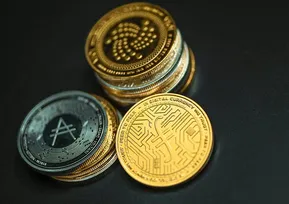
Photo by Filip Andrejevic on Unsplash


Protecting special combat forces

The two companies signed a memorandum of understanding (MOU) to develop a blockchain-based security system to be integrated into military training equipment that aims to safeguard the identity and behavioral data of special combat forces. Factor Labs’ security technology and blockchain expertise will be integrated into NS Studio’s military training programs, facilitating safer training sessions.

“Given the fact that special combat forces are important assets whose identities are considered national secrets, we want to amp up the security of the simulation programs that keep a record of their identities and behavioral patterns using blockchain technology,” the two companies said in a joint statement.

“We have begun developing the necessary technology for this project and are preparing to implement the security program starting in the latter half of this year.”


Blockchain’s role in military security

This collaboration underscores the increasing role of cutting-edge technologies like blockchain in ensuring the security and privacy of sensitive data not just in the financial context but also in military and security contexts. The combined efforts of NS Studio and Factor Labs are poised to contribute to the advancement of secure training simulations for special operations personnel.

More to Read
View All
Web3 & Enterprise·

Dec 18, 2023

Miracle Play and HAVAH team up to expand Web3 ecosystem

Miracle Play and HAVAH team up to expand Web3 ecosystemWeb3 e-sports tournament platform Miracle Play has signed a business agreement with the interchain platform HAVAH to exchange technologies and build a joint ecosystem, according to an official announcement on Miracle Play’s Medium page on Monday (KST).“With our interchain technology, we expect to play a pivotal role in the expansion and organic interoperability of the Web3 e-sports ecosystem, and we will actively cooperate with Miracle Play in building a leading ecosystem and infrastructure,” said Lim Young-kwang, CEO of HAVAH.Photo by Mateo on UnsplashNavigating the interchain landscape and blockchain gamingLaunched in January, HAVAH is an L1 interchain platform that allows users to freely move their digital assets across multiple blockchains. It features multiple decentralized applications (dApps) such as HAVAH Wallet and HAVAH Scan, and houses some 500,000 users.Miracle Play uses smart contract technology to ensure that anyone and everyone can hold various types of gaming tournaments in the form of PC, mobile and console games. It is currently in the open beta phase, with a cumulative participation rate of about 30,000 players. Although it is only supported on Polygon as of now, it will eventually be available on a total of nine major networks including Avalanche, XPLA, Solana and more, to facilitate cross-network gaming tournaments.Collaborative synergyThe two companies plan to collaborate on multiple fronts. Miracle Play will adopt HAVAH’s various mechanisms including the Mitter Protocol, which will allow the platform to implement one-click bridging services on the Miracle Play website and mobile app; as well as its interchain mechanism to bring multi-chain services to Miracle Play.HAVAH also aims to provide technical support for distributing and utilizing in-game rewards across networks on Miracle Play. Miracle Play tournaments will also be available via GameFi dApps in HAVAH’s ecosystem.“We will continue to work with companies in various fields to strengthen the interconnection of the blockchain ecosystem and expand the base of WEB3 Esport by making it conveniently accessible to everyone,” said Kim Hyun, CEO of Miracle Play.

news
Policy & Regulation·

Aug 07, 2023

The Need to Distinguish Between Security and Non-Security Virtual Assets

The Need to Distinguish Between Security and Non-Security Virtual AssetsWith the recent enactment of the Virtual Asset User Protection Bill in South Korea, there is a need to lay out criteria for determining whether virtual assets qualify as securities, says Kim Ja-bong, a senior research fellow at the Korea Institute of Finance, in his report titled “The Implications of Determining Which Virtual Assets Constitute Securities and Investor Protection” released on Saturday.Photo by Shubham Dhage on UnsplashThe implications of the Virtual Asset User Protection ActThe Virtual Asset User Protection Act — which will take effect in July of next year — aims to protect customer assets, establish regulations against unfair trading practices, and enforce penalties. Notably, it will target virtual assets that are not securities, deeming it necessary for regulators to determine if virtual assets qualify as securities or not in order to enforce the bill. Assets with characteristics of securities will fall under the jurisdiction of the Capital Markets Act.Therefore, if the Virtual Asset User Protection Act does not provide sufficient investor protection, issuers may be incentivized to issue non-security assets rather than security assets to avoid the regulations of the Capital Markets Act. This further necessitates the act of distinguishing between virtual assets that are securities versus those that are not.Determining if a virtual asset is a security or notThere are two approaches to do this, according to Kim: the passive approach, which avoids considering a virtual asset as a security whenever possible, and the active approach, which treats a virtual asset as a security whenever applicable.He argues that it is better to focus on whether an investment contract qualifies as a security if it is considered an investment contract, rather than simply selecting a specific approach.Furthermore, the nature of virtual assets renders them unbound by national borders, so it is necessary to establish assessment criteria that correspond with international standards, such as those used in the US and Europe.This is especially important because if the criteria differ from international standards, there is a risk of domestic investors suffering damages due to an issuer’s pursuit of regulatory arbitrage between countries.Equitable recognition and potential for security tokensAccording to Kim, the importance of determining whether virtual assets are securities lies in ensuring that security tokens receive the same recognition and trading treatment as traditional securities such as stocks. With such a measure, security token offerings can serve as an efficient and reliable method for raising funds. Although there may be concerns that such a regulation may hinder the development of virtual assets, it may well be an opportunity for security tokens to be qualified and trusted as high-quality financial instruments just like existing securities, Kim claims.Even for virtual assets that are not considered securities, there are many types of assets that are financial in nature, such as e-money tokens — therefore, it is necessary to actively protect investors in non-security virtual assets through financial regulations such as reinforcing disclosure obligations, which is being done in the EU through the Markets in Crypto-Assets Regulation (MiCA).Empowering regulators for enhanced investor protection and market integrityKim underscored that investor protection and healthy growth of the virtual asset market are made possible mainly through expanding regulators’ authority to protect economic interests and prevent damages. The author also suggested institutional reforms that grant regulators substantial authority, which would enhance their ability to protect investors effectively and provide compensation for damages.He added that regulators should also have the authority to enforce liability for damages or impose civil penalties for unfair trading practices conducted using classified information.

news
Policy & Regulation·

Dec 13, 2023

Hong Kong court grants trademark injunction against Huobi

Hong Kong court grants trademark injunction against HuobiThe Hong Kong Special Administrative Region High Court has resolved a trademark dispute between X-Spot Global Limited and Huobi Global Limited, ruling in favor of X-Spot.Back in June, X-Spot alleged that Huobi Global infringed on its trademark rights related to the “Huobi” name. In the legal process which followed, the court sided with X-Spot, compelling Huobi Global to cease using the “Huobi” trademark or any similar name or logo in Hong Kong.Photo by Tingey Injury Law Firm on UnsplashPotential confusionThe court’s official judgment highlighted concerns about potential confusion among the public and industry professionals arising from Huobi Global’s use of the “Huobi” trademarks. It emphasized that such confusion could lead people to believe that X-Spot Global, as the registered trademark owner, is actively engaged in cryptocurrency business associated with the trademark. In response, the court dismissed Huobi Global’s plea to revoke the service order and halt negotiations, also instructing the covering of X-Spot Global’s legal expenses.Post-acquisition conflictThe background to this dispute originates in the acquisition of Huobi Global last year. It’s widely believed that TRON blockchain network founder Justin Sun purchased the exchange for $1 billion although Sun has subsequently suggested that he is just an advisor to the crypto exchange business. The acquisition was made by About Capital Management, an entity associated with the controversial crypto entrepreneur.In May of this year, Sun claimed that Wei Li, a brother of Huobi founder Leon Li, had unjustly profited from the sale of Huobi’s native HT token. The disagreement escalated and as a consequence of that conflict, it became apparent that the acquisition agreement explicitly prohibited the buyer from using the “Huobi’’ trademark.Leon Li accused the cryptocurrency exchange of violating the acquisition agreement’s rules by unauthorized use of the “Huobi” trademark. This legal battle has shed light on the strained relationship between Leon Li and Justin Sun.The court’s decision adds a layer of complexity to Huobi Global’s legal challenges, intensifying existing regulatory issues. Notably, the cryptocurrency exchange is already grappling with a recent order from Malaysian authorities to cease operations in the country due to alleged illegal activities.The ruling comes at a critical juncture for Huobi Global. In September the business rebranded to HTX, signaling aspirations for global expansion amidst a shifting legal landscape. At the time, Justin Sun provided the rationale behind the rebrand. Taking to the X social media platform, he wrote:“It’s very hard for foreigners, Westerners, to pronounce ‘Huobi’… It doesn’t make any sense to them.” Sun went on to explain that the word Huobi means fire and coin in Chinese, adding, “That’s why we rebranded as HTX for international branding.”In light of this trademark infringement injunction decision, it could equally be speculated that the company was acting in advance of an unfavorable ruling in compliance with the terms of the business acquisition agreement.In reaching a decision on the matter, Judge Mimmie Chan J noted the lack of a defense mounted by Huobi against the trademark infringement action.

news
Loading