Top

Zodia Custody and Blockdaemon Partner on Institutional Staking

Web3 & Enterprise·June 06, 2023, 11:44 PM

London-based cryptocurrency storage provider Zodia Custody, a portfolio company of Japan’s SBI Holdings, has entered into a partnership with blockchain infrastructure provider Blockdaemon relative to crypto staking.
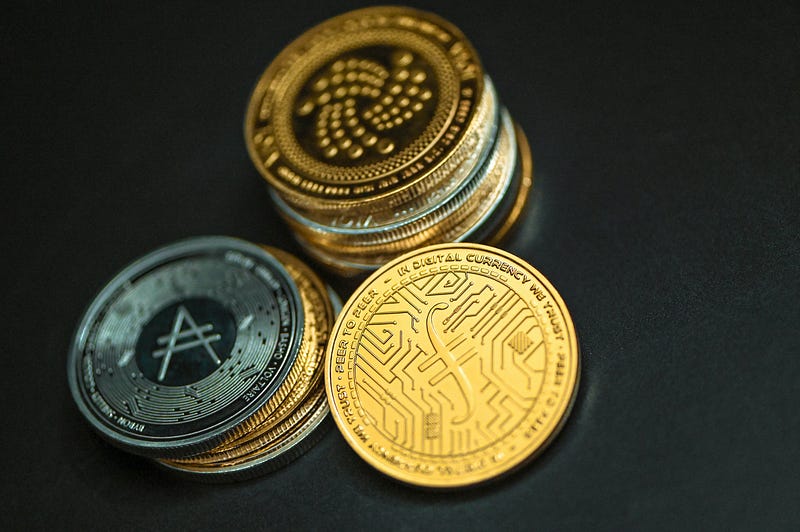
Photo by Traxer on Unsplash


Institutional interest

Blockdaemon announced the crypto staking collaboration, tailored to institutional clients, on Twitter on Tuesday. This move comes as institutional interest in staking, the process of contributing digital assets to support blockchain networks and earning rewards, continues to surge.

Following the Ethereum network’s Shapella upgrade on April 12, the amount of ether (ETH) staked increased by an impressive 4.4 million, reaching a total of 22.58 million ETH (equivalent to $42 billion) as of May 23. This remarkable growth in staked assets reflects the growing confidence in the Ethereum network and the potential for substantial returns.


First bank-owned custodian

Zodia Custody is a subsidiary of the well-known multinational bank Standard Chartered and backed by prominent institutions such as Northern Trust alongside SBI Holdings. It claims the title of being the first bank-owned custodian to provide staking services exclusively to institutional clients. This collaboration enables Zodia Custody to leverage Blockdaemon’s infrastructure to deliver secure and efficient staking solutions, catering to the specific needs of institutional investors.

Blockdaemon has been at the forefront of facilitating seamless integration between traditional financial institutions and the emerging crypto industry. Earlier this year, the company introduced a wallet service targeted at the institutions and crypto custodians. The wallet assists clients in managing their assets securely, eliminating the need for third-party storage solutions. By partnering with Zodia Custody, Blockdaemon expands its portfolio of services, capitalizing on the rising demand for staking among institutional investors.

The firm’s CEO and Founder, Konstantin Richter, stated that the partnership with Zodia “allows stronger security, automation and simplification of the process to participate in staking, truly accelerating Web3 innovation.”


LMAX collaboration

Earlier this month Zodia partnered with digital asset trade execution specialist LMAX Digital to provide a combination of institutional-grade trading infrastructure and custody services to crypto asset manager, Coinshares.

Institutional investors, traditionally cautious about entering the crypto ecosystem, are now becoming more proactive in engaging with digital assets. Staking, with its potential for consistent and predictable returns, has emerged as an appealing opportunity. By participating in staking, institutions not only contribute to the efficient functioning of blockchain networks but also enjoy the rewards associated with validating transactions and securing the network.

The partnership between Zodia Custody and Blockdaemon exemplifies the industry’s efforts to bridge the gap between traditional finance and the rapidly evolving world of cryptocurrencies. As more institutional clients seek exposure to digital assets, it becomes essential to provide them with secure and reliable solutions tailored to their specific requirements.

With demand for staking services continuing to rise, institutional players are recognizing the value of taking a more active part in the crypto ecosystem. With Zodia Custody and Blockdaemon leading the way, the opportunities for institutional clients to engage in staking and reap the rewards are set to expand, further fueling the growth of the entire crypto industry.

More to Read
View All
Web3 & Enterprise·

Nov 07, 2023

Galaxia Moneytree partners with Charzin to integrate security tokens into EV charging systems

Galaxia Moneytree partners with Charzin to integrate security tokens into EV charging systemsKorean financial platform services provider Galaxia Moneytree announced on Tuesday (local time) that it has signed a memorandum of understanding (MOU) with Charzin, a company that specializes in developing infrastructure for charging electric vehicles (EVs), to design a security token offering (STO) platform that issues security tokens for optimizing the process of EV charging. This includes securing installation sites and facilities for EV charging stations.Photo by Andrew Roberts on UnsplashMerging blockchain and transportationHeadquartered in Daegu, Charzin is notable for its app EVZ, which uses a blockchain-based sharing module to connect EV drivers and EV charger owners for faster charging and optimized revenue acquisition.Galaxia Moneytree will be responsible for establishing and operating the STO platform, while Charzin will handle business development, support for the launch of security token products and construction of EV charging facilities.The signing ceremony for the MOU took place at Galaxia Moneytree’s headquarters in Seoul on Monday with Galaxia Moneytree CEO Shin Dong-hoon and Charzin CEO Choi Young-seok in attendance. The two companies also discussed plans to launch other products that combine finance and EV charging infrastructure.“In addition to our ongoing efforts, we plan to design STO products for various underlying assets, such as renewable energy and aviation assets,” Galaxia Moneytree said. The company recently formed an aviation asset tokenization consortium in September.Ongoing partnershipsMeanwhile, Charzin recently announced its partnership with Hi Investment and Securities to venture into the security token business. The firms plan to raise funds for developing EV charging infrastructure by issuing security tokens and subsequently share the profits from running such projects.

news
Policy & Regulation·

Jan 17, 2024

Crypto exchange Flybit passes post-audit for ISMS-P certification

South Korean cryptocurrency exchange Flybit, which is operated by the Korean Fintech Industry Association, has passed the post-audit for its Information Security and Privacy Management System certification (ISMS-P), according to local news website News1 on Wednesday (KST).Photo by FlyD on UnsplashRigorous certification standardsThe ISMS-P is a security management system jointly operated by South Korea’s Ministry of Science and ICT and the Personal Information Protection Commission, representing the highest level of security management in the country. It combines 80 requirements for Information Security Management System (ISMS) certification and 22 requirements for Personal Information Management System (PIMS) certification, totaling 102 requirements that must be met. Once obtained, certification is valid for three years, and annual post-audits are required to maintain its validity. Flybit’s commitment to security"Cryptocurrency exchanges are businesses that manage customers' valuable assets. All Flybit members approach their work by recognizing the fact that the protection of personal information is our most important value,” the exchange said. "We will continually strive to maintain security accidents since the establishment of the exchange." Flybit first obtained the ISMS certification in December 2020 and the ISMS-P certification two years later in December 2022. The most recent ISMS-P follow-up audit was conducted last month. After a thorough examination, the results of the audit were delivered by the Korea Internet and Security Agency (KISA) on Dec. 12, which stated that the exchange could maintain its certification. In October last year, the firm also received the highest rating in the comprehensive anti-money laundering (AML) evaluation conducted annually by the Financial Intelligence Unit (FIU) under the Financial Services Commission.

news
Web3 & Enterprise·

May 17, 2023

OKX Wallet to Support BRC-20 Tokens and Bitcoin Ordinals

OKX Wallet to Support BRC-20 Tokens and Bitcoin OrdinalsIn a press release published on Tuesday, Seychelles-based cryptocurrency spot and derivatives exchange OKX announced that it is in the process of enabling an Ordinals marketplace on the OKX Wallet, which will enable customers to mint and trade BRC-20 tokens.Photo by Karolina Grabowska on PexelsRising BRC-20 market capThe move will also enable users to inscribe non-fungible token (NFT)-based digital content on the Bitcoin blockchain by way of ordinal inscriptions. The market capitalization of BRC-20 tokens has been rising exponentially over the course of the past few weeks despite only being in existence since March.BRC-20 is an experimental token standard which was created by an anonymous developer with the handle “Domo” and username ‘@domodata’ on Twitter. A token standard governs how and where a cryptocurrency can be used. The approach has been pioneered by developers on the Ethereum blockchain who created the ERC-20 standard a number of years ago, relative to the Ethereum network.OKX has clearly identified a rising trend and wants to be an early adopter in benefiting from it. In their short existence, BRC-20 tokens have mainly implicated meme tokens but as more experimentation follows, use cases that rely on the token standard are likely to expand.Binance has signaled a similar intent, having stated last week that before the month is out, Bitcoin Ordinals will be added to its NFT marketplace. Ordinals preceded the development of the BRC-20 standard by a couple of months, with over five million of the inscriptions having been generated since they emerged. It’s believed that the minting of those Ordinals has generated fees to the value of around 1,000 BTC (or $27 million as per the BTC/USD price at the time of publication).Growing painsWhile the emergence of the BRC-20 standard and Bitcoin Ordinals brings quite a lot of excitement to a bitcoin blockchain that many found to be boring and lacking diversity in terms of potential use cases, it’s not been without its problems. On the one hand, these tokens and inscriptions make use of unused block space on the network.They also offer a solution to the longer term issue of a reduction in fees. The bitcoin blockchain in-built subsidy to miners is halved every four years, meaning that there will be a need for fees to sustain the incentive to miners to continue to secure the network.The downside to these recent developments is that the new tokens are going beyond using up unused block space. Instead, they’ve been responsible for driving Bitcoin transaction fees up to uncomfortable levels over the course of the past two weeks. It’s still early days in terms of this development, so there is every hope that developers can find solutions to the issue.Last week, Singapore-based project OmniBOLT announced that it will support BRC-20 tokens on Lightning Network. Taking some of this activity away from the bitcoin mainnet will serve to dampen excessive transaction costs and transaction delays due to an excessively long queue of transactions within the bitcoin mempool.The recent transaction cost difficulty relative to Bitcoin has prompted Binance to respond by stating its intention to add support for Lightning Network transactions in the not too distant future. OKX already supports Lightning transactions but not from within its wallet. As part of this announcement, the company stated that Lightning support will be coming to its wallet in the near future.

news
Loading