Top

Hong Kong Lawmaker Explores Digital Asset Links With Mainland

Policy & Regulation·August 04, 2023, 11:33 PM

In a move aimed at bolstering its position as a rising global Web3 hub, Hong Kong Legislative Council member Johnny Ng has expressed his aspiration to foster greater collaboration between digital asset platforms in Hong Kong and a Shanghai-based exchange.

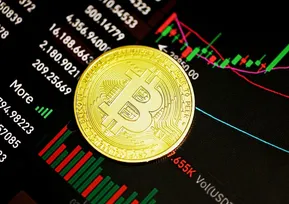
Photo by Simon Zhu on Unsplash


Digital asset exchange interconnectivity

As Hong Kong continues to position itself as a key player in the emerging Web3 landscape, Ng envisions a future where licensed virtual asset exchanges in Hong Kong could be interconnected with their counterparts in Shanghai.

Ng’s remarks came during an interview with Chinese media outlet The Paper. Drawing a parallel with the established Shanghai-Hong Kong Stock Connect program that seamlessly connects the stock markets of both cities, Ng raised the question of whether a similar connection could be established for licensed digital asset exchanges. Ng’s idea hinges on the potential to bridge appropriate platforms in Shanghai with those licensed in Hong Kong for virtual asset trading.


Interconnected talent pool

The lawmaker’s enthusiasm for interconnectivity also extends to the talent pool. He expressed his desire for more Web3 talent exchanges between Hong Kong and the mainland, recognizing Shanghai’s status as a financial hub boasting numerous exceptional financial enterprises.

Hong Kong’s approach to the Web3 landscape stands in contrast to mainland China’s stringent cryptocurrency regulations. While China banned cryptocurrency transactions in 2021, Hong Kong has embraced crypto firms, even encouraging partnerships between these firms and local banks.

This year, Hong Kong authorities unveiled a series of cryptocurrency-related policy statements, aimed at fortifying its stature as a global financial center. A significant step followed in December, when the Hong Kong Legislative Council passed an amendment introducing a comprehensive licensing framework for virtual asset service providers (VASPs).

In a recent development underscoring Hong Kong’s pro-crypto stance, HashKey and OSL have become the pioneering recipients of licenses for retail trading under the new regulatory regime, which commenced on June 1.


Differing policy approaches

People following developments in crypto and Web3 in China and East Asia have been speculating if the strategic positive shift in Hong Kong towards developing as a regional hub relative to the sector is indicative of a softening in the approach of mainland China towards the industry. It appears that Hong Kong’s pursuit of crypto business has been sanctioned by Beijing.

Commentators have been monitoring the emergence of further encouraging signals. In May, Chinese state television featured a segment that covered cryptocurrency and in particular Bitcoin. Binance CEO Changpeng Zhao (CZ) was sufficiently encouraged by the development to suggest that it was “a big deal,” although the clip was later removed from the broadcaster’s website.

Ng’s proposal aligns with the broader narrative of Hong Kong’s ambitious push into the Web3 landscape, capitalizing on its favorable regulatory environment to attract crypto-related ventures. As discussions evolve around the potential interconnectivity between Hong Kong and Shanghai’s digital asset exchanges, the global cryptocurrency community watches with interest to see if there are any emerging signs that Beijing will reciprocate positively.

More to Read
View All
Web3 & Enterprise·

Jun 23, 2023

Japan’s Biggest Bank Explores Global Stablecoin Issuance

Japan’s Biggest Bank Explores Global Stablecoin IssuanceMitsubishi UFJ Financial Group Inc. (MUFG), the largest bank in Japan, is currently engaged in discussions with companies involved in popular global stablecoins, as well as other firms, to explore the possibility of issuing these tokens using MUFG’s blockchain platform.That’s according to a report published by Bloomberg on Thursday. The stablecoin law in Japan, which recently went into effect on June 1, has established that only licensed banks, registered money transfer agents, and trust companies within the country are authorized to issue stablecoins.Photo by CoinWire Japan on UnsplashProgmat platformMUFG is actively in talks with various parties regarding the utilization of its blockchain platform, Progmat, to mint stablecoins linked to foreign currencies, including the US dollar, with the intention of facilitating their global use.Tatsuya Saito, the Vice President of Product at MUFG, emphasized that the implementation of the legislation provides issuers and users with a sense of security when it comes to engaging with stablecoins. However, he refrained from disclosing the specific stablecoin parties that MUFG is currently in discussions with.Stablecoins play a pivotal role within the cryptocurrency sector, serving as a reliable asset for investors to hold between trades involving more volatile tokens. These tokens are designed to maintain a consistent value, often pegged to $1, and are typically backed by reserves such as cash and bonds. CoinGecko data indicates that approximately $130 billion worth of stablecoins are presently in circulation.Stablecoin stabilityNevertheless, stablecoins have faced challenges in the past when it comes to maintaining their pegs, resulting in disruptions within crypto markets. Notably, TerraUSD, a token reliant on algorithms and trader incentives, experienced a significant crash in May 2022, leading to losses of at least $40 billion. In response to such incidents, regulators have intensified their scrutiny of stablecoins. The stablecoin law in Japan encourages the issuance of stablecoins that are fully backed by fiat cash in a corresponding currency.MUFG envisions leveraging its Progmat blockchain platform to issue security tokens on behalf of third parties, with no immediate plans to develop its own stablecoin, according to Saito. He further revealed that the bank is actively exploring stablecoin projects with entertainment firms, non-financial businesses, and a consortium of Japanese financial institutions. Furthermore, overseas financial groups have shown keen interest, and Saito believes that Japan has the potential to become a global hub for stablecoin issuance.Tether dominanceTether ($USDT) holds the position of the top global stablecoin, accounting for more than 60% of the sector’s market value, while Circle Internet Financial Ltd.’s USD Coin ($USDC) occupies the second spot. Any party intending to produce stablecoins within Japan would need to comply with the country’s legislation.Saito highlighted that the regulation’s provision allowing stablecoins to be denominated in various currencies, including the US dollar, opens up opportunities for the issuance of tokens intended for global use. He expressed his belief that this presents a significant opportunity for Japan.Prime Minister Fumio Kishida’s economic agenda, known as “New Capitalism,” includes a focus on supporting the growth of Web3 firms. While Japan has taken steps to relax certain cryptocurrency regulations, such as those pertaining to token listing and taxation, it continues to be perceived as a country with relatively strict regulations.

news
Web3 & Enterprise·

Nov 08, 2023

OKX announces delisting of 26 trading pairs

OKX announces delisting of 26 trading pairsCryptocurrency exchange OKX has made a significant announcement regarding the delisting of more than 20 trading pairs, with a view towards its ongoing maintenance of strict listing criteria and performance monitoring. This decision will impact a considerable number of trading pairs across various cryptocurrencies, with the process scheduled to commence later this week.OKX outlined details of this recent trading pair purge in a statement published to its website on Monday. Among the trading pairs set for removal are CELO-USDC, AXS-USDC, APE-BTC and the HNT-USDT trading pair, which will be delisted on Nov. 10. Notably, Bytom (BTM), a Chinese crypto project, which has experienced a substantial 46% drop in value since Monday, is also among the tokens to be delisted.The exchange is advising users to manage their assets accordingly in preparation for the changes. Withdrawals for these tokens will cease on Jan. 10, 2024. During this transitional period, OKX recommends that users cancel any open orders linked to the impacted trading pairs to avoid automatic cancellations, which could result in processing delays.Photo by Maxim Hopman on UnsplashSAITAMA delistingDeposits for the affected tokens, including HNT, BTM, and SAITAMA, were halted by OKX on Nov. 3. SAITAMA, an Ethereum-centric ERC20 token, is the primary payment medium on the Saitama platform. There were mixed reactions to the delisting of the coin. One community member took to X, stating:“I will say I do think it isn’t cool for OKX to delist #Saitama considering we didn’t get on there for the reasons specified of delisting. The listing was won through hours of Spaces and helping people get VPNs to win a contest. Regardless of what the market is doing we won fairly.”Another Saitama project supporter took a more pragmatic view, stating:“Delisting Is a tragedy? I don’t think so. What did the OKX listing for the token price? What is the difference between holding or selling with or without okx? Volume was too low, and this isn’t a news, so they will delist. They will relist again….#SAITAMA”OKX has embarked upon several initiatives over the course of 2023 in an effort to further the user proposition offered by the platform. From a marketing perspective, the company took the decision in October to retire the Okcoin brand, rebranding its various sub-platforms instead to OKX.The Seychelles-incorporated company indicated in September that it expects to have secured a virtual asset service provider (VASP) license in Hong Kong by June of next year.Delisting banksTokens are not the only items to be delisted by the exchange recently. Alongside competitor Bybit, the company decided to delist sanctioned Russian banks Tinkoff Bank and Sberbank from its peer-to-peer exchange platform.This move by OKX reflects the exchange’s efforts towards maintaining a high level of integrity and performance. Listing coins that fall below a minimum acceptable level of liquidity and trading volume can leave them much more exposed to the risk of manipulation. By adhering to stringent listing criteria and promptly addressing issues, the company is making a greater effort towards maintaining a position as a trusted and secure trading platform for cryptocurrency enthusiasts and investors.

news
Web3 & Enterprise·

Nov 13, 2023

Over 3,700 participants flock to Upbit D Conference to explore insights in blockchain

Over 3,700 participants flock to Upbit D Conference to explore insights in blockchainThe sixth annual Upbit D Conference (UDC), a major blockchain event in South Korea hosted by the country’s biggest cryptocurrency exchange Upbit, commenced on Monday (local time) at the Grand Walkerhill Seoul Hotel. Touting the theme “All That Blockchain,” the conference gathered some 3,700 participants — including 39 blockchain experts from 29 countries — both online and offline.Aimed at contributing to the blockchain ecosystem, UDC has gained acclaim as a non-profit event featuring in-depth lectures by experts from around the globe. While it initially focused on industry and technology alone, the conference has since expanded its scope to cover areas such as policy, finance, business, culture and trends.Photo by Gerd Altmann on PixabayLively guest discussionsHighlights of the event included a session led by Roger Ver, the founder of Bitcoin.com, who discussed the trajectory of the blockchain industry and the current status of Bitcoin. Korean telecommunications giant SK Telecom’s Executive Vice President, Oh Se-hyeon, also shared insights into the prospects of Web3 and blockchain services in Korea.Other speakers included Emily Parker, Executive Director of CoinDesk; Howard Fischer, former Senior Trial Counsel at the US Securities and Exchange Commission (SEC); Nizam Ismail, former Founding Chairman of the Regulatory and Compliance Sub-Commitee at Blockchain Association Singapore; and Kim Kab-lae, Senior Research Fellow at the Korea Capital Market Institute. Together, the four experts discussed country-specific perspectives and current issues regarding the rapidly changing regulatory landscape of the global virtual asset industry.“As blockchain’s influence expands across the economy, culture and society, UDC has evolved into a comprehensive conference capable of encompassing all aspects of blockchain. We hope it serves as a place that sparks positive inspiration and valuable connections,” said Song Chi-hyung, Chairman of Dunamu, the operator of Upbit.Growing recognitionOver the past five years, UDC has seen participation from over 1,190 companies and nearly 19,100 individual attendees. As of this month, the cumulative number of views on the conference’s official YouTube videos has reached 1.12 million. Videos of all of this year’s sessions can be viewed on the UDC YouTube channel and website.

news
Loading