Top

BitMEX Co-Founder Forecasts $750K to $1 Million Bitcoin Price by 2026

Markets·October 07, 2023, 12:39 AM

In a recent interview with YouTuber Tom Bilyeu, Arthur Hayes, Co-Founder of the Seychelles-registered cryptocurrency exchange and derivative trading platform BitMEX, has expressed his bullish outlook on Bitcoin’s future price, projecting a valuation of $750,000 to $1 million for the leading cryptocurrency by the year 2026.
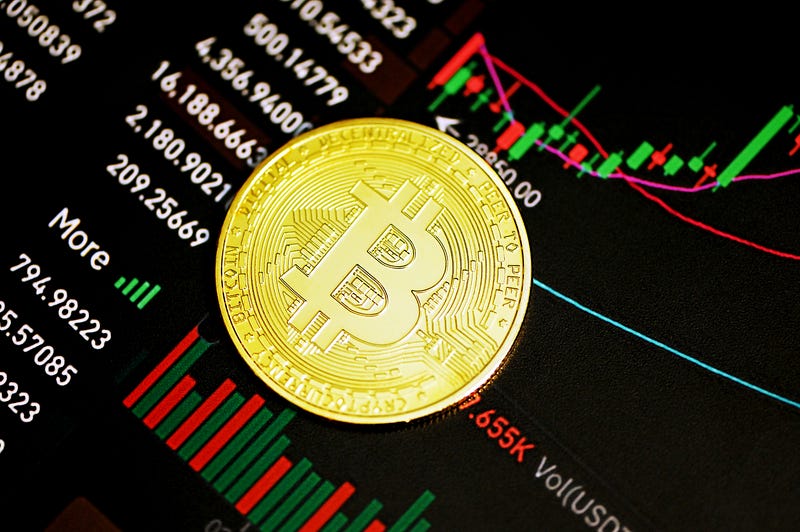
Photo by Kanchanara on Unsplash


Finite supply to drive price dynamic

Hayes’ optimism is rooted in several factors that he believes will shape the next Bitcoin cycle. One of the key factors driving Hayes’ projection is Bitcoin’s limited supply. With a maximum cap of 21 million coins, Bitcoin’s scarcity is expected to propel the unit price of the asset in tandem with growing demand as more investors seek to secure a piece of this finite resource.

The idea that Bitcoin’s scarcity will drive its value higher has been a fundamental tenet of the cryptocurrency since its inception. In 2010 the leading cryptocurrency’s pseudonymous Founder stated: “When someone tries to buy all the world’s supply of a scarce asset, the more they buy the higher the price goes.”


ETF potential

Hayes also highlighted the potential for Bitcoin spot exchange-traded funds (ETFs) to become available in major regulated markets. The introduction of Bitcoin ETFs could attract institutional investors and provide a more accessible way for the broader public to invest in Bitcoin, further boosting its demand.

However, Hayes also speculates about the risks associated with a Bitcoin ETF. He stated: “Are we inviting in something that’s going to fundamentally change what Bitcoin is?”


Geopolitical factors

Geopolitical uncertainty plays a significant role in Hayes’ forecast also. As global economic and political instability persists, investors may turn to Bitcoin and other alternative assets as hedges against traditional financial instruments.

However, it’s important to note that Hayes contextualized his Bitcoin price prediction within a larger bullish macroeconomic environment. From his perspective the surge in asset prices will not be limited to cryptocurrencies alone. He anticipates a substantial boom in financial markets, with not only Bitcoin but also traditional assets like stocks experiencing substantial price growth.

Hayes stated: “I think it will be the biggest boom in financial markets we have ever seen in human history. Bitcoin will have a ridiculous price, Nasdaq will have a ridiculous price, S&P will have a ridiculous price.”

Known for his thoughtful and insightful writings on the subject area, Hayes wrote in July that he believes that Bitcoin will be the currency of choice when it comes to the growing need for artificial intelligence (AI) to work directly with a means of payment.


$1 million BTC by 2026

While Hayes’ projection of a $1 million Bitcoin price by 2026 may seem ambitious, his short-term predictions are more moderate. He foresees Bitcoin trading in the $30,000 range for the current year. Building upon that thesis, he maintains that the possibility exists of it reaching $70,000 by 2024.

This aligns with the views of other industry analysts who anticipate challenges and headwinds in the near term. There’s little doubt that recent platform failures and speculation with regard to the health of other leading crypto platforms have been retarding market performance more recently.

While the road ahead may hold fluctuations and challenges, many experts believe that Bitcoin’s long-term trajectory remains promising, driven by its unique attributes and the changing dynamics of global finance.


More to Read
View All
Web3 & Enterprise·

Nov 01, 2023

OKX maintains robust asset reserves with 103% BTC backing

OKX maintains robust asset reserves with 103% BTC backingSeychelles-incorporated cryptocurrency exchange OKX has recently released its 12th asset reserve certificate, with its latest report revealing that the company maintains reserves of 103% for its top coins, which include Bitcoin (BTC), Ethereum (ETH), Ripple (XRP), Tether (USDT) and USD Coin (USDC). The measure is meant to reassure users that their funds are well-backed and, in fact, more than covered by the exchange’s reserves.Photo by rc.xyz NFT gallery on UnsplashBitcoin, Ether reserve surplusesOKX provided details on its latest asset reserve status via a blog post published to its website on Monday. Alongside providing the relevant asset reserve data, the exchange celebrated its first complete year of having utilized a proof-of-reserve-based system.For BTC, OKX holds a substantial reserve of 140,484 BTC, effectively exceeding the 136,227 BTC held in user accounts. Similarly, ETH reserves stand at 1.46 million ETH, providing a surplus over the 1.42 million ETH owed to OKX users.The exchange also demonstrated its considerable holdings in stablecoins, with over $5 billion in USDT reserves and over $327 million in USDC reserves. In an interview with CoinDesk recently, OKX Chief Marketing Officer (CMO) Haider Rafique, referred to the need to provide a mechanism to reassure platform users. He stated:“Customers often express concerns in person about centralized exchanges, highlighting issues with security, solvency and downtimes, even if they don’t always voice these concerns digitally.”Use of zero-knowledge technologyIn April, OKX upgraded its proof of reserve system, opting for the use of zero-knowledge scalable transparent argument of knowledge (zk-STARK) technology. This approach allows OKX platform users to independently verify exchange solvency, confirming their assets are backed by OKX reserves. A zero-knowledge proof demonstrates the truth of a statement without sharing the statement’s contents. Therefore, no account balances are made public to other service users, maintaining user privacy.Regular transparency is now crucial for exchanges like OKX, as it aims to provide users with the certainty that their funds are genuinely available for withdrawal at any given time. After the FTX insolvency incident, verifiable proof of reserves has become paramount in reassuring users about the safety of their investments.Trend towards improved standardsIn the wake of several high-profile crypto platform failures in 2022, many exchanges are making greater efforts towards reassuring users that their funds are safe and accounted for. This has given rise to the popularity of proof of reserve systems.On that basis, OKX hasn’t been alone in implementing a proof of reserves-based system. In July another Seychelles-incorporated crypto platform, Bitget, announced that it could demonstrate the debt-free status of its business through its proof of reserves system.Nic Carter, Partner at crypto venture capital and private equity firm Castle Island Ventures, has carried out some research into the various proof of reserve systems employed by a number of global crypto platforms. While accepting that the approach is not foolproof, Carter maintains that it’s still a move in the right direction. “The way PoR works is, if enough exchanges do it, the few exchanges that don’t do it end up sticking out like a sore thumb,” he states.

news
Web3 & Enterprise·

Aug 08, 2023

Bithumb’s No-Trading-Fee Policy Proves Effective in Boosting User Engagement

Bithumb’s No-Trading-Fee Policy Proves Effective in Boosting User EngagementSince the recent introduction of a no-trading-fee policy for select cryptocurrencies, Bithumb, one of the leading cryptocurrency exchanges in South Korea, has experienced extended customer engagement on its platform.Increased user engagement and installationsOver the past week, the Bithumb app has witnessed growth in user engagement and installations. Both the average total time spent on the app and the average time spent per individual user have risen by nearly 20%. Additionally, there has been a 10% rise in the number of new app installs compared to the previous week.Photo by Mike Hindle on UnsplashTen new fee-free tokensIn this positive announcement today, the crypto exchange also revealed the addition of ten new virtual assets to its list of fee-free trading options. These newly added assets are SAND, AXS, BSV, QTUM, TFUEL, ANKR, T, KNC, STPT, and ONG. This brings the total number of fee-free trading assets on the exchange to 20.Customer engagement and trading volumeBithumb has demonstrated its commitment to making customers stay longer on its platform through various initiatives. Notably, the exchange, in late June, introduced Insight, a service that provides crypto investors with metrics to help them make informed decisions. The company believes that bolstering customer engagement will drive growth in the exchange’s trading volume.Bithumb, recognizing the positive impact of its zero trading fee policy on customer retention, internally saw this achievement as a successful step towards delivering tangible benefits to its users through an optimized trading environment.Since the beginning of the month, the exchange has been unveiling a weekly lineup of fee-free tokens, accompanied by a no-fee BTC market. These fee-free tokens are easily identifiable with a blue badge and can be conveniently sorted by clicking the “fee-free” tab at the top of the chart.Moon Sun-il, the Head of Services at Bithumb, emphasized the company’s commitment to noticeable user experience enhancement. Moon highlighted the recent implementation of the no-trading fee policy and the introduction of the trading data service, Insight, as key initiatives driving towards this goal.

news
Web3 & Enterprise·

Aug 26, 2023

HashKey Gears Up to Offer Trading Service to Retail Traders

HashKey Gears Up to Offer Trading Service to Retail TradersHashKey is gearing up to launch its services to retail traders in Hong Kong with the intention of offering them Bitcoin and Ether trading products initially.The Hong Kong-based digital asset management platform received full licensing approval from the local regulator, the Securities Futures Commission (SFC), earlier this month. It’s anticipated that the platform will launch to retail on August 28.That’s according to a report from a local media source earlier this week. Financial publication Investing.com stated: “General investors in the period can only trade Bitcoin (BTC) and Ethereum (ETH), because these two currencies currently account for most of the trading volume in the market.“It’s worth noting, however, that investors will be subject to a cap, permitted to allocate only up to 30% of their net worth into the realm of cryptocurrencies while utilizing the platform.Photo by Traxer on UnsplashServing retail clientsIt’s a significant milestone for both HashKey and the regulator, given that Hong Kong has been making huge efforts to further the development of digital asset innovation within the Chinese autonomous territory over the course of the past twelve months. Hashkey, alongside brokerage and exchange business OSL (also successful in obtaining a license), has been collaborating with regulators from an early stage in the lead-up to both receiving full licensing.HashKey got to this point by focusing on two pivotal licenses offered by the SFC. The first of these licenses, known as Type 1, paved the way for HashKey to initiate a virtual asset trading platform, aligning seamlessly with the regulatory framework laid out under Hong Kong’s securities laws. The second license, Type 7, empowers the crypto platform to furnish automated trading services to both institutional and retail clientele.Nurturing digital asset innovationHong Kong has maintained a resolute focus on cultivating a crypto-friendly environment within its borders in 2023. Echoing this sentiment, Financial Secretary Paul Chan asserted the government’s and regulatory bodies’ determination to incubate a robust crypto and fintech ecosystem throughout the year.By March, over 80 crypto enterprises signaled their intent to establish a presence in Hong Kong, with several major players in the crypto industry among them. In April, the Hong Kong Monetary Authority (HKMA) issued a call to banks, urging them to extend their services to cryptocurrency companies.Banking remains a difficulty in Hong Kong for crypto businesses despite the HKMA’s efforts. However, in the case of both HashKey and OSL, both are being banked by Hong Kong’s largest virtual bank, ZA Bank.In May, the HKMA unveiled a comprehensive licensing framework tailored for crypto platforms, imposing a deadline of June 1 for compliance. As August rolled in, a select few crypto platforms clinched the green light to offer crypto trading services to an eclectic client base encompassing both retail and institutional participants.This regulatory framework, designed to safeguard the interests of investors, is playing a large part in Hong Kong’s recent success in developing the sector. In this particular instance, it will mean that retail traders will be granted access to Bitcoin and Ethereum exclusively. This curtailed selection provides a good starting point for retail trading, and it’s likely that we will see HashKey’s trading offering being extended to cover additional digital assets as soon as local regulators permit it.

news
Loading