Top

Crypto Trading Surges in South Korea While Global Trends Decline

Markets·August 04, 2023, 7:25 AM

Despite a global decrease in cryptocurrency trading on centralized exchanges, South Korea has witnessed a significant increase in trading activities. Upbit, the nation’s largest crypto exchange, climbed to the second spot in global spot trading volume for July.
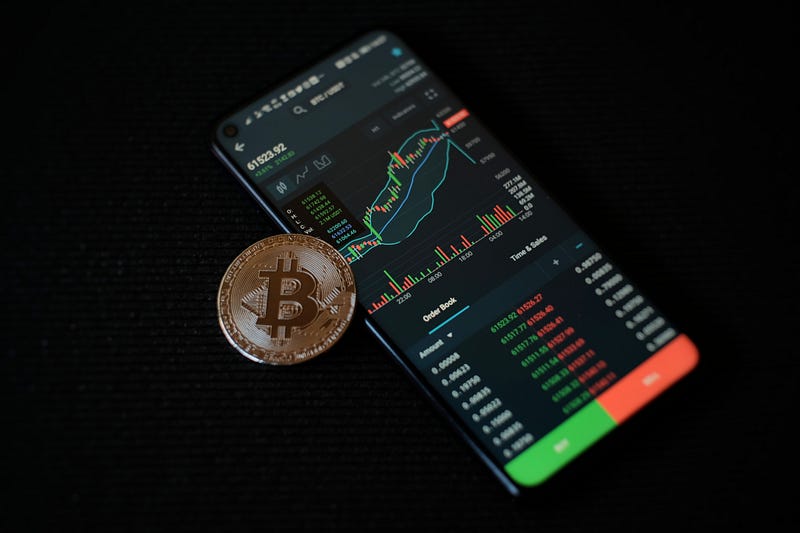
Photo by Viktor Forgacs on Unsplash


Plunges in global trading volumes

According to an Exchange Review for July 2023 by CCData, a virtual asset data provider, the total global spot trading volumes on centralized exchanges dropped to $515 billion in July, a 10.5% decrease compared to the previous month, marking the second lowest level since 2019. Additionally, derivative trading volumes fell by 12.7% to $1.85 trillion, the second-lowest since December 2020.

Experts attribute these declines to increased regulations on cryptocurrencies worldwide, such as legal crackdowns on exchanges like Binance and Coinbase by the US Securities and Exchange Commission.

Binance, the world’s largest cryptocurrency exchange, recorded a trading volume of $208 billion with a market share of 40.4% in July, marking a five-month consecutive decline, although it still maintained its title as the largest platform worldwide for crypto spot trading.

Coinbase — the largest cryptocurrency exchange in the US — and global exchange OKX also saw a decline in trading volume of 11.6% and 5.75% to $28.6 billion and $29 billion, respectively.


Crypto exchanges flourish in Korea

Contrarily, the majority of major crypto exchanges in Korea experienced significant growth in trading volume. Upbit’s trading volume skyrocketed by 42.3% to $29.8 billion in July, surpassing Coinbase and OKX for the first time to claim the second spot in global cryptocurrency exchanges behind Binance.

Other Korean exchanges also saw remarkable increases in trading volume. Bithumb recorded $6.09 billion, a surge of 27.9%, while Coinone’s volume rose by 4.72% to $1.39 billion.

These spikes in trading volume can be accredited to an increased interest in cryptocurrencies and blockchain technology among citizens throughout the country, despite global regulatory challenges impacting the market. As the cryptocurrency industry continues to evolve, Korean exchanges are showing resilience and maintaining their competitive positions on the global stage.


More to Read
View All
Policy & Regulation·

Apr 19, 2023

Korea’s DAXA Prohibits Relisting of Delisted Cryptos for a Year

Korea’s DAXA Prohibits Relisting of Delisted Cryptos for a YearThe Digital Asset Exchange Alliance (DAXA) in Korea will prohibit the relisting of cryptocurrencies delisted from its member exchanges for a year, according to Korean media outlet Edaily.©Pexels/Jan van der WolfDAXA’s arbitrary regulationSome criticize this regulation, arbitrarily created by DAXA, which consists of five major Korean cryptocurrency exchanges (Upbit, Bithumb, Coinone, Korbit, and Gopax), as this rule poses a significant impact on crypto issuers and investors.In fact, a blockchain industry insider said that when cryptos are designated by DAXA as a risky asset, their operators receive a notification from the group that relisting is possible after a year once delisted. So far, assets that have been delisted or designated as such are WEMIX, PCI, BASIC, SRM, and OMG.Coinone’s relisting of WEMIXDAXA added this stipulation, as it faced criticism for the absence of relisting regulations in its guidelines when Coinone, one of its members, exclusively relisted the WEMIX token. This raised doubts about the self-regulation of the industry because DAXA had decided the delisting of WEMIX on the grounds that the information on its circulation supply was unreliable.Crypto enterprises are complaining about DAXA’s devising of strict penalties when delisting processes are not transparent. DAXA has stated that a consensus has been reached for the first draft and it will be continuously revised.Stronger DAXA presenceThe Korean crypto industry forecasts that this regulation will empower DAXA’s presence in the crypto scene, considering that its members are responsible for 98% of the domestic trading volume.Experts note that DAXA needs to establish fairness and transparency in order for it to gain trust as a self-regulatory body. Park Yong-beom, Chairman of the Korea Society of Blockchain, said rules on listing and delisting have to be fair and transparent, and if market participants find them unconvincing, it would undermine the credibility and authority of the self-regulatory body.In an interview with Economic Review, Former KB Kookmin Bank CEO Lee Kun-ho suggested that DAXA should prioritize market vitalization and ecosystem strengthening. He believes that instead of focusing on market management and supervision, DAXA should concentrate on enhancing investor protection.

news
Web3 & Enterprise·

Aug 30, 2023

Nuvei Teams Up with Mastercard on APAC Instant Payouts

Nuvei Teams Up with Mastercard on APAC Instant PayoutsNuvei, a crypto-friendly Canadian fintech firm, has partnered with global payments giant Mastercard, unveiling plans to bring nearly instantaneous payout capabilities to online trading platforms and investors, with a strong focus on the Asia Pacific region.Photo by Allison Saeng on UnsplashHarnessing Mastercard SendThis collaboration, announced by Mastercard on Monday, harnesses the power of Mastercard’s Send service. Mastercard Send is a payment solution that enables secure, real time fund transfers for organizations around the world, in over one hundred markets.The service has already been made available to Nuvei’s clientele in Singapore, with Nuvei claiming that it will speed up payments for the benefit of the merchants and consumers that make up its user base.An increase in the rate of digitalization, spurred by growth in online trading and remote working on an international basis is fueling a need for ever more seamless and rapid payment solutions. Through the use of Mastercard Send, traders are able to cash out of their investments immediately and efficiently.Commencing later this year, Nuvei will extend the service to customers in Australia and Hong Kong.“Trading platforms rely on fast, secure deposits and payouts to optimize user experience. Partnering with Mastercard Send enables us to offer our partners another trusted, instant payout method that will win new traders and generate revenue growth,” said Philip Fayer, the Chair and CEO of Nuvei.This sentiment was echoed by Sandeep Malhotra, Executive Vice President of Products & Innovation, Asia Pacific at Mastercard. “Given the boom in online trading in the Asia Pacific region, Mastercard Send presents Nuvei’s customers with the opportunity to improve the payments experience for their users while standing to grow their own revenues — a win-win,” he said.Crypto service offeringNuvei claims to have an active customer base spread across two hundred countries, offering more than six hundred alternative payment methods. As part of its array of services, the fintech firm has also been active relative to crypto.In a move that served to integrate crypto alongside its conventional payments products, Nuvei purchased crypto payments firm Simplex in 2021. Simplex was founded in 2014, offering fiat to crypto conversions involving over fifty cryptocurrencies, while integrating with global exchanges such as Binance and OKX.Later that year, the Canadian fintech company collaborated with Mastercard rival Visa, in offering crypto friendly debit cards. Late last year, it signed a deal with Danish blockchain-based payment platform e-Money. This arrangement saw Nuvei enable a fiat on-ramp for e-Money’s euro stablecoin (EEUR).Nuvei recently released its 2023 second quarter results, recording a 68% increase in total trade volume at $50 billion compared to $20 billion in the same period last year. Earlier this year, the firm announced that it was acquiring Atlanta-based integrated payments provider Paya as part of a deal believed to be worth some $1.3 billion.

news
Web3 & Enterprise·

Feb 20, 2024

Backpack forges partnership with Australian crypto on-ramp provider

Cryptocurrency exchange Backpack has recently forged a strategic partnership with Banxa, a global crypto on-ramp provider, to introduce a comprehensive digital asset on- and off-ramp solution. Onboarding into cryptoThis collaboration, announced by Banxa on Monday, marks a significant milestone for Backpack users globally. If crypto and Web3 are to live up to their promise, then on-ramping and onboarding people from conventional financial services is key to broadening out adoption. Given the service provided by Banxa, the partnership has great importance. Notably, Backpack Exchange, which recently secured a virtual asset service provider (VASP) from the Virtual Asset Regulatory Authority (VARA) in Dubai, emerged from the minds behind Solana's renowned Mad Lads NFT collection, adding a layer of credibility to this venture. Since then, the platform has been steadily expanding its operational footprint. Throughout the latter half of 2023, the exchange acquired several operational licenses across various jurisdictions worldwide, further solidifying its regulatory compliance and global presence. The platform’s user base spans across more than 130 countries. Banxa hit the headlines in the crypto sector earlier this month when it emerged that the firm’s UK affiliate had become the first entity in 2024 to take its place on the Financial Conduct Authority’s (FCA) crypto register.Photo by Shubham Dhage on UnsplashIndustry responseAnndy Lian, a Singaporean intergovernmental blockchain expert and the author of the book "NFT: From Zero to Hero," views this partnership as a game-changer for Backpack users. Lian told Cointelegraph that this link-up will add to the ease with which users can now engage in buying and selling cryptocurrencies using fiat currencies through various payment methods like credit cards, bank transfers and e-wallets. He emphasizes that such convenience will undoubtedly drive up the adoption and liquidity of Backpack and its associated tokens, thereby enhancing the overall user experience. Trading volume high pointThe announcement of this partnership comes on the heels of Backpack's achievement of surpassing $1 billion in 24-hour trading volume on Sunday, merely four days into the launch of its trading preseason. The exchange had already exceeded $300 million in daily trading volume within the first 24 hours of trading on Feb. 15. In light of this exponential growth in trading volume, Armani Ferrante, the founder and CEO of Backpack, took to the X social media platform to issue a word of caution to traders. Ferrante warned against potential overexcitement that might lead to unfavorable trading outcomes. Ferrante stressed the long-term vision of the platform and urged users to trade responsibly, emphasizing that Backpack has extensive development plans in store, with the preseason serving as just the beginning. Ferrante previously worked for bankrupt exchange platform FTX, which was seen as being at the center of the Solana ecosystem prior to its collapse. The Solana-based Backpack appears to be going some way in filling that void within the Solana community. With that, Solana-based trading pairs feature strongly in Backpack’s overall trading volume statistics. At the time of writing, SOL was trading at $109, down 1.7% over the course of the past 24 hours.  

news
Loading