Top

Welcome Savings Bank Implements Blockchain-based Bank ID for Enhanced Customer Convenience

Web3 & Enterprise·August 03, 2023, 9:21 AM

Welcome Savings Bank, one of the mutual savings banks in South Korea, has announced a significant step towards enhancing identity security and customer convenience with the incorporation of Bank ID, a blockchain-based decentralized identity (DID) solution operated by the Korea Financial Telecommunications and Clearings Institute (KFTC), a payment services institution.
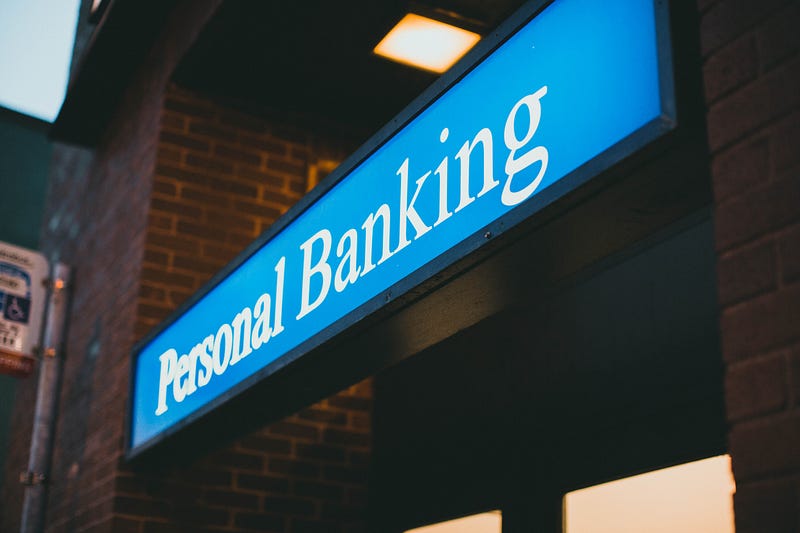
Photo by Jonathan Cooper on Unsplash


DID technology to prevent identity fraud

The utilization of DID technology marks a notable stride in preventing identity fraud. By storing user data on a secure distributed ledger, the system becomes highly resilient to counterfeiting or forgery attempts, ensuring a safer environment for customers’ personal information.


Single sign-on functionality

With this initiative, Welcome Savings Bank has become the first savings bank in the country to implement Bank ID, a solution predominantly adopted by prime commercial banks. This strategic move bolsters the bank’s digital competitiveness and improves customer convenience. With Bank ID, users can enjoy seamless access to their accounts across 18 Korean financial institutions without the hassle of logging in separately for each one, streamlining their banking experience.

Customers of Welcome Savings Bank can utilize the bank’s mobile app to acquire a Bank ID by undergoing a verification process through a one-time password or security card. For existing Bank ID holders, adding Welcome Savings Bank to their list of banks is a straightforward procedure.

The decision to embrace this innovative technology highlights the bank’s commitment to meeting the high standards set by prime commercial banks. By aligning with industry trends and bolstering their digital capabilities, savings banks like Welcome and other subprime banks can deliver improved convenience and a seamless banking journey to their valued customers.


More to Read
View All
Policy & Regulation·

Jul 06, 2023

India’s RBI Collaborates Internationally on Digital Rupee Payments

India’s RBI Collaborates Internationally on Digital Rupee PaymentsIndia’s Reserve Bank (RBI) is expanding its exploration of central bank digital currencies (CBDCs) by focusing on cross-border functionality, despite its cautious approach to CBDC development.The RBI aims to experiment with various use cases for CBDCs in international payments, as it believes this can enhance the efficiency of cross-border transactions. That’s according to a report which was recently published by local media source, the Economic Times. RBI Governor Shaktikanta Das emphasized the potential benefits of quicker, seamless, and cost-effective cross-border payments. The RBI is actively engaging in dialogue with other central banks that have already implemented or are planning to introduce CBDCs.Photo by rupixen.com on UnsplashUAE collaborationIn collaboration with the United Arab Emirates (UAE), the RBI is promoting joint studies on using CBDCs for settling international payments. The partnership is driven by the high volume of remittances between the two countries, a consequence of the large number of Indian migrants in the UAE.These recent developments follow the RBI’s retail and wholesale CBDC pilot programs, which began just seven months ago. Although the retail pilot attracted 50,000 users within 60 days, the RBI remains committed to a gradual and cautious approach to mitigate potential risks.Onboarding one million CBDC usersWhile expanding the pilot program to new cities, the RBI aims to onboard one million CBDC users within the coming weeks, despite the digital rupee currently having a very low circulation level. On the wholesale side, the RBI’s pilot has shown promising results, with the digital rupee being explored for government bond transactions, money market funds, and short-term lending.RBI Deputy Governor T. Rabi Sankar emphasized the importance of exploring multiple use cases for CBDCs, including account-based CBDCs. The RBI aims to offer as many applications for CBDCs as possible while ensuring the existing National Electronic Funds Transfer (NEFT) and other systems are not disrupted.Global surge in CBDC developmentThe surge in CBDC development worldwide can be attributed to various factors. The imposition of sanctions on Russia following its invasion of Ukraine led to a significant increase in wholesale CBDC initiatives as Russia sought alternatives to bypass the sanctions.Additionally, the diminishing use of cash and the rise of dollarization and cryptocurrency adoption in local economies have motivated over 120 central banks to initiate CBDC research. These central banks are attracted by the potential benefits of financial inclusion and the opportunity to address the decline in cash usage.India has been selective in terms of the aspects of digital asset technology it wants to see further developed within its borders. At a recent conference organized by the RBI, a central bank official called on Indian banks to adopt blockchain technology. When it comes to stablecoins, the central bank is apprehensive, warning of associated risks while calling for global regulation.As India’s RBI continues its CBDC exploration, the focus on cross-border functionality underscores the growing recognition of CBDCs as a transformative tool for international payments. The ongoing collaborations and pilots demonstrate India’s level of interest in staying at the forefront of CBDC development while taking measured steps to ensure a secure and efficient transition to digital currency.

news
Policy & Regulation·

Oct 18, 2023

Genesis Ordered to Comply with Subpoena in Terraform Labs Case

Genesis Ordered to Comply with Subpoena in Terraform Labs CaseGenesis, the troubled crypto lender and trading company, has been issued a compelling directive by a New York court. The court has mandated Genesis to comply with a subpoena within five days, following a failure to respond to previous requests by the October 9 deadline, relative to a case involving Singapore’s Terraform Labs.Photo by Michael Discenza on UnsplashTerraUSD collapse falloutThese requests are related to the 2022 collapse of the TerraUSD stablecoin, a cryptocurrency which was supposed to maintain a peg to the US dollar’s value until it lost that peg and collapsed. At the time, the demise of TerraUSD reverberated throughout the cryptocurrency markets.In response to this collapse, the US Securities and Exchange Commission (SEC) initiated a legal action against Terraform Labs, the company responsible for the token, and its co-founder Do Kwon, alleging that investors had been misled. Both Do Kwon and Terraform subsequently tried unsuccessfully to have the case dismissed.As part of the progression of this case, the SEC sought to question Do Kwon and gain access to company records held by the Singapore-headquartered firm. The defendants were ultimately unsuccessful in arguing their case in that instance on jurisdictional grounds.Failure to respondJudge Jed Rakoff, in a court order filed on Friday, highlighted Genesis’s non-compliance with the subpoenas, stating:“As of today, the Genesis Entities have failed to produce any documents in response to the Subpoenas.”These subpoenas were issued by the defendants to seek specific information from Genesis Global Capital, Genesis Global Holdco, and Genesis Global Trading on September 12.The court order does not specify the nature of the information sought. It is worth noting that Genesis extended substantial loans to the now-defunct hedge fund Three Arrows Capital (3AC), which was heavily exposed to the TerraUSD stablecoin. In January 2023, three Genesis entities filed for bankruptcy, and its trading arm ceased its US spot market operations in September.In addition to the challenge posed by Genesis’ non-compliance, Judge Rakoff is also wrestling with obtaining information from Do Kwon in connection with the legal proceedings. Kwon’s legal representatives have argued that he cannot physically come to the US as he is serving a jail sentence in Montenegro for possession of a counterfeit passport.However, Judge Rakoff has expressed his determination to ensure Kwon’s availability for cross-questioning and stated that Kwon will not be allowed to provide any declarations in the case without being subject to cross-examination.Citadel under scrutinyIn a related development, it emerged last week that Terraform Labs is accusing American market maker Citadel Securities of having sabotaged its TerraUSD stablecoin. As part of the Singaporean company’s pursuit of justice, it has called upon the United States District Court in the Southern District of Florida to force Citadel to furnish specific documents that relate to their trading activities during the period within which TerraUSD collapsed.Should it fail in that endeavor, Terraform has said that it will look to have the matter heard in Judge Rakoff’s court in New York.This legal development concerning Genesis marks a crucial juncture in the ongoing investigation into the TerraUSD stablecoin’s collapse and the actions of the entities involved, with Genesis now facing increased pressure to cooperate fully with the legal process.

news
Markets·

Jul 22, 2025

Bit Origin makes first purchase following DOGE treasury announcement

Bit Origin, the Nasdaq-listed (BTOG) pork processor turned crypto mining infrastructure firm, has acquired 40.5 million Dogecoin (DOGE), the company’s first purchase of the world’s largest memecoin by market cap since it announced that it was establishing a Dogecoin treasury. In a press release published on July 17, the Singapore-headquartered company with operations in the United States, Canada and China, set out that it would become the “first publicly listed company on a major US exchange to accumulate Dogecoin as a core asset.”Photo by Kanchanara on Unsplash$500 million treasury fundingThe firm outlined that it had entered into agreements with accredited investors, implicating the sale of $400 million in Class A ordinary shares in the company. An additional $100 million unlocked via convertible debt brought funding for its Dogecoin treasury to $500 million. Jinghai Jiang, Bit Origin’s CEO and Chairman, asserted that “what started as a joke has evolved into a globally liquid asset with a payments utility.” Jiang asserted that very few digital assets match the settlement speed and scale of community that Dogecoin offers. X Money potentialIn particular, he singled out the potential use of DOGE for X Money, a new payment system that is in the process of being established by Elon Musk’s X social media platform. Alongside many proponents of the cryptocurrency, Bit Origin is hoping that Musk will implement the use of DOGE to power X money. Jiang added:“In an age of broken institutions, Doge embodies a shared culture of optimism and resilience that transcends existing political and financial systems.” On social media, the company outlined that it believes in “Dogecoin not just as a meme, but as a future payments backbone.” Having utilized the services of Chardan Capital Markets as a placement agent, the company has already completed an initial closing of $15 million under the convertible debt facility that has been established.  On July 21, Bit Origin published another press release, detailing the acquisition of 40,543,745 DOGE with the memecoin holding having been purchased at an average acquisition cost of $0.2466 per DOGE.  Nearing inflection point for paymentsCommenting on the development, Jiang stated:“From our experience in mining, we understand the tradeoffs that define proof-of-work systems. We see Dogecoin’s utility potential for micropayments nearing an inflection point, driven by renewed developer activity and broader institutional interest in tokenization.” Dogecoin emerged in December 2013 having been developed by Jackson Palmer and Billy Markus as a joke. The project borrowed much of its code from Bitcoin. Despite having originated as a joke, the project has developed a sizeable community. The digital asset currently holds a market capitalization of $40.5 billion, according to CoinMarketCap data.  Bit Origin rebranded from China Xiangtai Food Co., Ltd. in April 2022. Up until that point, it had been involved in the pork processing business. The company pivoted to crypto mining, partnering with MineOne on a Wyoming mining facility in the United States. The facility was ordered to be shut down by the former Biden administration on the basis of it being a national security risk to have a Chinese project located within a mile of a U.S. Air Force base that houses nuclear intercontinental ballistic missiles.

news
Loading