Top

Circle CEO Sees Role for Yuan-Backed Stablecoins in Hong Kong

Web3 & Enterprise·July 12, 2023, 12:31 AM

Jeremy Allaire, the Co-Founder and CEO of Circle, the USDC stablecoin operator, expressed his acceptance of mainland China’s ban on cryptocurrencies. However, he remains optimistic about the development of Web3 technology in Hong Kong and the city’s monetary authority’s move towards regulating stablecoins.
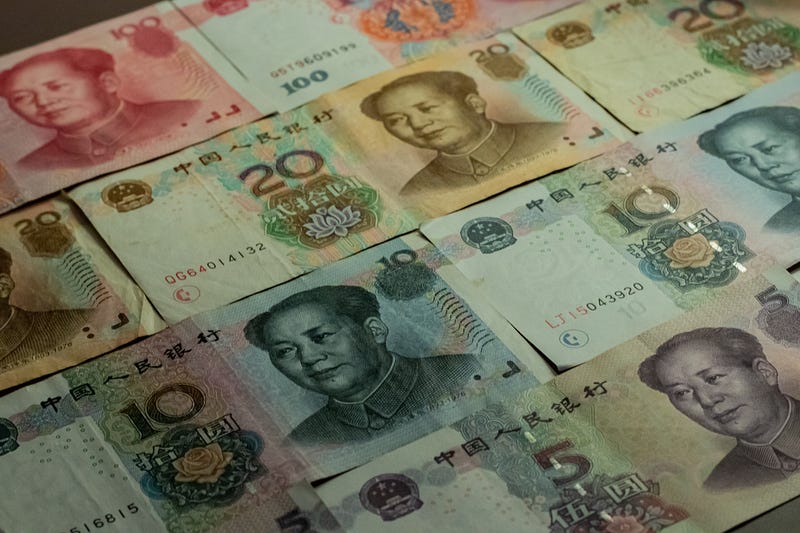
Photo by Mitchell Luo on Unsplash


Yuan internationalization

Allaire believes that Hong Kong must embrace digital assets to remain relevant in the global financial market. While he acknowledges that China is unlikely to open up its markets to cryptocurrencies, he sees potential for stablecoins to contribute to Beijing’s goal of yuan internationalization.

During an interview with the South China Morning Post (SCMP), Allaire highlighted that major financial markets worldwide are embracing digital assets and that the biggest financial institutions are adopting them. He mentioned that there is Chinese government support for stablecoins, but he clarified that it doesn’t imply opening up crypto trading on the mainland. Allaire emphasized that stablecoins could be a more immediate solution to the Chinese government’s aim of internationalizing the yuan compared to the central bank digital currency (CBDC) e-CNY.

Allaire cited the example of a stablecoin pegged to the offshore yuan (CNH) as a potential tool to facilitate the RMB’s use in global trade and commerce. He mentioned the existence of CNH Coin, a stablecoin team that also offers HKD Coin, pegged to the Hong Kong dollar.


Virtual asset hub

Hong Kong is positioning itself as a global virtual asset hub by focusing on the regulation of stablecoins. The Hong Kong Monetary Authority (HKMA) has committed to implementing stablecoin regulations by 2024, recognizing the potential impact of such assets on financial markets. Additionally, the Securities and Futures Commission (SFC) is working on complementary regulations for stablecoins following the recent implementation of licensing rules for sellers of other cryptocurrencies.

Circle’s USDC, the second-largest US dollar-backed stablecoin by market capitalization after Tether (USDT), is considered a “stored-value instrument” in the United States. Allaire expressed Circle’s encouragement regarding the HKMA’s plans and highlighted the positive motivation to expand their business in Hong Kong.

While central banks worldwide have expressed concerns about stablecoins’ impact on financial stability, the HKMA has proposed that the value of reserve assets should match the outstanding stablecoins at all times. The HKMA has also been researching the possibility of a digital Hong Kong dollar and is part of a cross-border trial for the e-CNY using a blockchain known as the mBridge.


CBDCs alongside stablecoins

Regarding the future role of stablecoins in a well-regulated environment alongside CBDCs, Allaire believes that CBDCs and private coins are complementary. He sees CBDCs as an upgrade to central banks’ systems and views the private sector’s work on innovation in distributed ledger technology as distinct and valuable.

Allaire noted that Circle conducts significant business activity in Asia, particularly in Hong Kong, which is its largest non-US market, employing around 125 individuals.

While mainland China maintains its ban on cryptocurrencies, Allaire remains optimistic about Hong Kong’s regulatory stance on stablecoins and believes they could contribute to the internationalization of the yuan. Allaire emphasized the importance of digital assets in the global financial market and expressed Circle’s support for Hong Kong’s initiatives.

More to Read
View All
Web3 & Enterprise·

Sep 07, 2023

Lotte Group’s Bellygom NFT Project Garners Global Fanbase of Over 300K

Lotte Group’s Bellygom NFT Project Garners Global Fanbase of Over 300KDaehong Communications and Lotte Homeshopping shared yesterday that their NFT project has now garnered a global fanbase exceeding 300,000 members. The two companies are subsidiaries of South Korean industrial conglomerate Lotte Group.Photo by Khinaii van Laren on UnsplashPartnership initiatives as global expansionTheir NFT initiative, operated by the group’s marketing arm Daehong, is based on Bellygom, the pink bear character representing Lotte Homeshopping. As part of its global strategy, the Bellygom NFT project has formed partnerships with various international projects and has been actively involved in communication efforts. Notably, Bellygom’s X (formerly Twitter) account, created earlier this year, has attracted 100,000 followers within a span of five months.At the end of last month, Daehong successfully completed the minting of Bellyland, the second NFT collection of the Bellygom project. The minting event was accompanied by Jelly Adventure, a universe where users can participate in a wide range of missions and games to earn “Bubble Gums.” Notably, Jelly Adventure is not only accessible to Bellyland NFT holders but also to those of other projects such as YogaPetz and Mocaverse.It’s worth highlighting that the minting event achieved the sale of over 5,000 NFTs, even during a period of reduced activity in the NFT market. Despite the declining minting prices and quantities, it managed to raise over 750,000 MATIC.Joining of new international usersAdditionally, the minting event attracted new international users to the Bellygom project, underlining its sustainability. The successful debut of Bellyland NFTs has significantly contributed to the project’s global expansion and presence.Furthermore, Daehong is pursuing a range of initiatives aimed at cultivating a fan-centric ecosystem with the ultimate objective of driving broader adoption of Web3 technologies. With the belief that the fanbase provides a strong foothold for the brand’s growth, the marketing firm plays a crucial role in facilitating the introduction of the Bellygom brand to the Web3 space. To this end, Daehong is constructing a universe with a story that embodies the brand’s identity while seamlessly integrating it with conventional marketing strategies.

news
Web3 & Enterprise·

Sep 14, 2023

Krafton and Naver Z Unveil a Metaverse Joint Venture ‘Overdare’

Krafton and Naver Z Unveil a Metaverse Joint Venture ‘Overdare’Krafton, the developer behind the popular shooter game PlayerUnknown’s Battlegrounds (PUBG), made an announcement on Thursday regarding its collaboration with augmented reality company Naver Z for a metaverse platform project. The official name of their joint venture has been revealed as “Overdare.” Furthermore, its forthcoming metaverse service, previously referred to as Migaloo, will also be rebranded under the name Overdare.Photo by Tima Miroshnichenko on PexelsInvestment breakdownThe total investment in the joint venture amounts to KRW 48 billion (approximately $36 million), with Krafton’s anticipated purchase price standing at KRW 40.8 billion and Naver Z’s expected purchase price at KRW 7.2 billion. Following the acquisition, Krafton will hold an 85% stake in the joint venture, while Naver Z will possess the remaining 15%.Meaning behind ‘Overdare’The company has chosen the English word Overdare to convey two meanings–“dare too much” and “over there,” which has a phonetic resemblance. Through this name, the joint venture aspires to establish itself as a pioneer in the realm of interactive user-generated content (UGC) platforms. Simultaneously, its service aims to provide a place where users can freely and fearlessly express themselves.As a mobile UGC platform, Overdare offers users the ability to craft games of diverse genres, including action RPGs, sports games, and shooting games. Leveraging the power of generative artificial intelligence and the advanced capabilities of Unreal Engine 5, a renowned video game engine, the platform facilitates the streamlined creation of top-notch content. Beyond game development, users can immerse themselves in a wide array of social activities, ranging from personalizing their avatars to engaging in lively conversations.C2E systemOverdare has adopted a create-to-earn (C2E) system within the metaverse, empowering creators to produce their own content, which users can then purchase and own. The trading of these creations is facilitated through non-fungible tokens (NFTs) and blockchain technology. Every transaction that takes place within the metaverse is recorded on the blockchain, and creators are duly compensated based on these transaction records. This system enhances the transparency of transactions and settlements.Compensation in USDCIn pursuit of this vision, Overdare has selected Settlus, a Cosmos-based blockchain developed by Krafton’s subsidiary of the same name, as its mainnet. Settlus has been dedicated to licensing creators’ intellectual property through NFTs on Web2 platforms. As part of this ecosystem, creators have the flexibility to receive compensation in USDC, the US dollar-pegged stablecoin issued by crypto company Circle.Overdare has its sights set on a soft launch of its service in December, followed by the official global release planned for the first half of next year.

news
Web3 & Enterprise·

Nov 30, 2023

IOTA accelerates Middle East expansion with $100M foundation launch

IOTA accelerates Middle East expansion with $100M foundation launchIn a move aimed at catalyzing the adoption of its distributed ledger technology (DLT) in the Middle East, the Berlin-headquartered IOTA Foundation, the developmental force behind the IOTA-directed acyclic graph-based ledger network, unveiled a $100 million foundation in Abu Dhabi on Wednesday.Photo by Imtiyaz Ali on UnsplashTokenizing real-world assetsThe IOTA Foundation announced details of the initiative, known as the IOTA Ecosystem DLT Foundation, via a blog post published on its website on Wednesday. The new foundation is designed to facilitate the transformation of tangible assets into digital entities, marking a significant stride in the convergence of real-world assets with the digital realm, according to IOTA Co-founder and Chairman Dominik Schiener.Taking to the X platform, Schiener wrote:”We will double down on our efforts to bring the real world to Web3. We will pave the way to tokenize RWA [Real World Assets] assets on #IOTA and work with the governments in the UAE, across the Middle East and Africa to digitize their trade infrastructure and tokenize assets. We will make Blockchain real, with real use cases, real adoption, real yield and real assets.”IOTA is not a blockchain, but a related distributed ledger technology. DLT has garnered attention for its diverse applications over the past decade. IOTA’s digital tokens will serve as the financial backbone for this substantial investment, signaling a strategic move amidst recent setbacks in the cryptocurrency sector.Regulatory first in Abu DhabiThe IOTA Ecosystem DLT Foundation stands out as the first blockchain-focused foundation sanctioned by the regulatory authorities of the Abu Dhabi Global Market (ADGM), a key financial hub within the United Arab Emirates (UAE). The ADGM solidified its blockchain regulations in early November, creating a conducive environment for innovative blockchain-focused entities. The regulatory framework was crafted to offer a comprehensive structure specifically for DLT foundations and decentralized autonomous organizations (DAOs).Schiener expanded further on plans for the DLT Foundation:”With a new headquarter in the UAE, we are positioning IOTA from being an Enterprise Blockchain in Europe, to becoming one of the largest, global Crypto ecosystems. We will fully support Web3 and DeFi use cases on IOTA with the #EVM launch in Q1.”Endowed with over $100 million in IOTA tokens, the foundation’s funds will be gradually vested over the next four years.The financial infusion is earmarked for the development and expansion of the IOTA network. Additionally, IOTA will embark on asset “tokenization,” a process involving the representation of ownership rights for land or buildings as digital tokens stored on a blockchain. These tokens, akin to digital certificates of ownership, extend to virtually any valuable object.IOTA launched in 2015, and within its first two years, it rose to be a top-ten crypto project on the basis of market capitalization. Over the course of the last six years, the project has struggled to make the network less centralized. There have also been internal conflicts, which resulted in a number of the project’s co-founders stepping away from the project. With this latest development, Schiener suggested that IOTA could work its way back to being a top-ten project once again.

news
Loading