Top

Nomura’s Laser Digital Expands Crypto Venture Capital Arm with New Partner

Web3 & Enterprise·July 12, 2023, 12:04 AM

Laser Digital, the cryptocurrency subsidiary of Nomura, one of Japan’s leading financial services companies, is strengthening its venture capital business with the appointment of industry veteran Florent Jouanneau as a new partner.

Despite a decline in funding levels across the industry, Laser Digital aims to expand its venture capital arm, according to a report published by The Block on Tuesday.

With Jouanneau joining the team, Laser’s venture team now consists of seven members, according to Olivier Dang, the company’s General Partner and Head of Ventures. Laser Digital, launched in the fall of last year, currently employs about 65 people and offers asset management and trading services alongside its venture capital activities.

Jouanneau’s previous experience includes positions at White Star Capital, a venture capital firm that invests in Web3 and DeFi startups. He also served as a structured credit and ABS trader at Bank of America, and held sales and trading roles at UBS and BPCE Group’s Natixis.
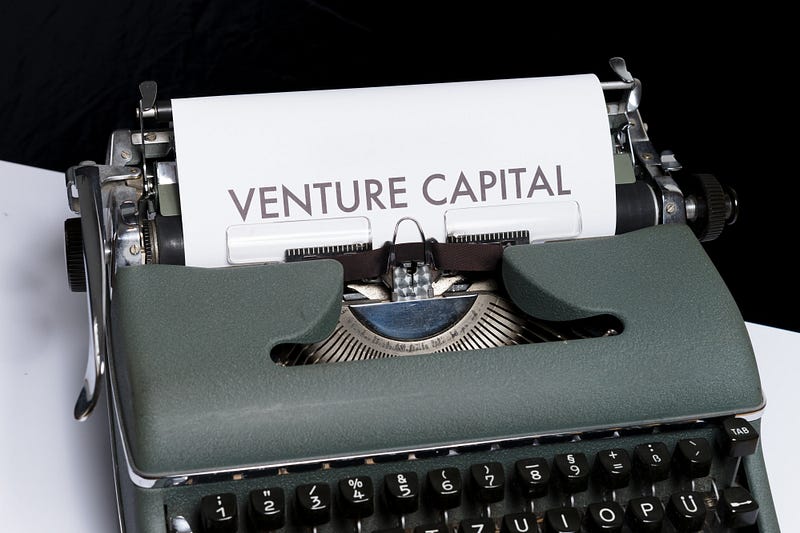
Photo by Markus Winkler on Unsplash


Crypto venture business expansion

The decision to expand the venture business comes at a time when VC investments in Web3 are declining. In the first quarter of this year, Web3 venture funding dropped by 80% compared to the same period last year, as reported by data from K33 Research. VC investment in Web3 totaled $2.8 billion in Q1 2023, a significant decrease from $13.5 billion in Q1 2022.

Jouanneau acknowledged the market slowdown in 2022 and highlighted the current opportunity for investment. He stated: “We are seeing a lot of valuations being dragged down by effectively the lack of capital to be deployed.” This sentiment aligns with the perspective of many crypto venture capitalists who view the current bear market as a favorable time to invest, given the risk-reward dynamics and the potential for institutional participation.


Crypto sector maturation

Dang expressed optimism about the maturation of the crypto industry, pointing to the increasing interest of traditional financial institutions, including BlackRock, in spot Bitcoin ETFs. Dang believes that as more institutions enter the space, the quality of deal flow and transactions in the venture capital sector will improve.

He also emphasized the importance of robust institutional-grade infrastructure to support these institutions, noting that Laser’s association with Nomura has helped instill trust among investors.

While Laser’s fund is currently backed exclusively by Nomura, Dang mentioned that they have started raising third-party capital. The fund has invested in early-stage startups focusing on areas such as DeFi, CeFi, Web3 tooling, and infrastructure. Among its portfolio companies are DeFi protocol Infinity Exchange and crypto trading firm CrossX.

Dang disclosed that the team aims to make an additional ten investments throughout the rest of this year, prioritizing projects with institutional use cases. However, they remain cautious about ventures primarily focused on gaming and NFTs due to their limited expertise in those areas.

As the industry continues to mature and attract institutional interest, it’s clear that Laser is attempting to position itself as a trusted player in the space, leveraging its expertise and partnerships to drive growth and generate value for its investors.


More to Read
View All
Web3 & Enterprise·

Nov 21, 2023

Finger Labs to leverage Web3 services for Dream Ladders’ college entrance briefing

Finger Labs to leverage Web3 services for Dream Ladders’ college entrance briefingFinger Labs, a subsidiary of digital marketing company FSN, announced on Tuesday (local time) that it is set to introduce its Web3 services, Xclusive and Favorlet, at an informational college admissions briefing hosted by Dream Ladders, a blockchain subsidiary of educational and career services provider Jinhak.Photo by Unseen Studio on UnsplashXclusive is Finger Labs’ Web3 content distribution hub that uses blockchain technology to connect content creators and consumers, facilitating the distribution of various content like movies and performances and the creation of profitable business models. Favorlet, on the other hand, is an NFT wallet that allows users to view, manage and store their NFTs safely in one place.Innovative ticketingThe upcoming briefing, organized by Dream Ladders’ EDUM project, is set to share insights regarding college entrance exams and applications. Attendees will be able to submit questions in advance and receive exclusive benefits. It is scheduled for Dec. 22 to 23, hosting 50 select individuals each day.Tickets for the event will be issued and sold as NFTs, which are available for purchase on Xclusive until Dec. 21. Attendees can purchase the tickets and store them in their Favorlet wallets, which will allow them to easily verify their tickets on-site at the briefing. This ticketing process will serve to show users the convenience that Web3 technology offers.“Contributing our Web3 services to this opportunity offers promising outlooks,” said Kim Dong-hoon, CEO of Finger Labs.Showcasing Web3 solutionsFinger Labs has previously tailored solutions for major corporations like SK Planet, Lotte Homeshopping and SK Networks. In particular, the company also introduced Xclusive and Favorlet at this year’s Blockchain Grand Week — a large-scale blockchain event hosted by the Ministry of Science and ICT and jointly organized by the National IT Industry Promotion Agency (NIPA), the Korea Internet and Security Agency (KISA) and the Institute of Information and Communications Technology Planning and Evaluation (IITP).

news
Web3 & Enterprise·

Sep 19, 2023

KOTEC and Busan Techno Park Join Hands to Boost Technological Growth of Busan Enterprises

KOTEC and Busan Techno Park Join Hands to Boost Technological Growth of Busan EnterprisesThe Korea Technology Finance Corporation (KOTEC) announced that it signed a cooperative agreement with Busan Techno Park on Monday at Busan Techno Park’s headquarters to support the growth of enterprises and offer financing for technological development. Under the agreement, KOTEC and Busan Techno Park have established a mutually beneficial system to jointly nurture and support tech companies based in Busan that are striving to commercialize data and blockchain technologies.Photo by Christopher Lee on UnsplashFostering tech innovation in BusanKOTEC is a non-profit government-affiliated institution aimed at financing innovative small and medium-sized enterprises (SMEs) for technology development. It offers services like credit guarantees, technology appraisal, equity investments, and technology transfers. Busan Techno Park is a regional industrial innovation institution for the southern port city of Busan, which operates a cooperative system among industrial, academic, and governmental agencies for the technological advancement of local companies.The two entities have committed to sharing information about companies that require financing for technological advancement — such as technological challenges that they may face — and promote joint projects related to technology investment and financing. They also aim to gather data resources for technology transfer, evaluation, and commercialization.KOTEC has marked Busan as a regulation-free special zone for companies that reside there. The demarcation of regulation-free special zones aims to foster the innovative and strategic development of a certain region. It is also operating a system under a regulatory sandbox preferential guarantee, which aims to facilitate accelerated market entry for businesses specializing in blockchain technology, maritime mobility, ammonia energy, and more.Empowering financing for technological advancementThe regulatory sandbox is a system run by the Korean government that exempts or suspends existing regulations for a designated amount of time for companies releasing new products and services and regulates them post-mortem if there is a problem. Under the sandbox policy, preferential guarantees refer to a technology guarantee fund that provides guarantees up to KRW 2 billion (approximately $1.5 million) for loans of facility funds to companies subjected to temporary approval and decreases the guarantee rate by up to 0.5%.In March, KOTEC was designated as a data appraisal agency by the Ministry of Science and ICT. Since then, the corporation has been implementing the data value plus guarantee — a product that determines the economic value of data and provides guarantees accordingly.“We will actively contribute to the government’s national tasks, including providing prioritized support for the cutting-edge future strategy industry. We will make even greater efforts to contribute to job creation and regional economic development,” said Kim Se-hyun, Head of KOTEC’s Busan-Gyeongnam Regional Office.

news
Web3 & Enterprise·

Dec 09, 2025

Abu Dhabi broadens crypto regime with new stablecoin approvals and Binance licensing

While global cryptocurrency sentiment remains subdued, authorities and state-linked investors in Abu Dhabi are deepening their engagement with digital assets through expanded regulation and increased capital allocation. On Dec. 8, stablecoin issuer Tether and cryptocurrency exchange Binance announced they had secured regulatory approvals from the Abu Dhabi Global Market (ADGM), the international financial center and free economic zone in the UAE capital. The moves signal a continued effort by the United Arab Emirates to integrate blockchain technology into its formal financial system, creating a contrast with the broader market’s current “extreme fear” rating of 22 on the Alternative Fear and Greed Index.Photo by DrawKit Illustrations on UnsplashTether, Ripple stablecoins approvedTether confirmed that its USDT stablecoin has been designated as an Accepted Fiat-Referenced Token within the ADGM. This status allows financial entities licensed by the Financial Services Regulatory Authority (FSRA) to conduct regulated activities involving USDT across a broader range of blockchain networks, including Aptos, Celo, Cosmos, Kaia, Near, Polkadot, Tezos, TON, and TRON. The approval builds on previous authorizations for USDT on Ethereum, Solana, and Avalanche, and follows the FSRA’s recognition of Ripple’s RLUSD stablecoin last month. Binance fully cleared for regulated launch Simultaneously, Binance announced it has secured full authorization from the FSRA to operate a regulated platform within the financial center. Pending final operational preparations, Binance is scheduled to commence regulated activities on Jan. 5, 2026. The exchange will operate in Abu Dhabi through a three-entity structure that separates key functions, mirroring traditional financial infrastructure. Nest Exchange Limited (currently Nest Services) will function as the regulated arm for spot and derivatives trading, while Nest Clearing and Custody Limited will manage clearing and settlement. Broker-dealer activities will be handled by a third entity, Nest Trading Limited (currently BCI Limited). Circle awarded FSP for paymentsMore recently, Circle, the issuer of the USDC stablecoin, announced the receipt of a Financial Services Permission (FSP) license from the FSRA. The license allows Circle to act as a Money Services Provider within Abu Dhabi’s International Financial Centre (IFC), enabling it to support regulated payment and settlement services for businesses, developers, and financial institutions across the UAE. Circle has been expanding its regulatory presence in the region throughout the year. In February, the Dubai International Financial Centre (DIFC) recognized the company’s USDC and EURC tokens as permitted crypto assets under its virtual asset framework. This regulatory expansion comes amid the UAE’s efforts to develop a comprehensive financial compliance framework. A recent report by the Global Finance & Technology Network identified the UAE as one of seven jurisdictions globally that meet three core standards for anti-money laundering and counter-terrorist financing compliance. Those standards include know-your-customer (KYC) and identity verification, suspicious transaction reporting, and implementation of the Financial Action Task Force (FATF) Travel Rule. Institutional capital inflows riseIn parallel with the regulatory push, investment vehicles linked to the Abu Dhabi government have increased their exposure to digital assets. Bloomberg reported that in the third quarter, the Abu Dhabi Investment Council, a Mubadala subsidiary, increased its position in BlackRock’s iShares Bitcoin Trust ETF more than threefold to nearly eight million shares. Separately, the Royal Group, an investment firm associated with the Abu Dhabi royal family, currently holds roughly 6,516 Bitcoin, according to Arkham data. An earlier Crypto Briefing report noted that this acquisition was carried out through its majority-owned subsidiary, Citadel Mining. These simultaneous developments in licensing and capital allocation suggest a coordinated strategy to establish Abu Dhabi as a hub for institutional digital assets, with a focus on long-term infrastructure despite current market fragility. 

news
Loading