Top

Research Finds Over 90% of Korean Cryptos Prone to Pump-and-Dump Schemes

Markets·July 10, 2023, 2:52 AM

The Korea Institute of Finance (KIF) has released a report revealing that 91.3% of South Korean-issued cryptocurrencies, known as “kimchi coins,” are prone to pump-and-dump (P&D) schemes. These schemes involve intentionally spreading false information on social media platforms to manipulate token prices. This is done with the intention of selling the tokens at artificially inflated prices.
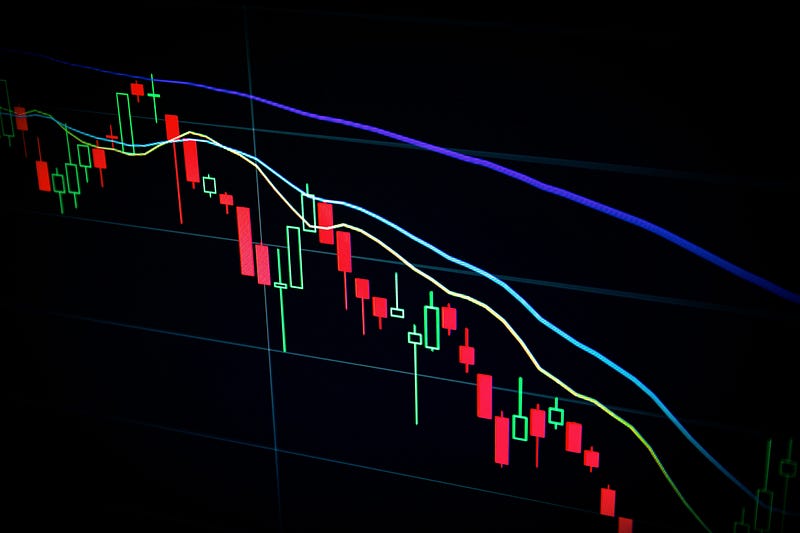
Photo by Maxim Hopman on Unsplash


P&D prevalence

These manipulative practices were frequently observed during the rapid growth of the cryptocurrency market from 2020 to 2022. Previous research papers indicate that P&D schemes commonly occur on multiple crypto exchanges and typically unfold within a time frame of 10 minutes. It has been observed that cryptocurrencies with lower liquidity and smaller market capitalization are particularly vulnerable to becoming prime targets for these schemes.


Korean market and global market

The Korean cryptocurrency market stands out with its significant number of cryptocurrencies listed on a single exchange, including kimchi coins. This distinction becomes evident when comparing it to the global market. In the Korean market, the top 10 global cryptocurrencies, ranked by their market capitalization, account for 59% of the total market share. Meanwhile, in the global market, they represent 84.9%. This contrast indicates that the Korean market has a larger proportion of alternative coins, also known as altcoins, which are more susceptible to pump-and-dump schemes and other manipulative activities.

According to a survey conducted by the Financial Services Commission in the second half of 2022, there were a total of 625 listed coins (excluding duplicate listings), with 389 (62.24%) of them being listed on a single exchange. Among these single-exchange listed cryptos, 223 were kimchi coins, which is equivalent to 57%.


OHLCV data analysis

In this KIF paper, research analyst Baik Yeon-ju delved into abnormal price patterns within the Korean cryptocurrency market. She analyzed the hourly Open-High-Low-Close-Volume (OHLCV) data of kimchi coins in October 2021. The study revealed that out of a total of 16,560 hourly price and volume observations, approximately 4.7% exhibited characteristics consistent with P&D schemes. Baik noted that 91.3% (21 of the 23) observed kimchi coins witnessed such movements.


Legislative efforts

Meanwhile, it is encouraging that the South Korean National Assembly passed the Virtual Asset User Protection Bill during its plenary session on June 30. This legislation, set to go effective in July next year, aims to provide protection for customers’ assets in the virtual asset space. The act not only establishes regulations to combat unfair trading practices but also enforces penalties for non-compliance.


Call for further measures

However, Baik suggested that policies should be further strengthened to enhance investor protection within the crypto market. In order to achieve this, she proposed the implementation of a monitoring system for virtual asset service operators (VASPs) and the allocation of inspection and investigation personnel, as well as technical resources. It is also necessary to address potential conflicts that may arise with the Act on Real Name Financial Transactions and Confidentiality, particularly if the data required from VASPs falls under the classification of financial transaction information and personal information.

Furthermore, considering the lack of transparency surrounding many altcoins regarding their projects and exchange listings, Baik suggests that the upcoming second virtual asset bill should tackle this issue by regulating the issuance and disclosure of these cryptocurrencies. Additionally, she highlighted the importance of conducting research based on empirical data to detect abnormal transactions. This approach enables the recognition of existing issues and the acquisition of concrete evidence, which serves as a credible basis for policymakers to enact relevant legislation.


More to Read
View All
Markets·

Mar 11, 2024

Korea’s daily crypto trading volume surpasses that of stocks at nearly $9B

With Bitcoin prices hitting an all-time high, the daily crypto trading volume in South Korea has surpassed that of the stock market, local media outlet The Financial News reported.  As of yesterday at noon (KST), the local daily trading volume of cryptocurrencies over the past 24 hours stood at over KRW 11.8 trillion, or nearly $9 billion, according to data from crypto platform CoinMarketCap. Meanwhile, the daily trading volume on the Korea Composite Stock Price Index, or KOSPI, was KRW 11.4 trillion on Friday.  The total daily crypto trading volume was tallied by adding trading volume across Korea’s five major crypto exchanges – Bithumb posted KRW 8.8 trillion, Upbit KRW 2.7 trillion, Coinone KRW 176.4 billion, Gopax KRW 55.2 billion and Korbit KRW 32 billion. Photo by Alexander Mils on UnsplashUnlike stock markets which have a closing time, crypto assets are traded 24/7, which makes it difficult to do an apple-to-apple comparison. Still, the numbers clearly demonstrate retail investors’ bullish sentiment toward the crypto market.  According to the U.S. crypto exchange Coinbase, the Bitcoin price touched $70,199 on Friday (UST), just three days after the flagship coin surpassed $69,000 on March 5, an already record-breaking price in 28 months since November 2021.  Inflation and recession drive retail investors to crypto Financial experts say that Korea’s persistently high inflation and slowing economic growth are driving local retail investors to seek relatively riskier yet high-yielding assets such as cryptocurrencies. Young investors in their 20s and 30s are particularly leaning towards investing in crypto, as they fear not being able to buy houses solely with their wages. Moreover, Koreans’ average monthly real wage declined by 1.1% year-on-year, which marks a continuous decline for two consecutive years since 2022.  Despite the country’s economic slowdown, the KOSPI has actually risen, fueled by capital influx from foreign investors who are expecting a valuation increase in local firms. In contrast, local retail investors are rushing out from the stock market as they see a lack of outperforming companies.  Data from the Korea Exchange (KRX), the sole securities exchange operator in the country, showed that foreign investors purchased KRW 4.4 trillion in stocks over the past month on the KOSPI market, while local retail investors sold KRW 3.3 trillion worth of stocks during the same period.  Local crypto boom prompts ‘Kimchi Premium’ effectThe recent bullish sentiment in the Korean crypto market can largely be attributed to local retail investors, because current laws prohibit foreign investors from trading crypto assets in the country and regulations limit enterprises from making direct investments in crypto.  While the KOSPI market grapples with the so-called Korea Discount effect, which refers to the undervaluation of the Korean stock market, the local crypto market is experiencing the exact opposite trend – crypto investors are benefitting from something called the Kimchi Premium effect, a newly coined term referring to the overvaluation of crypto assets in Korean crypto markets compared to those in their foreign counterparts. As of yesterday at 14:00 (KST), Bitcoin changed hands at KRW 917.4 million on foreign exchanges while at KRW 971.8 million on Korean exchanges, per data from local crypto exchange Upbit.  Cho Dong-keun, a professor at the Economics Department at Myongji University, described the current Korean economic situation as “a competition for the country’s limited wealth”. He said that the stagnant national growth has pushed people to fight for more wealth, urging them to invest in crypto assets, adding that Kimchi Premium could substantially appeal to many retail investors.   

news
Web3 & Enterprise·

Oct 23, 2024

Komainu acquires Singaporean digital asset custodian

Jersey-headquartered Komainu, a digital asset custodian backed by Japan’s Nomura Holdings, is in the process of acquiring Propine Holdings, a Singaporean competitor. Subject to approvalKomainu has signed an agreement in principle with Propine to acquire the company, according to a press release published on Oct. 22 by PR Newswire on behalf of the two firms. One of the key elements in completing the deal is attaining the approval of local regulator the Monetary Authority of Singapore (MAS). This is Komainu’s first acquisition, and according to the firm’s co-CEO Paul Frost-Smith, it will be the first of several. According to Bloomberg, Frost-Smith stated in an interview that “an absolutely key factor in building” the business is obtaining access to Propine’s Capital Market Services license, which the company was awarded in Singapore. Frost-Smith described the acquisition as "setting ourselves up for the future with a licensed platform that we can grow." The company intends to further its efforts in terms of compliance by applying for a Major Payment Institution (MPI) license in Singapore. Komainu is motivated in developing in this manner as it has identified increasing demand from established institutions in Singapore for advisory services.Photo by RDNE Stock project on PexelsStrategic hubThe Komainu co-CEO said that the Asia-Pacific (APAC) region was central to Komainu’s heritage. With that, he added that Singapore is “an important strategic hub for Komainu in Asia and Propine will enhance our capabilities in meeting the significant client demand we are experiencing, including for Komainu Connect, our collateral management service, which is already extensively utilised by our investor clients in Hong Kong, Singapore, Malaysia, Thailand and Australia.” Back in August, global crypto exchange platform Bitfinex signed a memorandum of understanding (MOU) with Komainu Connect, with a view towards enhancing trading security. In July Komainu was added by crypto infrastructure firm Fireblocks to its Global Custodian Partner Program. The Japanese market has been one that Komainu has been focusing on. Frost-Smith asserted that it will serve as a major hub for the company, given that it is home to its primary backer, Nomura.  In November 2023, the company partnered with Crypto Garage, a regulated Japanese crypto-asset financial services firm. The collaboration extended Komainu’s dealings with the firm, given that it had invested in Crypto Garage’s parent company, Digital Garage, previously. At the time, the companies claimed that the partnership would allow them both to leverage their collective expertise. Komainu has also been following a regulatory-compliant path in other markets. In the UK, where it’s stationed, it received permission from the Financial Conduct Authority (FCA) to operate as a crypto custodian in October 2023. In August of the same year, it was awarded an operating license by the Virtual Asset Regulatory Authority (VARA) in Dubai. Alongside Nomura, the company was also established with the backing of digital asset security firm Ledger and digital asset investment manager CoinShares. Earlier this year, Komainu was approved by Nasdaq to be a core custodian relative to its suite of crypto indices. 

news
Web3 & Enterprise·

May 06, 2024

Animoca Brands partners with Saakuru Labs to bolster Web3 gaming

Metaverse gaming company Animoca Brands has recently announced a strategic partnership with Saakuru Labs, aiming to drive the adoption and integration of blockchain technology within Saakuru Labs' ecosystem. The collaboration is expected to bolster the expansion of the Web3 gaming industry, particularly in Southeast Asia, where the partnership officially kicks off. The initiative involves the incorporation of Web3 games developed with the Saakuru Protocol into the Animoca Brands ecosystem. Gasless transactionsAnimoca Brands will play a crucial role by providing gaming titles to its partners, while Saakuru Labs will facilitate Animoca Brands' expansion efforts in Southeast Asia. Developers stand to benefit from access to accelerated development processes and gasless transactions. Gasless transactions are particularly significant in regions like Southeast Asia, known for lower-income demographics. The market has shown a keen interest in blockchain technology and Web3 games, indicating promising growth potential. With gasless transactions, developers can seamlessly integrate critical functionalities into their gaming titles, including infrastructure components.Photo by Bastian Riccardi on UnsplashTransition to Web3 gamingThe Saakuru Protocol, known for its consumer-centric L2 infrastructure, enables major integrations of Web3 components into traditional gaming segments. This ensures a smooth transition from traditional gaming to Web3 gaming, enhancing the overall gaming experience. Yat Siu, Executive Chairman of Animoca Brands, emphasized the pivotal role of gaming in the evolution of the Internet and open metaverse, highlighting Southeast Asia's potential to lead in Web3 technology adoption. Jack Vinijtrongjit, CEO of Saakuru Labs, underscored the platform's capability to offer seamless engagement with multiplayer gaming titles without latency or transaction fees. The partnership between Saakuru Labs and Animoca Brands aligns with Saakuru Labs' recent collaboration with cloud computing infrastructure platform Aethir, aimed at enhancing blockchain gaming through GPU infrastructure. Notable partners of Animoca Brands, including GameGPT, W3GG and GameFi.org, have already expressed their commitment to adopting the gasless protocol. Experts believe that gaming presents an ideal avenue to accelerate blockchain technology adoption and advance Web3 gaming principles. With gaming becoming a mainstream form of entertainment, seamless integration of technology is crucial for user acceptance. The outcome of the Animoca Brands and Saakuru Labs partnership is anticipated to manifest results in the coming quarter or by the end of the year. 

news
Loading