Top

KuCoin CEO: Privacy Not a Key Bitcoin Feature

Web3 & Enterprise·July 08, 2023, 12:05 AM

Johnny Lyu, the CEO of Seychelles-headquartered cryptocurrency exchange KuCoin, recently shared his perspective on the role of privacy in Bitcoin, maintaining that privacy isn’t the primary feature of the leading digital asset that many believe it to be.
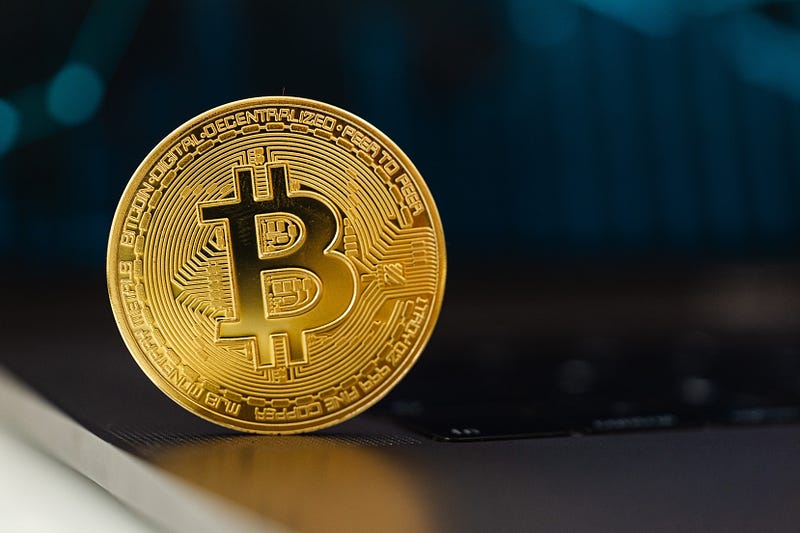
Photo by Karolina Grabowska on Pexels


Unit of exchange is core

In an interview with Cointelegraph earlier this week, Lyu expressed his belief that privacy is not the core feature of Bitcoin. He argued that the primary benefit of Bitcoin lies in its function as a unit of exchange, enabling users to hedge against recessions.

Lyu drew a connection between the creation of Bitcoin and the 2008 financial crisis, which was triggered by the subprime mortgage crisis in the United States. According to him, these events served as the catalyst for the birth of Bitcoin. However, he made it clear that privacy is just one of the features offered by the cryptocurrency.


KYC safeguarding customer funds

Addressing concerns about the increasingly stringent Know Your Customer (KYC) checks being implemented by KuCoin, Lyu emphasized the importance of these measures in safeguarding user funds. While some individuals argue that stringent KYC practices compromise privacy, the CEO believes that they enhance security. He explained that KYC procedures protect users’ assets by establishing ownership and enabling asset tracking in the event of theft.

As the cryptocurrency industry continues to expand and interact with the physical world, compliance becomes crucial. Lyu expressed his belief that KYC checks are an inevitable and healthy stage in the development cycle of cryptocurrencies. Compliance measures contribute to the industry’s long-term stability and promote user confidence.


New restrictions

KuCoin recently announced that starting from July 15, 2023, mandatory KYC checks will be implemented for all new users. This means that without completing the KYC process, new users will be unable to access KuCoin’s products and services. Existing users who have not undergone KYC will still be able to trade but will face restrictions on depositing new funds.

Lyu acknowledged that these new KYC restrictions may impact KuCoin’s trading volumes in the short term, as some customers may choose to leave. However, the exchange remains optimistic about the long-term benefits of compliance. The CEO expressed confidence that increased compliance will attract more secure funds and users to the industry, ultimately enhancing the overall security and integrity of the ecosystem.

KuCoin currently boasts 27 million users, reflecting a 35% increase compared to the previous year. Following the announcement of the KYC upgrades, the exchange experienced a notable uptick in trading volumes, with figures rising from around $540 million to over $660 million at the time of writing, according to CoinGecko data.

The introduction of mandatory KYC checks is seen as a necessary step to enhance user security and protect their assets. Although short-term effects on trading volumes are anticipated, the exchange remains optimistic about the long-term benefits of compliance measures for the entire industry.


More to Read
View All
Policy & Regulation·

Oct 29, 2025

EU bans Ruble-backed stablecoin A7A5 in latest round of Russia sanctions

The European Council has banned all transactions within the European Union (EU) involving the Russian Ruble-backed stablecoin A7A5, according to a press release published Oct. 23. The prohibition targets the stablecoin itself, its developer, its Kyrgyzstan-based issuer, and the operator of a platform that facilitates major A7A5 trades. The package also takes aim at Russian crypto exchanges.Photo by Christian Lue on UnsplashAdditional banking restrictionsThis measure is part of a broader set of economic sanctions against sectors the EU stated assist the Russian invasion of Ukraine, including energy, finance, and defense industries. As part of this financial clampdown, the EU will also impose a ban on five additional Russian lenders starting Nov. 12. One of those lenders, Alfa-Bank, recently began offering Bitcoin buying and selling services, according to an X post by journalist Pete Rizzo. The European body said the new crypto measures address Russia’s increasing use of digital assets to circumvent existing sanctions. Russian banks were cut off from the SWIFT international payment system in early 2022, following the onset of the Russo-Ukrainian war. Reports of Russia using cryptocurrency to finance malign activities have surfaced previously. Earlier this month, Sławomir Cenckiewicz, the head of the Polish National Security Bureau (BBN), told the Financial Times that Russia has employed crypto to finance attacks on EU countries. Cenckiewicz said that a network of agents recruited by Russia’s GRU military intelligence agency and uncovered in Poland in 2023 had been substantially funded with cryptocurrency. Reflecting this concern, lawmakers in Poland’s lower house approved a bill in September to strengthen national crypto oversight, a move also expected to help curb Russian funding channels. Cenckiewicz noted that Polish intelligence agencies are closely monitoring the legislation to prevent loopholes that allow foreign actors to support agents using digital assets. Russia’s evolving crypto policyThe EU’s action comes as Russia itself is attempting to refine its own cryptocurrency rules. According to the Moscow Times, Russia's central bank wants to limit cryptocurrency use strictly to cross-border payments within an experimental legal regime (ELR). The institution continues to reject recognition of cryptocurrency as a legal means of payment and has advocated banning its use for domestic payments and retail investment, while permitting trading only for high-net-worth individuals through licensed platforms. Russia’s finance ministry has expressed a more flexible view, pointing to the scale of crypto adoption among the public. Earlier this year, the central bank estimated that domestic crypto transactions exceeded 1 trillion rubles (about $12.4 billion) per month, and that as of March, wallets linked to Russian users held roughly 827 billion rubles (about $10.2 billion). The finance ministry and the central bank have agreed to tighten supervision of the crypto market, with officials expecting to finalize the new framework before the end of the year. 

news
Policy & Regulation·

May 17, 2023

Chinese Prosecutors Issue Warning on NFTs

Chinese Prosecutors Issue Warning on NFTsIn recent days, China’s top procuratorial agency, the Supreme People’s Procuratorate of China, issued a warning alongside some guidelines on non-fungible tokens (NFTs).The Supreme People’s Procuratorate is the highest office in China charged with the mandate of upholding legal integrity, safeguarding citizens’ rights, and where necessary, conducting criminal investigations. In a statement published on Monday, the agency set out an advisory, together with additional recommendations, pertaining to NFTs.Photo by Markus Winkler on PexelsNFT status in ChinaWhile all and sundry are aware of a multi-year crack-down by the Chinese authorities on crypto in recent times, exemplified by a ban on crypto trading and the operation of crypto mining facilities within the country’s borders, the status of NFTs has been discussed to a much lesser degree.NFTs remain legal within the country. When the crypto trading ban came into play in 2021, much of the local industry connected with that trading activity disappeared. However, in its place, a newly emergent trend came to the fore in the form of NFTs. With cryptocurrencies perceived as being high risk and sanctioned by the authorities, attention turned to NFTs and there has been a surge of adoption of the digital collectibles within China as a consequence.NFT risksThe procuratorial agency highlighted a number of attributes as well as risks in relation to NFTs in the report that it published. The agency finds the issue of ownership of NFTs as a troublesome one. It cites the fact that NFTs can be replicated and distributed at will on this basis as being particularly problematic. The legitimacy of the right source of the work itself is the decisive factor for the healthy and orderly development of digital works NFT transactions,” it states.It appears that the agency, like many in traditional professional circles before them, have a difficulty recognizing the model of asset ownership that NFTs incorporate. That ownership is not defined by civil law or in accordance with centralized systems but by simply the possession of the requisite private key pertaining to a given NFT within a decentralized system.Blockchain, not cryptoThe agency acknowledged that NFTs do present a novel application of blockchain technology. This is not surprising as while there might be an ongoing clampdown on decentralized cryptocurrencies in China, officials at a national level and in numerous instances within regional administrations, are demonstrating a strategy of leveraging blockchain technology for the betterment of the Chinese economy in the future.Public prosecutor Wang Xia-fen, one of the authors of the report, stated: “It’s widely recognized that digital collectibles have the potential to protect intellectual property rights, boost content creation and enrich the digital economy.” Wang encouraged public prosecutors to “find the distinction between real innovation and criminal activities” where NFTs are concerned.The upshot of its report though, is that the procuratorial agency is uncomfortable with the similarity of many of the attributes of NFTs when compared with decentralized cryptocurrencies. It issued a warning on that basis, emphasizing a need for risk assessment to be carried out and further consideration of the legal risks that are implicated.

news
Policy & Regulation·

Nov 12, 2024

Deutsche Bundesbank joins Singapore’s Project Guardian

The Deutsche Bundesbank, Germany’s central bank, has joined Project Guardian, a collaboration established in 2022 between the Monetary Authority of Singapore (MAS) and the financial sector, with an emphasis on the use of asset tokenization to improve liquidity and efficiency within financial markets.Photo by Rachel Davis on UnsplashAssessing DLT technologyIn a press release published on Nov. 8, Bundesbank Executive Board member Burkhard Balz suggested that the central bank is aligned with MAS in that both central banks are interested in determining “how innovative technologies and concepts, such as distributed ledger technology (DLT) or blockchain, can be put to meaningful use in the financial sector.” In joining Project Guardian, the Bundesbank will take part in the Asset & Wealth Management workstream, testing an interoperable blockchain platform for tokenized and digital funds. While the German central bank has just announced details of its participation in Project Guardian, in a speech given at the Layer One Summit, an event which formed part of the Singapore Fintech Festival last week, MAS Deputy Director Leong Sing Chiong welcomed the Bundesbank, alongside the World Bank, to Project Guardian.  The MAS executive clarified that the Deutsche Bundesbank and the World Bank would join the project’s Policymaker Group. He outlined that the role of that group is to “help provide inputs on governance arrangements, guidance on how GL1 [Global Layer One] infrastructures can be developed in line with global standards, and advice on appropriate regulatory guardrails for tokenised asset transactions.” GL1 refers to an initiative that has been established to create the foundational digital infrastructure to facilitate tokenized assets. Cross-border collaborationThrough its involvement in Project Guardian, the German central bank hopes to strengthen cross-border collaboration, while at the same time, progressing matters related to the “standardisation and interoperability of digital assets.” In working towards the goal of standardization, MAS has published two comprehensive reports covering fixed income tokenization and fund tokenization. MAS believes that the use of too many individual private DLT networks is resulting in fragmentation, with a detrimental effect with regard to liquidity. Consequently, the Singaporean central bank is establishing the Guardian Wholesale Network to improve liquidity and achieve asset tokenization at scale. The network will consist of Citi, Schroders, Standard Chartered, UOB and HSBC. Additionally, it was recently announced that SBI Digital Markets, a Singapore-based affiliate company of Japan’s SBI Digital Asset Holdings (SBI DAH), intends to contribute towards greater liquidity through its involvement in a fixed income asset tokenization pilot. Meanwhile, Citi and Fidelity have developed a proof of concept for a digital foreign exchange (FX) swap, enabled within an on-chain money market fund (MMF).  Tokenization inflection pointLeong went on to claim that while nobody has succeeded yet in implementing tokenization at scale, an inflection point has been reached with regard to the use of tokenization. He added that many use cases are promising relative to tokenization but that there is a need for supporting infrastructure “to enable good use cases to scale beyond individual networks.” In the press release, Leong said that the Bundesbank’s expertise “will be invaluable as we work together to enhance liquidity and efficiency of financial markets through asset tokenisation.”

news
Loading
