Top

Woo X launches tokenized T-Bills for retail investors

Web3 & Enterprise·April 23, 2024, 1:52 AM

Taipei-headquartered cryptocurrency exchange Woo X has announced the launch of tokenized United States Treasury Bills (T-Bills), marking a significant milestone for the crypto-sector retail investment landscape.


In a press release, the company outlined that it has partnered with London-based institutional tokenization platform OpenTrade in order to bring its Earn Vaults product backed by real-world assets (RWAs) to market. The product is being heralded as the first protocol offering tokenized T-Bills accessible to retail investors.
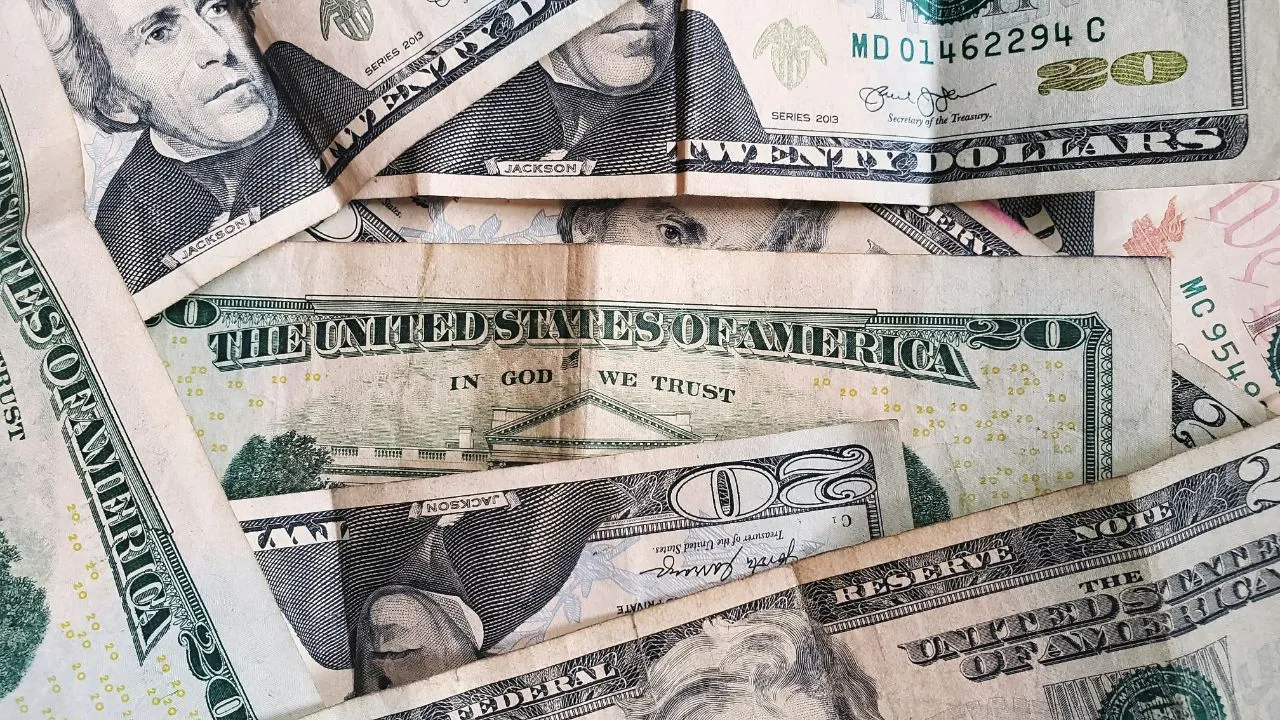
https://asset.coinness.com/en/news/89ba6a36d75336b86a5b9447bd61bcf0.webp
Photo by Jorge Salvador on Unsplash

Stable yield access

Willy Chuang, Chief Operating Officer of Woo X, expressed enthusiasm about the initiative, highlighting its potential to bridge the gap between conventional financial securities and the cryptocurrency market. He told CoinDesk in an email that “for the first time, retail users on a centralized exchange can instantly access an interest-bearing account backed by U.S. Treasury Bills.” With RWA Earn Vaults, Woo X users now have access to stable, predictable yields on their USDC holdings, backed by U.S. Treasury Bills, without encountering additional complexities.


These yield-bearing products offer attractive annual percentage rates (APR) ranging from 4.5% to 4.7% for USDC holders. Subscriptions accrue real yields, fully backed by U.S. Treasury Bills, with current annual percentage rates (APRs) for seven-day and 28-day terms standing at approximately 4.5% and 4.75%, respectively.


OpenTrade is a tokenization platform supported by Circle, the issuer of the world's second-largest stablecoin, USDC, lending further credibility to the partnership, with USDC boasting a market cap of $34 billion. OpenTrade had established links with Centre, the now-dissolved collaboration between Circle and Coinbase, and the Marco Polo enterprise blockchain project.


Interest in RWA tokenization

Recent institutional interest in the RWA tokenization sector is exemplified by BlackRock's launch of the USD Institutional Digital Liquidity Fund, valued at over $298 million. This development underscores the increasing recognition of digital assets as viable investment instruments by traditional financial giants.


Additionally, a recent report by CoinGecko highlighted the profitability of tokenized RWAs in the crypto space, positioning it as the second most lucrative narrative in the first quarter of 2024. Lim Yu Qian, an analyst at CoinGecko, noted the substantial profitability of the RWA narrative compared to other sectors, emphasizing its growing prominence.

Franklin Templeton's Franklin OnChain U.S. Government Money Fund (FOBXX) has emerged as a notable treasury tokenization fund, reflecting the sector's maturation and investor confidence. 


Woo X's product offerings extend beyond tokenized T-Bills, encompassing index-linked perpetuals covering crypto meme coins and layer-2 tokens in collaboration with market maker Wintermute. The exchange's native token, WOO, plays a pivotal role in governance and incentivization, offering users the opportunity to stake WOO and earn an average APR of 12.66%. The recent robust performance of WOO, experiencing a price surge of about 30% since its April 13 low, has served to boost the platform further.


Tokenization of U.S. T-Bills has witnessed significant growth, with over $1.15 billion worth of assets tokenized through various products by April 2022, highlighting the growing appeal of digital asset-based offerings in the financial sector. This latest product offering benefits retail market participants, giving them increased access to diverse and lucrative investment opportunities in the burgeoning digital asset space.

 

More to Read
View All
Policy & Regulation·

Nov 19, 2025

Hong Kong advances tokenization as institutions continue building amid market pullback

Hong Kong last week entered the pilot phase of Project Ensemble, an initiative focused on developing infrastructure for a tokenized market and creating a sandbox where institutions can test blockchain systems in real business environments. Set to run through 2026, the pilot involves the Hong Kong Monetary Authority (HKMA), several banks, and other industry participants. Its early work will examine how tokenized deposits can be used in money market fund transactions and how these tools might support real-time liquidity and treasury management. Interoperability key to tokenizationCommenting on the development, Hong Kong Securities and Futures Commission (SFC) CEO Julia Leung said, “To scale tokenisation of investment products, interoperability is key.” She added that the measure announced on Nov. 13 by the HKMA “will gradually allow interbank settlement of tokenised deposits in real time 24/7.”Photo by Ibrahim Rifath on UnsplashFollowing the HKMA’s announcement, Ant International, the global arm of Ant Group, revealed that it is joining Project Ensemble’s Architecture Community. As part of this digital finance effort, Ant International will help design and advance the tokenization ecosystem in the special administrative region, contribute to defining industry standards, and support broader industry adoption. Corporate initiatives in digital financeSeparately, Ant International also signed a memorandum of understanding with Swiss bank UBS to explore new opportunities in tokenized deposits, leveraging Ant’s blockchain platform Whale. Under this partnership, UBS Digital Cash, a blockchain-based payment solution developed by UBS, will be used to support Ant International’s global treasury operations. Young Jin Yee, Co-Head UBS Global Wealth Management Asia Pacific and Country Head UBS Singapore, said the collaboration with Ant aims to achieve “a real-time, multi-currency payment solution that sets standards for transparency and efficiency.” Hong Kong has been seeing a noticeable pickup in crypto-related activity more broadly. According to a post on X by Unfolded, AMINA, a Swiss-regulated institution, is now the first international banking group to roll out full crypto trading and custody services in Hong Kong. Adding to this momentum, companies are stepping up their Bitcoin accumulation. In its third-quarter results announcement, Boyaa International, a Hong Kong–listed firm specializing in online card and board games, reported a quarter-over-quarter increase of 738 Bitcoin. As of Sept. 30, its total holdings stood at 4,091 Bitcoin at an average cost of about $68,114 per coin. Adoption trends and market contractionThis push into the crypto sector aligns with broader digital asset adoption across Asia. A recent survey by CoinDesk and Protocol Theory of 4,020 individuals aged 18 to 64 in 10 Asian countries found potential crypto ownership of around 25% among respondents with internet access. The survey also noted that roughly half of adults familiar with crypto plan to use it within the next year or so. Despite the uptick in activity and interest, the market itself is currently in a downturn, with Bitcoin falling below the $90,000 mark on Nov. 18 for the first time since April 22. Analyzing the move, CoinDesk’s Omkar Godbole said Bitcoin looks oversold, as the 14-day relative strength index (RSI) has slipped under 30, indicating the drop may be steep enough to trigger a pause or a possible rebound. Godbole drew a parallel with price action earlier in the year, noting that February was the last time the RSI fell below 30, when Bitcoin was trading under $80,000. After that decline, the market bottomed out at around $75,000 in April, a pattern that traders may be watching closely as they assess the current pullback. At the time of publication, Bitcoin was trading around $90,400 against USDT on Binance. 

news
Web3 & Enterprise·

Jun 20, 2023

SK Geo Centric Launches Korea’s First Blockchain-Based Plastic Recycling Platform

SK Geo Centric Launches Korea’s First Blockchain-Based Plastic Recycling PlatformSK Geo Centric, a chemical affiliate of South Korea’s second largest conglomerate SK Group, has announced today the launch of the country’s first blockchain-based plastic recycling platform. This endeavor aims to ensure the safe and widespread use of recycled plastics by customers.Photo by mali maeder on PexelsAddressing environmental pollutionPlastic recycling has emerged as a promising solution to address environmental pollution. However, concerns have been raised about the source and safety of collected plastic waste. Recognizing the demand from customer manufacturers who utilize recycled plastic, SK Geo Centric developed the new platform to provide more comprehensive information than what is required by the International Sustainability and Carbon Certification (ISCC) PLUS, which the company previously obtained.The ISCC PLUS certification is a voluntary program designed for circular products, including chemicals and plastics, derived from using renewable energy sources. It is administered by ISCC, an independent multi-stakeholder initiative based in Germany. While adhering to the same certification standards as ISCC EU, ISCC PLUS allows for customization to meet the requirements of other markets.Blockchain techSK Geo Centric’s innovative platform utilizes blockchain technology to record and store every step of the plastic recycling process, ensuring transparency and traceability. Intermediate producers and end-users can access the complete history of recycled plastic by scanning the QR code on the product. Information such as the types, sources, and proportions of plastic waste used in a product, as well as the quality of materials, will be readily available.The history records will be stored in the form of non-fungible tokens (NFTs), providing proof of authenticity for the product. This information can be shared via email among the relevant parties. Manufacturers can now demonstrate to their customers the specific recycled materials used in their products.Market growth and efficient distributionSK Geo Centric believes that the systematic management of history records will enhance the credibility of the plastic recycling market, leading to its growth. Transparent records of high-quality and safe plastic waste will facilitate trading. Furthermore, real-time information on the recycled plastic market will enable efficient distribution within the industry.Recycling facilityIn addition to the platform, SK Geo Centric plans to establish the Advanced Recycle Cluster in Ulsan, a city in southern Korea, later this year. The presence of this plastic recycling facility is expected to expand the scale of the recycling market and attract more participants.Na Kyung-soo, CEO of SK Geo Centric, highlighted the importance of trust among market participants in fostering the development of the recycled plastic sector. The company is committed to improving its platform to earn the trust of its customers.

news
Policy & Regulation·

Jul 21, 2023

Korea’s FSC Embarks on Developing Regulatory Framework for VASPs

Korea’s FSC Embarks on Developing Regulatory Framework for VASPsThe South Korean Financial Services Commission (FSC) has taken a step towards the development of a virtual asset regulation system by seeking external parties to undertake a research project in this area, according to local news agency News1.Photo by Joshua Miranda on PexelsSecond phaseEarlier this month, the National Assembly passed the Virtual Asset User Protection Bill, aimed at protecting investors and preventing unfair trading practices. This legislative accomplishment, scheduled to go effective in July next year, is referred to as the “first phase” of virtual asset regulations. Building upon this foundation, the FSC has now shifted its focus to the “second phase,” which involves the regulation of virtual asset service providers (VASPs).Regulating VASP operationsOne primary concern regarding VASPs is the potential for conflicts of interest arising from their involvement in the issuance and distribution of virtual assets. In response, the FSC is determined to design a regulatory framework that covers a wide range of virtual assets, including stablecoins, security tokens, and utility tokens.In addition to this, the FSC intends to establish a system that governs advisory and disclosure businesses, which will play a crucial role in disseminating information about asset prices and disclosures.Moreover, the regulatory system will include guidelines for holding parties accountable in case of incidents and for overseeing the operations of VASPs to maintain a safe and fair market environment.The FSC acknowledges the significance of aligning policies with international standards. To achieve this, the commission will conduct an examination of virtual asset regulatory approaches taken by different countries and international organizations. Through this study, the FSC aims to integrate global best practices and approaches into Korea’s own regulatory framework for virtual assets.Once the study is complete, the FSC has to report the result to the National Policy Committee of the National Assembly by July 2024 before the Virtual Asset User Protection Bill goes into effect.

news
Loading