Top

Singapore’s Central Bank Paves the Way for Digital Asset Networks

Policy & Regulation·June 27, 2023, 11:33 PM

Singapore’s Monetary Authority (MAS) has taken a significant step towards the future of digital assets by proposing a comprehensive framework for the design of open and interoperable networks for tokenized digital assets.
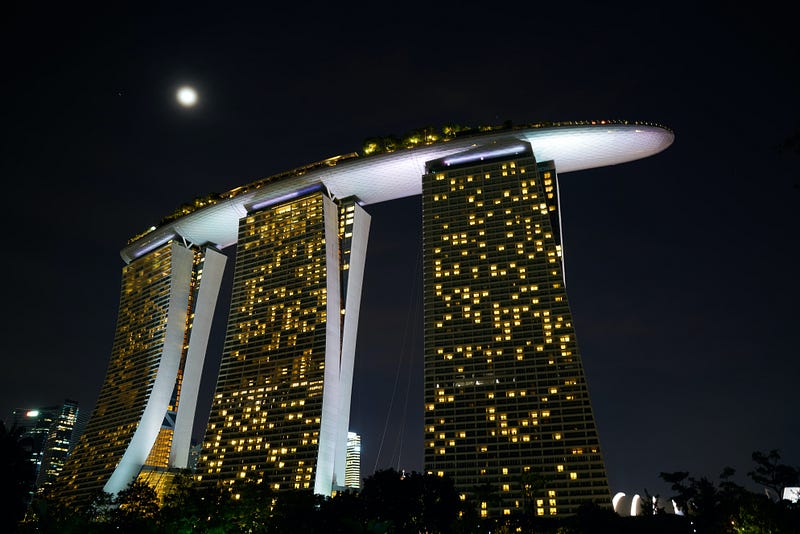
Photo by Pixabay on Pexels


Detailed framework

In a report published on Monday, titled “Enabling Open & Interoperable Networks,” MAS presented a detailed framework aimed at understanding the design options necessary to facilitate the seamless trading of digital assets across diverse networks and liquidity pools. The framework is rooted in the core principles of financial market infrastructure and draws inspiration from cutting-edge projects that have been at the forefront of advancing these concepts.

To ensure a robust and comprehensive approach, the report was jointly developed with subject matter experts from the Bank for International Settlements’ (BIS) Committee on Payments and Market Infrastructure (CPMI), with valuable contributions from prominent financial institutions including DBS Bank, JP Morgan, HSBC, SBI Digital Asset Holdings, Standard Chartered, and UOB.

MAS defines digital asset networks as platforms that leverage distributed ledger technology (DLT) or blockchain to enable secure and efficient transfers of digital assets without the need for traditional intermediaries. These networks serve as the foundation for open and interoperable infrastructure, facilitating the issuance, transfer, and custody of digital assets. By promoting transparency, efficiency, and trust, the report suggests that they will play a pivotal role in shaping the digital asset ecosystem.


Project Guardian

The report underscores the immense potential of digital asset networks in a future financial landscape, where digital assets and currencies can be seamlessly exchanged across different networks. MAS believes that these networks could revolutionize the way financial transactions occur, leading to increased efficiency and expanded possibilities. The framework also lays the groundwork for future exploration as part of the Project Guardian initiative, encompassing additional focused themes such as Trust Anchors and Institutional DeFi.

MAS has also announced the expansion of Project Guardian to include a broader range of financial asset classes. The project now features an industry group comprising 11 leading financial institutions that will spearhead industry pilots in asset and wealth management, fixed income, and foreign exchange. Esteemed banks such as HSBC, Standard Chartered, DBS, and Citi are set to conduct multiple trials focusing on tokenization. For instance, Standard Chartered, in collaboration with Linklogis, is developing an initial token offering platform to issue asset-backed security tokens listed on the Singapore Exchange.

Despite its cautious stance on cryptocurrency speculation, MAS recognizes the immense potential for value creation and efficiency gains within the digital asset ecosystem. Leong Sing Chiong, MAS’ Deputy Managing Director of Markets and Development, emphasized the authority’s optimism, stating: “We see significant potential for value creation and efficiency gains in the digital asset ecosystem.”

This latest initiative by MAS comes on the heels of its recent proposal for standards governing the use of digital money, including central bank digital currencies (CBDCs) and stablecoins. Singapore’s central bank is paving the way for the future of digital assets and making a strong effort to assert its position as a global leader in digital asset innovation through the establishment of this framework alongside industry collaboration.


More to Read
View All
Policy & Regulation·

Jun 08, 2023

Philippines Delays Crypto Framework Publication

Philippines Delays Crypto Framework PublicationThe Philippines’ financial regulator has decided to postpone the release of a legal framework for the crypto industry, originally scheduled for late 2022, despite a tumultuous year.That’s according to a report published by local news outlet, Philstar Global. In the face of numerous market failures in 2022, the Philippines’ financial regulator has opted for a cautious approach and delayed the publication of a legal framework for the crypto industry, which was initially expected to be released by the end of the same year. However, work on the guidelines is still ongoing, and there is a possibility that the results could be made public in 2023.Photo by Krisia on PexelsScrutinizing crypto failuresAccording to the chairman of the Philippines Securities and Exchange Commission (SEC), Emilio Aquino, the regulatory authority has adjusted its previous deadlines for introducing the crypto framework in the country. The SEC had originally planned to roll out the guidelines in 2022, but they held back in order to thoroughly study the reasons behind the collapse of the FTX exchange and ensure the protection of investors.Aquino stated that there is still a chance that the framework will be issued by the end of 2023, saying, “We haven’t closed the door. We really just have to make sure people don’t get burned.”Earlier this year, the SEC joined forces with the University of the Philippines Law Center (UPLC) to collaborate on the development of guidelines for digital assets. In January 2023, the regulator introduced the Implementing Rules and Regulations of Republic Act No. 11765 for public comment. This act, which was signed into law in 2022, however, does not explicitly mention “crypto” or “blockchain.”The crypto industry in the Philippines has been facing increasing pressure. The country’s central bank has been urging citizens to refrain from engaging in any transactions with unregistered or foreign crypto exchanges, and the SEC has echoed these recommendations.In May 2023, the SEC identified Gemini Derivatives as an unregistered security product under national law. In the investor advisory, the Commission wrote: “The public is advised not to invest or to stop investing in the investment scheme of Gemini Trust Company, LLC.”Last month the country hosted a meeting of the Regional Consultative Group for Asia of the Financial Stability Board. That meeting, held in the Philippines' oldest city, Cebu, highlighted the risks pertaining to crypto assets.Potential for positive approachNevertheless, the Philippines remains an attractive destination for crypto enthusiasts. With its rapidly growing economy, it has emerged as one of the world’s fastest-growing markets, with over 11.6 million Filipinos owning digital assets, placing it 10th worldwide in terms of crypto adoption.In an opinion piece published by Forkast News in April, Robert De Guzman, Head of Legal Compliance at Philippines-based cryptocurrency exchange Coins.ph, outlined his view that the country is forging a positive, workable framework for crypto assets. With that, it sounds like while the delay is unwelcome, the more important factor is that the South East Asian country devises a framework that is fit for purpose relative to the innovation at hand.

news
Web3 & Enterprise·

Jul 12, 2023

Circle CEO Sees Role for Yuan-Backed Stablecoins in Hong Kong

Circle CEO Sees Role for Yuan-Backed Stablecoins in Hong KongJeremy Allaire, the Co-Founder and CEO of Circle, the USDC stablecoin operator, expressed his acceptance of mainland China’s ban on cryptocurrencies. However, he remains optimistic about the development of Web3 technology in Hong Kong and the city’s monetary authority’s move towards regulating stablecoins.Photo by Mitchell Luo on UnsplashYuan internationalizationAllaire believes that Hong Kong must embrace digital assets to remain relevant in the global financial market. While he acknowledges that China is unlikely to open up its markets to cryptocurrencies, he sees potential for stablecoins to contribute to Beijing’s goal of yuan internationalization.During an interview with the South China Morning Post (SCMP), Allaire highlighted that major financial markets worldwide are embracing digital assets and that the biggest financial institutions are adopting them. He mentioned that there is Chinese government support for stablecoins, but he clarified that it doesn’t imply opening up crypto trading on the mainland. Allaire emphasized that stablecoins could be a more immediate solution to the Chinese government’s aim of internationalizing the yuan compared to the central bank digital currency (CBDC) e-CNY.Allaire cited the example of a stablecoin pegged to the offshore yuan (CNH) as a potential tool to facilitate the RMB’s use in global trade and commerce. He mentioned the existence of CNH Coin, a stablecoin team that also offers HKD Coin, pegged to the Hong Kong dollar.Virtual asset hubHong Kong is positioning itself as a global virtual asset hub by focusing on the regulation of stablecoins. The Hong Kong Monetary Authority (HKMA) has committed to implementing stablecoin regulations by 2024, recognizing the potential impact of such assets on financial markets. Additionally, the Securities and Futures Commission (SFC) is working on complementary regulations for stablecoins following the recent implementation of licensing rules for sellers of other cryptocurrencies.Circle’s USDC, the second-largest US dollar-backed stablecoin by market capitalization after Tether (USDT), is considered a “stored-value instrument” in the United States. Allaire expressed Circle’s encouragement regarding the HKMA’s plans and highlighted the positive motivation to expand their business in Hong Kong.While central banks worldwide have expressed concerns about stablecoins’ impact on financial stability, the HKMA has proposed that the value of reserve assets should match the outstanding stablecoins at all times. The HKMA has also been researching the possibility of a digital Hong Kong dollar and is part of a cross-border trial for the e-CNY using a blockchain known as the mBridge.CBDCs alongside stablecoinsRegarding the future role of stablecoins in a well-regulated environment alongside CBDCs, Allaire believes that CBDCs and private coins are complementary. He sees CBDCs as an upgrade to central banks’ systems and views the private sector’s work on innovation in distributed ledger technology as distinct and valuable.Allaire noted that Circle conducts significant business activity in Asia, particularly in Hong Kong, which is its largest non-US market, employing around 125 individuals.While mainland China maintains its ban on cryptocurrencies, Allaire remains optimistic about Hong Kong’s regulatory stance on stablecoins and believes they could contribute to the internationalization of the yuan. Allaire emphasized the importance of digital assets in the global financial market and expressed Circle’s support for Hong Kong’s initiatives.

news
Web3 & Enterprise·

Sep 29, 2023

Shanghai’s Blockchain Development Plan Paves the Way for Web3 Innovation

Shanghai’s Blockchain Development Plan Paves the Way for Web3 InnovationShanghai has set its sights on a global leadership role in blockchain technology by 2025. This commitment comes following the recent unveiling of an action plan by the Shanghai municipal government, designed to accelerate the city’s blockchain technical development.The plan, published on Wednesday, places emphasis on several critical aspects of the blockchain ecosystem, reaffirming Shanghai’s dedication to advancing Web3 technologies.Photo by Vin Jack on UnsplashTargeting key areas in blockchainUnder this comprehensive plan, Shanghai aims to achieve significant breakthroughs in multiple key areas within the blockchain realm. These include enhancing blockchain system security, advancing cryptographic algorithms, developing specialized blockchain processors, refining smart contract capabilities, achieving cross-chain interoperability, optimizing storage solutions, enhancing privacy computing, and establishing robust regulatory frameworks.These advancements will serve as pillars supporting the city’s digital transformation across various sectors, such as government affairs, cross-border trade, supply chain management, finance, the metaverse, and data element circulation.Human capital development stands as a central pillar of Shanghai’s blockchain strategy. To ensure a well-rounded and skilled workforce in the blockchain industry, the plan encourages research institutes and companies to leverage China’s foreign talent recognition standards to attract blockchain professionals.Furthermore, the city aims to guide educational institutions and businesses in nurturing young talents within the blockchain sector. Interdisciplinary and cross-industry platforms will be created to facilitate talent exchange and provide opportunities for growth and leadership.Zeroing in on ZK proofsOne notable objective within the plan is the advancement of zero-knowledge proofs, a cryptographic technique enabling parties to validate the authenticity of statements without disclosing specific information. Shanghai is committed to improving the efficiency and usability of zero-knowledge proof protocols, with a clear target of doubling efficiency by 2025.Major Chinese tech giants, including Alibaba and Tencent, have been actively developing their consortium blockchains while contributing significantly to the country’s leadership in blockchain innovation. Additionally, Beijing released a white paper in May with a strong emphasis on fostering growth and innovation in the Web3 industry. This positions the city as a global hub for digital economic advancements.Building upon 3-year action planShanghai’s determination to excel in blockchain development is not a recent occurrence. In June, the city unveiled a comprehensive document outlining its ambitious plans to enhance blockchain infrastructure by 2025. It also explored potential collaborations with international cities like Hong Kong and Singapore to test cross-chain applications. Despite China’s strict measures against cryptocurrency transactions in September 2021, the country remains optimistic about the potential of domestic blockchain technology.Shanghai’s ambitious blockchain development plan underscores China’s determination to lead in the blockchain space and reinforces its commitment to technological innovation and digital transformation. Leveraging its strengths in research, talent cultivation, and strategic partnerships, the city “on the sea” is positioning itself to make substantial contributions to the evolving landscape of Web3 technologies. By 2025, it aims to emerge as a global leader in blockchain innovation, setting a precedent for other cities worldwide.

news
Loading