Top

Korean Blockchain Fund Supports Web3 Game Developer Growth in Southeast Asia

Web3 & Enterprise·June 19, 2023, 1:01 AM

Hashed, a Seoul-based blockchain venture fund, has spearheaded a seven-figure investment round for Decentralised Gaming Ventures (DGV), a Web3 game development support entity primarily serving Southeast Asia (SEA), according to a press release. This funding will help DGV in its mission to foster the growth of promising game developers in the region.

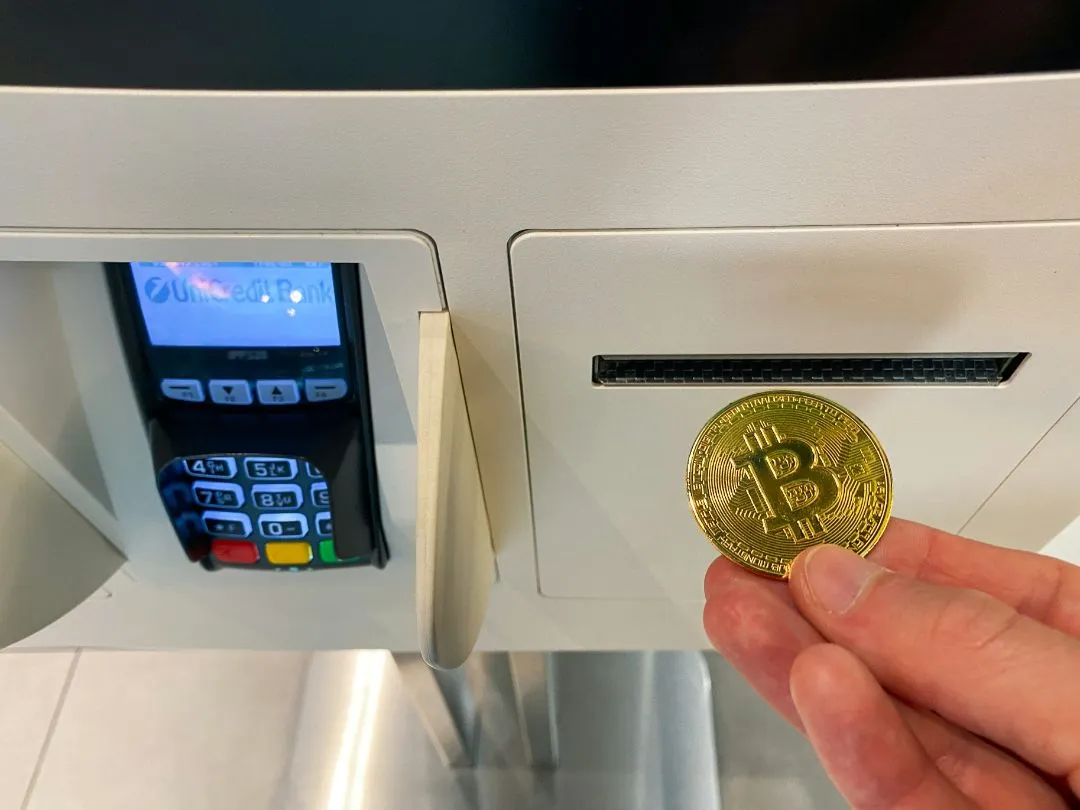
Photo by Timo Volz on Pexels


SEA as a Web3 Game Hub

DGV has set its sights on making SEA a hub to nurture game developers and bolster the Web3 game sector. The company has already established a studio in Singapore, where 32 talented game developers work in eight different teams, providing them with the necessary resources to design and introduce new gaming titles. Over the past year, DGV has supported the release of 15 games.


Studio in Singapore

DGV further plans to help game developers in the region through alliances with renowned entertainment intellectual property (IP) owners. In the past, the company has teamed up with Singapore-based designer toys and art collectibles studio Mighty Jaxx, and recently appointed gaming veteran Derrick Sim as its Chief Operating Officer. Sim has expertise in collaborating with major entertainment IPs, including Marvel, StarCraft II, and FIFA Online 2.

DGV CEO Samson Oh articulated the firm’s aspiration to forge an environment that empowers developers in SEA to create blockchain-powered Web3 games, anticipated to be the gaming industry’s future. With the support from Hashed, DGV looks to reinforce the region’s reputation as a fertile ground for innovative game developers.

Hashed’s Co-Founder Ryan Kim commended DGV’s effective leadership, SEA governmental backing, and firm groundwork for expansion in the Web3 gaming industry. The investment in the firm signals the Korean fund’s belief in DGV’s seasoned team and its mission to leverage IP accessibility to advance its digital ownership initiative in the gaming realm.

More to Read
View All
Policy & Regulation·

May 29, 2025

Thailand plans to enable tourists to spend crypto

The Thai government is planning to enable tourists to spend crypto via credit card, according to information revealed by Thailand’s finance minister on May 26.Photo by rc.xyz NFT gallery on UnsplashPichai Chunhavajira, the Southeast Asian nation’s finance minister and deputy prime minister, delivered a keynote speech at an investment seminar in Bangkok in which he outlined that while some countries enable people to purchase goods directly with cryptocurrency, another option is to allow consumers to link their digital assets with other services such as credit cards.  In that way, the consumer can spend crypto through credit card services. English language news outlet The Nation reported that Chunhavajira confirmed that the government is preparing to launch a pilot project that would allow tourists to spend crypto in this manner within Thailand. Seamless conversion from crypto to fiatWith this system, merchants would still receive payment in Thai baht. From the point of view of the user, crypto could be spent but any exchange between crypto and fiat currency would happen seamlessly and automatically via the credit card service provider’s platform.Discussions between officials from the Bank of Thailand and the Ministry of Finance are ongoing with regard to the proposed scheme. It’s understood that similar existing models which have been introduced overseas are being examined. It’s likely that the pilot program is the same as the project that was announced by Chunhavajira in January when he alluded to a program enabled for foreign tourists visiting the Thai tourist resort of Phuket. At that time, it was envisaged that the scheme would adhere to existing legal frameworks and implicate identity verification through a third party service provider, with conversion from crypto to Thai baht to be enabled such that there would be no material difference experienced by merchants. Targeting touristsThis is not the first occasion in which tourists have been targeted by crypto-related initiatives. Earlier this month, it was announced that Binance Pay, a crypto payment service offered by global crypto exchange Binance, had partnered with the government of the Buddhist kingdom of Bhutan to launch the world’s first national-level crypto tourism payment system. In July 2024, the governor of Jeju Province in South Korea advocated for the use of non-fungible tokens (NFTs) and crypto as part of Jeju Island’s tourism strategy. Last December the province announced a digital transformation roadmap that sets out a cashless future. Plans include the introduction of a system for converting digital assets and facilitating payment methods from neighboring countries like China and Japan. However, not all governments have been keen to facilitate tourists in spending crypto. In May 2023, the governor of the province of Bali in Indonesia cautioned foreign visitors to the region against the use of cryptocurrencies as a means of payment for goods and services. Governor Wayan Koster warned that visitors using cryptocurrency for payments could face severe consequences, including criminal penalties and deportation.

news
Web3 & Enterprise·

Mar 19, 2025

amana makes 300 additional cryptocurrencies available to app users

amana, a Dubai-based neo-broker, has announced that it is adding another 300 cryptocurrencies to its app. 450 crypto assetsA neo-broker is an online-based digital investment service provider that leverages technology and online tools to make investing and trading more accessible to the broader investing and trading public. The firm announced the product expansion via a press release published on its behalf by GlobeNewswire on March 17. Prior to the announcement, amana had offered its service users access to 150 cryptocurrencies. Expanding the range to a total of 450 cryptocurrencies makes it the leading broker in the Middle East and North Africa (MENA) region in terms of the breadth of digital assets it has made accessible to users.Photo by Christoph Schulz on UnsplashAll-in-one service offeringThe company described the offering as “unmatched,” allowing amana to firmly position itself as the go-to platform where the seamless trading of both traditional and digital assets is concerned. amana believes that its offering fills a gap in the market. Most platforms, it claims, either cater to the digital assets market or the traditional finance market. The platform sees itself as an all-in-one solution, making it unnecessary for investors and traders to create multiple accounts. Speaking to that gap in the market that the company wants to exploit, amana CEO Muhammad Rasoul stated: “We’re making it easier than ever for our customers to trade digital assets alongside stocks, forex, and commodities—all in one place, with zero hassle.” The firm added that the expansion isn’t just about offering a greater selection of digital assets. The announcement said that “it’s about seamless access, competitive pricing, and a frictionless trading experience.” The company described the amana app as “intuitive,” with the ability to empower both seasoned traders and new investors through the ease of trading within a few taps. Alongside the 450 digital assets, the platform provides users with access to U.S. stocks, FX, commodities, gold and global exchange-traded funds (ETFs). amana also facilitates users to trade using leverage and to avail of automated investment plans. Futures products and contracts for difference (CFDs) complete the product offering lineup. Having first launched in September 2022, the platform claimed recently that it has over 320,000 users accessing the service. Besides Dubai, amana has offices in London, Limassol and Beirut. The company is not the first online broker to bridge the gap between traditional finance and digital assets. American commission-free trading platform Robinhood has made in-roads into crypto. The company has plans to roll out its crypto offerings to the Singapore market later this year.  UK-based neobank Revolut has expanded into the world of investing, including crypto as part of that offering. It emerged last year that the firm has plans to launch a stablecoin. flatexDEGIRO, a European online broker that offers stocks, bonds and exchange-traded funds (ETFs), outlined last November that it plans to extend its product offering to include cryptocurrencies.

news
Policy & Regulation·

Jun 02, 2025

Thailand’s SEC moves to block five exchanges to protect investors

Thailand’s Securities and Exchange Commission (SEC), an independent state agency responsible for the supervision of capital markets including the digital assets sector within the Southeast Asian nation, has moved to block five cryptocurrency exchange platforms. In a statement published by the agency to its website on Thursday, May 29, the SEC outlined that it deems the five exchanges, namely OKX, Bybit, CoinEx, XT.com and 1000X.Live, to be unauthorized crypto trading platforms.Photo by REY MELVIN CARAAN on UnsplashCountering money laundering activityIt is acting against these platforms “to protect investors” and to prevent their use for money laundering purposes. In offering services to Thai users on an unauthorized basis, the exchanges were found to be in breach of Thailand’s Digital Asset Business Act B.E. 2561 (2018). The agency has asked the Ministry of Digital Economy and Society (MDES) to take measures to block local access to these online platforms. That block will be put in place on June 28. On that basis, the SEC has advised Thai users of such platforms to proceed to remove their assets from them before that June 28 deadline.  An updated version of the Royal Decree on Measures to Prevent and Suppress Technology-related Crime, (No. 2) B.E. 2568 (2025), was introduced by the Thai government in April. It facilitated the establishment of the Committee for the Prevention and Suppression of Technological Crime.  Following practices overseasThe committee met with the MDES in April, with the parties setting out the process through which unauthorized digital asset platforms would be restricted and blocked. On that occasion, similar practices carried out in other jurisdictions within the Asian region were referred to.  In December 2023 India’s Financial Intelligence Unit (FIU) moved to block nine offshore crypto exchanges, having issued them with compliance show-cause notices.  In April 2024 the Philippines SEC requested that Google and Apple remove apps associated with global exchange Binance from the local versions of their application stores. Japan’s Financial Services Agency (FSA) similarly ordered both companies to remove apps belonging to unregistered crypto exchanges in February of this year. Back in March, the Thai SEC filed a lawsuit against Aux Cayes FinTech Co. Ltd., an OKX affiliate company. The complaint alleged that OKX had been running an unlicensed exchange in Thailand, and was filed with the Economic Crime Suppression Division of the Thai police force. The SEC outlined on March 21 that a similar criminal complaint had been filed against XT.com. It’s understood that Bybit, CoinEx and 1000X.Live have also been recipients of complaints on the same basis. Earlier this year, the Economic Crime Suppression Division considered taking action against Polymarket, a crypto-based prediction market, on the basis that the platform violated Thailand’s gambling laws, and in doing so, posing a risk to economic and social stability in Thailand. In April 2024, the SEC issued a warning to crypto exchange platforms against the use of misleading advertising, drawing their attention to the fact that advertising of that nature would potentially place those platforms in breach of regulatory guidelines. 

news
Loading