Top

OKX Follows Path Towards Dubai Licensing

Policy & Regulation·June 15, 2023, 11:32 PM

Seychelles-headquartered OKX, one of the world’s largest cryptocurrency exchanges, has expressed its intention to seek regulatory approval for operating in Dubai as part of its expansion strategy in the Middle East.

With that objective, the company has obtained a Minimum Viable Product (MVP) preparatory license, an interim step on its path towards full licensing. That’s according to a press release published on Thursday.

Tim Byun, OKX’s Global Head of Government Relations, emphasized the growing trend of regulation within the industry. In an interview with Reuters, Byun stated: “We would like to get ahead of that curve and be regulated in a sound manner.” The move comes in the wake of recent legal action taken by the Securities and Exchange Commission (SEC) in the United States against Binance and Coinbase, two of the largest crypto exchanges, for alleged breaches of SEC rules.
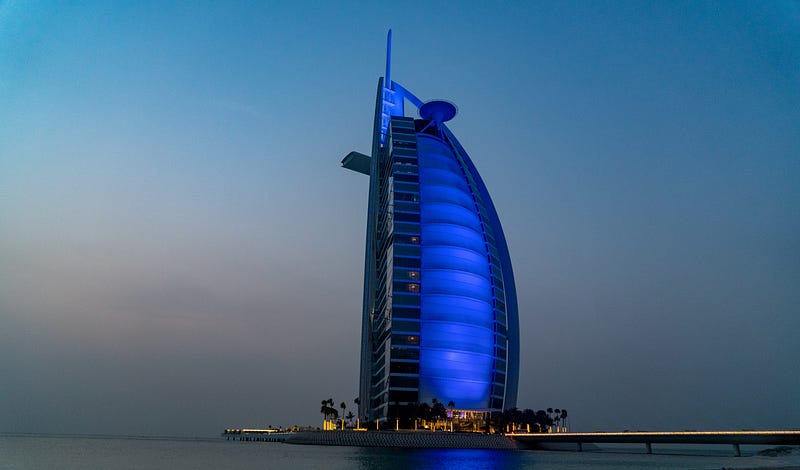
Photo by Marcus Herzberg on Pexels


Switching to Dubai

Byun believes that the SEC’s actions will compel more market participants to seek out innovative regulators such as Dubai’s Virtual Asset Regulatory Authority (VARA).

To support its expansion plans, OKX intends to hire 30 staff members following the opening of an office last month in the Dubai World Trade Center, strategically located in the business and financial hub of the United Arab Emirates.

Byun further explained that by expanding its services from Dubai to jurisdictions like Saudi Arabia or Bahrain, where no domestic regulatory framework is in place, the local populations would benefit significantly from OKX’s regulation under an international regulator.


Following Bahamian regulation

Currently regulated in the Bahamas, OKX does not allow customers from the United States to utilize its platform due to regulatory concerns. Following the collapse of FTX in November of last year, the Bahamas has suffered reputationally.

It’s seen as a jurisdiction with much looser regulation and as the FTX debacle demonstrated, one that proved to be totally ineffective in preventing the epic fraud that occurred in that instance.


Effective regulatory framework

In contrast, Dubai and the United Arab Emirates (UAE) in general seem to be making a much better effort towards a workable yet effective regulatory framework. Established in March 2022, VARA serves as the regulatory authority overseeing the burgeoning virtual asset sector in Dubai, excluding the Dubai International Financial Centre financial free zone. The United Arab Emirates has been actively working towards positioning itself to become a global crypto industry hub.

No company has yet obtained a license for VARA’s full market product (FMP) stage, which would grant permission to serve retail clients. Byun revealed that OKX intends to apply for such a license.

Byun concluded by expressing OKX’s willingness to be regulated and licensed in jurisdictions that adopt a balanced, clear, and transparent approach to the industry. The exchange is committed to operating within frameworks that prioritize investor protection and promote market integrity.

More to Read
View All
Policy & Regulation·

Jul 21, 2023

Fraud Defense Sees Terraform Labs Pursue Access to FTX Wallets

Fraud Defense Sees Terraform Labs Pursue Access to FTX WalletsTerraform Labs, the Singapore-based cryptocurrency firm at the center of a lawsuit filed by the United States Securities and Exchange Commission (SEC) in February, is taking steps to bolster its defense against fraud charges.Photo by Anete Lusina on PexelsSubpoena for debtors’ recordsAccording to a motion filed with the FTX bankruptcy court in Delaware on Wednesday, the company is seeking permission from a judge to subpoena data from the bankrupt crypto exchange. The filing shows that Terraform’s legal team is requesting access to information about digital wallets utilized by short sellers between March and May 2022.The company believes that its algorithmic stablecoin’s collapse was not a result of natural market forces but rather a coordinated attack by short sellers, potentially involving Alameda Research, FTX’s sister company.The motion states: “To establish these defenses, TFL needs Debtors’ records about wallets, accounts, and assets used to transact on the FTX International and US exchanges and sales/offers of large volumes of cryptocurrencies developed by TFL, if any, by FTX Trading and West Realm Shires Services Inc. d/b/a FTX US.”Alleged securities fraudThe SEC’s lawsuit, filed on February 16, accuses Terraform Labs and its founder, Do Kwon, of orchestrating a multi-billion dollar crypto asset securities fraud. The regulator alleges that Terraform offered unregistered securities through its algorithmic stablecoin, TerraUSD (UST), and the Terra Luna (LUNA) token. The failure of Terraform in 2022 led to a staggering loss of over $40 billion in the crypto markets.The motion also targets Jump Trading, another entity accused by the SEC of colluding with Terraform to manipulate the price of the UST stablecoin. Jump Trading is facing a separate lawsuit in Illinois in the US, accused of purchasing millions of UST tokens in 2021 as part of an agreement with Terraform to maintain the stablecoin’s peg to $1.“Defendants misrepresented UST’s recovery by claiming that the algorithm was able to restore and maintain the price peg. According to the SEC, UST instead recovered its price peg because Defendants entered an arrangement with a U.S. trading firm, Jump Trading, […] to purchase substantial amounts of UST to support the price,” reads the court filing.Jurisdictional argumentsAside from its pursuit of FTX’s data, Terraform is also seeking to dismiss a class-action lawsuit in California, having already sought to have the SEC lawsuit dismissed. The company argues that since it is based in Singapore, US securities laws referenced in the lawsuit are not applicable to its foreign-developed protocols.Using a similar jurisdictional argument, Do Kwon also tried to conceal documents held in Singapore by the Singaporean company from the SEC, but he failed in that endeavor.Another significant development at Terraform has seen a new CEO appointed to lead the troubled company. According to a report in the Wall Street Journal on Wednesday, Chris Amani, who has been acting as Terraform’s Chief Operating Officer and Chief Financial Officer up until now, has been appointed as CEO.

news
Web3 & Enterprise·

Jan 23, 2024

Coinone receives over 600 applications for development staff recruitment

South Korean cryptocurrency exchange Coinone disclosed that it has received more than 600 applications in two weeks following the start of its mass recruitment for development staff for 2024, according to local news outlet Law Issue on Tuesday (KST).Photo by Clem Onojeghuo on UnsplashOffering hope in a job market downturn"We believe this large influx of applications is due to our recruitment’s role in revitalizing the job market of both domestic and foreign virtual asset industries, which has been inactive lately," the exchange explained. Coinone opened applications on Jan. 8, recruiting employees for a total of eight fields related to development. As of Monday, more than 600 people have applied. The exchange’s website received over 3,000 visitors on the first day of recruitment. The final number of applicants is expected to increase as the application deadline is January 26th. More applications are expected to flood in until the deadline on Jan. 26. Job category preferencesAccording to the applications by job category, applicants were most interested in front-end positions (57.1%), followed by back-end (24.4%) and data (18.4%) positions. More specifically, positions in front-end development (29.8%), data analytics (21.3%) and Android development (15.8%) had the highest application rates. The popularity of these categories can be attributed to a combination of Coinone's corporate identity rooted in its solid technology and a positive outlook for this year’s cryptocurrency market. Throughout last year, the exchange also implemented more than 13 service updates across its trading, information and security services, demonstrating its commitment to service integrity and improvement.

news
Policy & Regulation·

Mar 05, 2024

Korean crypto exchanges to face new crypto accounting standards

As the Virtual Asset User Protection Act is set to take effect in July, South Korean virtual asset services providers (VASPs) are preparing themselves for new crypto accounting standards. This development is pushing crypto businesses to take consultation services from accounting firms, local media outlet Yonhap Infomax today reported.  Pronounced last year, the new crypto accounting guideline is scheduled to be applied to VASPs starting this July. Rather than providing clear and explicit standards, the guideline requires crypto businesses to interpret it on their own based on “reasonable grounds.” One accountant in the crypto industry said that individual crypto exchanges are wrapping their heads around the new crypto accounting standards, pondering over numerous issues such as whether to manage customer assets in a single record-keeping system. Photo by Volkan Olmez on UnsplashThe most significant concern among VASPs is that the new standard will highly likely recognize crypto assets entrusted by customers as either assets or liabilities. So far, local crypto exchanges haven’t recognized custodial tokens as assets; instead, they have been including these tokens in the footnotes. Only the money users deposited in Korean won has been acknowledged as “customer deposit liabilities.” Dunamu, the operator of crypto exchange Upbit, stated in the footnotes of its previous quarterly report that virtual assets entrusted by customers do not meet the accounting definition of an asset, leading the exchange to exclude its users’ custodial tokens from the asset category.  Varying interpretation of ‘control over custodial assets’ A lot is at stake depending on how individual crypto exchanges interpret the new guideline. If crypto exchanges are deemed to have control over custodial assets, they must meticulously document the details of the assets in custody on their financial statements, including the total amount of custodial assets and how they are managed under what policies.  These details would serve as decisive factors in determining who bears the liabilities in the event of future incidents.  Crypto businesses’ accounting dilemmaThe Korean financial regulators have explained that the new guideline is not the ultimate golden rule, implying that there could be a leeway for crypto businesses if they have reasonable grounds for not following the new accounting standard. However, regulators said they will conduct thorough examinations on the financial statements following their publishment, to ensure that custodial assets are not left out in the documents. This is where VASPs face a difficult choice between two different options; they can either classify custodial tokens as something other than an asset and undergo thorough examinations, or they can recognize them as an asset and risk being included in the “mutual investment-restricted group.” This is a group consisting of large local firms with over nearly KRW 10 trillion ($7.5 billion) in total assets. The companies listed in the group are subject to strict government regulations.  Previous recognition of Dunamu as ‘big firm’ raises concerns among VASPsThe local regulatory authority previously classified Dunamu as part of the mutual investment-restricted group in 2022.  At the time, Korean won deposits made by Upbit users, categorized under the customer deposit liabilities, were recognized as part of its assets by the Korea Fair Trade Commission (KFTC). The KFTC determined that Dunamu had controlling power over the customers’ deposits. This judgment by the KFTC led the company to fall under the mutual investment-restricted group. Once the new accounting standard takes effect in July, the likelihood is that the exchange’s custodial tokens, currently valued at KRW 20.2 trillion, will also be recognized as assets. Meanwhile, another prominent crypto exchange Bithumb is reported to have KRW 4.5 trillion in total assets.   Another accountant in the crypto industry expressed concerns, saying that VASPs will have to deal with more regulations if incorporated into the mutual investment-restricted group. The person added that recognizing custodial tokens as assets could further heighten the management risks for crypto businesses. 

news
Loading