Top

Korea Securities Depository Spotlights the Significance of a Security Token Platform

Policy & Regulation·June 14, 2023, 8:09 AM

During a press conference held today in Seoul, Chairman Lee Soon-ho of the Korea Securities Depository (KSD) highlighted the need for developing innovative financial infrastructure, including a security token platform, as reported by local tech news outlet etnews.

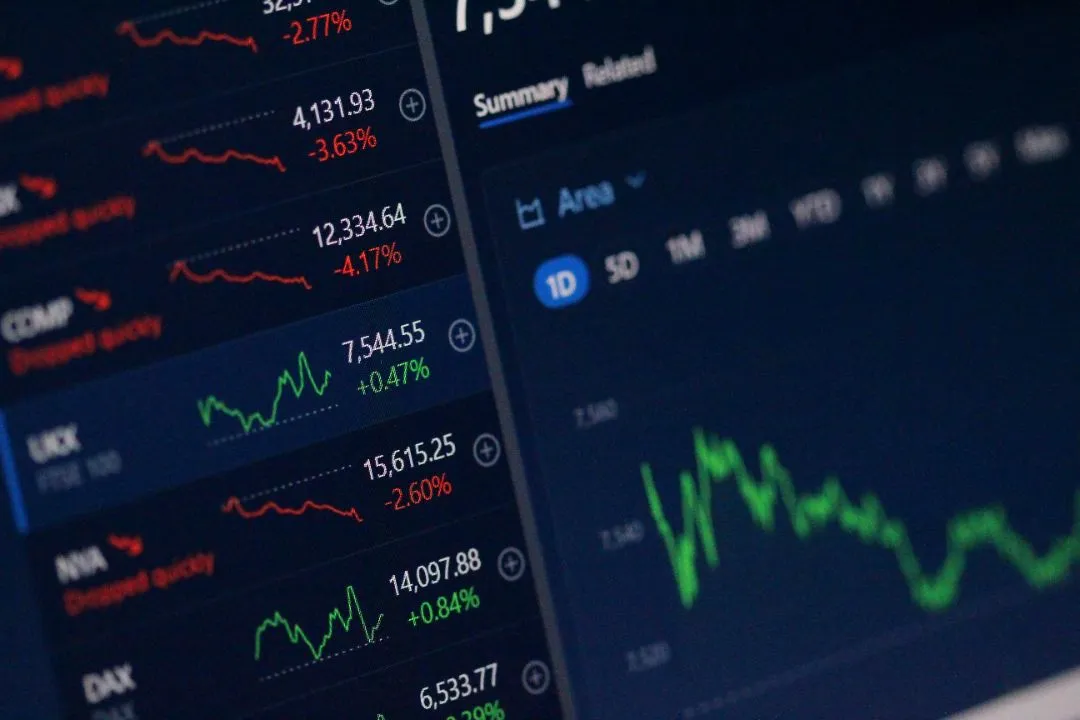
Photo by JEONGUK -on Unsplash


Blockchain-based securities

In recent times, there has been a surge in demand for blockchain-based securities, prompting the South Korean government to issue guidelines on security tokens in February of this year. Consequently, securities firms, fractional investment platforms, and technology companies have been collaborating to form consortia.

The KSD has been actively studying the legislative and institutional aspects of security tokens to establish a foundation for their widespread acceptance. Furthermore, it has devised a mid-to-long-term roadmap for the security token platform. Since February, the KSD has been spearheading a security tokens council with an aim to develop a business model for a security token platform starting in July.


KSD’s role

Specifically, the KSD intends to provide feedback on subsequent legislative revisions pertaining to security tokens, review security token registrations, and establish methods for managing the total volume of security tokens under the Act on Electronic Registration of Stocks and Bonds.

Additionally, the KSD aims to expedite the construction of a new system for the capital market infrastructure. This endeavor entails revamping the operational system to enable flexible responses to internal and external changes, as well as creating a smart workplace suited for the digital era.

Since its establishment in 1974, the KSD has played a crucial role in supporting the development of the Korean capital market by providing diverse securities services, including the issuance and distribution of securities. Nonetheless, participants at the conference concurred that the agency needs a fresh vision and strategy to maintain its position in the future.

Chairman Lee emphasized that the agency’s 50th anniversary will take place next year, prompting a thorough assessment of its current status and the formulation of a new vision and strategy to adapt to the ever-evolving financial landscape. As part of these efforts, he underscored the recent establishment of a task force dedicated to devising future plans.

More to Read
View All
Web3 & Enterprise·

Jul 31, 2025

Pyth Network brings Hong Kong stock pricing on-chain

Pyth Network, an oracle network that provides a bridge between blockchain smart contracts and real-world data, has added pricing data related to stocks listed on the Hong Kong Stock Exchange (HKEX) to its service offering. Data covering 85 stocksIn a social media post, the project stated that it’s “bringing the Hong Kong market onchain.” In building out the future of finance, DeFi application developers need real-world data from traditional finance sources. Pyth Network confirmed that real-time data in the case of 85 stocks listed on HKEX is now live. In announcing the development, the company disclosed that price feed data is updated every 400 milliseconds and sourced from institutional-grade venues. Once added to the Pyth Network, the data is made available on a multi-network basis across in excess of 100 blockchain networks.Photo by Anne Nygård on UnsplashGateway dataHKEX data is perceived to be significant given that it is a major global exchange, while acting as a key gateway between global and Chinese markets. Pyth Network stated: “Whether you’re building trading strategies, structured products, tokenized portfolios, or simply want access to real-world stock prices from Asia’s financial gateway, these feeds bring Hong Kong’s equity market onchain openly, instantly, and permissionlessly.” In a blog post published to its website on July 28, Pyth Network outlined that this data addition accounts for data related to companies that have a combined equity market value of over $5 trillion. The project stated that this new data is “giving builders, traders, and protocols around the world direct, real-time access to one of the largest financial markets on earth.” Improving access to APAC equitiesThe project made the point that for many years, access to real-time data from the primary markets within the Asia-Pacific (APAC) region has been cost-prohibitive. It claimed that data terminals with this information can cost in excess of $30,000 per year. Pyth Network feels that with its market offering now incorporating HKEX market data, it is opening up access to this data for developers and DeFi protocol projects. This development is the latest in a string of updates that the project has brought about recently. Earlier this month, the project announced a partnership with tokenized real-world asset (RWA) provider Ondo Finance. The deal sees the duo oversee the launch of a USDY/USD price feed, which will be distributed by Pyth across 65 blockchain ecosystems. Similar to its latest unlocking of HKEX equity data, in June it enabled access to real-time onchain pricing related to the UK’s most actively traded equities. Going forward, the company states that “foundational market data will be open, composably integrated, updated in real-time, and available to anyone with an internet connection.” In March 2024, Pyth’s price feeds went live on Injective inEVM, an Ethereum Virtual Machine (EVM)-compatible layer-2 rollup developed by Injective Labs. At the time of writing, the unit price of PYTH, Pyth Network’s native utility and governance token, was $0.1204, according to CoinGecko data.

news
Web3 & Enterprise·

Oct 11, 2023

Dunamu Restructures Leadership at Its Blockchain Research Arm

Dunamu Restructures Leadership at Its Blockchain Research ArmDunamu, the operator of South Korea’s largest cryptocurrency exchange Upbit, has implemented leadership changes at its blockchain research arm, Lambda256. That’s according to a report by local media outlet Decenter.Photo by Lea L on UnsplashCo-leadership structureStarting this month, Lambda256 welcomes a co-leadership structure, with tech maven Chung Ui-chung and financial specialist Park Yong-shin stepping in as co-CEOs. Each CEO holds independent signing authority. Chung previously held the role of Chief Technology Officer (CTO) at internet messaging giant Kakao, while Park Yong-shin boasts a distinguished career in public administration and finance, having passed the civil service examination and later steering the helm at Heungkuk Investment Trust Management, currently known as Heungkuk Asset Management.Tech expert and gov’t affairs specialistThe reshuffle follows the departure of former CEO Park Jae-hyun, who resigned last month. Shedding light on the division of roles, a Lambda256 official mentioned that Chung will spearhead practical endeavors, whereas Park Yong-shin will liaise with government sectors. Industry analysts perceive this strategic move as Lambda256’s intensified drive to hone its technological edge and navigate the evolving government regulations surrounding security tokens and associated blockchain ventures.Dunamu, holding a dominant 60.6% ownership in Lambda256, established the company in 2018, entrusting the leadership to Park Jae-hyun, a former employee of SK Telecom and Samsung Electronics. The subsequent year saw Lambda256 evolve into a subsidiary, rolling out blockchain platforms like Luniverse. However, financial challenges loomed, with the firm recording net losses of KRW 2.1 billion ($1.6 million) in 2020, KRW 3.7 billion in 2021, and KRW 46.5 billion in 2022.

news
Policy & Regulation·

May 01, 2025

South Korea maintains single-bank policy for crypto exchanges

South Korean financial regulators have decided, at least for the time being, to maintain the current policy requiring cryptocurrency exchanges to partner with only one bank, according to a report from the Seoul Economic Daily.Photo by POURIA 🦋 on UnsplashDominance and money laundering concernsA government official cited concerns that allowing multiple banking relationships could potentially strengthen market dominance by leading platforms and increase money laundering risks. Regulators plan to revisit the issue after monitoring new developments following upcoming regulations that will permit institutional participation in the crypto market. This decision runs counter to a recent proposal put forward by the People Power Party (PPP) ahead of the presidential election that seeks to eliminate the one-bank-per-exchange requirement. Bizwatch reported that while the crypto industry initially supported the removal of this restriction unanimously, opinions have recently diverged among market participants. Divided industryMajor exchanges offering Korean won-based trading are mostly against the potential policy change. Except for Upbit, the country's largest platform, competitors express concern that modifying the rules could weaken their existing banking relationships if more financial institutions choose to partner with the market leader. Conversely, crypto-only exchanges, which cannot offer Korean won trading services, generally favor eliminating banking restrictions. These platforms believe relaxed regulations could create more opportunities to establish banking partnerships. Under current rules, virtual asset service providers must secure real-name accounts from a local bank to offer Korean won trading, placing those without such accounts at a competitive disadvantage. Banks also want changeKorean commercial banks align with crypto-only exchanges in supporting the easing of banking regulations. Jung Jin-wan, CEO of key financial institution Woori Bank, recently called for allowing multiple banks to serve individual crypto exchanges. He argues that the current one-bank-per-exchange system not only undermines systemic stability but also limits customer choice. While an official from a crypto-to-fiat exchange acknowledged the need for eventual reform of the one-bank-per-exchange system to improve customer options and market development, they also pointed out that industry stakeholders hold different views depending on their position in the market. The official said that dominant platforms perceive minimal practical benefits from permitting multiple banking relationships. 

news
Loading