Top

Pyth Network brings Hong Kong stock pricing on-chain

Web3 & Enterprise·July 31, 2025, 12:41 AM

Pyth Network, an oracle network that provides a bridge between blockchain smart contracts and real-world data, has added pricing data related to stocks listed on the Hong Kong Stock Exchange (HKEX) to its service offering.


Data covering 85 stocks

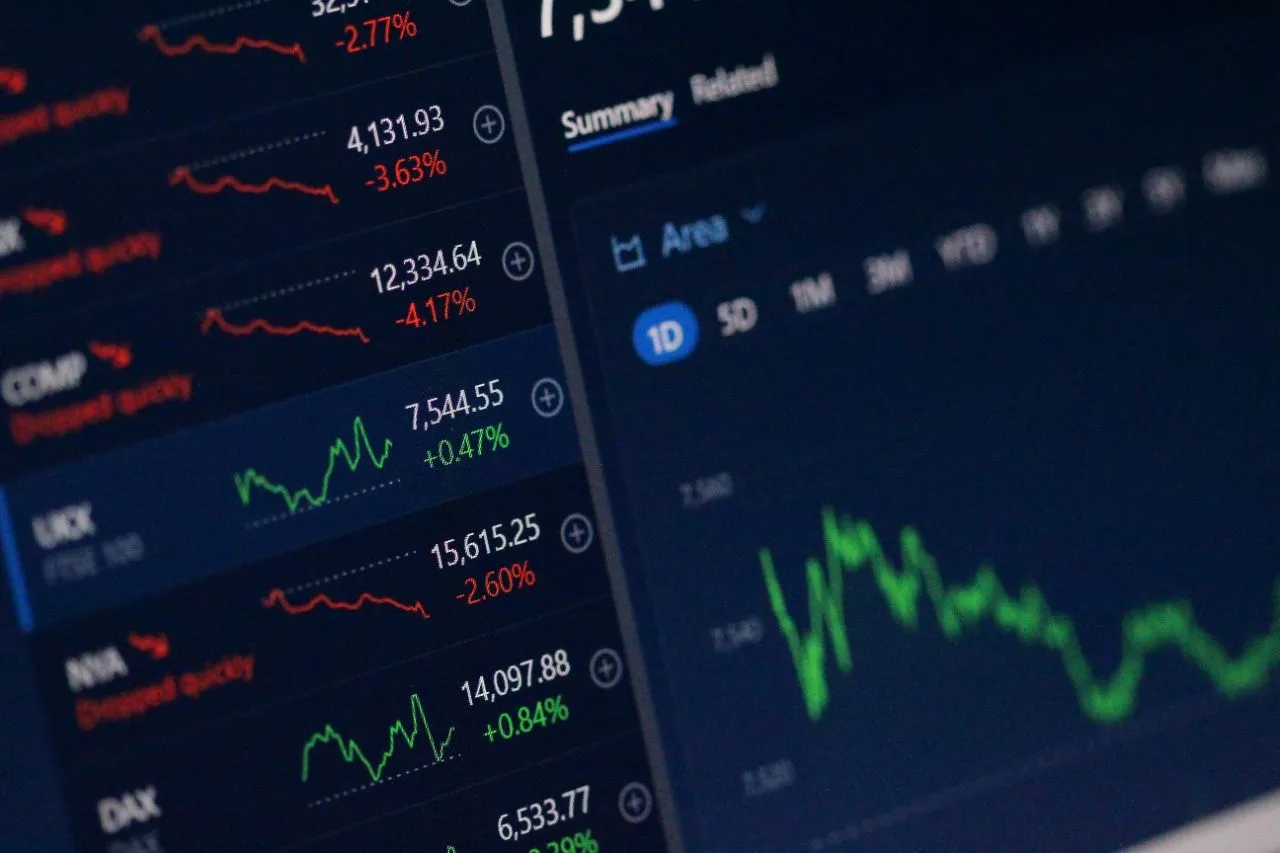
In a social media post, the project stated that it’s “bringing the Hong Kong market onchain.” In building out the future of finance, DeFi application developers need real-world data from traditional finance sources. Pyth Network confirmed that real-time data in the case of 85 stocks listed on HKEX is now live.


In announcing the development, the company disclosed that price feed data is updated every 400 milliseconds and sourced from institutional-grade venues. Once added to the Pyth Network, the data is made available on a multi-network basis across in excess of 100 blockchain networks.
https://asset.coinness.com/en/news/86107004aa5bec3647f0487fc930f89a.webp
Photo by Anne Nygård on Unsplash

Gateway data

HKEX data is perceived to be significant given that it is a major global exchange, while acting as a key gateway between global and Chinese markets. Pyth Network stated:


“Whether you’re building trading strategies, structured products, tokenized portfolios, or simply want access to real-world stock prices from Asia’s financial gateway, these feeds bring Hong Kong’s equity market onchain openly, instantly, and permissionlessly.”


In a blog post published to its website on July 28, Pyth Network outlined that this data addition accounts for data related to companies that have a combined equity market value of over $5 trillion. The project stated that this new data is “giving builders, traders, and protocols around the world direct, real-time access to one of the largest financial markets on earth.”


Improving access to APAC equities

The project made the point that for many years, access to real-time data from the primary markets within the Asia-Pacific (APAC) region has been cost-prohibitive. It claimed that data terminals with this information can cost in excess of $30,000 per year. Pyth Network feels that with its market offering now incorporating HKEX market data, it is opening up access to this data for developers and DeFi protocol projects.


This development is the latest in a string of updates that the project has brought about recently. Earlier this month, the project announced a partnership with tokenized real-world asset (RWA) provider Ondo Finance. The deal sees the duo oversee the launch of a USDY/USD price feed, which will be distributed by Pyth across 65 blockchain ecosystems.


Similar to its latest unlocking of HKEX equity data, in June it enabled access to real-time onchain pricing related to the UK’s most actively traded equities. Going forward, the company states that “foundational market data will be open, composably integrated, updated in real-time, and available to anyone with an internet connection.”


In March 2024, Pyth’s price feeds went live on Injective inEVM, an Ethereum Virtual Machine (EVM)-compatible layer-2 rollup developed by Injective Labs. At the time of writing, the unit price of PYTH, Pyth Network’s native utility and governance token, was $0.1204, according to CoinGecko data.

More to Read
View All
Policy & Regulation·

Aug 25, 2023

Calls for Regulation of Crypto Investment Management Firms Amidst Growing Concerns

Calls for Regulation of Crypto Investment Management Firms Amidst Growing ConcernsThere have been recent calls in South Korea for crypto investment management companies to be subject to the Financial Investment Services and Capital Markets Act amidst concerns about potential regulatory blind spots negatively impacting crypto investors.Photo by Conny Schneider on UnsplashPushing for regulatory oversightKang Seong-hoo, chairman of the Korea Digital Asset Business Association (KDA) went into detail regarding the issue during a forum held by the association on Thursday to discuss the efficient use of technology and safety management in the era of the digital economy.He emphasized that dealings related to virtual asset management such as deposits, lending, and staking must be regulated by authorities under the Financial Investment Services and Capital Markets Act. This is due to the fact that crypto investment management companies are not within the purview of the Act On Reporting and Using Specified Financial Transaction Information or the Virtual Asset User Protection Act, the latter of which is set to take effect next year.The Act On Reporting and Using Specified Financial Transaction Information defines financial companies as those that provide services for selling, buying, exchanging, transferring, keeping, or managing virtual assets; or act as a broker, intermediary, or agent for these services. However, there is no mention of crypto management companies.Echoes of past crypto platform controversiesThese concerns are driven by the looming possibility of another debacle like the class-action lawsuits against crypto platforms like Haru Invest or Delio arising again as a result of regulatory gray areas. Two months ago, investors had filed a legal complaint after the two lenders unexpectedly suspended customer deposits and withdrawals, claiming that they suffered around KRW 50 billion (approximately $39 million at the time of the incident) in damages as a result.Furthermore, the Financial Intelligence Unit (FIU), a division under the Korean Financial Services Commission (FSC), recently stated in a report that virtual asset deposits, lending, and DeFi services do not fall under the obligations of the Act On Reporting and Using Specified Financial Transaction Information.“Given the context of the ongoing crypto winter since last year, the business model of virtual asset management companies, which is heavily reliant on arbitrage between exchanges, poses a high risk of incidents similar to the Haru Invest and Delio cases,” said Chairman Kang.“In order to ensure virtual asset user protection and market safety, authorities should promptly explore regulatory measures under the Financial Investment Services and Capital Markets Act for virtual asset management such as deposits, lending, staking, and the like.”

news
Policy & Regulation·

Aug 26, 2023

Binance Takes P2P Service Measures in Response to Sanctioned Russian Banks

Binance Takes P2P Service Measures in Response to Sanctioned Russian BanksGlobal crypto exchange Binance has removed the option for users to conduct transactions via sanctioned Russian banks on its peer-to-peer (P2P) platform, a decision that comes on the heels of a Wall Street Journal exposé published earlier this week, shedding light on the platform’s involvement in facilitating the movement of funds for Russian users.Previously, Binance’s peer-to-peer service featured five Russian banks under sanctions as a method for ruble transfers between users. However, the company swiftly acted to address potential compliance concerns. Fittingly, this latest news was also broken by the Wall Street Journal on Friday.Dmitry Sidorov on PexelsSailing too close to the windWhen approached regarding the omission of these banks, a Binance spokesperson stated: “We regularly update our systems to ensure compliance with local and global regulatory standards. When gaps are pointed out to us, we seek to address and remediate them as soon as possible.”The Wall Street Journal’s article outlined how Binance’s peer-to-peer platform facilitated ruble-to-crypto trades that frequently involved the sanctioned Russian banks, with Rosbank and Tinkoff Bank being prominent examples.These trades often utilized layers of intermediaries to convert funds from these banks into Binance balances, as detailed by various company resources, user screenshots, and messages in official chat groups. Despite these revelations, Binance’s exchange had continued to handle significant volumes of ruble trading, according to data compiled by digital asset research firm CCData.US DoJ probeBinance’s activities in Russia could potentially contribute to its ongoing legal challenges in the United States. The US Justice Department (DoJ) has been probing the company’s actions for potential violations of American sanctions on Russia. In response to such concerns, the Binance spokesperson emphasized:“Binance aims to diligently comply with the global sanctions rules and enforces sanctions on people, organizations, entities, and countries that have been blacklisted by the international community, denying such actors access to the Binance platform.”WorkaroundsTraders, however, had reportedly found workarounds to the bank removals, as observed in the official Telegram chat group for Russian clients. Many shared that they could still engage with sanctioned banks by selecting alternative payment methods and then manually inputting their Rosbank or Tinkoff bank details.Earlier this year, an investigative report by CNBC alleged that employees of the company had told it that Binance staff regularly helped Chinese customers to bypass Know Your Customer (KYC) controls in order to access the platform. More recently, another report, once again by the Wall Street Journal, found that business in China was booming, which surprised many given that China banned crypto trading within the country in 2021.It’s apparent that the company is reacting to regulatory and legal pressures in taking the decision to make these changes to its P2P service. Perennial crypto critic US Senator Elizabeth Warren took to X (formerly Twitter) on Friday, stating:“I rang the alarm about sanctions evasion by Russia using the crypto platform Binance — and urged [the DoJ] to investigate potentially false statements it made to Congress. We need stronger crypto regulations to rein in illicit finance.“

news
Web3 & Enterprise·

Oct 04, 2023

Over Half of Leading Korean Conglomerates Are Venturing Into Web3 and Blockchain

Over Half of Leading Korean Conglomerates Are Venturing Into Web3 and BlockchainMore than half of South Korea’s conglomerates are ushering in the emerging era of Web3 in an attempt to seize new business opportunities presented by a decentralized internet that permits open access and sharing of resources as well as ownership of personal data.Photo by Abbe Sublett on UnsplashSurging interest among Korea’s biggest enterprisesAccording to a survey conducted by local news outlet E Today, 46 of Korea’s top 82 corporations as designated by the Fair Trade Commission (FTC) are pursuing ventures in Web3 and blockchain this year, including those related to non-fungible tokens (NFTs), security tokens, and logistics chains. The survey examined whether the corporations had issued coins, tokens, or NFTs; whether they had corporate divisions or subsidiaries dedicated to blockchain-related projects; and whether they had made investments in blockchain or digital asset-related companies as well as coin and token issuance projects. It was conducted remotely using publicly disclosed information and press releases.Of the 82 total companies, 48 are under the mutual investment restriction system, which prohibits independent corporations from investing their capital in the form of an exchange. Commercial law prohibits mutual stock holdings between parent companies and their subsidiaries in order to prevent a processive increase in company assets through mutual investments. Of those 48, the survey revealed that 32 are engaged in blockchain and Web3-related projects.Nearly 60.42% of the mutual investment restriction group and 48.78% of the total survey group were found to have become involved in the field by signing business deals with blockchain and digital asset-related companies or utilizing blockchain technology themselves.On the other hand, only seven corporations, or 8.54%, had directly issued digital assets or invested in related companies. On the other hand, 26 firms, or 31.71%, invested in NFT-related businesses.Navigating the path to Web3 adoptionHowever, although Web3 is gaining traction as the next generation of future innovation, it has not yet become the dominant trend as Web3 platforms have yet to attract a significant user base. This hindrance can be attributed to the ongoing crypto winter and strict financial regulations.Woo Jong-soo, Director of the Pohang University of Science and Technology’s (POSTECH) Blockchain Research Center and a professor at POSTECH’s Graduate School of Information and Communication, also pointed out that in order for blockchain to exert its influence as an innovative technology, it should be open to the public like Bitcoin. There will be limitations in implementing centralized private blockchains into corporate businesses, he said.But despite these challenges, major leading companies are still pushing their own Web3 and blockchain projects. “The current situation is not an ideal time for diving into Web3 and blockchain businesses, but everyone is quietly preparing while waiting for regulatory uncertainties to be resolved,” said an anonymous developer working at a major corporation.Notably, Park Hye-jin, a professor at the Seoul School of Integrated Sciences and Technologies, revealed that she had received separate Web3 business consultation requests from several teams under the same division of a particular corporation and that these teams were essentially unaware of each others’ ventures into the field. The corporation, which ostensibly announced that it had closed its business, also continues to request consultations, she claimed, highlighting the corporate world’s acknowledgment of Web3’s potential.“Individuals can now monetize and have control over their data, which big tech companies like Facebook and Instagram used to own,” Park explained. “The essence of Web3 is that it is ushering in an era where users have the ability to take initiative.”

news
Loading