Top

Legislator Invites Coinbase to Set Up Shop in Hong Kong

Policy & Regulation·June 12, 2023, 11:26 PM

Hong Kong continues to position itself as a favorable destination for the cryptocurrency industry, with the latest evidence of that coming in the form of an invitation to US-headquartered crypto exchange Coinbase to set up a base in the autonomous Chinese territory from one of its legislators.

In a bold move showcasing its progressive stance on cryptocurrencies, Johnny Ng, a member of Hong Kong’s Legislative Council, has extended an invitation to Coinbase and other crypto exchanges to establish their operations in the region. Ng took to Twitter on Saturday to express his support and offer assistance to “all global virtual asset trading operators,” emphasizing the potential for stock listing opportunities.

This invitation came at the end of a week which saw major industry players like Binance and Coinbase face legal action from the United States Securities and Exchange Commission (SEC).

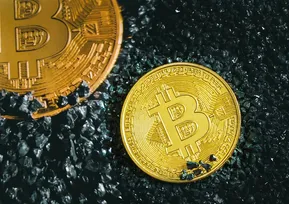
Photo by Ben Cheung on Pexels


Contrasting approaches

Hong Kong stands in stark contrast to the cautious approach adopted by many Western countries when it comes to cryptocurrencies. In January 2023, Paul Chan, Hong Kong’s Financial Secretary, reaffirmed the government’s commitment to building a robust ecosystem for crypto and fintech. Since then, Hong Kong has been actively developing regulations and implementing compliance measures to foster the growth of the cryptocurrency industry.

Recently, the Hong Kong Monetary Authority (HKMA) announced its intention to lay the foundation for a retail central bank digital currency (CBDC). This initiative, revealed on June 9, aims to explore the benefits of CBDCs as a means of everyday payment transactions and to facilitate customer access to cryptocurrency exchanges.


Crypto hub ambitions

Ng’s invitation to Coinbase exemplifies Hong Kong’s ambition to become a leading digital hub for the crypto industry. Several crypto exchanges, including OKX and Huobi, have already applied for virtual asset service provider licenses in the region, demonstrating their confidence in Hong Kong’s favorable regulatory environment.

Hong Kong’s crypto-friendly approach has also attracted interest from prominent international technology companies. In January, Samsung, the South Korean tech giant, announced plans to launch a Bitcoin futures active exchange-traded fund on the Hong Kong Stock Exchange.

Furthermore, reports emerged in mid-February suggesting that Chinese government officials have granted strategic approval to Hong Kong’s pro-crypto initiatives. This recognition from Chinese authorities further underscores the significance of Hong Kong’s efforts in the crypto space and their potential impact on the broader digital currency landscape.


Coinbase going global

Long before the arrival of last week’s lawsuit against Coinbase, the company had indicated that it was broadening its horizons. Some weeks back, SEC Chair Gary Gensler appeared on Capitol Hill in Washington, D.C., and Coinbase Founder and CEO Brian Armstrong chose that moment to outline that the company would look to operate overseas if the regulatory environment didn’t change in the US.

In the intervening weeks, Coinbase has extended its product offering in Singapore, indicating its interest in establishing a base in Abu Dhabi while obtaining crypto licensing in Bermuda.

With its proactive regulation, dedication to fostering industry growth, and growing interest from global players, Hong Kong is poised to become a prominent player in the cryptocurrency world. Despite the ongoing scrutiny faced by Coinbase and other exchanges in the United States, Hong Kong presents an attractive alternative for these companies to expand their operations and tap into the region’s thriving crypto ecosystem.

More to Read
View All
Web3 & Enterprise·

Nov 19, 2024

OKX enables zero-fee SGD transfers in Singapore

Seychelles-headquartered global crypto exchange OKX outlined on Nov. 18 that it will offer instant, zero-fee Singaporean dollar (SGD) deposits and withdrawals into and out of the exchange platform for customers resident in Singapore.Photo by Peter Nguyen on UnsplashDBS partnershipIn a press release published by GlobeNewswire on behalf of OKX, the company outlined that it has been in a position to enable this feature for its Singapore-based customers due to a collaboration with Singapore’s largest bank, DBS Bank. OKX Singapore CEO Gracie Lin said that “working with DBS to provide payment rail infrastructure in Singapore provides customers with secure and seamless access to digital assets.” As DBS is one of 27 banks that participate in PayNow, a real-time payment system that falls under the Fast and Secure Transfers (FAST) service in Singapore, OKX customers who are also customers of a bank that participates in the PayNow scheme, can effect those SGD deposits and withdrawals in real time. Lin added that OKX is working towards the addition of more features in an effort to further enhance the customer experience. The new offering takes OKX a step further towards integrating with the local traditional finance system (TradFi).  Singpass integrationAdditionally, the exchange has also integrated Singpass verification. Singpass is a digital identity system that enables Singaporean residents to access private sector and government services online. Back in March, the company acquired in-principle approval (IPA) from the Monetary Authority of Singapore (MAS) in respect of a Major Payments Institution (MPI) license. Continuing that shift towards regulatory compliance, it followed up with the acquisition of a full MPI license from MAS in September. The company is now one of 29 crypto sector firms to have been licensed by MAS in Singapore. While a particular effort has been made in Singapore, OKX has been making similar in-roads elsewhere. Last month, it launched its service in the United Arab Emirates (UAE), having received full licensing from Dubai’s Virtual Assets Regulatory Authority (VARA). Making further progress in October, OKX partnered with UK-headquartered multinational bank Standard Chartered for institutional crypto custody. Both Singapore and the UAE are seen by the company to be strategic crypto hubs. However, its efforts in expanding its offering globally has also taken it into other markets. In February OKX launched OKX TR, a specialized crypto exchange platform catering to the specific needs of the Turkish market. In an emailed response to Reuters, DBS Bank’s Head of Digital Assets, Evy Theunis, commented on its partnership with OKX:”DBS has been actively fostering a responsible and innovative digital asset ecosystem in Singapore for several years now. Working with OKX deepens the bank's wide-ranging involvement in this space." DBS has been following its own path as a pioneering TradFi entity getting further involved in cryptocurrency, blockchain and tokenization. Last month it launched DBS Token Services for institutions, integrating tokenization and smart contracting capabilities within its existing conventional services. 

news
Web3 & Enterprise·

Jul 25, 2024

HKX latest exchange to drop out of Hong Kong market

HKX management has advised Hong Kong resident users of the platform to withdraw assets following the company’s decision to halt operations in Hong Kong.  The company publicized its decision on July 18, making the following statement on its website: “We would like to inform you that our management team has, after careful consideration, decided to withdraw our application for the Type 1 and Type 7 licenses under the Securities and Futures Ordinance (Cap. 571) and the virtual asset service provider license under the Anti-Money Laundering and Counter-Terrorist Financing Ordinance (Cap. 615).”Photo by Zhe ZHANG on UnsplashCompliance strugglesHKX’s exit from Hong Kong is the latest in a series of crypto exchange withdrawals from the Chinese autonomous territory. Other exchanges such as OKX, KuCoin, Gate.io and Binance had all bowed out back in May.  HKX initially applied for a Hong Kong license in February. However, like many others, the exchange failed to comply with Hong Kong’s regulatory requirements. While Hong Kong has been making a concerted effort to establish a regulatory framework and licensing system in order to create the conditions for it to become a crypto hub, it has also been grappling with making regulations strict enough to stamp out fraud in the wake of the JPEX exchange scandal. With that, it appears that many exchanges are finding the regulatory requirements difficult to live with. Originally, 24 exchanges had applied for a virtual asset trading platform (VATP) license. As it stands today, 12 of those original applicants have dropped out, with one more having its application returned with no clarity emerging as to the reason why. HKX has suspended new user registrations. The company’s management has not suggested that they will reapply for a license and reboot the service at a later stage. The company had flagged its intentions back in May, suspending trading and deposit services on May 29. OKX announced on May 24 that it was withdrawing from the Hong Kong market, citing a review of its business strategy. Around the same timeframe, Gate.io withdrew from the market in Hong Kong having failed to achieve compliance in accordance with the new licensing requirements.  Notwithstanding that outcome, the firm suggested that it planned to revamp its platform in line with the Chinese autonomous territory’s licensing requirements, and return to the market once that had been achieved. In a notice posted to its website on May 22, it stated: “Gate.HK is actively working on the aforementioned overhaul. We plan to resume our business in Hong Kong in the future and contribute to the virtual asset ecosystem after obtaining the relevant licenses.” That overhaul has yet to be completed as right now, the platform only allows the withdrawal of funds by its previous Hong Kong-based customers. Back in May 2023, Eddie Yue, the CEO of the Hong Kong Monetary Authority, suggested that there would be no light touch regulation in Hong Kong. HashKey Exchange, alongside OSL, was the first business to secure licensing under the new framework. In April, HasKey CEO Livio Weng told the Financial Times that these regulations block access to overseas investors while the local market in Hong Kong isn’t very big. It emerged in recent weeks that Hong Kong regulators are reviewing whether crypto regulation is “excessively stringent.” 

news
Policy & Regulation·

Nov 09, 2023

UAE strengthens regulatory oversight of virtual asset service providers

UAE strengthens regulatory oversight of virtual asset service providersThe Central Bank of the United Arab Emirates (CBUAE) and other relevant authorities in the Middle Eastern country have issued new joint guidance for virtual asset service providers (VASPs) operating within the UAE.Photo by Thomas Drouault on UnsplashPushing back against unlicensed VASPsThese guidelines aim to prevent VASPs from operating without proper licenses in the jurisdiction, demonstrative of the country’s efforts in fighting financial crimes and maintaining the integrity of its financial system.The document outlines the penalties for VASPs operating in the UAE without a valid license. They will face civil and criminal sanctions, including financial penalties against the entity, its owners and senior managers. Moreover, the guidance cautions that licensed financial institutions (LFIs), designated non-financial businesses and professions (DNFBPs) and licensed VASPs that engage with unlicensed VASPs will be subject to law enforcement actions.The National Anti-Money Laundering and Combating Financing of Terrorism and Financing of Illegal Organizations Committee (NAMLCFTC) is the specific entity responsible for having issued the guidance in conjunction with the central bank.VASP ‘red flags’As part of those guidelines, a list of “red flags” for VASPs has been included. Through reliance on these indicators, it’s hoped that bad acting VASPs can be identified by consumers and other industry stakeholders. The document refers to red flags such as the lack of regulatory licensing, no physical presence in the UAE, pressure being applied by a platform to invest quickly and a lack of regulatory disclosure as items to look out for.Otherwise, the guidance encourages stakeholders to be suspicious of unsolicited contact being employed as a means of operation by a platform, the lack of a record of compliance, poor website and communications and the offer of unrealistic promises.Lastly, the document suggests that people should be observant of any illicit use of virtual currency, the use of fake wallets, engagement in terrorist financing and a lack of consumer protection as red flag items.The new guidance instructs all LFIs, DNFBPs and licensed VASPs to report transactions involving suspicious parties. The guidance also emphasizes that information related to unlicensed virtual asset activities can be reported through whistleblowing mechanisms.Exiting FATF ‘grey list’The release of these guidelines is part of an effort by the UAE to be removed from the Financial Action Task Force’s (FATF) “grey list.” The grey list indicates deficiencies in a country’s anti-money laundering (AML) and counter-terrorist financing (CTF) regimes.Improving control mechanisms relative to crypto has been a theme for several countries who are similarly looking to exit the FATF grey list. Last week, it emerged that Turkey is crafting new regulations governing crypto in an effort towards “grey list” removal. Earlier this year, Pakistan announced a renewed ban on cryptocurrency, as part of its efforts to remain off the grey list it had been listed on over an extended period.The UAE was placed on the FATF’s grey list in March 2022 due to AML and CTF deficiencies. However, the country made a commitment to work with the global watchdog to improve its regulatory frameworks in these areas.

news
Loading
