Top

Dramatic crypto tax take decline recorded in Indonesia

Policy & Regulation·January 26, 2024, 5:34 AM

Indonesia witnessed a striking decline in cryptocurrency tax revenue for the year 2023, according to local media.


63% decrease

A report by Indonesian business and financial publication Kontan detailed a tax take drop to $31.7 million (Indonesian rupiah 467.27 billion). That tax collection is in sharp contrast to the partial collection period in 2022 when the crypto tax regime was initially introduced. It represents a drop of around 63%.


The decline is part of a broader tax reform targeting the "digital economy" implemented in 2022, with the Indonesian government expressing the expectation that the reform would enhance tax collection, fostering a "healthy and fair taxation system."
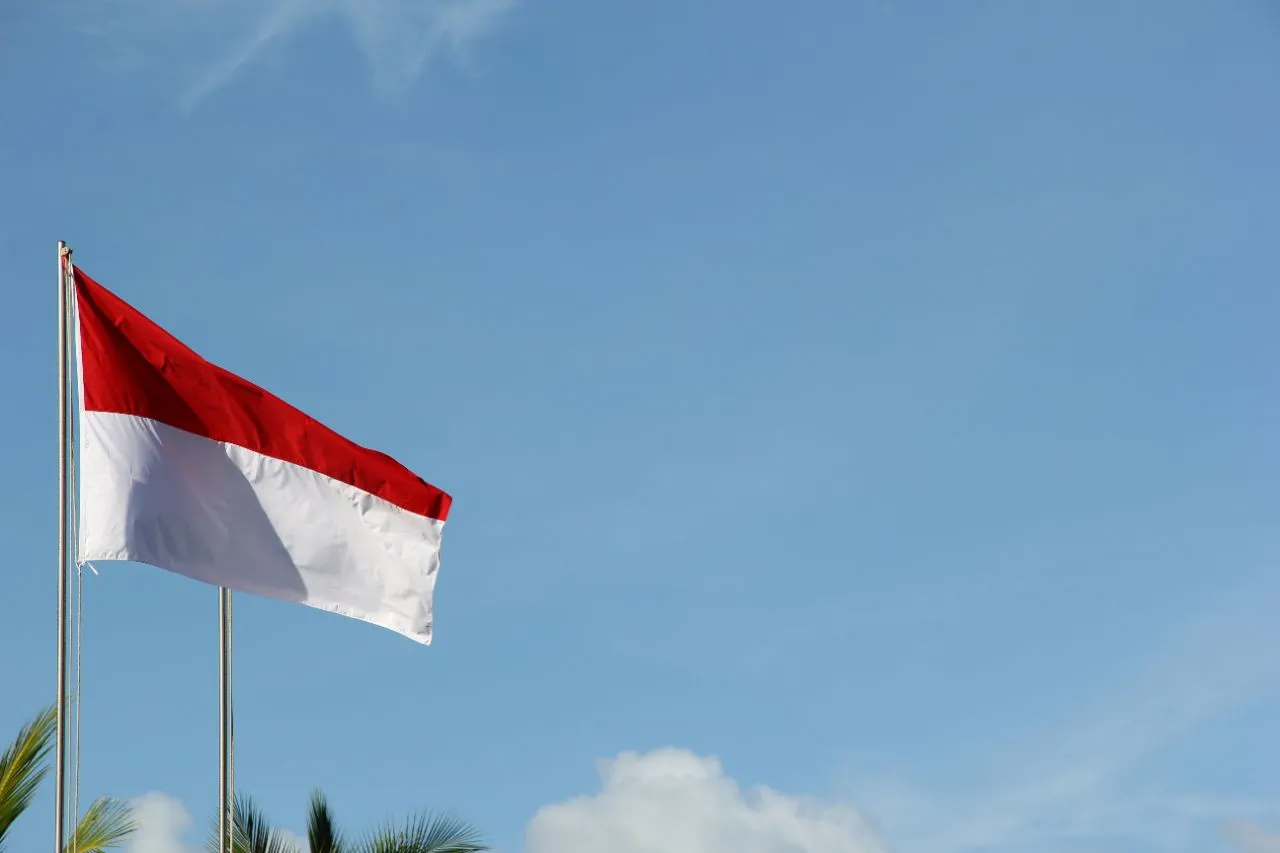
https://asset.coinness.com/en/news/cff50de010b22a1aa6db656f1a2d50e6.webp
Photo by Nick Agus Arya on Unsplash

Declining transaction volumes

Despite bitcoin's impressive surge of approximately 160% throughout 2023, the dip in crypto tax revenue was notable. The decrease is closely tied to a drop in transaction volumes over the same period compared to 2022. A report by CoinDesk Indonesia last week put that trading volume decrease at around 60%.


Crypto transactions in Indonesia face dual taxation – a 0.1% income tax and a 0.11% value-added tax (VAT). Additionally, local crypto exchanges are subject to a special tax of approximately 0.04%, contributing to the national digital asset bourse.


Disadvantaging local exchanges

Local exchanges in Indonesia, including prominent ones like Indodax, have voiced discontent with the high tax rates, contending that these levies are driving users towards unregulated offshore exchanges.


Earlier this month Indodax CEO Oscar Darmawan called on the Indonesian government to review crypto tax rates. Darmawan highlighted that the cumulative taxes on crypto transactions often surpass the trading fees paid by users, posing a risk of users seeking more cost-effective alternatives.


Local exchanges suggest that crypto transactions should only be subject to income tax, eliminating the VAT component. This proposal comes as Indonesia's Financial Services Authority (OJK) prepares to implement cryptocurrency regulations in early 2025. The aim is to align the taxation of cryptocurrencies with their market nature, possibly redefining them more as securities than commodities.


Inadequate tax regulation can lead to a decline in local market activities, potentially resulting in capital flight to more favorable jurisdictions. Indonesia's situation serves as a reminder of the crucial need for policies that understand and adapt to the dynamic nature of the cryptocurrency sector.


India is being similarly challenged. Local exchanges there have also complained of punitive taxation, which resulted in Indian users migrating to offshore exchanges. That scenario led indigenous exchanges to lobby the government to take action. The authorities have duly acted, flagging a number of global exchanges for operating illegally within India.


It’s not all bad news for the development of digital assets within Indonesia. The country still ranks highly in terms of crypto adoption within the Asian region. Crypto was also floated as an election issue recently by Gibran Rakabuming Raka, a vice-presidential candidate in the upcoming election. The politician expressed his commitment to accelerating the country's position as a leader in the digital revolution.


 

More to Read
View All
Web3 & Enterprise·

Dec 29, 2023

Filipino exchange Coins.ph adds BRC-20 support

Coins.ph, the leading crypto exchange in the Philippines, has announced its support for BRC-20 tokens. As part of that move, the exchange has successfully integrated the ORDI token, thereby becoming the inaugural platform in the country to embrace the BRC-20 standard. The platform clarified its support for BRC-20 in a recent blog post, which it published to its website. Coins.ph revealed its intention to expand its services further by adding support for additional BRC-20 tokens, showcasing a forward-looking approach to cater to the evolving needs of its user base. BRC-20 is a standard facilitating the creation of fungible tokens on the Bitcoin blockchain. The inclusion of this technical standard allows for the minting of tokens with unique features, introducing a new dimension to the capabilities of the world's flagship cryptocurrency.Photo by Kanchanara on UnsplashORDI memecoin additionORDI stands out as one of the most popular BRC-20 tokens, gaining traction and reaching an all-time high above $81 earlier this week. This surge in value followed the addition of trading support by crypto exchange Binance in early November, underscoring the influence of strategic partnerships and market dynamics on token performance. Wei Zhou, CEO of Coins.ph, expressed the company's commitment to staying at the forefront of digital asset innovation through this strategic move. Highlighting the remarkable growth in BRC-20 activity since its launch earlier in the year, Zhou emphasized the importance of enabling users to participate in these opportunities. He mentioned the recent listing of $ORDI and hinted at future product offerings enabled by the BRC-20 standard. Industry trendWhile coins.ph may have been the first exchange in the Philippines to introduce BRC-20 support, it's not the first mover in the broader Asian region. Back in May, leading crypto exchange OKX decided to support the BRC-20 standard through its OKX Wallet product. The company’s support of the standard was validated more recently when it emerged that BRC-20 support played a large role in OKX NFT Marketplace taking top rank as the NFT marketplace with the greatest trading volume earlier this month. Seychelles-based crypto derivatives platform Bitget has also identified the associated growth potential. Earlier this week, the platform unveiled a plan to support development within the Bitcoin ecosystem, inclusive of BRC-20. The fusion of ordinals and BRC-20 enables users to embed images, texts or audio, among other data, into satoshis—the smallest units of BTC. Bitcoin community controversyAmidst these developments, concerns have been raised by Bitcoin core developer Luke Dashjr. On Dec. 6, Dashjr disclosed that developers are working to remove Bitcoin inscriptions before the v27 update scheduled for the next year. This would imply the elimination of ordinals and BRC-20 from the Bitcoin landscape. Dashjr clarified that Bitcoin Core has allowed users to set limits on extra data size in transactions since 2013 through the "datacarriersize" setting. Despite this, inscriptions have found a way to bypass the limit by obfuscating their data as program code. He reassured the community that a recent bug in Bitcoin Knots v25.1 has been fixed, addressing concerns about vulnerability.

news
Policy & Regulation·

Oct 26, 2025

Coinbase Ventures invests in Indian exchange CoinDCX amid mixed regulatory signals

Coinbase's venture capital arm, Coinbase Ventures, has invested in the India-based crypto trading platform CoinDCX, the American crypto exchange company said on its official blog. This move follows Coinbase's direct entry into the Indian market earlier this year. In March, Coinbase registered with the Financial Intelligence Unit–India (FIU-IND), announcing plans to launch products for retail investors.Photo by PiggyBank on Unsplash100 million crypto holdersWhile the investment sum remains undisclosed, Coinbase highlighted CoinDCX's strong performance indicators. As of July 2025, the Mumbai-headquartered exchange reported a user base of 20.4 million, accounting for about one-fifth of the country’s estimated 100 million crypto holders. CoinDCX also recorded $141 million in annualized group revenue, $165 billion in annualized transaction volumes, and $1.2 billion in assets under custody. The investment targets a market with high adoption. According to Chainalysis’ 2025 Global Crypto Adoption Index, India ranked first among 151 countries studied. Regulatory uncertainty in IndiaCoinbase’s push into India, however, comes amid a complex and often contradictory regulatory environment for digital assets. On one hand, India maintains a cautious stance. Profits from crypto transactions are taxed at a flat 30% rate, supplemented by applicable surcharges and an additional 4% cess. Recent reforms unveiled by the Reserve Bank of India (RBI) did not mention the acceptance of crypto assets. Rather than supporting cryptocurrencies, regulators have focused on advancing the central bank digital currency (CBDC), the e-rupee, through pilot initiatives in deposit tokenization and a fintech sandbox. This conservative approach was also evident at the recent 6th Global Fintech Fest in Mumbai. According to Reuters, a handout given to speakers at the Oct. 7-9 event read, “Please avoid political, crypto, religious, or personal remarks on stage or at the venue.” On the other hand, some officials have signaled a willingness to engage. Finance Minister Nirmala Sitharaman said on Oct. 4 that India must prepare to engage with cryptocurrencies such as stablecoins, according to the Financial Times. She noted that no country can stay isolated from broader systemic shifts, possibly alluding to the pro-crypto policies emerging in the U.S. and the anticipated acceleration in adoption. Global exchanges resume operationsFurthermore, India has shown more openness to foreign crypto platforms lately. Bybit recently reinstated access to its mobile app for Indian users via the Apple App Store and Google Play. Last year, both Binance and KuCoin registered with the FIU-IND after paying penalties for earlier compliance violations. Binance was fined 188.2 million rupees (about $2.14 million), while KuCoin faced a lighter penalty of around $41,000. 

news
Web3 & Enterprise·

Sep 06, 2023

Korea Blockchain Week to Expand Online Next Year

Korea Blockchain Week to Expand Online Next YearFactBlock, the organizer of South Korea’s largest blockchain event Korea Blockchain Week (KBW) 2023, has unveiled its vision to bring KBW online, aiming to resolve information asymmetry and cater to a larger audience.Photo by Sergey Zolkin on UnsplashExpanding accessThe company’s CEO, Jeon Seon-ik, shared future plans to extend KBW’s reach to the digital realm during the event’s main conference, Impact, at the Shilla Hotel in Seoul on Tuesday. “Next year, we plan to implement online passes to enable people overseas who cannot attend the event in person to do so online,” he said.Growing popularityKBW has experienced continuous growth since its inception in 2018. Last year’s Impact conference attracted over 8,700 attendees, and this year’s event is expected to host more than 10,000. The number of speakers at Impact increased from around 140 last year to over 200 this year, while side events have also doubled.“As KBW grows every year, we are preparing for the event with a greater sense of mission,” Jeon said.This year’s KBW has also come back bigger than ever with events like The Gateway: Korea — an annual Web3 event held to celebrate the NFT community and digital artists — and the SEOULBOUND EDM festival, integrating a diverse range of realms like tech, art, and music.The driving force behind KBWNotably, Jeon also emphasized the importance of the blockchain community. He underscored that KBW’s planning and growth have been achieved with the help of the community and expressed a commitment to continue working closely with it. “We will always strive to make KBW an event with the community, by the community, and for the community,” he said.Jeon also mentioned FactBlock’s plans to provide communities with information on blockchains and virtual assets through its upcoming online platform Fablo, where these communities can learn, interact, and grow together.

news
Loading