Top

Japan’s Largest Airline Opens NFT Marketplace

Web3 & Enterprise·May 31, 2023, 12:29 AM

All Nippon Airways (ANA), Japan’s largest airline, has ventured into the world of Web3 by launching its own non-fungible token (NFT) marketplace through its subsidiary, ANA Neo.
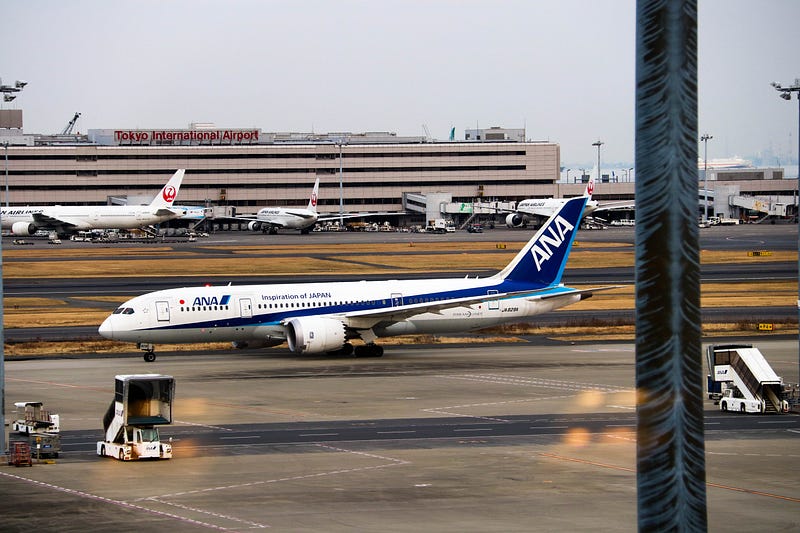
Photo by Marcus Ng on Unsplash


ANA GranWhale NFT marketplace

The newly introduced platform, called the “ANA GranWhale NFT Marketplace,” will showcase an exclusive digital art collection crafted by renowned aerial photographer Luke Ozawa.

The NFT marketplace commenced on Tuesday with the conversion of Ozawa’s first digital photograph into an NFT. One of these unique pieces will be auctioned alongside the positive film, which served as the source for the photo’s development. The starting price for this item is set at 100,000 yen, offering collectors the opportunity to acquire an NFT paired with a tangible artifact.

Following this initial collection, ANA plans to release its second batch of NFTs on June 7. This collection will feature the NFT rendition of the first Boeing 787 operated by ANA, presented in the form of a 3D model airplane. The offerings include a total of 1,574 items, comprising two types of 787 models, with each item priced at 7,870 yen.

ANA, a company with revenues of $12.2 billion in its previous fiscal year, aims to expand its NFT product line in the future. The airline envisions leveraging NFTs to enhance the customer experience and add value to its services.


Airline industry NFT Potential

The development of ANA Neo’s GranWhale initiative began in August of last year. The project focuses on creating a virtual travel platform that utilizes various technologies, including virtual reality (VR), to recreate destinations and cultures from around the world. These recreations take the form of metaverse parks, allowing users to explore and immerse themselves in virtual travel experiences.

ANA Neo President Mitsuo Tomita emphasized the significance of this venture, stating that the ANA GranWhale logo symbolizes the fusion of the virtual and the real, signifying the airline’s journey into the future, where Web3 and metaverse travel will become increasingly prevalent. “Through this initiative, we aim to unlock the potential of NFTs in the aviation industry, bringing together the digital and physical realms to create unique and memorable experiences that unite the world in wonder,” Tomita stated.


Club Toki NFTs

ANA is not the first Japanese airline to involve itself with the NFT space. Earlier this month, regional Japanese airline Toki Air announced the launch of Club Toki, a fan community centered around NFTs. The initiative claims that community members join by purchasing NFTs, and as NFT holders, they receive further club benefits. The NFTs can be purchased by credit card or payment in ETH, with the buyer needing a MetaMask wallet in order to receive the NFT.

In March, Argentinian low-cost airline Flybondi integrated Web3 into its ticketing process by issuing tickets as NFTs in a partnership with NFT ticketing firm, TravelX. With this initiative, Flybondi became the first airline to offer flight tickets as NFTs.

With its entry into the NFT marketplace, ANA joins the growing number of companies embracing Web3 technologies to offer unique digital assets and experiences. As the airline continues to develop its GranWhale platform, it seeks to cater to the evolving demands of the market and establish a presence at the intersection of aviation and the metaverse.


More to Read
View All
Web3 & Enterprise·

May 03, 2023

Momentica’s NFT Photo Cards Captivate K-Pop Enthusiasts

Momentica’s NFT Photo Cards Captivate K-Pop EnthusiastsMomentica, a fan-artist engagement platform, has been captivating K-pop enthusiasts with NFT photo cards featuring their favorite artists.Dunamu and HYBELevvels, the company behind Momentica, has garnered significant attention from both the tech and the entertainment industries, as it is a joint venture between Dunamu, the operator of Korea’s leading crypto exchange, and HYBE, the agency representing world-renowned boy band BTS.K-pop photo cardsOne of the primary goals of this promising company is to introduce the K-pop fandom culture to global audiences. K-pop fans enjoy collecting photo cards featuring their favorite singers or actors, and thanks to blockchain technology, these cards can now be transformed into non-fungible tokens (NFTs), ensuring their authenticity and preventing forgeries and counterfeits. Dunamu’s blockchain expertise has combined with HYBE’s intellectual property to create a range of collectible items for K-pop fans.In a recent interview with Donga Ilbo, Levvels CEO Cha Sang-hoon explained the company’s current status and future plans. Cha said that Levvels is primarily a blockchain-based Web3 company aiming to leverage various technological tools to offer a range of services.Levvels’ Momentica issues digital photo cards called TAKEs, which capture unique and memorable moments of artists, and the collection, appreciation, and trading of these cards are facilitated through the Momentica app. Fans can use Momentica to collect digital cards featuring artists such as Seventeen, Le Sserafim, and Fromis_9. The authenticity of TAKEs is verifiable, as they are recorded on the blockchain.© Pexels/Sebastian ErviPhysical to digitalMomentica transitions the fan experience from the physical world to the digital realm. Through the app, K-pop aficionados can now exchange photo cards, promote their favorite stars, and maintain a virtual album. Exclusive content, including pictures, videos, and handwriting from some artists, will be available only on Momentica.Cha mentioned that Momentica has users across 93 countries, with Koreans constituting 40% of the total. Japanese users represent over 30%, indicating the app’s strong presence in the Japanese market. Taiwan, Indonesia, and the US follow in the number of users. Overall, the app’s popularity aligns with regional interest in K-pop.Beyond HYBEWhile the current service focuses on limited collections of digital photo cards, Momentica plans to enhance the experience by allowing K-pop fans to personalize and directly exchange cards. The company is also working on collaborations with artists from labels beyond HYBE for them to participate in Momentica.

news
Policy & Regulation·

Nov 18, 2025

Japan to classify crypto as financial instruments, seeks 20% tax rate

Japan’s financial authority has decided to regulate cryptocurrencies under the Financial Instruments and Exchange Act, classifying them as financial instruments. According to a report by The Asahi Shimbun, the Financial Services Agency (FSA) intends to include this reclassification in an amendment scheduled for submission during next year’s regular Diet session. Under the revised framework, local crypto exchanges will be required to provide detailed disclosures on the 105 tokens they handle. This includes the existence of issuers, underlying technologies such as blockchain, and price volatility risks. The proposed regulations will also subject these classified cryptocurrencies to insider trading rules. Issuers and individuals affiliated with exchanges will be prohibited from trading based on material non-public information, such as the suspension of trading or an issuer’s potential bankruptcy.Photo by Karola G on PexelsToken coverage in JapanAlthough the regulatory list contains 105 tokens, data from the Japan Virtual and Crypto Assets Exchange Association (JVCEA), cited in a New Economy report, indicates that Japanese exchanges currently list 119 cryptocurrencies, leaving unclear how the remaining digital assets will be regulated.  To enhance investor protection, the FSA will mandate specific disclosure requirements for issuers that use token launches for fundraising. These entities will be required to report on their latest business activities and future issuance plans annually. This legislative push follows a discussion paper published by the FSA in April, which proposed dividing crypto assets into two distinct categories. The first category includes tokens issued for raising capital, while the second comprises established cryptocurrencies that are not primarily used for issuer fundraising, citing Bitcoin (BTC) and Ethereum (ETH) as primary examples. Tax cut from 55% to 20%In parallel with these regulatory changes, the FSA plans to request tax reforms similar to those applied to traditional stock trading. Under Japan’s current tax code, taxes on cryptocurrency gains can reach as high as 55%. The agency proposes reducing this rate to a flat 20% in next year’s tax reform. Responding to the news on X, Changpeng Zhao, the founder and former CEO of Binance, welcomed Japan’s initiative to lower crypto taxes. However, he noted that the proposed 20% rate remains high compared to other jurisdictions, many of which do not levy capital gains taxes on crypto at all. Crypto ETF CFDs set to closeThe government’s move to tighten regulations is already reshaping the financial product landscape. One immediate impact is visible in contracts for difference (CFDs) linked to crypto ETFs. As reported by FinanceFeeds, IG Securities, the Japanese subsidiary of the London-listed IG Group, announced changes to its offerings. The firm will stop accepting new orders for CFDs tied to BlackRock’s iShares Bitcoin Trust and its Ethereum equivalent on Dec. 1. Open positions are scheduled to be automatically closed on Jan. 31 of next year. If clients do not settle their holdings prior to this date, the final settlement will be calculated based on the official closing price of that final day. This discontinuation adheres to an FSA decision that derivatives referencing Bitcoin or Ether ETFs must be regulated as crypto-related derivatives rather than standard ETF products. These instruments, now under the crypto-related derivative classification, fall under stricter rules regarding investor protection, operational oversight, and licensing. Japan’s latest regulatory and tax initiatives reflect a broader effort to bring clarity and investor protection to the country’s growing crypto market. As the framework evolves, the industry will be watching how the new rules influence participation and market structure. With lower taxes and stricter oversight on the horizon, both investors and exchanges may need to adjust, potentially reshaping liquidity and Japan’s overall appeal while prompting trading platforms to rethink their product offerings. 

news
Policy & Regulation·

Jul 24, 2023

Shanghai Embraces Blockchain, AI, and Digital Yuan with New Guidelines

Shanghai Embraces Blockchain, AI, and Digital Yuan with New GuidelinesIn a bid to stay at the forefront of technological advancements, the government of China’s largest and most populous city, Shanghai, has issued a set of guidelines aimed at promoting the widespread adoption of blockchain, the metaverse, and the digital yuan.Photo by Edward He on UnsplashIntegrating blockchain technologyThe objective of the measure is to further the use of these technologies across various industries within the city. Leading enterprises across a range of industry sectors, such as automotive, commodity trading, and e-commerce, are now required to look to incorporate these technologies into their operations.The guidelines, which were published last Tuesday, outline the government’s commitment to providing support for platforms that seek to enhance digitalization in production, operations, and management processes. Additionally, they emphasize the development of information technology services centered around big data, blockchain, the Internet of Things, artificial intelligence, and the mobile Internet.Bolstering commodity tradingA key focus for the government is the establishment of a robust internet system to bolster its local commodity trading service. This move is driven by a reliance on “the national financial factor market,” which aims to upgrade the over-the-counter derivatives platform for bulk commodities and strengthen the linkages between futures and cash.Furthermore, the guidelines pave the way for expanding e-commerce service platforms for industrial products, setting up a digital transformation service platform, and fostering the development and application of data resources.Shanghai’s status as China’s financial hub makes it an ideal testing ground for innovative technologies like blockchain and AI. However, China’s approach to cryptocurrency is more complex. It involves support for blockchain technology while at the same time applying strict measures against crypto trading and mining.Aligning with central government policyThe Chinese government’s support for blockchain technology stems from its recognition of blockchain as the underlying foundation of cryptocurrencies. Judging by the blockchain initiatives forwarded by the central government and regional Chinese administrations in recent months, it’s clear that China is keen to develop leadership in the use of blockchain across various sectors. It takes a different view, however, when it comes to projects related to decentralized cryptocurrencies and crypto trading.In recent years, China has cracked down on cryptocurrency activities. In 2013, the government banned initial coin offerings (ICOs), a fundraising method used for cryptocurrency projects. Subsequently, cryptocurrency exchanges were banned in 2017, followed by a prohibition on cryptocurrency mining in 2021.Several factors contribute to the Chinese government’s cautious approach to cryptocurrency. One major concern is financial stability, as crypto can be exploited for illicit activities like money laundering. According to a recent report, Chinese authorities are redoubling their efforts in pushing back against the use of crypto as they’re finding that it is being used to exploit capital control loopholes.These recent guidelines from Shanghai’s administrators aim to capitalize on the transformative potential of emerging technologies while ensuring prudent regulation and control over cryptocurrency-related activities in line with current central government policy emanating from Beijing.

news
Loading