Top

UAE institutions deepen Bitcoin positions prior to market pullback

Markets·November 24, 2025, 2:24 AM

Major investment entities linked to the Abu Dhabi government increased their exposure to Bitcoin in the third quarter, according to newly released data. These moves came ahead of a broader decline in the digital asset market amid shifting macroeconomic conditions in the U.S.
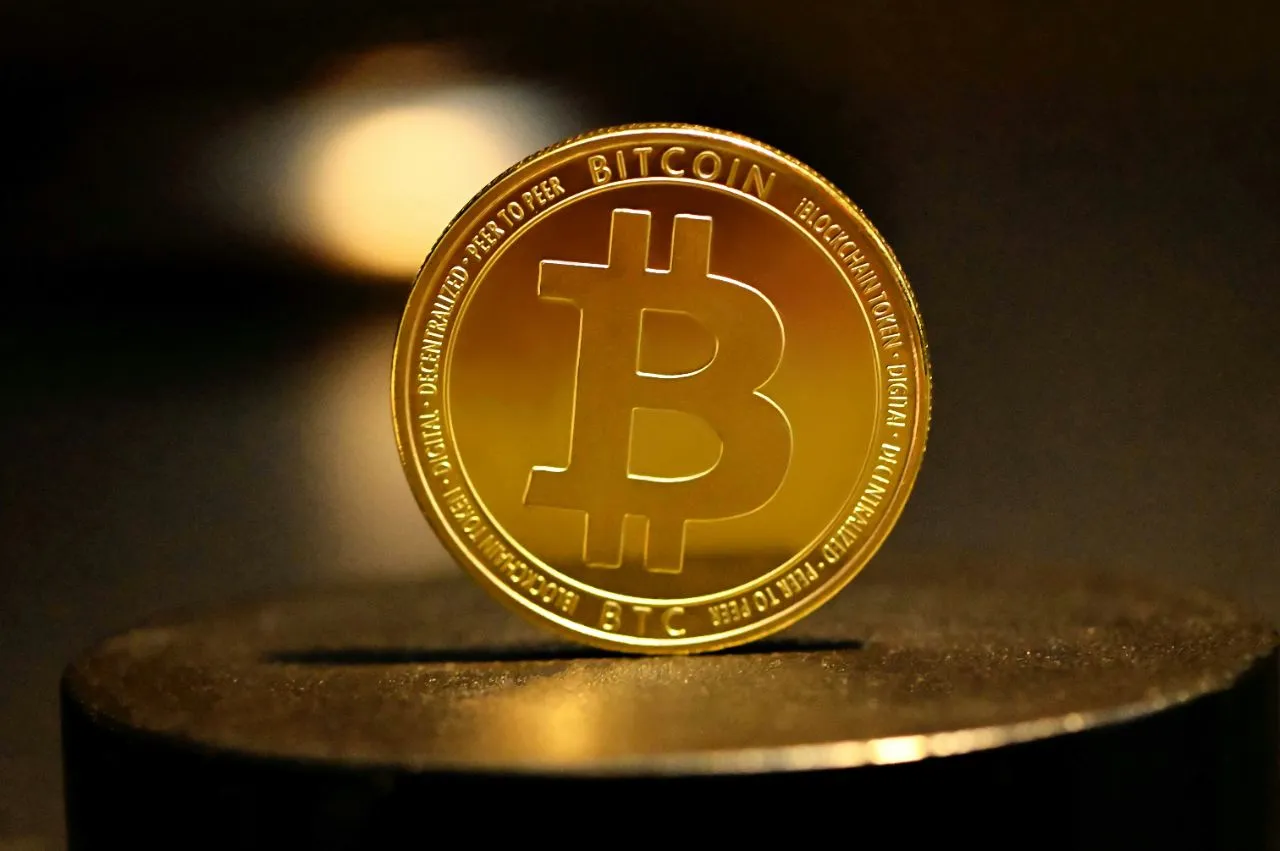
https://asset.coinness.com/en/news/2a66d7f889880f8dd604b434e8e720f0.webp
Photo by Kanchanara on Unsplash

Institutional accumulation

The Abu Dhabi Investment Council (ADIC), a subsidiary of Mubadala Investment Company, more than tripled its holdings in BlackRock’s iShares Bitcoin Trust ETF (IBIT) during the third quarter, increasing its position from 2.4 million to nearly 8 million shares, Bloomberg reported.


An ADIC spokesperson told Bloomberg that the organization views Bitcoin as “a store of value similar to gold,” and described the allocation as “part of a long-term diversification strategy.”


Other UAE-based conglomerates are also maintaining sizable Bitcoin positions. The Royal Group, which is linked to the Abu Dhabi royal family, holds around 6,450 BTC, according to a Crypto Briefing report citing Arkham data. The assets were accumulated through the group’s majority-owned subsidiary, Citadel Mining.


Regulatory and infrastructure developments

The UAE’s efforts to position digital assets as a driver of economic growth are also reflected in its regulatory framework.


A recent Global Digital Assets Report by the Global Finance & Technology Network (GFTN) identified the UAE as one of seven jurisdictions worldwide whose crypto-exchange rules meet all three key standards for AML/CFT compliance: know-your-customer (KYC) and ID verification, suspicious transaction reporting, and implementation of the Financial Action Task Force (FATF) Travel Rule.


The report characterized the UAE’s approach as “federated oversight with zone-specific AML regimes.” Responsibilities are divided among the Securities and Commodities Authority (SCA) at the federal level, the Virtual Assets Regulatory Authority (VARA) in Dubai, and the Financial Services Regulatory Authority (FSRA) of the Abu Dhabi Global Market (ADGM).


In decentralized finance (DeFi), VARA has issued specific rulebooks covering activities such as lending and borrowing. ADGM has introduced DLT Foundations Regulations to provide legal structures for decentralized autonomous organizations (DAOs), while DeFi operations within the jurisdiction still require authorization from the FSRA.


In addition to regulatory developments, the UAE is also advancing the practical deployment of digital asset technologies. In the payments sector, Abu Dhabi Airport has signed a memorandum of understanding (MOU) with Al Hail Holding to pilot stablecoin payment options and digital wallets for travelers, according to Cryptopolitan.


Bitcoin declining below $87K

The buildup in institutional exposure has occurred against a backdrop of declining market prices. Bitcoin (BTC) reached a peak of $126,080.00 on Oct. 6 before dropping to roughly $87,000 as of Nov. 21, its lowest level since April 21. Technical indicators show that Bitcoin has fallen below both its 50-day and 200-day moving averages.


IBIT has followed a similar trajectory. After closing the third quarter at $65 per share, the ETF rose to $71 on Oct. 6 before falling to $48.96 by Nov. 20. Two days before that, the fund recorded a net outflow of $513.47 million, the largest in its history, according to data from Trader T.


Reuters reported that the recent weakness in Bitcoin and other risk assets is tied to the U.S. Federal Reserve’s cautious stance on rate cuts amid persistent inflation pressures. That concern was reinforced on Nov. 20 when the U.S. Bureau of Labor Statistics released September nonfarm payrolls data that had been delayed by the federal government shutdown, showing a figure of 119,000 against the market forecast of 53,000. The stronger-than-expected labor reading has reduced expectations for a rate cut next month, adding pressure to both equities and Bitcoin.

 

More to Read
View All
Policy & Regulation·

Sep 25, 2024

Philippine government agency aiding youth in exploring blockchain and NFTs

The Department of Science and Technology-Advanced Science and Technology Institute (DOST-ASTI) in the Philippines has launched an initiative to educate the Southeast Asian country’s young people in relation to blockchain technology and non-fungible tokens (NFTs). The DOST published a blog article on its website on September 23 titled “Opening opportunities for the youth: DOST-ASTI highlights blockchain applications across various sectors.” It highlighted that technologies such as blockchain are “key forces reshaping how public and private institutions operate.” It’s on that basis that the government agency believes that there is a need to familiarize the country’s youth with blockchain technology, digital assets and NFTs. Photo by Choong Deng Xiang on UnsplashTech forum With that objective in mind, DOST-ASTI held a tech forum titled  “ASTIg Tech Talks Season 2: Blockchain for Young Innovators” on September 20 in Pasay City to fulfill that objective of aiding Filipino youngsters in becoming better acquainted with blockchain technology. The event formed part of the second National Youth Science, Technology and Innovation Festival (NYSTIF). In that effort, the agency is placing a focus on the real-world applications associated with blockchain technology, and with that, an emphasis on the fostering of this innovation going forward. DOST-ASTI placed blockchain in the same category as other emerging innovations such as the Internet of Things (IoT) and artificial intelligence (AI), pointing out that these are tangible innovations rather than hyped buzzwords. Job opportunities DOST-ASTI Senior Science Research Specialist Roxanne Aviñante spoke at the event, introducing the concept of blockchain to those participating students in attendance. Aviñante outlined that the emerging technology is building momentum and with that, increasingly there are job opportunities opening up within the sector. While acknowledging that blockchain’s first application was cryptocurrency, Aviñante pointed out that other use cases are being found. With that, she referred to “Self-Sovereign Identity Empowerment: Reinventing Rights and Attributes” (SIERRA), a blockchain-based system for managing intellectual property that is being developed by DOST-ASTI. Marc Jerome Tulali, a science research specialist at DOST, discussed the use of blockchain in voting systems and how it addresses deficiencies in traditional voting systems. Tulali claimed that blockchain can enhance traceability and transparency, as it provides a clear flow and record of product movement. Additionally, its characteristics make it ideal in addressing fraud and counterfeiting risks. Tulali recommended participating students to enroll in online educational courses in order to learn more about the field. He also provided details of four sample careers in blockchain, including blockchain developer, blockchain architect, NFT artist and blockchain researcher, as potential job opportunities for the students in the future. The Philippines has featured consistently within the top twenty of nations on Chainalysis’ Global Crypto Adoption Index in recent years. It has long been considered an ideal market for furthering crypto-based payments, given the large Filipino diaspora sending millions of dollars back home from overseas each year. With that remittance market in mind, Australian startup Stables Money recently partnered with Philippines-based digital assets platform Coins.ph to use a Philippine peso-based stablecoin for remittances.

news
Web3 & Enterprise·

Sep 29, 2023

Nomura Subsidiary Achieves In-Principle Approval in Abu Dhabi

Nomura Subsidiary Achieves In-Principle Approval in Abu DhabiThe digital assets subsidiary of Japanese financial services conglomerate Nomura has been granted in-principle approval by the Abu Dhabi Global Market (ADGM) to offer broker-dealer and asset/fund management services for both digital and traditional assets.Photo by Belinda Fewings on UnsplashPreliminary license to tradeThe development is a shot in the arm for Laser Digital Asset Management while serving to highlight Abu Dhabi’s growing prominence as a global center for digital assets, attracting prominent players such as Binance and Kraken.Led by CEO Jez Mohideen, Laser Digital is now on the path toward securing full financial services authorization in Abu Dhabi, subject to meeting undisclosed conditions specified in the approval. The company is enthusiastic about the ADGM’s transparent and comprehensive regulatory framework.Speaking to that, Mohideen stated: “We are thrilled to be part of their comprehensive and clear regulatory framework, which is creating a global hub for digital assets.”International free zoneThe ADGM, an international financial free zone situated in Abu Dhabi, covers nearly 15 square kilometers across two islands. It hosts a registration authority, regulatory authority, and a court system functioning under common law principles. This favorable regulatory ecosystem has been instrumental in attracting digital asset firms to establish a presence in the UAE’s capital.Laser Digital’s approval follows a series of recent cryptocurrency-related approvals in Abu Dhabi. Zodia Markets, backed by UK bank Standard Chartered, was recently granted permission to operate as a crypto broker, adding to the growing list of companies making strides in the region.Binance, one of the world’s largest cryptocurrency exchanges, received in-principle approval from the ADGM in April 2022 and subsequently obtained full financial services permission in November of the same year. Kraken, along with firms like UAE-based M2 and Bahrain-based Rain, have also received permissions to operate within the ADGM in recent years.Building on Dubai achievementLaser Digital’s approval in Abu Dhabi comes on the heels of its earlier achievement of obtaining an operating license from Dubai’s Virtual Asset Regulatory Authority (VARA). Alongside these regulatory milestones, Laser Digital introduced an institutional Bitcoin Adoption Fund in August. Despite its relatively short existence since its establishment in September 2022, the firm has made significant strides.Nomura’s engagement extends beyond Laser Digital, as it is also part of the Komainu joint venture alongside cryptocurrency firms CoinShares and Ledger. Komainu secured its operating license from Dubai’s VARA in August, contributing to the expanding community of crypto-focused businesses in the region.It is worth noting the UAE’s diversified approach to cryptocurrency regulation, offering five distinct regulatory regimes for cryptocurrencies, including the ADGM and VARA. Legal experts from White & Case have recently assessed these regulatory frameworks, highlighting the UAE’s commitment to fostering a progressive and well-regulated environment for digital assets.Nomura’s Laser Digital is well-positioned to play a pivotal role in the digital asset sector in Abu Dhabi, given that it’s leveraging the favorable regulatory environment of the ADGM and the UAE’s dedication to becoming a global digital asset hub.

news
Web3 & Enterprise·

Dec 06, 2023

Bitcoin records this year’s highest in Korean market, surpassing KRW 60M

Bitcoin records this year’s highest in Korean market, surpassing KRW 60MBitcoin, the world’s largest cryptocurrency, exceeded the KRW 60 million (approximately $45,700) mark in the South Korean market on Wednesday (local time), reaching its highest value of the year.So far today, the nation’s leading crypto exchange, Upbit, saw Bitcoin’s price soaring to a daily peak of KRW 60,642,000. Meanwhile, another major trading platform, Bithumb, observed Bitcoin’s value touching a daily high of KRW 60,775,000.Photo by André François McKenzie on UnsplashHighest since November 2021This is the first time Bitcoin went above the KRW 60 million mark since November 2021. Amid this development, the Kimchi premium, a term indicating the gap in crypto prices between Korean exchanges and their foreign counterparts, has exceeded 4%. According to data from crypto information platform CoinNess, at the time of publication, the average price of Bitcoin on Korean platforms is KRW 59,986,250, while the average price of Bitcoin on foreign platforms is KRW 57,605,406.Ethereum prices are also on the rise. On Upbit, Ethereum reached its highest point of the day at KRW 3,163,000, and on Bithumb, it peaked at KRW 3,162,000.Rate hike halt and Bitcoin halvingThe ongoing surge in Bitcoin’s value is widely believed to be influenced by a halt in global interest rate hikes and the anticipated Bitcoin halving event scheduled for April 2024. Additionally, the potential approval of spot bitcoin exchange-traded funds (ETFs) by the U.S. Securities and Exchange Commission is seen as another significant factor contributing to the rise in the digital currency’s prices.Meanwhile, the Crypto Fear and Greed Index from software comparison platform Alternative.me currently indicates a sentiment of “Greed” with a score of 72. This index assesses various factors, including volatility, market momentum and volume, social media buzz, market dominance and trends. The scale ranges from 0 to 100, where 0 signifies “Extreme Fear” and 100 represents “Extreme Greed.” Scores nearer to 0 suggest increasing fear among investors, potentially signaling a buying opportunity. On the other hand, scores approaching 100 imply growing greed, hinting at the possibility of a market correction.Korean won as the top fiat trading pairDuring this latest Bitcoin rally, where the cryptocurrency climbed to over 50% of its highest price in almost two years, South Korean crypto traders have played a significant role, Bloomberg reported, citing data from CCData. In November, the South Korean won exceeded the U.S. dollar as the top fiat trading pair in the crypto market for the first time.

news
Loading