Top

Renault Korea Establishes Metaverse Space for Car Enthusiasts

Web3 & Enterprise·May 26, 2023, 2:54 AM

Renault Korea Motors made an announcement on Friday that it will establish the Renault Korea Hub, an immersive automotive experience located within a metaverse, according to a report by Korean news media Dailian. The company intends to commence operations of this unique venture in the upcoming autumn season.

Photo by Richard Horvath on Unsplash


The Sandbox and Korean brands

The Renault Korea Hub will operate within K-verse, a designated area of Korean brands within The Sandbox, a metaverse platform based on blockchain technology.

The Sandbox metaverse has recently announced its latest Korean brand partners, and as part of this development, a land sale event is being organized where their adjacent land will be raffled off. The event is named “Hallyu Rising.” Hallyu or the Korean Wave is a cultural phenomenon that has experienced a significant surge in global popularity since the 1990s, mainly thanks to its pop songs and TV shows.

During the land sale event, users have the chance to acquire land adjacent to various prominent brands associated with Korean culture. This will be made possible through raffles and auctions facilitated by the metaverse platform. Other notable partners besides Renault Korea are Channel A, a TV broadcasting network; Netmarble, a game publisher; and CJ ENM, an entertainment company.


Unique experiences for car enthusiasts

The Renault Korea Hub, the first of its kind in Korea, will provide a unique space for automobile enthusiasts to indulge in a diverse array of experiences and games. As per the automaker’s announcement, visitors will have the chance to engage in activities like developing their own vehicle designs.

Visitors will have the opportunity to experience Renault Korea’s vehicles in voxel form, allowing them to explore the technology, design philosophy, and stories associated with each vehicle. A voxel can be understood as a 3D counterpart to a 2D pixel, representing a value on a regular grid in 3D space.

Renault Korea CEO Stéphane Deblaise stated that the carmaker intends to continue its pursuit of diverse Web 3.0-based activities centered around metaverses and non-fungible tokens (NFTs). He said the automaker’s projects aim to establish a connection between customers’ mobility experiences and their digital lives. Deblaise also highlighted that these projects will undergo further development through the integration of artificial intelligence (AI) technologies.


Storytelling contest

Earlier this month, Renault Korea introduced the storytelling contest titled “create your SM6,” which concludes today. This campaign inspires customers to utilize emerging AI technologies to design their own SM6 vehicles and transform them into NFTs. The SM6, Renault Korea’s midsize sedan, initially debuted in 2016 and has undergone subsequent facelifts to enhance its features and aesthetics.

The top ten performers in the storytelling contest, who create captivating renditions and stories featuring the SM6, will be rewarded with utility NFTs and KLAY, the native token of the Klaytn network. The first-place winner will receive a prize package consisting of 1 million KRW ($750) worth of KLAY, along with six SM6 NFTs.

The announcement of the winners is scheduled to take place between May 31 and June 9. Following the announcement, the airdrop of rewards will be conducted from June 30 to July 7.
More to Read
View All
Policy & Regulation·

May 23, 2023

Huobi Falls Foul of Malaysian Regulator

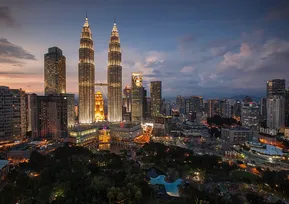
Huobi Falls Foul of Malaysian RegulatorMalaysia’s Securities Commission, the regulator responsible for investor protection and market integrity in the South East Asian country, has closed down the Malaysian operations of Seychelles-headquartered global crypto exchange Huobi.Photo by Zukiman Mohamad on PexelsThe regulator announced the shutdown via a press release published to its website on Monday. The Commission outlined that it has taken action against both the exchange, Huobi Global Limited, and its CEO Leon Li. It cites “operating illegally in Malaysia,” given that it was operating as an unregistered digital asset exchange (DAX) as the rationale for the decision.With the enforcement action has come an order to Huobi from the regulator to “cease circulating, publishing or sending any advertisements, whether in email or on social media platforms, to Malaysian investors, and to stop its operations in the country, including to disable its website and mobile application on several platforms such as Apple Store, Google Play and any other digital application platform.”Compliance concernsThe Securities Commission is putting the onus on the Huobi Global CEO to ensure that this order is complied with. The regulator said that it had concerns about the platform’s compliance with local regulatory requirements. It further outlined that it is an offense in Malaysia to operate a DAX without having completed registration with the Commission as a Recognized Market Operator (RMO) under Section 7 (1) of the Capital Markets and Services Act 2007.The Malaysian regulator also took the opportunity to warn citizens that they should only seek to trade on platforms that are registered RMOs and that for right now, those that have funds on the Huobi platform should withdraw their assets and cease trading on the platform.Expected newsHuobi doesn’t seem to have made an official statement relative to the Malaysian Security Commission’s decision via its official media channels. However, it did provide the following response to CoinTelegraph on Monday:“In response to recent reports, we would like to clarify that the situation outlined pertains to the previous Huobi entity and former shareholders. This is not associated with the current Huobi platform, which adheres to strict regulatory compliance globally.”Taking that response at face value, the company doesn’t seem to be particularly bothered about the enforcement action. It seems as if Huobi were already prepared for this eventuality, by starting a new corporate entity from scratch.In August 2022, the Malaysian regulator issued Huobi Global with a lesser enforcement action by adding the company to its investor alert list. It chastised the firm for operating without regulatory approval.Malaysia hasn’t been a hotbed of activity where crypto and digital assets have been concerned and certainly doesn’t compare with Asian centers like Hong Kong and Singapore who are actively chasing crypto business. However, in March of last year, the country’s Deputy Minister of Communications and Multimedia, Zahidi Zainul, said that the Southeast Asian country should recognize crypto assets like Bitcoin as legal tender.In 2021, Malaysia’s central bank joined a Bank of International Settlements (BIS)-led trial to explore the proof of concept of a central bank digital currency (CBDC), in order to enhance technical and policy capabilities should there ever be a need to issue one.

news
Policy & Regulation·

Oct 31, 2023

Indonesia Sees Further Crypto Investor Growth

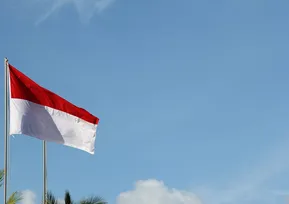
Indonesia Sees Further Crypto Investor GrowthRecent data released by the Commodity Futures Trading Supervisory Agency (Bappebti) underscores the robust growth of the crypto investment landscape in Indonesia.Photo by Nick Agus Arya on Unsplash10.1% year-on-year increaseAccording to reports published in recent days in local media, as of September 2023, the country boasts 17.91 million crypto investors, marking a noteworthy 0.67% uptick compared to the previous month of August, which registered 17.79 million individuals.Over the span of a year, from September 2022 to September 2023, the Southeast Asian nation witnessed an influx of approximately 1.64 million new crypto investors, showcasing a remarkable 10.1% increase from the 16.27 million reported in September 2022.Emerging from a slowdownWhile this growth signals a positive trend, a noteworthy observation pertains to the deceleration in crypto investor growth from October 2022 to August 2023. The data reveals that during this period, the increase in the number of crypto investors in Indonesia never exceeded 1%. This slowdown can be attributed to the global crypto market’s trend characterized by uncertainty and a downward trajectory.Tirta Karma Senjaya, Head of the Bappebti Commodity Futures Trading Development and Development Bureau, comments on this phenomenon, stating, “Growth in the number of crypto investors in Indonesia continues to increase, but investors are still looking for the right time to buy crypto.”Furthermore, Bappebti highlights a reduction in the value of crypto transactions in Indonesia for September 2023, amounting to IDR 7.96 trillion ($502 million). This marks a decrease of 25.2% when compared to the preceding month, which recorded a total of IDR 10.64 trillion. In contrast to the previous year, this decline reflects a substantial 54.7% contraction from the September 2022 figure of IDR 17.57 trillion.Yudhono Rawis, CEO of Tokocrypto, an Indonesian crypto exchange platform, suggests that global conditions, including economic and regulatory uncertainties, have significantly impacted the crypto market’s evolution, both within Indonesia and worldwide. Despite the recent slowdown in growth, Indonesia’s crypto market continues to exhibit considerable potential.Bitcoin resurgenceYudhono remains optimistic, anticipating that the growth and trading volumes of crypto assets in October will surpass previous records. This optimism stems from the surge in Bitcoin prices, which soared in excess of $35,000 (approximately IDR 556.5 million) towards the end of October. This milestone marks Bitcoin’s highest point in nearly 18 months and signifies a mounting interest in the crypto market on a global scale.In a statement to Voice of Indonesia, Yudhono stated:“We are confident that the growth of investors and transactions will continue to increase. The increase in Bitcoin prices and increasingly strong interest in the crypto market in general are indications that these digital assets are increasingly accepted by society. We hope that this trend will continue and bring benefits to the entire ecosystem crypto.”The crypto investment sector in Indonesia continues to experience steady growth, albeit amid global market fluctuations. With Bitcoin’s resurgence and a growing appetite for digital assets, the outlook for Indonesia’s crypto market is positive.

news
Web3 & Enterprise·

Sep 25, 2023

CityLabs Secures 8.55% Stake in Gopax

CityLabs Secures 8.55% Stake in GopaxCityLabs, a company listed on the KOSDAQ stock exchange, has stepped in as a rescue investor for the South Korean cryptocurrency exchange Gopax.The company announced last Friday that it has acquired a total of 76,308 shares of Streami, the operator of Gopax, securing an 8.55% stake in the company. The investment amounts to a total value of KRW 5.4 billion (approximately $4 million).Photo by Precondo CA on UnsplashGopax’s turbulent historyGopax has recently been facing public and regulatory scrutiny due to its internal struggles, such as undergoing major changes in leadership earlier this year following its acquisition by Binance, with Lee Jun-haeng resigning and Binance’s Asia Pacific Head, Leon Sing Foong, taking over.After this event, Streami submitted reports to the Financial Intelligence Unit (FIU) under the Financial Services Commission (FSS) in line with requirements to inform the regulatory body about such changes. However, due to delays in the FIU’s approval process likely influenced by Binance’s various legal and regulatory challenges, there was yet another leadership transition — Foong stepped down, and Lee Joong-hoon, Gopax’s former Vice President, took over. Notably, Foong recently left Binance altogether amid regulatory crackdowns.During this process, Gopax also struggled to make principal and interest payments on its own decentralized finance (DeFi) service, GOFi, in the wake of last year’s FTX collapse. The amount of customer funds locked in GOFi totals KRW 56.6 billion, according to an announcement made by Gopax in April. Binance acquired a stake in Gopax on the condition that it would inject enough capital into Gopax to repay this amount in full.CityLabs steps inAs a result, there have been speculations that a Korean company would invest in Gopax and deliver the exchange from its woes. Some even predicted that this company might become a major shareholder, although CityLabs has acquired only an 8.55% stake due to the fact that the funds required to do so far exceed CityLabs’ annual revenue.Last year, CityLabs reported a consolidated revenue of KRW 28.4 billion and an operating loss of KRW 6.1 billion. Although its revenue increased by 2% compared to the previous year, operating losses grew by 46.9%. While the company may not have sufficient funds at present to become a major shareholder, there lies the possibility that it may increase its stake in the future.The acquisition seems to be driven by CityLabs’ interest in blockchain businesses and the crypto market. While it currently specializes in intelligent transportation systems (ITS), it was formerly Dayli Blockchain, which was affiliated with the crypto exchange Coinone and Dayli Financial Group (now known as Gowid). In 2017, Yellow Mobile became the largest shareholder of Dayli Financial, and in February 2018, it became the largest shareholder of DailyBlockchain, making Dayli Blockchain its subsidiary. Coinone was also a subsidiary of Yellow Mobile at the time. All of these ownership relations have now been restructured.CityLabs has thus been involved in the blockchain industry for some time now with previous connections to cryptocurrency exchanges while also offering decentralized identity (DID) and blockchain as a service (BaaS) products. Observations point to the possibility that its history has influenced its decision to invest in Gopax.“We acquired shares to secure an entry point into the crypto market and position ourselves as a major player,” the company said in a statement.Meanwhile, financial authorities are considering plans to examine the eligibility of major shareholders when reviewing applications from crypto businesses.

news
Loading