Top

Coinbase Effects International Expansion By Extending Singapore Offering

Web3 & Enterprise·May 18, 2023, 11:59 PM

In further proof of Coinbase’s recently-adopted strategy of focusing on global expansion, the company has just extended the range of its product offering to Singaporean customers.
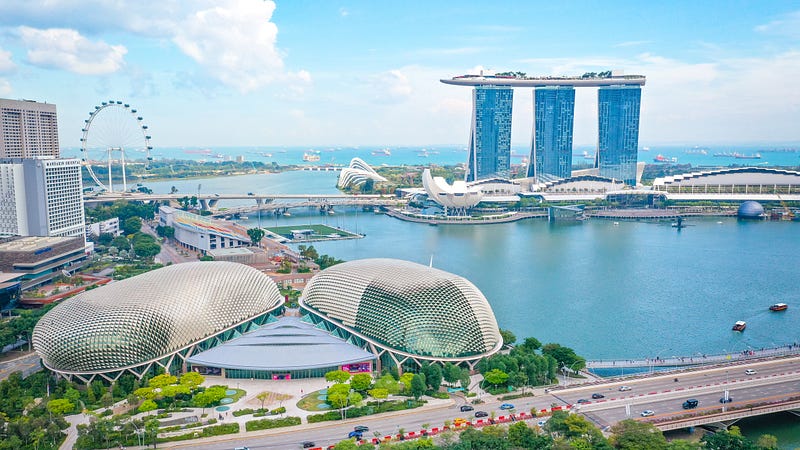
Photo by Meriç Dağlı on Unsplash


No Fees on USDC

The move was announced by way of a blog post published to the company’s website on Tuesday. The expansion entails the introduction of fee-less purchases of the USDC stablecoin for users who buy it with the Singaporean dollar (SGD). Furthermore, it is enabling Singaporean customers to earn rewards on the USDC that they hold on the platform. USDC trading pairs are being added that will allow users to trade USDC directly with over two hundred digital assets.


Taking staking overseas

Additionally, Coinbase Global is rolling out staking to the Singaporean market. Users will be empowered with the ability to stake the following digital assets: ETH, SOL, ADA, ATOM, and XTZ.

It’s interesting that Coinbase feels enabled in rolling out a digital asset staking service in this overseas market. In March of this year, the company received a Wells Notice — a formal notice informing the recipient that there are firm plans to bring enforcement actions against it — from the Securities and Exchange Commission (SEC) in the United States. The notice was sent in relation to digital assets covered under Coinbase’s staking product offering, Coinbase Earn.

In highlighting the issue, the company bemoaned the fact that the SEC had gone down the route of issuing a Wells Notice without it expressing a single specific concern about any specific digital asset offered by the platform in advance of taking the action.


Global strategy

Coinbase Founder and CEO Brian Armstrong has been outspoken in criticizing the regulatory approach to crypto in the United States. He expressed that at the time of having received the Wells Notice earlier this year, and again last week, when he and key Coinbase executives visited Abu Dhabi and Dubai in the United Arab Emirates.

On the day of SEC Chair Gary Gensler’s appearance before the House Financial Services Committee on Capitol Hill in Washington, D.C. a few weeks ago, Armstrong signaled that unless there was a more accommodating regulatory approach taken to crypto in the US, Coinbase would increasingly be looking to expand operations overseas.

A short time later, it emerged that the company had obtained a license to trade in Bermuda. At last week’s Dubai Fintech Summit, Armstrong applauded the regulatory approach taken by the UAE and indicated that the company is interested in opening a base in Abu Dhabi.


Positive survey results

Against this background, it’s not surprising to hear that Coinbase has expanded its service offering in Singapore, another aspiring global hub for crypto business. As part of reviewing and updating its business offering in the city state, Coinbase carried out a survey of prospective customers in Singapore. It found that 25% of Singaporeans consider crypto as the future of finance, on a par with findings in the US, and higher than the 17% reported in the UK.

Among its other findings, security concerns and price volatility of digital assets are still a barrier to entry for many. Of those who are already crypto-native, they tend to trade higher trade amounts, and with greater frequency, if from higher income backgrounds.

More to Read
View All
Web3 & Enterprise·

Dec 23, 2024

IOTA co-founder meets with Philippine Secretary of Trade to further adoption

Dominik Schiener, the co-founder of distributed ledger technology (DLT) project IOTA, outlined on X on Dec. 12 that he had met with Cristina Aldeguer-Roque, Secretary of Trade of the Philippines. Commenting further, Schiener wrote: “We are looking forward to expand IOTA and our trade infrastructure TWIN across South East Asia in 2025.” Photo by iSawRed on UnsplashCutting through trade barriersTWIN refers to IOTA’s Trade Worldwide Information Network, a continuation of another longstanding IOTA project, the Trade and Logistics Information Pipeline (TLIP). The objective of TWIN is to cut through trade barriers and improve connections between disparate national trading systems. In rolling out the network, IOTA has formed a consortium which includes organizations such as TradeMark Africa, the Global Alliance for Trade Facilitation and the Chartered Institute of Export & International Trade. TWIN seeks to optimize trade processes by merging physical goods with digital infrastructure, eliminating inefficiencies and boosting transparency. Schiener anticipates that once participants place data on the network, they will ultimately tokenize assets on it. In turn, this will result in utility for the IOTA token, once TWIN is released on the IOTA mainnet. The TWIN project is currently staffed by 28 people but Schiener believes that this will grow to 100 people over the course of the next two years. The project originally emerged in Germany, with the IOTA Foundation having its headquarters in Berlin. Initially, IOTA concerned itself with European blockchain initiatives in trying to find its place in the industry. Earlier this year, its Web3 identity authentication solution was chosen by the European Commission for inclusion within the European Blockchain Sandbox Initiative (EBSI). In August, the IOTA Foundation completed the final stage of the European Union’s blockchain pre-commercial procurement (PCP) program. Strategic expansionHowever, over the course of the past year, the project has expanded towards searching for product market fit within emerging markets. In November 2023, the project established the IOTA Ecosystem DLT Foundation within the Abu Dhabi Global Market (ADGM) financial center in the United Arab Emirates (UAE). This marked the first DLT foundation to have established itself within the ADGM.  $100 million in funding was provided with the objective of nurturing the IOTA ecosystem and accelerating the growth of the IOTA protocol. Since then, the TON Foundation and the Aptos Foundation have moved to register under the ADGM’s DLT Foundations framework. East Africa has been ground zero for IOTA’s attempts to enhance cross-border processes related to trade documentation, where it has been working with TradeMark Africa and local regulators. In Singapore, the IOTA Foundation has collaborated with global innovation ecosystem Tenity to establish the IOTA Accelerator, a 12-week initiative aimed at assisting early-stage startups concerned with real-world asset (RWA) tokenization within the IOTA ecosystem. Schiener’s meeting in the Philippines would suggest that the project is making greater efforts still in terms of bringing about the adoption of the technology in Southeast Asia. In his X post, Schiener wrote: “Let's connect the world with sovereign digital infrastructure.”

news
Policy & Regulation·

Dec 23, 2023

3AC liquidators estimate 46% recovery while BVI court freezes $1B

3AC liquidators estimate 46% recovery while BVI court freezes $1BThe joint liquidators of the now-defunct Singaporean crypto hedge fund Three Arrows Capital (3AC) have provided creditors with an estimated 45.74% recovery rate for their claims in the bankrupt estate. Meanwhile, in parallel proceedings in the British Virgin Islands (BVI), a court has frozen $1 billion of founders’ assets.According to The Block, the details were disclosed in a December report to creditors by joint liquidators Russell Crumpler and Christopher Farmer of Teneo, the firm appointed to oversee the liquidation of the failed business.$1.16B in assetsAs of Dec. 18, the estimated value of 3AC’s assets was reported to be $1.16 billion, while claims totaling $2.7 billion are expected to be recognized for distribution. The liquidators highlighted that settlements in litigation against various parties, including DCG, Genesis and BlockFi, increased reported assets by an estimated $292 million. It’s important to note that the BlockFi settlement is still pending approval.A total of 154 claims, valued at $3.4 billion, were filed against the 3AC estate. The report indicates that $200 million of claims were not admitted for distribution, and $322 million in claims have either been rejected or are expected to be rejected. Additionally, $76 million in claims are currently under dispute. The report reveals that initial distributions to creditors are being planned for the first quarter of the upcoming year.Illiquid tokensThe breakdown of assets reveals that a large majority are illiquid tokens, subject to vesting periods, comprising 82% of the total. Only 6% of the portfolio is liquid, while equity and investments account for 6.9% and 4.8% is in cash. These illiquid tokens, totaling $563 million at current prices, consist of 13 different tokens with vesting schedules unlocking assets over the next three years, reaching $200 million by the end of 2024.To date, the liquidators have staked some of these tokens, resulting in $5.4 million in staking rewards. Liquidation efforts, including the sale of $34.5 million worth of liquid tokens and $15 million in NFTs, along with other asset sales, have generated a total of $66 million.Photo by Kemp Fuller on UnsplashFrozen assetsIn a related development, Bloomberg reported on Thursday that a British Virgin Islands court has frozen assets totaling $1.1 billion belonging to 3AC co-founders Su Zhu and Kyle Davies, along with Davies’ wife Kelly Chen. The liquidators filed a claim for insolvent trading against the founders for $1.078 billion, with additional claims against Davies for $66 million and Chen for $4.6 million.Teneo outlined the rationale behind the move in the following statement it made to Decrypt:“The worldwide freezing order has been sought in connection with claims that are being pursued by the liquidators that allege, amongst other things, that the Founders should be held responsible for causing 3AC’s position to deteriorate by an amount that is equivalent to the value of the freezing orders sought.”Su Zhu, who was under house arrest for the last few weeks, became free on Dec. 20. Zhu had been arrested in Singapore on Sept. 29 and sentenced to four months imprisonment, serving two-thirds of his sentence under house arrest.Throughout the bankruptcy proceedings, legal fees have accumulated to $49.7 million while the report suggests ongoing efforts to maximize creditor recovery.

news
Web3 & Enterprise·

Sep 23, 2024

Hashgraph ecosystem developer explores use cases in Qatar

The Hashgraph Association, a non-profit organization that focuses on building an ecosystem of startups and enterprises relative to the use of the Hedera Hashgraph public ledger, has announced that it intends to explore use cases for the technology in Qatar. Hedera Hashgraph was first created in 2015 by Leemon Baird and Mance Harmon. The network is designed such that anyone can transact using it and deploy applications on it. However, governance is separated from consensus, with a group of businesses overseeing the network protocol.Photo by Hongbin on UnsplashFive key use casesIn a LinkedIn post published on September 19, the Hashgraph Association outlined that within the next 12 months, it would explore the implementation of five key use cases relative to the Hashgraph network in Qatar, collaborating with stakeholders within the Middle Eastern country in order to do so. First on its list is the tokenization of equities. During the TOKEN2049 event in Singapore earlier this week, the HBAR Foundation, another entity which supports the creation of Web3 communities on the Hedera network, launched the Hedera Asset Tokenization Studio.  According to the HBAR Foundation, the initiative “enables the seamless issuance and management of tokenized bonds and equities on the Hedera network.” The move, when considered in the context of the Hashgraph Association’s intentions relative to the pursuit of the tokenization of equities as a use case in Qatar, demonstrates that the distributed ledger technology (DLT) network’s most prominent stakeholders are homing in on this particular use case in furthering the use of the network.  Dr. Sabrina Tachdjian, the HBAR Foundation’s head of fintech and payments, stated that the  Asset Tokenization Studio will lower technical barriers to the tokenization of bonds and equities, along with the recording of their underlying data on the ledger. Sukuk tokenizationOther use cases up for exploration in Qatar are real estate tokenization and sukuk tokenization. A sukuk is an Islamic financial certificate. It’s a bond-like financial instrument which is sharia-compliant. The world’s first tokenized sukuk, linked to a sovereign instrument, was created in Malaysia in 2023.  Fusang Exchange listed the product, as a digitized version of a sukuk issued by the International Islamic Liquidity Management Corporation (IILM), represented via an ERC-20 token. Shariah-compliant finance represents a $4 trillion opportunity. Additionally, the Hashgraph Association is looking to exploit the carbon credit sector as a use case, while also looking towards the use of the Hedera Hashgraph ledger for the purpose of consumer engagement and loyalty programs. Digital assets frameworkOn September 1, the Qatar Financial Centre (QFC) announced that the Qatar Financial Centre Authority (QFCA) and the Qatar Financial Centre Regulatory Authority (QFCRA) had launched the QFC digital assets framework. The Hashgraph Association believes that the regulations strengthen its role in “fostering innovation and trust within the digital assets ecosystem, further solidifying the region’s position as a global leader in fintech.” In May, the Hashgraph Association announced at the Qatar Economic Forum a $50 million partnership with the QFC, with the goal of creating a digital assets venture studio in Qatar to support solutions built on the Hedera network.

news
Loading