Top

Ripple Pursues International Growth Via Dubai Expansion

Web3 & Enterprise·May 11, 2023, 1:13 AM

The Dubai Fintech Summit was held in the Venice of the Gulf earlier this week, bringing with it an announcement from Ripple outlining its plans to expand in the Middle Eastern location.
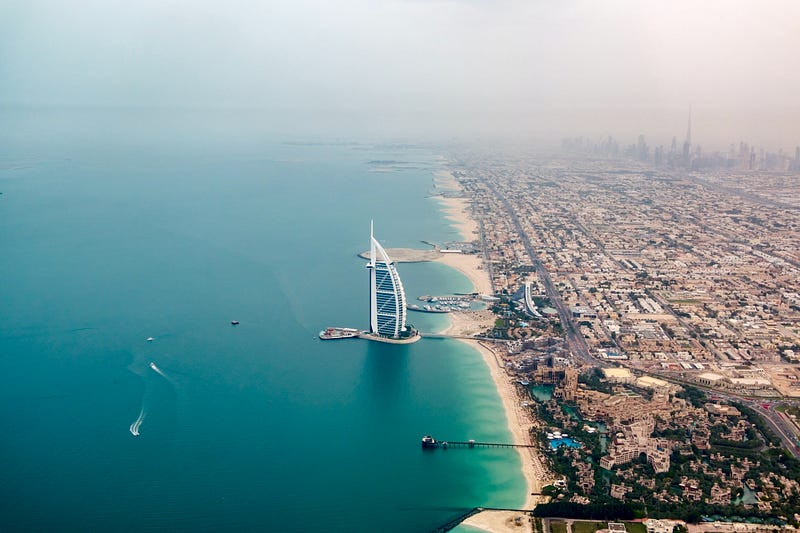
Photo by Christoph Schulz on Unsplash


Responding to the regulatory environment

Ripple CEO Brad Garlinghouse was a keynote speaker at the Summit on Monday, and he took that opportunity to outline the company’s plans within the region. Immediately following his speech, Garlinghouse took to social media to confirm those plans. He tweeted out:

“As I just shared on stage at #DubaiFintechSummit, @Ripple is expanding in Dubai. With 20% of our customers based in MENA and clear regulatory regimes being developed, it’s no surprise that Dubai is emerging as a key global financial hub for crypto innovation to thrive.”

It’s no coincidence that at the very same event, Coinbase CEO Brian Armstrong was present alongside the company’s executive team. Armstrong also spoke at the event and the outcome of that involvement saw Coinbase too, signaling that it sees potential in setting up a regional base in the United Arab Emirates (UAE).

In Coinbase’s case, it’s understood that it is considering the Emirate of Abu Dhabi as opposed to Dubai. Nonetheless, the rationale for pursuing such a move by both leading digital assets companies is the same. Both have been outspoken about the issues they have with the regulatory situation as it exists in the United States right now, relative to digital assets.


Office presence

As an initial step in that Middle East expansion, Ripple is opening an office in Dubai. The office will be located within the Dubai International Financial Centre (DFIC). In what appears like an effort to underscore the company’s official arrival in the United Arab Emirates, Ripple is holding its seventh annual customer conference in the country’s capital later this year.

This week, Garlinghouse confirmed that the company’s prolonged legal battle with the Securities and Exchange Commission (SEC) in the United States is projected to cost the company a whopping $200 million. The Biden administration is using all the major financial agencies in the US to clamp down on the sector. It’s little wonder, therefore, that companies like Ripple and Coinbase are seeking refuge overseas.

That regulatory and administrative landscape in the United States relative to crypto stands in total contrast to the experience of Navin Gupta, Ripple’s Managing Director of South Asia & MENA in respect of the UAE. In an interview with CoinDesk TV Gupta said that the “UAE as a market is very attractive to us, the Middle East as a market is doing very well.”

Gupta drew on his experience in working in Silicon Valley previously and recalling how back then it had three ingredients that made it function that he believes is now the case for the UAE: talent, venture capital investment and a workable regulatory approach.


More to Read
View All
Policy & Regulation·

Sep 12, 2025

China funds research on stablecoin risks to financial system

China’s leading science foundation has initiated a research program to examine the effects of stablecoins, reflecting concerns that such digital currencies could pose a risk to the nation’s financial system and its fiat currency. According to the South China Morning Post, the National Natural Science Foundation of China (NSFC) is now offering grants for studies focused on stablecoins and the creation of cross-border monitoring frameworks. The foundation expressed that the unmonitored circulation of private stablecoins, particularly those pegged to the U.S. dollar, could weaken capital controls and present a potential challenge to the yuan. This initiative emerges as governments around the world, from the U.S. to regional financial centers, are actively developing rules for the digital asset sector.Photo by  Christian Lue on UnsplashStrategic research and internal debateThe NSFC will fund the projects with grants valued between 200,000 and 300,000 yuan ($28,042 to $42,063). Researchers are expected to complete their work within a year and deliver policy recommendations on how China can manage the challenges posed by global stablecoins and contribute to digital finance governance. The deadline for applications is Oct. 9. This research program is set against a backdrop of internal discussion in China regarding the possible launch of a yuan-backed stablecoin. While some economists support the idea of boosting the yuan's international profile, Bloomberg noted that former central bank governor Zhou Xiaochuan has advised caution. He recently said the high efficiency of China's current payment systems and warned that financial stability could be threatened by speculation in the stablecoin market. Analysts believe any state-sanctioned yuan stablecoin would likely be confined to offshore markets and tied to the offshore CNH. Global regulatory landscapeChina’s examination of stablecoins is part of a broader global trend of increased regulatory focus on the asset class. In Hong Kong, a new ordinance took effect on Aug. 1, creating a mandatory licensing system for stablecoin issuers under the oversight of the Hong Kong Monetary Authority. Other Asian nations are also taking action. South Korea’s government is reportedly exploring a model for a won-pegged stablecoin involving a consortium of banks and non-bank entities. Separately, Cointelegraph reported that Kyrgyzstan has introduced legislation outlining a regulatory framework for such assets. Developments are also accelerating in the U.S., where the Guiding and Establishing National Innovation for U.S. Stablecoins (GENIUS) Act was signed into law, creating a federal structure for stablecoin oversight. On a commercial level, a Minnesota-based credit union, St. Cloud Financial, intends to introduce its own stablecoin later this year, a move highlighted by Cointelegraph. This token, named Cloud Dollar (CLDUSD), is designed to integrate with the credit union's banking system to facilitate faster and cheaper transactions for its members within a regulated environment.

news
Web3 & Enterprise·

Aug 04, 2023

Hyosung TNS and APoT Join Hands to Promote NFT Portal Service

Hyosung TNS and APoT Join Hands to Promote NFT Portal ServiceSouth Korean IT infrastructure and financial solutions provider Hyosung TNS announced that it is teaming up with APoT Platforms, a company specializing in developing blockchains for real-world assets (RWAs), to promote NFTtown — Hyosung TNS’ portal service dedicated to providing information, news, and educational content on NFTs.Photo by Andrey Metelev on UnsplashBringing real-world assets to blockchainAPoT Platforms is equipped with technology that is able to embed data on RWAs, such as artwork and luxury goods, thereby connecting them to the blockchain. The company also maintains an extensive network of collaborative relationships with various NFT artist organizations and communities both domestically and abroad.Hyosung TNS plans to bring APoT’s artist network to NFTtown, allowing users to easily access information regarding NFT artists and their works.The two companies will also work together on other efforts, including introducing NFT artworks, digital product transfers, and events for NFT holders.NFT art exhibitionAs the first step of their collaboration, they plan to exhibit and sell works by renowned NFT artists such as Han Kwang-suk, Quiet Eye, and HAN (Han Sun-ok) this month at the Lotte Department Store Ilsan’s Spazio We;R Gallery.

news
Web3 & Enterprise·

Oct 05, 2023

Ripple Expands in Asia-Pacific with Full License to Operate in Singapore

Ripple Expands in Asia-Pacific with Full License to Operate in SingaporeEnterprise blockchain firm Ripple announced on Wednesday (UTC) that it has secured a full license to operate in Singapore, where it has established its Asia-Pacific headquarters since 2017.Photo by Sergio Sala on UnsplashFrom outline to full approval in 4 monthsThis development marks another step in Ripple’s strategic expansion within the Asia-Pacific region, known for its rapidly growing cryptocurrency market. Ripple’s journey to obtaining this full license began less than four months ago when the Monetary Authority of Singapore (MAS) granted it an initial in-principle approval in June. With the newly acquired full license, Ripple is now authorized to offer regulated cryptocurrency payment services in Singapore, a key financial hub in the region.Brad Garlinghouse, the CEO of Ripple, expressed his enthusiasm for the company’s continued growth in Singapore, stating:“We have hired exceptional talent and local leadership, doubling headcount over the past year and plan to continue growing our presence in a progressive jurisdiction like Singapore.”Global expansion strategyThe company also highlighted the fact that over 90% of Ripple’s business occurs outside the United States, making the Asia-Pacific region, and Singapore in particular, a vital part of its global expansion strategy.Monica Long, President of Ripple, explained in a recent interview with CNBC that the Singapore office has seen substantial growth in the past year due to the booming business opportunities in the Asia-Pacific region. This expansion aligns with Singapore’s leadership in crypto regulation in the region. The introduction of the Payment Services Act, which has been in effect since January 2020, has played a large part in that, regulating payment services and crypto services to the public.Singapore’s regulatory framework also includes requirements for crypto service providers to safeguard customer assets in statutory trusts by the end of 2023 and restrictions on facilitating lending or staking of retail customers’ assets. These measures ensure consumer protection and responsible growth in the crypto industry.Praising SingaporeGarlinghouse commended Singapore’s regulatory approach, stating, “Under MAS’ leadership, Singapore has developed into one of the leading fintech and digital asset hubs, striking the balance between innovation, consumer protection and responsible growth.” Ripple’s experience in Singapore differs entirely from the ongoing legal battle it has found itself in in the United States with the Securities and Exchange Commission (SEC).Both Ripple and Coinbase have found themselves embroiled in lawsuits with the regulator in the US. In Ripple’s case, the firm and its founders have been accused of unlawfully selling their native cryptocurrency XRP without registering it with the SEC. However, a landmark ruling in July determined that XRP, as a token, may not necessarily be classified as a security.Long spoke to the contrasting experiences the firm has encountered between the United States and Singapore. Long stated:”Being in Singapore a couple weeks ago felt like night and day compared to the US in terms of open dialogue with regulators, and thus being able to build innovative *and* compliant products.”Ripple, along with Coinbase and several other crypto firms, has criticized the lack of regulatory clarity in the US and has even considered relocating operations due to the SEC’s stringent regulatory stance. Notably, Coinbase also recently announced its successful acquisition of a major payment institution license in Singapore, following its in-principle approval obtained about a year ago.

news
Loading