Top

Report: Asia Set to Dominate Web3 Gaming Market

Markets·April 14, 2023, 2:16 AM

A new report has revealed that Asia is poised to dominate the growing Web3 gaming market, accounting for as much as 80% of all players. The study, conducted by Japanese firm Pacific Meta and DappRadar, found that the region already accounts for 55% of the global gaming population, with 1.7 billion players.
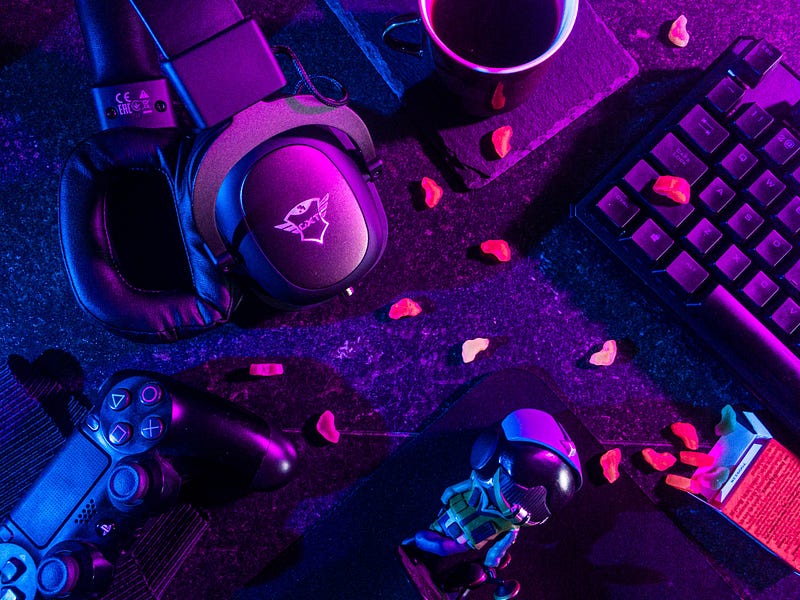
gaming desk: headphones, gummy bears and joystick
©Pexels/Lucie Liz

The report identified that the role-playing genre is the most popular in Asia, with games such as Final Fantasy, Phantasy Star Online and Genshin Impact ranking highly.


Legal restrictions

The research noted that legal restrictions on gaming are prevalent across the region, with China only allowing gamers under 18 to play for one hour a day and blockchain games all but banned in South Korea. Despite these restrictions, the report argued that Nexon’s Web3 play with MapleStory Universe and Square Enix’s upcoming Web3 game Symbiogenesis are two examples of crypto games gaining traction in the East. Both games will use the Polygon blockchain, currently the most preferred network for Web3 gaming from a game studio perspective.

The report also concluded that Web3 gaming is a “natural” fit for the Asian market because of the types of games to which the market is accustomed. It argues that as Web3 games become more focused on gameplay over financials, Western and Eastern audiences will come to expect similar experiences.


A developing understanding of Web3 games

To better understand the market, Pacific Meta surveyed over 1,000 adults in Japan and found that 40% knew about blockchain games. Among those who knew about such games, nearly 57% said Web3 games “seemed interesting”, while roughly 10% said they did not seem interesting. Notably, about 33% said “neither”, suggesting they were perhaps unsure about Web3 games and hadn’t yet formed an opinion on them.

When asked about the types of blockchain games they would be interested in, 773 out of the 1,030 surveyed said that they would like a game to be free-to-play, and that initial cost was an important feature to them. 538 said that they would like the game to be playable on a mobile phone. Player earnings, game quality, consoles, and famous IP scored lower on the list.


Long road to mainstream adoption

The report highlights that the nascent industry still has a ways to go before it sees mainstream adoption. Nevertheless, big brands such as Razer and FIFA are doubling down on Web3 gaming projects. With the Asian market poised to take a dominant role in Web3 gaming, developers will need to tailor their offerings to suit the preferences of the region’s gamers.

The Web3 gaming market in Asia is enormous and is expected to dominate the global market, with Japan a key market for growth. Developers will need to focus on the role-playing genre and create free-to-play mobile games to appeal to gamers in the region. As the Web3 gaming market continues to grow, and blockchain technology advances, it is likely that we will see more games and platforms targeting Asian gamers in the coming years.
More to Read
View All
Web3 & Enterprise·

Jul 18, 2023

P2E Game Covenant Child Developer Partners with Pala for Global NFT Collaboration

P2E Game Covenant Child Developer Partners with Pala for Global NFT CollaborationCityLabs, a South Korean smart city integration platform company, made an announcement today regarding its subsidiary, Metablock, which has entered into a memorandum of understanding (MOU) with Pala, the nation’s largest non-fungible token (NFT) trading platform.Photo by Andrey Metelev on UnsplashGlobal expansionAccording to a report by Newsis, the collaboration between the two companies aims to explore various cooperative efforts in the global development and expansion of NFT projects related to games. To accomplish this, they will utilize the intellectual properties (IPs) of Covenant Child, a global play-to-earn (P2E) game developed by MetaBlock.NFT marketplaceThe initial step of this partnership involves the establishment of an NFT trading platform. MetaBlock recently concluded the final closed beta test for Covenant Child on a global scale. In the upcoming months, the company plans to launch a dedicated NFT marketplace for Covenant Child sometime during the open beta test period. Additionally, MetaBlock will conduct pre-sales of NFTs and list the governance token on cryptocurrency exchanges.Cho Young-joong, CEO of CityLabs, expressed enthusiasm for the partnership, noting that it will provide users with a more convenient and reliable NFT trading environment. Cho further emphasized the company’s commitment to creating an infrastructure that allows users to readily enjoy content developed on MetaBlock.

news
Policy & Regulation·

Aug 16, 2023

Singapore Takes Lead in Regulating Stablecoins

Singapore Takes Lead in Regulating StablecoinsSingapore has taken a proactive step by finalizing regulations for stablecoins, solidifying its position as one of the first jurisdictions to do so on a global scale.The Monetary Authority of Singapore (MAS) has established a comprehensive framework that outlines essential prerequisites for stablecoin operations, according to an announcement made by the central bank on Monday.Key highlights include:Reserve Backing: Stablecoins must be backed by reserves consisting of low-risk and highly liquid assets. The value of these reserves should equal or surpass the circulating stablecoin value at all times.Prompt Redemption: Stablecoin issuers are mandated to return the par value of the digital currency to holders within five business days upon redemption requests.Transparency: Issuers must furnish users with “appropriate disclosures,” including audit outcomes of the backing reserves.These regulations will be applicable to stablecoins issued in Singapore that mirror the value of the Singapore dollar or any G10 currency, such as the US dollar. Stablecoins meeting all the requirements outlined by the regulations will receive recognition from the regulator as “MAS-regulated stablecoins.” This distinct categorization will differentiate them from tokens lacking regulation.Photo by CoinWire Japan on UnsplashKey roleWith a market valuation of approximately $125 billion, stablecoins have rapidly emerged as a significant force within the crypto space. Leading the pack are Tether’s USDT and Circle’s USDC, which together command around 90% of the market’s total value.Stablecoins play a key role in the crypto trading market. They allow traders to move in and out of various cryptocurrencies and back into fiat. However, despite their immense influence, stablecoins have largely remained unregulated across the globe. While their primary use has been in trading, stablecoin proponents assert their versatility in various applications, including remittances.Digital currency hubSingapore has been actively positioning itself as a hub for digital currencies, striving to attract foreign companies seeking refuge from the crypto industry’s apprehensions surrounding the current unwelcoming US regulatory approach.Despite their prevalence, stablecoin issuers have faced criticism regarding the transparency of their reserve holdings. Singapore’s regulatory measures aim to bring increased clarity to this sector.Ho Hern Shin, Deputy Managing Director of Financial Supervision at MAS, expressed that the framework’s purpose is to enable stablecoins to serve as a credible digital medium of exchange and bridge the gap between fiat and digital asset ecosystems.Positive industry responseLeading stablecoin firms, Tether and Circle, have applauded Singapore’s new regulations. Yam Ki Chan, Vice President of Strategy and Policy for APAC at Circle, stated that MAS is at the forefront of forward-looking regulators globally, establishing a transparent regulatory framework for stablecoins and digital assets. Paolo Ardoino, CTO of Tether, hailed the framework for providing a clear structure, accountability, and transparency in stablecoin operations within Singapore.The collapse of algorithmic stablecoin UST last year drew regulatory attention to this category of stablecoins. Unlike traditional stablecoins like USDT and USDC, UST was governed by an algorithm and lacked real-world assets as reserves.Singapore’s stablecoin regulations have placed it in a select group of jurisdictions pioneering such rules. Hong Kong is presently undergoing public consultation on stablecoins and plans to introduce regulations in the coming year.

news
Web3 & Enterprise·

Dec 08, 2023

Digital wallet D’CENT and Astar Network team up to bring scalable wallet services to users

Digital wallet D’CENT and Astar Network team up to bring scalable wallet services to usersSouth Korean digital hardware wallet service D’CENT has partnered with Japan’s leading blockchain project, Astar Network, to offer users enhanced wallet scalability and seamless asset management, according to an official Medium post on Friday (local time). D’CENT will be integrated into Astar’s blockchain network.Photo by Shubham’s Web3 on UnsplashDriving blockchain innovationAstar Network is a layer 1 blockchain that supports Ethereum virtual machine (EVM) and WebAssembly (Wasm) smart contracts. Tailored to function as a centralized smart contract hub within the Polkadot blockchain ecosystem, it serves as a comprehensive platform for developers to create and deploy decentralized applications (dApps).Astar is revolutionizing blockchain for millions of users worldwide and is actively working with major South Korean companies to achieve this goal. Its newest partner, D’CENT Wallet, which currently provides cold wallet services for hundreds of users across the world, offers an easy-to-use, secure solution for managing digital assets. In particular, it boasts a convenient user experience (UX) that employs fingerprint authentication. Through the new partnership, D’CENT will become the first wallet to support Astar-zkEVM, Astar’s layer 2 scaling solution.Enhancing accessibility and interoperabilityThe two companies plan to work together to bring D’CENT’s unique services to Astar’s Japanese and global user base. Through its integration into Astar Network, the wallet now supports over 60 blockchain networks, 29 of which are EVM-compatible. Users can also store, manage and trade their ASTR tokens — Astar’s native token. This effectively removes the complicated process of managing assets across multiple blockchains.Beyond its role in asset management, the D’CENT wallet also serves as a gateway to the Polkadot ecosystem, where wallet holders can gain access to a plethora of dApps.Both D’CENT and Astar expect that their collaboration will contribute to shaping the future of blockchain transactions and fostering a more integrated blockchain ecosystem.

news
Loading