Top

Shapella Upgrade to Have limited Impact on ETH’s Selling Pressure

Markets·April 13, 2023, 6:06 AM

The Shapella upgrade on the Ethereum network scheduled to take place on Wednesday will only have a limited impact on the selling pressure on ETH, according to a report by the research center at Korean cryptocurrency exchange Korbit.
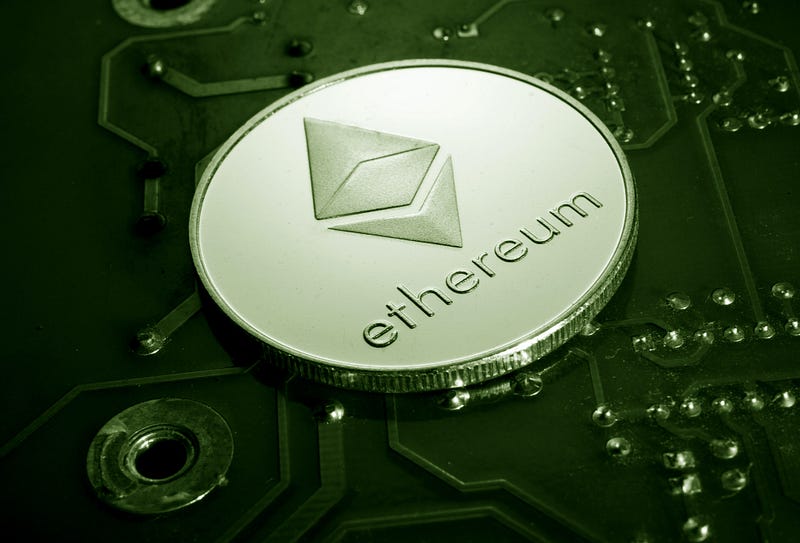
Ethereum coin
©Pexels/Jievani


Shapella upgrade

One of the key features of the Shapella upgrade is to allow withdrawal of staked ETH. This upgrade follows September’s Merge upgrade that switched the Ethereum network’s consensus algorithm from Proof of Work to Proof of Stake, significantly reducing electricity consumption.


Impact on selling pressure

To predict the impact of the Shapella upgrade on the selling pressure on ETH, the analysts at Korbit Research calculated the amount of time it takes for all the ETH staked as of March 22 to be withdrawn. They believe this calculation is relevant because withdrawals of staked ETH could trigger bulk sales, potentially imposing a greater selling pressure on ETH.

According to the findings, the daily sell volume for the first three days is expected to be 300,700 ETH, 0.254% of the circulating supply. This volume will gradually decrease to 43,000 ETH for the next six months and to 29,000 ETH for the following six months, each corresponding to 0.035% and 0.024% of the circulating supply, respectively.

All in all, bulk selling of ETH is not likely, considering it will take about a year and five months for all the staked ETH to be withdrawn and that the amount of withdrawable ETH will stay relatively low for each period. Furthermore, since this analysis assumes an extreme case, the market will be able to effectively handle the volume over the six month to 18 month period.


4 other reasons

In addition, Korbit Research outlined four other aspects that limit the selling pressure on ETH.

Firstly, there is some concern that the selling volume of ETH may increase due to unstaking resulting from the cessation of staking services at American crypto exchange Kraken. However, a decrease in the number of validators on the Ethereum network will raise the base reward. This may prompt those who unstaked ETH to stake them on other platforms, rather than selling them.

Second, ETH locked up at liquidity staking protocols such as Lido Finance and Rocket Pool provide liquidity for representations of staked ETH. These platforms allow users to stake fewer than 32 ETH for rewards. According to a February Binance Research report, 57.7% of ETH stakers enjoy liquidity and rewards. Therefore, there may be a limited impetus to divest of staked ETH.

Third, since only 41.1% of ETH stakers are seeing profits as of the time of writing the report, the remaining stakers would have to risk losses when withdrawing ETH. This suggests that those not yet seeing profits are more likely to keep ETH staked. Furthermore, Dune Analytics data shows that most of the ETH stakers with gains staked ETH when its price was relatively low, which indicates that they participated in staking in early days. Shivam Sharma, the author of the aforementioned Binance report, states that these ETH stakers are likely “some of the strongest Ethereum believers.”

Lastly, despite the Shapella upgrade, ETH withdrawals at different staking pools may not be initiated immediately. This could limit the circulation of withdrawable ETH, which in turn would hinder the selling pressure on ETH.


Macroeconomic factors

The Korbit researchers concluded their paper with a note that the selling pressure on ETH will be more influenced by macroeconomic factors than technical factors. They added that a possible downturn in the overall economy and corrections in risky asset markets might lead investors to sell ETH.

More to Read
View All
Web3 & Enterprise·

Aug 11, 2025

Animoca Brands & Standard Chartered form Anchorpoint in Hong Kong

Animoca Brands, a company focused on Web3 and metaverse projects, has gotten together with the Hong Kong subsidiary of British banking giant Standard Chartered to establish Anchorpoint Financial Limited.In a press release published to its website on Aug. 8, Animoca Brands outlined that the joint venture company has been established with the objective of building a business model that will concern itself with the issuance and advancement of licensed stablecoins. The move follows Hong Kong’s Stablecoins Ordinance, which went live on Aug. 1.Photo by Andres Garcia on UnsplashHKT involvementThe partnership also involves Hong Kong Telecom (HKT), one of the largest telecommunications companies in Hong Kong. This collaboration is not something that has just been formed. The trio had been participants in a regulatory sandbox related to stablecoin issuance established by the Hong Kong Monetary Authority (HKMA) in 2024.  Back in February, it emerged that the three companies had entered into an agreement to establish a joint venture with a view towards applying to the HKMA for a license to cover the issuance of a Hong Kong dollar-pegged stablecoin. By June, the companies had formed that company. Applying for a licenseAnchor Financial has already informed the HKMA of its intention to apply for a stablecoin license. A recent Bloomberg report asserted that somewhere in the region of 50 companies have expressed an interest in obtaining stablecoin licensing in Hong Kong. However, the regulator is likely to issue no more than 10 licenses. Additionally, disclosure by the HKMA of strict customer identification rules related to the city’s new Stablecoins Ordinance has sparked concern among industry stakeholders. Know-your-customer (KYC) rules will put an onus on stablecoin issuers in Hong Kong to verify the identity of every stablecoin holder. Bo Tang, head and assistant director at the HKUST Institute for Financial Research, told Reuters that the rules were “a bit too strict and not good for acquiring users.” Ricky Xie, a crypto trader based in Hong Kong, pointed out that these KYC rules aren’t just for those who would hold accounts with the stablecoin issuer, but instead they will apply to every stablecoin holder. A number of Hong Kong stablecoin-concept stocks, that had been performing well in the market, fell by as much as 20% when these stringent rules were disclosed by the HKMA. Evan Auyang, group president of Animoca Brands, expressed contentment with Animoca’s partnership with HKT and Standard Chartered Bank (Hong Kong), while adding:”Stablecoins represent one of the most compelling use cases within Web3, and we believe we are still at the early frontier of widespread adoption across institutions and retail alike. As assets continue to move on-chain, the HKMA-regulated fiat-referenced stablecoin is important in reinforcing Hong Kong’s position as a leading international financial center.” The first stablecoin licenses are expected to be issued by the HKMA early next year.

news
Policy & Regulation·

Nov 20, 2025

Seoul launches global expansion program for fintech firms on XRP Ledger

The Seoul Metropolitan Government has launched a new initiative designed to help South Korean fintech firms expand into global markets. According to a Nov. 18 press release, the city and its blockchain partner, Catalyze Research, will utilize the XRP Ledger (XRPL), Ripple Labs’ public blockchain, to provide technology-focused mentorship and facilitate networking with overseas partners.Photo by Kanchanara on UnsplashFunding for global growthParticipating startups are eligible to receive up to $200,000 each, with the total funding pool capped at $1.8 million. The Seoul government anticipates that this initiative will assist early-stage ventures in establishing a meaningful presence in the global marketplace. Selected participants will receive mentorship from Catalyze Research on entering the blockchain ecosystem via the XRP Ledger, refining business models, and developing multichain strategies. The program is open to applicants working in a variety of specific sectors, including blockchain payments, asset tokenization, cross-border transfers, decentralized identifiers (DIDs), decentralized finance (DeFi), and regulatory technology. Beyond the core business training, Seoul is offering technical workshops that allow participants to explore complex topics such as XRPL-based issuance, liquidity configuration, fee optimization, and security architecture in greater depth. Follow-up support programs will continue to assist participating ventures after the initial phase, offering help with investor relations and jurisdiction-specific regulatory consulting. Pilot projects with overseas partners are also planned to further support company growth. The capital’s move to back crypto ventures follows its recognition in the Global Financial Centres Index (GFCI), produced annually by the London-based think tank Z/Yen and the China Development Institute (CDI). In the latest report released in September, Seoul ranked eighth in fintech among 135 cities. Price swings amid XRP ETF debutsWhile the city pushes to grow the country’s blockchain sector, XRP, the native asset of the XRP Ledger, has faced market headwinds. According to CoinMarketCap data, the token’s price dropped more than 15% over the past week amid a broader market downturn. This decline came even after the Nov. 14 launch of XRPC, a Canary Capital–managed ETF that is the first in the U.S. to track the spot price of XRP. Subsequently, the Bitwise XRP ETF is also set to debut on the New York Stock Exchange on Nov. 20. Amid the recent price weakness, XRP’s retail positioning offers a more nuanced backdrop. Glassnode’s Nov. 19 update estimates the average retail cost basis for the token at roughly $2.17, putting the typical holder about 61% in profit. The firm’s analysis a day earlier showed, at the network-wide level, 58.5% of the total supply in profit and 41.5% held at a loss—a structure that the firm said reflected a market dominated by recent buyers and prone to volatility.

news
Policy & Regulation·

Jan 14, 2025

Indian Railways to issue NFT train tickets for world’s largest religious festival

Indian Railways (IR), the state-owned manager of India’s railway network, plans to issue non-fungible token (NFT)-based train tickets to transport pilgrims to Maha Kumbh Mela, the world’s largest religious festival. The Hindu festival is of particular significance given that it only occurs once every 144 years. ChainCode Consulting partnership According to a report published by Indian news outlet Pune.news on Jan. 13, IR has collaborated with ChainCode Consulting, a Bangalore-headquartered enterprise blockchain development and consulting firm, to provide the digital tickets. The Polygon blockchain has been chosen as the network upon which the NFT tickets will be minted. The tickets will then be made available to end users via NFTtrace, a real-world assets (RWA) tokenization and traceability platform run by ChainCode Consulting.Photo by Choong Deng Xiang on UnsplashLong-running collaborationService users and railway personnel will be free to check the validity of tickets on the public blockchain. This announcement is just the latest installment of a long-running collaboration between ChainCode Consulting and IR. In March 2024, a similar project was pursued by both parties. On that occasion, the collaboration involved the release of a series of NFT tickets for use on a train line running from Lucknow, the capital of the Indian state of Uttar Pradesh, to the Indian capital, New Delhi.  In that instance, NFTs were minted on the Hyperledger blockchain. A previous collaboration, earlier in 2024, saw NFTs minted on Polygon for digital tickets covering journeys to the sacred Hindu city of Ayodhya. Commenting on the choice of Polygon relative to this latest collaboration, Alok Gupta, CEO of ChainCode Consulting, stated: “By partnering with IRCTC and leveraging the Polygon blockchain, we are enabling a digital-first experience that complements the spiritual and traditional significance of the Mahakumbh while introducing a new level of engagement through NFTs.” Polygon is an Ethereum ecosystem scaling network. With that, it has fast throughput and low gas fees and it's on this basis that it’s understood that Polygon was chosen in this instance. Aishwary Gupta, global head of payment and fintech at Polygon Labs, the key developer behind the Polygon blockchain, told Cointelegraph that public blockchains are playing an important role in doing away with middlemen and intermediaries.  The Polygon Labs executive stated that at both state and central government levels in India, Polygon has been used on a number of projects. He added: ”With its low cost and high throughput, we are sure that the NFTs being issued around Maha Kumbh Mela would be yet another great success.” $94 billion market opportunityTicketing remains one of the proposed use cases for blockchain technology that has the potential to gain traction. That potential hasn’t gone unnoticed by ticketing industry leader Ticketmaster. In 2023 the company rolled out token-gated ticket sales. The feature enables artists to reward fans who hold NFTs with access to exclusive pre-sale events, prime concert seating and many other incentives and rewards. NFT technology offers a solution to a number of issues experienced within the events industry, including ticket scalping, fake tickets and security issues. The live events business is a $94 billion industry, underscoring the opportunity available to be exploited by innovative NFT-based ticketing startups. 

news
Loading