Top

Four Pillars for Success in Korean Security Token Market

Policy & Regulation·April 10, 2023, 3:41 AM

On Wednesday, blockchain experts in various fields gathered at the 2023 Blockchain Meetup Conference held in Seoul to discuss issues with security tokens and their outlook.
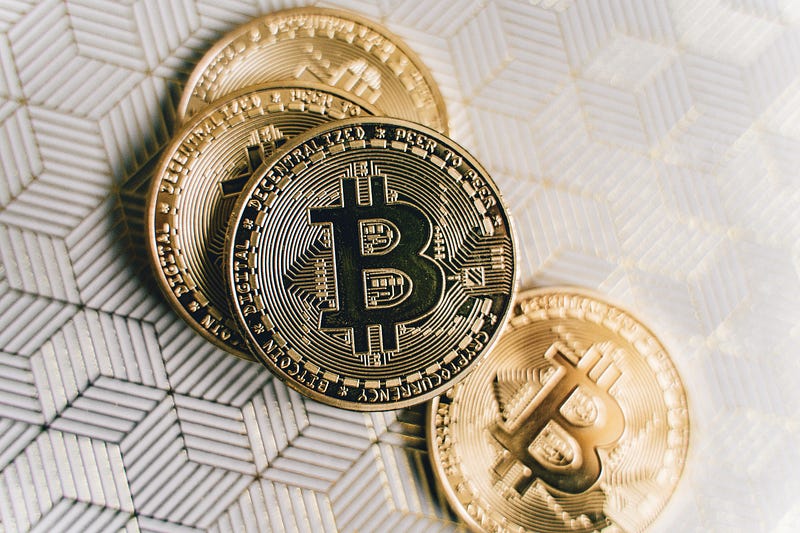
©Pexels/Alesia Kozik

What attracted security token businesses’ attention at the meeting was a presentation by Jung Eui-heon from Lambda256, a subsidiary of Korean crypto exchange Upbit’s operator Dunamu. He shared four pillars for success in the Korean security token market.


Security tokens gaining traction in Korea

Security tokens have been a trending topic in the Korean blockchain industry since the Korean Financial Services Commission (FSC) allowed the issuance and trading of security tokens last February. Furthermore, a 2022 report jointly published by Boston Consulting Group and Singaporean investment platform ADDX predicted that the total size of illiquid tokenized assets worldwide would reach $16 trillion by 2030.

Against this backdrop, here are the four keys to successful security token projects that Jung outlined.


Technology adaptation

First, he emphasized the importance of adopting rapidly changing technology. To tackle the issue, he suggested teaming up with advanced tech companies for long-term collaboration. When choosing tech partners, companies should ensure they are sustainable, possess technological prowess, hold credibility on high volume transactions, and maintain the security level of financial institutions, Jung advised.


Forging partnerships

The second point he mentioned was the need to forge partnerships. The FSC’s February guideline requires the issuance and distribution of security tokens to be managed separately. This means that security token projects require collaboration between issuers, distributors, account managers, asset holders, and tech companies.


New securities products

Jung also noted that discovering new securities products is crucial. Partnering with existing fractional investing companies may help accelerate the security token project initially, but in the long run, enterprises will eventually have to create products in various fields such as gaming, movies, and entertainment.


Token liquidity

Lastly, Jung underlined the token liquidity, which plays a crucial role in determining its prices. Issuers will need to find various distributors and vice versa. Securing liquidity requires the establishment of a technical standard that improves interoperability and compatibility, he highlighted.


More to Read
View All
Web3 & Enterprise·

Jan 23, 2024

HTX bounces back following DDoS attack

Well-known crypto exchange HTX and its decentralized autonomous organization (HTX DAO) have restored services following a distributed denial-of-service (DDoS) attack. The attack, which occurred late last week, briefly disrupted operations. However, HTX swiftly addressed the issue, highlighting the robust security protocols in place. The Seychelles-incorporated exchange confirmed the outage on social media last Friday, only to post an update shortly afterwards to confirm that service had been restored.Photo by Tekton on Unsplash‘Funds are SAFU!’Key industry figure and HTX advisor Justin Sun also took to social media to announce the recovery and express gratitude to the user community for their support. He reassured users that all funds remained secure, underscoring the exchange's dedication to safeguarding user assets. Sun borrowed a phrase first coined by Binance founder Changpeng Zhou (CZ), stating:”All funds are SAFU!” Latest in a string of incidentsThis DDoS attack adds to a series of challenges faced by HTX. In September, the same month in which the company rebranded from Huobi to HTX, hackers exploited the exchange, resulting in a loss of approximately 4,999 ether (ETH) valued at $7.9 million. In November, two Sun-linked protocols, HTX and Heco Bridge, experienced a combined $100 million hack. Despite these incidents, prompt measures, including statements from Justin Sun, ensured the protection of user assets. Having originated in 2013, HTX has evolved into a comprehensive blockchain ecosystem, encompassing digital asset trading, financial derivatives, wallets and various other blockchain-related services. The firm maintains offices in Hong Kong, Singapore, Tokyo and the United States. Its South Korean branch is set to close its operations on Jan. 29. Since 2018 the business has been a publicly listed company on the Hong Kong Stock Exchange (HKEX). HTX DAOOnly hours before experiencing this DDoS attack, the firm had launched HTX DAO. The DAO allows users to actively participate in the exchange's operations. Users can contribute to decision-making processes through voting, engaging in community discussions and selecting representatives. The DAO’s whitepaper outlines that governance will be conducted through the use of HTX tokens. The HTX DAO website alludes to various privileges that HTX token holders can benefit from on both the DAO and the HTX exchange. However, it remains unclear as to the specific nature of these privileges as yet. In a bid to strengthen its security infrastructure, HTX DAO recently underwent a comprehensive security audit conducted by ChainSecurity. This integration of the exchange business into the HTX DAO ecosystem reflects a broader trend within the cryptocurrency sector towards decentralization. In a long post on the X social media platform on Thursday, Justin Sun suggested that through HTX DAO, the HTX exchange would become “The People’s Exchange.” Sun added:”HTX currency holders should eventually become the owners of the platform.” Despite the high hopes and aspirations, Sun continues to have his perennial detractors. Travis Kling, founder of Ikigai Asset Management, posted on X on the very same day, stating:”We may be getting close to showtime here. We need [Justin Sun] gone. He’s a cancer.” 

news
Web3 & Enterprise·

Jan 26, 2024

Bithumb Burrito Wallet to integrate Smart Valor’s AI investment advisor service

Rotonda, the operator of the Bithumb Burrito Wallet, has agreed to work with Swiss digital asset AI platform Smart Valor, according to South Korean news website Greenpost Korea. Burrito Wallet will adopt the features of Smart Valor’s Elonn.ai – a digital investment advisor that provides investors with AI-generated market news analysis and research for optimized investment. Photo by Shubham's Web3 on Unsplash"Our collaboration with Smart Valor, who was the main sponsor of our NextBlock blockchain conference last year, is significant. The company will serve as an ideal partner for us to lay out the blueprint of the global Web3 market together," said Max Shin, CEO of Burrito Wallet. Leading the European Web3 industryFounded in 2017, Smart Valor is a Swiss-based Web3 AI company and the first European digital asset platform to be listed on the NASDAQ First North Growth Market. It specializes in crypto AI market intelligence application programming interfaces (APIs), as well as investment platforms and crypto trading and custody infrastructure for banks, fintech firms and European investors. Global expansion and market access in South KoreaThrough the newest partnership, Burrito Wallet aims to provide high-quality investment services for users and contribute to the expansion of the Web3 ecosystem as a key partner for Smart Valor's global expansion. In particular, the collaboration will also serve as a bridgehead for Smart Valor's entry into South Korea. The firm’s VALOR token is currently listed exclusively on Bithumb among Korean cryptocurrency exchanges and will be supported for trading on Burrito Wallet, offering Korean users the opportunity to experience a more expanded Web3 market. To celebrate their cooperation, the two companies will be holding a Valor token trading event until Feb. 1. The first thousand Bithumb users to trade at least 30 Valor tokens during the event will receive an additional 30. Also, the first 2,000 users who sign up for Burrito Wallet and trade at least 30 tokens will receive 60 tokens for free.  "Starting with this event, we will not only expand the scope of our partnership with Smart Valor but also initiate various collaborative activities and develop features to ensure that Burrito Wallet is recognized as a unique Web3 wallet,” Shin added. Burrito Wallet has been accelerating efforts to expand overseas. The service recently increased its number of supported blockchain networks to 18 and entered global markets in Asia and Latin America.

news
Markets·

Jun 04, 2024

Hackers spirit away over $300M in Bitcoin from DMM Bitcoin

Japanese crypto exchange DMM Bitcoin announced on Friday that over $300 million worth of Bitcoin was stolen from its primary wallet, marking one of the digital asset industry's largest hacks in recent years.Photo by Kanchanara on UnsplashHack confirmed without further detail"At approximately 1:26 p.m. on Friday, May 31, 2024, we detected an unauthorized leak of bitcoin from our wallet," the company stated, based on an English translation of its original statement in Japanese, which had been posted on the firm’s website. DMM Bitcoin is a subsidiary of DMM Group, which incorporates businesses covering a broad spectrum of activities including solar energy, gaming, 3D printers, FX, e-books and software. The company has, as yet, not provided any further detail relative to the manner in which the hack occurred. Notwithstanding that, DMM Bitcoin did confirm that measures have been taken to prevent any repeat of the hack. Furthermore, the company outlined that a full investigation into the hack is ongoing right now. Buy orders and leverage trades suspendedThe company has moved to reassure platform users that their digital assets are fully guaranteed. It stated: "Please rest assured that all of your bitcoin deposits will be fully guaranteed, as we will procure the equivalent amount of BTC that was leaked with support from our group companies."  The exchange has taken the decision to temporarily suspend a number of activities, including spot trading buy orders and the opening of leveraged trading positions. A temporary halt has been imposed on crypto withdrawals while Japanese yen withdrawals are permitted, albeit that the exchange suggests that service users may experience delays. Blockchain security sector responseIn light of the hack, a number of well-known blockchain security firms have been giving the matter their attention. Beosin, a blockchain security specialist, outlined that it is continuing to monitor the wallet addresses implicated in the hack, with a view towards tracing any further movement of the funds. Meanwhile, blockchain analysis firm Arkham Intelligence has offered a 1,000 ARKM token bounty to anyone who may provide information leading to the identification of the perpetrators of the hack. Blockchain analysis firm Chainalysis described the hack as “the 7th largest crypto hack ever.” The company has labeled the stolen funds within its products. Broader industry implications and historical contextThis hack is a significant blow to the industry, given that a hack on this scale has not occurred thus far in 2024 or at any point during 2023. The crypto industry has faced numerous significant breaches in the past. In 2022, a series of large-scale exploits targeted layer-1 blockchains, crypto exchanges and DeFi protocols. The largest hack amongst them implicated the BNB Chain (formerly Binance Smart Chain), which resulted in the loss of $566 million worth of BNB. The latest hack is second only (within Japan) in size relative to the 2018 hack of Coincheck, one of the country’s largest exchanges, when over $550 million worth of XEM was stolen. Japan was also host to the most infamous Bitcoin hack, that of the Mt. Gox exchange, whose bankruptcy administrators moved $9 billion worth of its remaining Bitcoin holdings on the blockchain in recent days for the first time in many years. 

news
Loading