Top

NVT Ratio Signals Overvalued BTC

Markets·April 12, 2023, 3:35 AM

The network value to transaction (NVT) ratio of Bitcoin, which has been staying at a high level since the beginning of the year, has signaled its overvaluation, according to Yonhap Infomax.

However, some argue that this will not necessarily lead to a crypto winter, considering that the nature of Bitcoin as an asset has changed and there is no sign of overheating in other indicators.
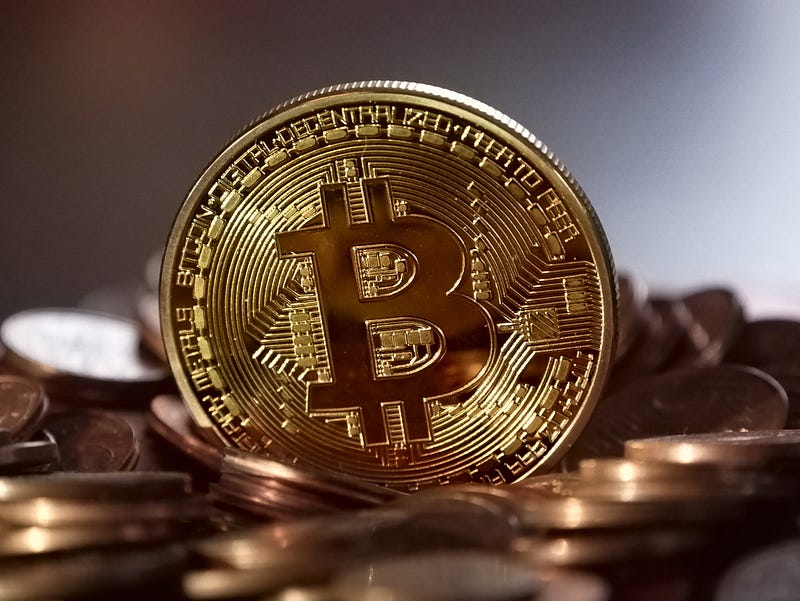
BTC coin
©Pexels/Pixabay


Price and NVT ratio correlation

Yonhap Infomax found out that the correlation between the NVT ratio and the price of Bitcoin over the past six years is -0.35. A value of 1 represents a completely positive correlation, while a value of -1 represents a completely negative correlation.

Extending this period to 2010 makes the correlation close to 0, but during the early years, NVT ratios showed high volatility, shooting up to four digits. Such a high volatility doesn’t suggest much correlation. Until 2021, there was a high correlation of up to -0.44.

The NVT ratio is calculated by dividing the market cap by the transacted volume. Conceptually, it is similar to the price-to-earnings ratio for the stock market.

In 2017, when the crypto market was bullish, the average Bitcoin NVT ratio was 7.3. This number became 8.7 in 2021 when the market experienced a similar pattern. In retrospect, single-digit NVT ratios usually hint at bullish markets.

This year so far, Bitcoin has been relatively overvalued, given that the average NVT ratio is 23.6.


BTC price recovery

When the crypto market sentiment lost its confidence due to the FTX bankruptcy last year, the price of Bitcoin went down to $15,000. It later recovered to the near $30,000 level. The Bitcoin price once had reached an all-time high in 2021, surpassing $65,000.

The years that manifested similar patterns as this year were 2018 and 2019. In those years, the Bitcoin NVT ratio plateaued around 20.


Uncertain outlook

The NVT ratio itself could point to a possible crypto winter, but researchers say it’s hard to say.

Jang Kyung-pil, a research analyst at crypto data platform Xangle, said that people now consider Bitcoin as a store of value rather than a means of transactions, pointing out that BTC’s market value to realized value (MVRV) ratio has hit the bottom at 0.84 and now reached 1.4. According to Jang, MVRV values under 1 indicate undervaluation and those above 3 indicate overvaluation.

Jung Seok-moon, head of the research center at crypto exchange Korbit, said that the current NVT ratio signals BTC overvaluation. He added that the Fed is likely to turn dovish in its monetary policy, which would prompt a strong BTC uptrend.


More to Read
View All
Web3 & Enterprise·

Dec 05, 2024

dtcpay shifts exclusively to stablecoin-based payments

dtcpay, a regulated and licensed digital payment services provider headquartered in Singapore, has announced that it is changing direction, and adopting a stablecoin-only digital payments model. Phasing out Bitcoin, EtherThe company set out details of its new stablecoin-only approach in a series of posts on X on Dec. 3. dtcpay will phase out support for other cryptocurrencies such as Bitcoin and Ether by the end of 2024. It will then transition to the exclusive use of stablecoins, starting with Tether (USDT) and Circle’s USD Coin (USDC). Additionally, FDUSD, a U.S. dollar stablecoin issued by Hong Kong’s First Digital, and Worldwide USD (WUSD), a stablecoin which was developed by the Worldwide Stablecoin Payment Network (WSPN), a Singapore-based project, will be supported.Photo by CoinWire Japan on UnsplashVolatility issuesdtcpay cited the volatility of non-stablecoin cryptos as being an issue for payments. Volatility is driving the company’s plan to concentrate solely on stablecoins. Outlining its rationale further, the company stated: “By transitioning to focus dtcpay’s #DPT services purely on #stablecoins, we are setting the stage for the future of global, digital payments. This move is designed to provide our customers with a more reliable, scalable, & secure payment experience.” A significant portion of the firm’s transaction volume is already stablecoin-based. On that basis, the move can be viewed as aligning with the preferences of its current user base to a large extent. Originally established in 2019 by Alice Liu, Band Zhao and Sam Lin as Digital Treasures Center Pte. Ltd., the company later rebranded as dtcpay. In August 2022, the firm was awarded a full Major Payment Institution (MPI) license by the Monetary Authority of Singapore. In 2023, the company collaborated with Singaporean data-sharing platform PlatON and Chinese payments firm Allinpay, to launch a payments system using point-of-sale terminals which accepted Bitcoin, Ethereum and USDT. Asian expansiondtcpay has set out its objective as aiming to unify payment methods across Asia for the benefit of merchants and consumers alike. Last year, it identified Hong Kong and Dubai as locations of particular interest relative to the company’s expansion plans. In October, it furthered its international presence with the opening of an office in Kuala Lumpur. In an effort to make further in-roads into the payments sector, dtcpay announced a strategic partnership with Visa in September. The integration allows dtcpay to gain access to Visa’s global network of 130 million merchants across 200 countries. As part of the partnership, the company is rolling out its dtcpay Visa Infinite card, enabling users to convert digital currencies to fiat at competitive rates. In 2023, the company raised $16.5 million in a pre-series A funding round led by real estate development company Pontiac Land Group, which is controlled by Singaporean billionaire Kwee Liong Tek.

news
Policy & Regulation·

Mar 10, 2025

Government-owned bank enables crypto trading through digital app in Dubai

Dubai-based Emirates NBD, one of the United Arab Emirates’ (UAE) top banks, has enabled a crypto trading service via its subsidiary bank, Liv Digital Bank. Liv Digital Bank has launched the crypto trading service through its Liv X mobile banking app. App users now have the ability to buy, hold and sell a range of cryptocurrencies. Users will have access to custody solutions. They can control both virtual currencies and fiat currencies from within one application.Photo by Markus Winkler on UnsplashAquanow collaborationThe offering has been brought online through a collaboration with digital assets infrastructure provider Aquanow. Taking to X, Aquanow CEO Phil Sham said that "incumbent institutions like Emirates NBD will play a pivotal role in driving the next wave of digital asset adoption.” Aquanow has acquired the necessary licensing from the Virtual Assets Regulatory Authority (VARA) in Dubai to enable the service offering on a compliant basis. Sham told Cointelegraph that the collaboration “showcases how traditional banking and digital assets can coexist, providing consumers with seamless, secure, and compliant access to the evolving digital economy.” Zodia as digital asset custodianZodia Custody, a virtual asset custodian that serves institutional clients, has been chosen to custody assets held as a result of crypto trading on the app. The custodian, a subsidiary company of British multinational banking group Standard Chartered, launched its service in Dubai back in 2023. Emirates NBD is government-owned and the UAE’s second largest bank. The service will facilitate users in trading Bitcoin (BTC), Ethereum (ETH), Solana (SOL), XRP, Cardano (ADA) and some other cryptocurrencies. The bank’s Group Head of Retail Banking and Wealth Management, Marwan Hadi, commented on the development, stating: “Offering cryptocurrency on Liv X is the next step towards the overall vision of Liv being a pioneer in innovation and excellence.” He added that “with the highest crypto adoption rate in the UAE, [Emirates NBD is] keen to launch [its] own virtual asset offering to capitalise on this trend.” This is not the first touch point with the crypto sector for the Emirates NBD subsidiary. Last year, Liv Digital partnered with tokenized real-world assets (RWA) firm Ctrl Alt. Accessing Ctrl Alt’s RWA tokenization expertise, Liv is opening investing opportunities for its customers in the area of tokenized assets. In November 2024, Emirates NBD signed up as a member of the Partior Network, the distributed ledger technology (DLT) clearing and settlement network. Partior uses tokenized instruments for the wholesale settlement of cross-border payments in conjunction with correspondent banks. In the past, the Dubai-based bank had made efforts to educate its customers with regard to the benefits of cryptocurrency and blockchain. Last year, American blockchain analysis firm Chainalysis reported that the Middle East and North Africa (MENA) accounted for 7.5% of global digital asset trading volume over the course of 12 months from July 2023 to June 2024. Chainalysis itself chose Dubai to set up its regional headquarters in May 2024.

news
Web3 & Enterprise·

Apr 02, 2025

Metaplanet surpasses 4K Bitcoin following stock split

Metaplanet, the Tokyo-headquartered Bitcoin corporate treasury firm, has purchased an additional 696 BTC, following a stock split, bringing its total Bitcoin holding to 4,046 BTC.Photo by Kanchanara on Unsplash$341 million in BitcoinThe company publicized details of its latest Bitcoin purchase on X on April 1. It outlined that funding of this purchase was enabled through the allocation of cash held by the firm as a consequence of the sale of put options.  The average purchase price of the 696 BTC was 14,586,230 yen ($97,694). The average price the firm has paid per Bitcoin in relation to its entire holding of the leading digital asset is 12,943,181 yen ($86,689). Its overall Bitcoin holding has a total value of approximately $341 million. Taking to X, the firm’s CEO, Simon Gerovich, said that Metaplanet’s Bitcoin Income Generation business achieved 770 million yen ($5.2 million) in Q1 revenue, while year-to-date its Bitcoin yield has reached 95.6%. Stock split & bond issuanceThis purchase follows both a stock split and the issuance of bonds worth 2 billion yen ($13.3 million). On March 31, Metaplanet filed a disclosure outlining details of the bond issuance. The company issued the zero interest bonds via its Evo Fund. Buyers will be permitted to redeem the newly issued bonds at face value by Sept. 30. In an X post, Gerovich suggested that the bond issuance was being implemented in order to facilitate the company “buying the dip,” taking advantage of a downturn in the Bitcoin unit price over recent weeks. In a notice filed on Feb. 18, Metaplanet outlined details of its 10-to-1 stock split. The company described how it executed a reverse 10-to-1 stock split last August. This has created a problem for investors as in the interim, the stock price has increased significantly. Consequently, the share price is unwieldy, placing a substantial financial burden on investors. On that basis, the latest stock split will enable greater investor accessibility and improved liquidity. Arising from that, Metaplanet expects that it will gain a broader investor base. On March 30, Gerovich reported that Metaplanet stock is now a component within Betashares’ Crypto Innovators ETF. Betashares is an Australian asset manager with over $50 billion in assets under management.  The Metaplanet CEO suggested that the development pointed towards “growing interest from institutional investors,” while expressing his satisfaction with Australians now having access to Metaplanet’s Bitcoin First Strategy via the Australian Securities Exchange (ASX). The ‘Asian MicroStrategy’Metaplanet is being regarded by many industry commentators as the “Asian MicroStrategy,” referring to the American Bitcoin treasury firm that recently rebranded to Strategy, having pioneered a particular approach to building a position in Bitcoin within a corporate treasury. Metaplanet appears to have adopted the same Bitcoin playbook. In an appearance on the Coin Stories Podcast recently, Metaplanet’s Gerovich said that he encourages his friends to put “100% of their net worth into Bitcoin.” Last month, the company confirmed that it was pursuing a strategy to accumulate 10,000 Bitcoin in 2025 and 21,000 Bitcoin by 2026. The firm is now ranked ninth in the world as a corporate Bitcoin holder. Within Asia, it is the leading corporate holder of the world's largest digital asset.

news
Loading