Top

OKX NFT Marketplace hits the front on trading volume

Web3 & Enterprise·December 19, 2023, 2:19 AM

In the non-fungible token (NFT) space, OKX’s NFT marketplace has emerged as the leader in daily trading volume, surpassing long-standing frontrunners such as OpenSea, Blur and Magic Eden.

According to data from decentralized applications (DApp) tracker DappRadar, on Dec. 18, the OKX NFT Marketplace had recorded a 24-hour trading volume of $50 million. In more recent trading, that has reduced to around $35 million. Nevertheless, it maintains its lead over its main competitors, whose combined 24-hour trading volume stands at approximately $24 million.
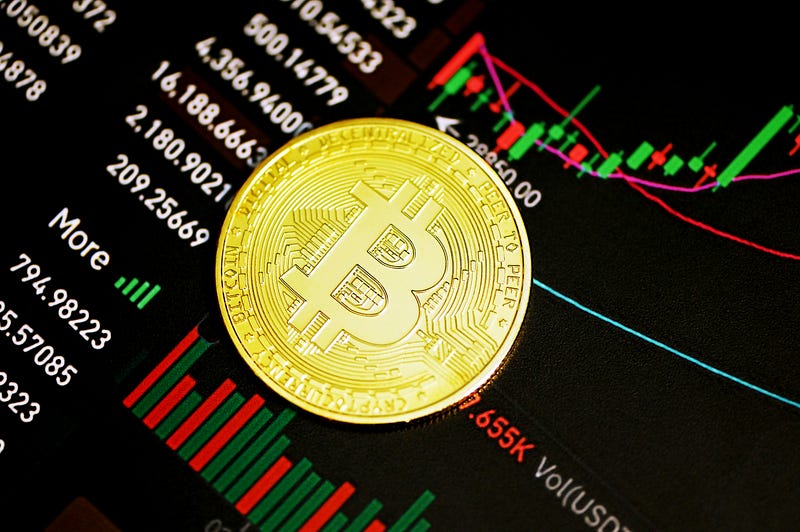
Photo by Kanchanara on Unsplash


Ordinals driving volume uptick

The surge in trading volume can be attributed to OKX’s support for Bitcoin Ordinals NFTs and BRC-20 tokens. Notably, the NFT transaction volume on Bitcoin experienced a substantial increase, reaching $121.8 million between Dec. 10 and Dec. 17.

Unlike traditional NFTs, Ordinals do not rely on smart contracts pointing to a digital asset. Described as digital artifacts by developer Casey Rodarmor, they lack smart contract features, making their trading reliant on decentralized exchanges and wallets.

The Ordinals protocol has been made possible by the Bitcoin Taproot upgrade, which was implemented in November 2021. The upgrade allows digital files to be inscribed on satoshis, the smallest monetary denomination on the Bitcoin network, each with a unique number or ordinal.


Strategic focus on BRC-20

The OKX NFT Marketplace’s strategic focus on the BRC-20 token standard has also played a role in its success. Collaborating with UniSat, a developer of Ordinals wallets, OKX created an indexing mechanism for BRC-20 transactions built on ordinal inscriptions, further solidifying its position in the market.

The Ordinals protocol has not been without controversy, with some, including Adam Back, CEO of Blockstream, criticizing it as a misuse of Bitcoin transaction blockspace. Despite the controversy, Ordinals have gained momentum, contributing to $367 million in sales volume on the Bitcoin network, surpassing Ethereum and Solana.

Ordinals and the BRC-20 standard have generally been a boon for Bitcoin miners, boosting their revenues through increased fees. This incentivizes miners to secure the network. Over 49 million transactions have resulted in over 2,250 BTC in transaction fees. Around 6 p.m. UTC on Monday, bitcoin fees are averaging out at $38.43 per transaction.

Beyond Bitcoin Ordinals, the broader NFT space has seen a resurgence, with the collective volume nearing $1 billion in November. During that month, the average value of NFT transactions experienced a notable 114% increase, rising from $126 to $270. This suggests a willingness among users to engage in higher-value trades compared to previous months.

Speaking with The Block, Nick Ruck, COO of ContentFi Labs, a community-owned Web3 tool suite, had this to say on the development:

“OKX has become the number one NFT marketplace after enabling trading of BTC Ordinals NFTs. Blur and OpenSea have not yet allowed trading of these Bitcoin-based NFTs, so they’ve started to fall behind in terms of volume due to the huge demand of Ordinals.”

More to Read
View All
Policy & Regulation·

Oct 24, 2023

Singapore High Court Embraces NFTs for Financial Investigations

Singapore High Court Embraces NFTs for Financial InvestigationsA recent decision by the Singapore High Court has seen it embrace non-fungible tokens (NFTs) in financial investigations. Financial investigation firm Intelligent Sanctuary, also known as iSanctuary, has been granted permission to attach NFTs containing legal documents to cold wallets linked to a hacking incident.This innovative approach, similar to the one used in Italy and the United States to deliver court summonses recently, signals a new departure in the application of NFT technology in the legal and financial world.Photo by Choong Deng Xiang on UnsplashMoving towards tokenized legal ordersLondon-based iSanctuary set out details of the court decision in a blog post published to its website recently. A pivotal moment in this scenario was the court’s issuance of a global freezing order encapsulated within soulbound NFTs, securely linked to the specified wallets. Soulbound NFTs are special types of NFTs which are tied to a user’s account. They cannot be transferred or traded.Although these NFTs do not halt transactions, they serve as powerful deterrents, notifying counterparties and exchanges about the wallets’ dubious past involvement in a hacking event.Monitoring fund movementsFurthermore, iSanctuary has unveiled an ingenious strategy to actively monitor funds leaving these wallets through the NFTs. This innovative method ensures a permanent and unbreakable connection between the NFTs and the wallets.iSanctuary recounted on its website that it was employed by a businessperson who had lost $3 million in crypto assets and was able to track the stolen funds successfully. Their method, which combines both on-chain and off-chain evidence, was presented by an iSanctuary senior investigator to the Singapore High Court. This led to the issuance of a worldwide injunction.iSanctuary’s financial and crypto investigators identified a series of cold wallets holding the proceeds of the crime, and the court approved their use of NFTs for service delivery.Mintable collaborationiSanctuary accredited Singaporean NFT marketplace Mintable as the creator of the NFTs. As reported by local news media outlet The Straits Times last week, this case revolved around a stolen private key and the alleged involvement of Singapore-based crypto exchanges in laundering the stolen assets. The fraudsters, purportedly from Singapore, are alleged to have orchestrated this saga that spans countries from Singapore to Spain, Ireland, Britain, and other European territories.Taking to X (formerly Twitter) to comment on the saga, Mintable founder Zach Burks stated:”Happy to help clean up the crypto space and move the NFT ecosystem into a realm of utility and away from the speculation of jpegs!”In a subsequent post, Burks highlighted further NFT-related innovation when pointing to a central bank digital currency (CBDC) pilot program led by Mastercard that implicated the use of NFTs to stamp out fraud. Mintable supported that particular use of the technology within that project.iSanctuary’s founder, Jonathan Benton, emphasized the impact of the recent initiative, calling it a “game changer.” The approach enables swift action, allowing for the identification of illicit asset holders and expediting the issuance of civil or criminal orders, even red flags, within hours if necessary. It also demonstrates that NFTs can be put to good use, above and beyond speculative trading.

news
Policy & Regulation·

Apr 28, 2023

HK Regulators Facilitate Dialogue between Banks and Crypto Enterprises

HK Regulators Facilitate Dialogue between Banks and Crypto EnterprisesIn a recent column, Arthur Yuen, Deputy CEO at the Hong Kong Monetary Authority (HKMA), stated that the HKMA and the Securities and Futures Commission (SFC) will jointly convene a meeting on Friday to share opinions on providing banking services to virtual asset service providers (VASPs).Proportionate CDD measuresYuen said that banks should “differentiate the risk levels of customers and apply proportionate CDD [customer due diligence] measures,” and “refrain from adopting a ‘one-size-fits-all’ approach to reject account opening applications.” To address misconceptions about CDD, the HKMA issued a circular on Thursday, offering further clarification and sharing notable cases and best practices.The HKMA called on banks to enhance employee training on account opening procedures and create task forces to help companies seize new business opportunities. The HKMA plans to actively take part in developing and introducing international standards, and provide guidance and support for banks to adopt appropriate anti-money laundering measures.SFC’s guidelines in MayMeanwhile, SFC CEO Julia Leung said in a discussion with Bloomberg that the SFC will issue virtual asset guidelines in May.Reactions on TwitterIn his tweet, Justin Sun, the founder of blockchain DAO ecosystem Tron, hinted at the potential development of a Tron-based stablecoin in Hong Kong. The Hong Kong Innovation Encryption Fund (HKIEF), an investor in blockchain projects, also took to Twitter to predict the details of a regulatory framework for cryptocurrencies in the city.According to HKIEF, USDT and USDC will be classified as security tokens, while BTC and ETH won’t be deemed securities. Exchanges trading non-security tokens will need both a VASP license and a trust license. Hong Kong-based virtual asset exchanges will be required to obtain a full license by May 31, 2024.

news
Policy & Regulation·

Aug 22, 2023

Cheongju City Targets Cryptocurrency to Recoup Unpaid Taxes

Cheongju City Targets Cryptocurrency to Recoup Unpaid TaxesSouth Korea’s Cheongju City, located 112km south of Seoul, has announced today that it will tackle local tax delinquents, focusing on the confiscation of their virtual assets.Photo by Karolina Grabowska on PexelsTax debtors owing over KRW 1 millionTo address this challenge, Cheongju City has requested records of cryptocurrency holdings for 8,520 individuals, each owing over KRW 1 million ($747) in local taxes, from seven cryptocurrency exchanges, including Upbit and Bithumb. The city’s plan is to seize and then liquidate these cryptocurrencies to recover the pending tax amounts.This move is facilitated by the amended Act on Reporting and Use of Specified Financial Transaction Information. Under this act, virtual asset service providers (VASPs) must uphold obligations such as confirming the identity of their customers and notifying authorities of dubious transactions. Moreover, the city is keenly monitoring the transfer of virtual assets, focusing particularly on those owned by individuals with unresolved tax dues.Legal groundsIn 2018, the South Korean Supreme Court ruled that virtual assets are recognized as intangible yet legitimate assets, which can be subject to confiscation. It is this ruling that empowers Cheongju City to act against tax arrears by seizing cryptocurrencies.Last year, Cheongju City scrutinized the crypto records of 16,000 individuals and successfully recouped KRW 68 million in taxes from 17 defaulting taxpayers. Cryptocurrencies of those still evading their tax responsibilities remain under confiscation.A city official said that Cheongju will take firm and swift action to collect delinquent payments from those who conceal assets or are repeat offenders.

news
Loading