Top

Singapore High Court Embraces NFTs for Financial Investigations

Policy & Regulation·October 24, 2023, 1:43 AM

A recent decision by the Singapore High Court has seen it embrace non-fungible tokens (NFTs) in financial investigations. Financial investigation firm Intelligent Sanctuary, also known as iSanctuary, has been granted permission to attach NFTs containing legal documents to cold wallets linked to a hacking incident.

This innovative approach, similar to the one used in Italy and the United States to deliver court summonses recently, signals a new departure in the application of NFT technology in the legal and financial world.
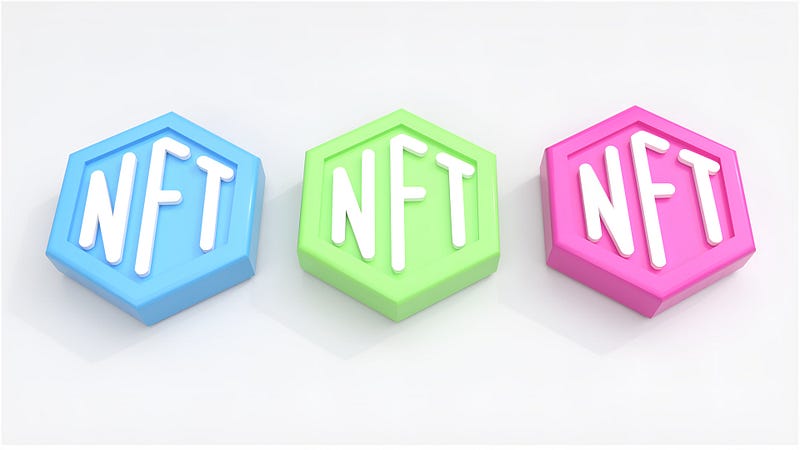
Photo by Choong Deng Xiang on Unsplash


Moving towards tokenized legal orders

London-based iSanctuary set out details of the court decision in a blog post published to its website recently. A pivotal moment in this scenario was the court’s issuance of a global freezing order encapsulated within soulbound NFTs, securely linked to the specified wallets. Soulbound NFTs are special types of NFTs which are tied to a user’s account. They cannot be transferred or traded.

Although these NFTs do not halt transactions, they serve as powerful deterrents, notifying counterparties and exchanges about the wallets’ dubious past involvement in a hacking event.


Monitoring fund movements

Furthermore, iSanctuary has unveiled an ingenious strategy to actively monitor funds leaving these wallets through the NFTs. This innovative method ensures a permanent and unbreakable connection between the NFTs and the wallets.

iSanctuary recounted on its website that it was employed by a businessperson who had lost $3 million in crypto assets and was able to track the stolen funds successfully. Their method, which combines both on-chain and off-chain evidence, was presented by an iSanctuary senior investigator to the Singapore High Court. This led to the issuance of a worldwide injunction.

iSanctuary’s financial and crypto investigators identified a series of cold wallets holding the proceeds of the crime, and the court approved their use of NFTs for service delivery.


Mintable collaboration

iSanctuary accredited Singaporean NFT marketplace Mintable as the creator of the NFTs. As reported by local news media outlet The Straits Times last week, this case revolved around a stolen private key and the alleged involvement of Singapore-based crypto exchanges in laundering the stolen assets. The fraudsters, purportedly from Singapore, are alleged to have orchestrated this saga that spans countries from Singapore to Spain, Ireland, Britain, and other European territories.

Taking to X (formerly Twitter) to comment on the saga, Mintable founder Zach Burks stated:

”Happy to help clean up the crypto space and move the NFT ecosystem into a realm of utility and away from the speculation of jpegs!”

In a subsequent post, Burks highlighted further NFT-related innovation when pointing to a central bank digital currency (CBDC) pilot program led by Mastercard that implicated the use of NFTs to stamp out fraud. Mintable supported that particular use of the technology within that project.

iSanctuary’s founder, Jonathan Benton, emphasized the impact of the recent initiative, calling it a “game changer.” The approach enables swift action, allowing for the identification of illicit asset holders and expediting the issuance of civil or criminal orders, even red flags, within hours if necessary. It also demonstrates that NFTs can be put to good use, above and beyond speculative trading.


More to Read
View All
Policy & Regulation·

Oct 30, 2023

Gyeonggi Officials with Cryptocurrencies Clear of Professional Conflicts in Virtual Assets

Gyeonggi Officials with Cryptocurrencies Clear of Professional Conflicts in Virtual AssetsGyeonggi Province, South Korea’s most populated province surrounding the national capital of Seoul, announced on October 26 (local time) that the duties of all crypto-holding officials ranked 4 or higher in the provincial government are not associated with virtual assets. In Korea, public officials are ranked from nine to one, with one being the highest position.In anticipation of the amended Public Service Ethics Act coming into effect on December 14, the Gyeonggi provincial government introduced a revised employee code of conduct in August. This required officials of rank 4 or higher to report their crypto holdings within 10 days starting from August 21.Photo by Nattu Adnan on UnsplashReported crypto ownershipThe result indicated that out of 228 officials, 23 reported owning virtual assets. Among these, 15 officials held cryptocurrencies valued at less than KRW 1 million ($738), while the remaining 8 had holdings exceeding that amount.To determine any potential involvement with cryptocurrencies in their official duties, the Gyeonggi government examined the roles and responsibilities of these officials within their respective departments. Following this review, the matter was forwarded to the Gyeonggi Public Service Ethics Committee for further scrutiny.Ethics committee reviewOn October 20, the committee convened to assess the relationship between the officials’ duties and their crypto holdings. They unanimously concluded that none of the 23 officials had any ties to crypto in their official roles.The newly revised code of conduct elaborates on the conditions under which a public official’s responsibilities are associated with virtual assets. Specifically, an official’s duties are considered linked to virtual assets if they are involved in formulating or implementing crypto-related policies or laws; conducting related investigations, inquiries, or inspections; engaging in the registration and oversight of cryptocurrency exchanges; or if they are involved in supporting or overseeing the development of crypto technologies.In light of these definitions, officials who engage in any of the above roles are strictly prohibited from capitalizing on any crypto-related information they encounter during their professional duties for personal trading or investment. Furthermore, officials who either currently shoulder or have previously carried out such responsibilities are required to disclose any crypto holdings they acquire.In the future, once the revised Ethics Act is implemented, the Gyeonggi government will remain fully committed to preventing conflicts of interest among public officials. To bolster these efforts, Gyeonggi will introduce additional measures, including a thorough verification process for the accuracy of their cryptocurrency holdings reports.In situations where a public official with cryptocurrency holdings is assigned a position related to virtual assets, Gyeonggi will issue individualized instructions. These directives may entail either the liquidation of their cryptocurrency holdings or their removal from the specific role in question.Meanwhile, Gyeonggi will enhance its endeavors to furnish educational resources pertaining to virtual asset reporting. Moreover, the local government will restrict officials from holding virtual assets if they fall under financial disclosure obligations and are deemed to possess information about or exert influence on virtual assets.

news
Web3 & Enterprise·

Jun 07, 2023

SAND Token to be Listed on Japanese Crypto Exchange bitFlyer

SAND Token to be Listed on Japanese Crypto Exchange bitFlyerJapanese crypto exchange bitFlyer has recently announced its plans to list The Sandbox (SAND) on its trading platform, making it the 22nd crypto asset to be available on bitFlyer. Specific details are yet to be announced. This move reflects bitFlyer’s commitment to expanding its offering and providing customers with more investment options and opportunities in the realm of Web3.Photo by Shubham Dhage on UnsplashGlobal presenceFounded in 2014 with a mission to simplify the world through blockchain technology, bitFlyer has taken its crypto asset trading business to the global stage. Its expansion includes sister companies bitFlyer USA and bitFlyer Europe, which have allowed the exchange to extend its reach beyond Japan.Blockchain-powered metaverseThe Sandbox is a metaverse platform that harnesses the power of blockchain technology, empowering users to create and possess digital content using the platform’s tools. Moreover, The Sandbox features virtual land called LAND, which is regularly utilized by companies for hosting events and various other activities. At the heart of this ecosystem lies the SAND token, which enables users to trade user-generated content, participate in governance by voting, and engage in staking.Attention in East AsiaNotably, The Sandbox has been generating significant attention in East Asia. Last month, the metaverse platform initiated an event titled “Hallyu Rising,” collaborating with renowned Korean brand partners, including automaker Renault Korea. As part of this event, Renault Korea launched the Renault Korea Hub within The Sandbox’s environment. This hub gives car enthusiasts a unique chance to design their own vehicles and enjoy exclusive experiences. The event also included a land sale, offering users the chance to acquire LAND adjacent to the Korean brands, thereby encouraging more active user engagement.

news
Web3 & Enterprise·

Mar 13, 2025

SGX to list Bitcoin perpetual futures in H2

Singapore Exchange Limited (SGX), the city-state’s primary asset exchange, is in the process of establishing Bitcoin perpetual futures trading on the platform.Photo by Kanchanara on UnsplashInstitutional product offeringAccording to a report published by Bloomberg earlier this week, the exchange platform intends to launch Bitcoin futures sometime during H2 2025. The product launch will be subject to regulatory approval from the Monetary Authority of Singapore (MAS). A spokesperson for the company told Bloomberg that the product offering will be geared exclusively towards institutional investors and traders in an effort to “significantly expand institutional market access.” Retail access to the product will be prohibited. Once launched, these Bitcoin perpetual futures contracts, being offered through a traditional finance (TradFi) outfit like SGX, will help to blur the lines between TradFi and the emerging crypto sector. Perpetual futures have no expiry date. They offer a means for traders to bet on price changes in an underlying asset while doing away with the need to take ownership of the asset itself. Cautious approachSGX has been cautious in listing crypto assets and derivative products. Last year the firm’s CEO, Loh Boon Chye, said that the time was not yet right for such listings.  His concern back then was that any such product launches would need “sustainable ecosystem support,” adding that “that means demand, that means governance, that means structure.” While spot Bitcoin exchange-traded funds (ETFs) had been approved in the United States at that point, there has been much further development in the crypto-sphere since then, following the election of a pro-crypto administration in the U.S. That event has had knock-on effects globally. Singapore’s SGX isn’t the only traditional exchange platform to respond. Japanese futures exchange, the Osaka Dojima Exchange (ODEX), is gearing up to file an application with the Financial Services Agency (FSA) to list a Bitcoin futures product later this month. Closer to home, an American digital asset marketplace that focuses on institutional trading, EDX Markets, has plans to introduce Bitcoin perpetual futures products to the Singaporean market, according to a report which emerged in January. In May 2024, EDX launched EDXM Global, a settlement platform, in Singapore. This product launch by SGX serves the purposes of decision-makers in Singapore, who have been trying to position the city-state as a digital asset industry hub. Additionally, the move will bring greater acceptance of the digital assets sector from traditional market participants. Crypto perpetual futures contracts were first pioneered by crypto derivatives exchanges like BitMEX back in 2016. Since then, other crypto-native platforms like Binance and OKX have offered these products. In the case of unregulated offshore exchanges, the products have proven to be controversial, as at times, they have been used in a manner that has exposed market participants to counterparty risk. Failed crypto exchange FTX, together with its sister company Alameda Research, relied on the products in their trading activities. SGX, as a seasoned, regulated TradFi operator, which holds an Aa2 rating from Moody’s, is likely to prove to be a more palatable option for institutional players.

news
Loading