Top

South Korean FSC updates definition of virtual assets and VASP regulations for Virtual Asset User…

Policy & Regulation·December 11, 2023, 7:32 AM

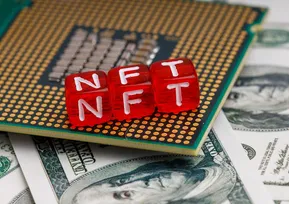
The South Korean Financial Services Commission (FSC) on Monday (local time) published a new enforcement decree and supervisory regulations for the Virtual Asset User Protection Act, under which non-fungible tokens (NFTs) and deposit tokens are excluded from the definition of virtual assets. The act serves to protect customer assets, prevent unfair trading practices, and enforce penalties.

“The enforcement decree and supervisory regulations provide detailed standards and methods to safeguard users’ assets and establish stability in the market,” the FSC said.

Photo by Tingey Injury Law Firm on Unsplash


Defining virtual assets

The agency explained that it decided to exclude NFTs because they are mainly bought and sold for collection purposes, posing low risks to holders and the financial system. However, NFTs that can be used as a means of payment for purchasing certain goods and services are considered virtual assets. On the other hand, deposit tokens — which will be managed by the Bank of Korea’s central bank digital currency network — are regarded as a legitimate form of monetary deposit and are subject to relevant regulations instead of the User Protection Act. Other “electronic certificates of economic value,” such as mobile vouchers and electronic bonds, are also excluded from the definition of virtual assets.


Enhancing security and transparency

Following the clarified definition of virtual assets, the updated regulations underline conduct measures that virtual asset service providers (VASPs) must comply with. For example, VASPs must calculate the total value of their customers’ crypto assets every month and store at least 80% in a cold wallet to prevent infringements like hacks — a boost from the current 70 percent. Cold wallets are deemed more secure than hot wallets because they keep crypto keys offline instead of staying connected to the internet.

VASPs are also not allowed to arbitrarily block deposits and withdrawals of user assets without prior notice and a justifiable reason like internal system failure or hacks as well as requests from courts, investigative bodies, the National Tax Service and financial authorities. User deposits must be stored in banks, which can invest them only in safe assets such as government bonds.

The act is set to take effect on July 19 next year after a legislative review scheduled for next month.


More to Read
View All
Policy & Regulation·

Aug 29, 2023

Illicit Crypto Activities Estimated to Have Surpassed $100 Billion in S.E. Asia

Illicit Crypto Activities Estimated to Have Surpassed $100 Billion in S.E. AsiaA recent analysis by blockchain analytics firm Bitrace has found that over $100 billion worth of digital currency has been used in illicit crypto trading activities in Southeast Asia.Photo by Bermix Studio on UnsplashThe firm provided details of its analysis via X (formerly Twitter) on Monday. The data underscores the extensive scope of unlawful activities involving cryptocurrencies across Southeast Asia. The analysis further revealed that illicit activities involve fraudulent schemes, online gambling, and money laundering.Misuse of digital asset innovationSome of the key characteristics of digital assets include the ability to maintain anonymity, decentralization, and borderless transactions, which are generally considered positive attributes. However, the very nature of decentralized cryptocurrency means that nobody dictates who uses it or the purpose for which someone decides to use it. With that, these characteristics have rendered illegal undertakings not only more covert but also facilitated expedited transfers of pilfered resources.The silver lining, however, rests in the inherent transparency of blockchain ledgers. This quality has enabled Bitrace’s team of encryption analysts to trace funds implicated in illicit ventures through intensive on-chain analysis.Key insightsThe Bitrace research points towards the following key insights:Prevalence of Tether (USDT): The use of USDT has gained prominence in both illicit activities and gambling operations throughout Southeast Asia, with a staggering sum of over 115 billion USDT recorded in 2022 alone.Shift to Top Trading Platforms: USDT is observed to migrate from unlawful platforms within Southeast Asia towards top-tier trading platforms. Particularly favored by operators and gamblers, a significant proportion hails from the Chinese demographic, consistently gravitating towards specific exchanges.Inflow into Trading Platforms: A noteworthy development emerges as over 14.6 billion USDT prepares to traverse into trading platform accounts. The mounting risk factor diffuses across an expanding spectrum of addresses and platforms.Likely consequencesIf this blockchain analysis is found to be accurate, there are likely to be ramifications for all projects operating in the digital assets, DeFi and Web3 space. It comes at a time when the focus on the regulation of crypto-related businesses is more intense than ever before.Anti-Money Laundering (AML) and Know Your Transaction (KYT) legislation are cornerstone financial services regulations that have been established on a global basis. If these regulations are being flouted, and crypto is being used as a means to circumvent them, there’s a real risk that regulation could be applied heavy-handedly to counteract that threat of widespread illicit activity.Global crypto exchange Binance has faced criticism in this context, with a suggestion in March that its Turkey-based exchange service had been used by an organization connected with militant group Hamas for money laundering and terrorist financing.In a report last week, Binance claimed that it shared information with authorities that led to the capture of senior ISIS members. More such cooperation will likely be necessary to prevent the sector being subject to overzealous regulation.

news
Policy & Regulation·

Oct 05, 2023

South Korea Embarks on Wholesale CBDC Pilot Program

South Korea Embarks on Wholesale CBDC Pilot ProgramAiming to pave the way for a future-oriented monetary infrastructure, South Korean financial agencies announced a plan on Wednesday (local time) to pilot a central bank digital currency (CBDC). This trial is designed to evaluate its practical use in real-world scenarios.The Bank of Korea (BOK), alongside the Financial Services Commission (FSC) and the Financial Supervisory Service (FSS), has been working with the Bank for International Settlements (BIS) from the inception of this project’s blueprint. Together, they plan to partner with multiple commercial banks to successfully carry out this initiative.Photo by Y K on UnsplashWholesale CBDCThe test will concentrate on a wholesale CBDC designed for transactions and settlements between financial institutions. This concept is akin to how commercial banks use reserves in their central bank accounts for transactions and settlements.Meanwhile, banks will introduce tokenized deposits for public use within the CBDC network. These payment instruments will circulate securely within the new monetary infrastructure built by the BOK and managed jointly with the FSC and the FSS.The pilot of this cutting-edge monetary infrastructure is poised to set the stage for the introduction of diverse, innovative payment and financial services that stand out from current offerings. This effort will also lay the groundwork for newer financial products, like security tokens, to be traded with greater safety and efficiency.Participation from citizensThe test aims to complete its Proof of Concept (PoC) through technical trials in simulated settings. Furthermore, a select group of citizens will be given the opportunity to engage in specific use case tests, letting them experience firsthand the advantages of the emerging digital payment methods. This project will significantly contribute to the future research and development of CBDC infrastructure.The Korean financial authorities have engaged in in-depth discussions regarding policy matters leading up to the test. To ensure alignment with existing laws, only banks will be involved in this initial phase. Decisions on expanding the test will come later, after a thorough evaluation of relevant policy considerations after the trial.The agencies will continue working to ensure that transaction tests involving citizens are conducted with sufficient user protection measures under the existing legal framework.Moreover, from the outset of the test’s preparation, the BIS offered insights from its research and development experiences with CBDC systems. In particular, members from the BIS’s Innovation Hub and the Monetary and Economic Department provided technical advice on designing and constructing a CBDC network. Stemming from their discussions, the BIS and the BOK jointly released a report highlighting the test’s importance and its intricately crafted model.This trial is a step towards identifying the best CBDC model suited for Korea’s financial and economic landscape. It’s important to note that the test doesn’t necessarily indicate a complete rollout of a CBDC or the final version of a CBDC network.Moving forward, the BOK, FSC, and FSS will form a collaborative working group. They’ll work hand-in-hand with pertinent ministries and entities, including the Ministry of Economy and Finance, to ensure a seamless execution of the test. Their technical partnership with the BIS will also remain ongoing.The selection process for a system developer began on October 4. Later this month, there will be an informational session for companies and banks engaged in the project. By the end of November, the financial authorities will unveil information regarding the banks involved and the specific use cases slated for testing. Public involvement is anticipated to start in the fourth quarter of next year.

news
Web3 & Enterprise·

Oct 20, 2023

Komainu Partners with Copper to Enable Off-Exchange Settlements

Komainu Partners with Copper to Enable Off-Exchange SettlementsKomainu, a well-established and regulated custody service provider and subsidiary of Japanese financial services conglomerate Nomura, has recently unveiled a new partnership with Copper, a digital asset solutions firm.This collaboration offers institutional clients of Komainu a means through which they can access off-exchange settlements. At a broader level, it is another significant development in progressing digital assets infrastructure.Photo by Gerd Altmann on PixabayClearLoop network accessKomainu, which was originally launched by Nomura in conjunction with Ledger and CoinShares, will be accessing Copper’s ClearLoop network as part of this collaboration. This partnership brings a host of possibilities for institutional clients of Komainu.What makes this collaboration particularly noteworthy is its ability to merge Komainu’s regulated, on-chain custody with the advanced off-exchange settlement capabilities of ClearLoop. As the institutional adoption of digital assets continues to gain momentum, the focus on managing custody and counterparty risk has never been more critical. Recent events, such as the collapse of the crypto exchange FTX alongside a plethora of crypto lending platforms, have served as stark reminders of the significance of robust custody solutions in this space.ClearLoop network growthClearLoop, with its distinctive feature of holding assets until just before a trade execution, effectively mitigates counterparty risk by seamlessly connecting multiple exchanges within a single trading network. This innovative approach eliminates the need to transfer assets to an exchange-based wallet, streamlining and fortifying the institutional trading process.UK-based Copper has been making market in-roads with its off-exchange settlement tool which it first launched in 2020. In March crypto exchange platform Huobi signed a memorandum of understanding (MOU) with Copper with the intention of joining the ClearLoop Network. Bitstamp, the world’s oldest crypto exchange, followed in April with its intention to integrate with ClearLoop.Singapore’s Matrixport was next to join in May, followed by Seychelles-headquartered crypto exchange Bitget in August.The leaders of both companies, Nicolas Bertrand, CEO of Komainu, and Dmitry Tokarev, CEO of Copper, expressed their enthusiasm for this partnership. Bertrand highlighted the importance of diversifying counterparty risk and commended the partnership’s ability to offer clients the best of both worlds. He emphasized that by combining Copper’s proven processes and connectivity with Komainu’s on-chain, segregated, and regulated custody platform, this partnership is set to raise the industry’s standards significantly.UK regulatory approvalEarlier this month, Komainu achieved a further milestone when it received regulatory approval from the UK’s Financial Conduct Authority (FCA) to operate as a custodian wallet provider. This achievement aligns with the regulatory framework established to combat money laundering, terrorist financing, and fund transfers.In a landscape where institutions are increasingly embracing digital assets, the partnership between Komainu and Copper demonstrates that the industry is moving towards ushering in a new era of more secure, efficient, and trustworthy financial markets. With the FCA’s regulatory approval, Komainu is solidifying its attempts towards adhering to the industry’s most rigorous security and compliance standards.

news
Loading