Top

Terraform Labs fails to halt class action lawsuit

Policy & Regulation·December 05, 2023, 1:52 AM

The High Court in Singapore has dismissed an appeal filed by Terraform Labs and its co-founders, marking a significant step forward for the plaintiffs behind a class action initiated against the company.

That’s according to a report published by Singaporean publication, the Business Times, on Thursday. The legal development follows the collapse of TerraUSD (UST) tokens in May of 2022, resulting in the loss of billions of dollars in market value. The collapse, in turn, has led to several lawsuits against Terraform, its founders and affiliated entities, with those court actions playing out in courtrooms in Singapore, South Korea, Montenegro and the United States.
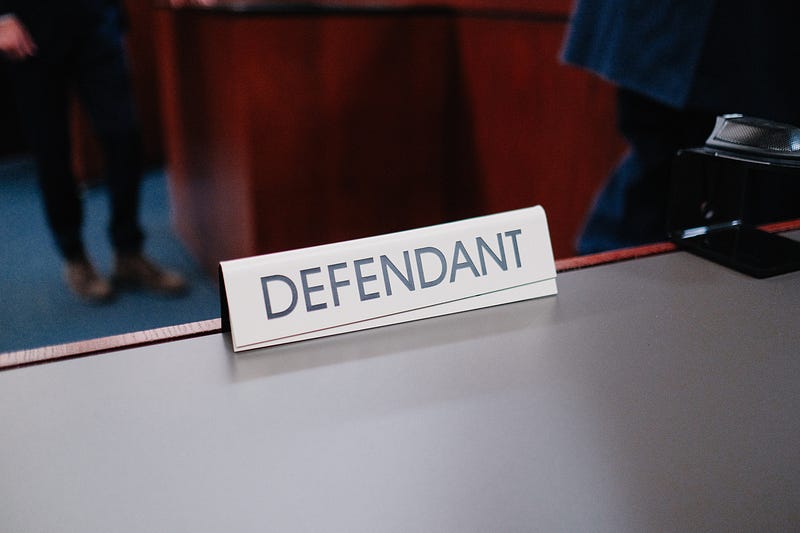
Photo by Wesley Tingey on Unsplash


Fraudulent misrepresentation alleged

The class-action suit, initiated in September 2022 by Julian Moreno Beltran and Douglas Gan on behalf of 375 others, alleges fraudulent misrepresentation by Terraform, Co-Founders Do Kwon and Nikolaos Alexandros Platias and the Luna Foundation Guard (LFG). The claimants argue that these misrepresentations induced them to purchase UST, stake the tokens and retain them as their value plummeted.

UST had been designed to be pegged to the U.S. dollar with a 1:1 ratio. However, flaws in the tokenomics behind that digital asset meant that it faced a loss of confidence in May 2022, trading at around $0.05 when the court’s decision was released. The claimants collectively suffered losses of nearly $57 million.


Terms of use cited in attempt to dismiss

Terraform attempted to have the lawsuit dismissed by invoking an arbitration clause in its website’s terms of use, asserting that users had waived their rights to a jury trial or participation in a class action. However, the Assistant Registrar (AR) rejected this application, stating that the defendants failed to establish an arbitration agreement.

The AR highlighted that the terms of use were inconspicuous on the website, and there was insufficient effort to draw users’ attention to those clauses. Terraform, Kwon and associated entities appealed this decision, which was heard by Justice Hri Kumar Nair on Sept. 25.

Despite establishing a prima facie case for an arbitration agreement, the court ruled that Terraform’s participation in the legal proceedings, including filing a defense and counterclaim, meant it could no longer seek a stay in favor of arbitration.


Multiple actions

It’s a busy time for all stakeholders relative to the Terraform collapse. Playing out within the same timeframe is a lawsuit in the United States taken by the Securities and Exchange Commission (SEC) against Terraform and Do Kwon, where the SEC claims that crypto asset securities fraud has been carried out.

The latest installments in that saga in recent weeks have seen both parties file to seek summary judgment. Last week, a court in New York approved the confidential treatment of specific documentation which had been produced by Jump Crypto, a division of proprietary trading firm Jump Trading.

There are also criminal actions underway. In a South Korean court in October, Terraform Labs Co-Founder Daniel Shin denied wrongdoing in the Terra/Luna collapse. Meanwhile, a court in Montenegro has approved the extradition of Do Kwon, with a final decision to be made shortly as regards whether he should be extradited to the United States or South Korea.


More to Read
View All
Markets·

Dec 07, 2023

Market speculates on Qatari investment driving bitcoin price surge

Market speculates on Qatari investment driving bitcoin price surgeRumors are circulating within the cryptocurrency space that Qatar’s sovereign wealth fund may have dabbled in investing in bitcoin, leading to the recent surge in the bitcoin unit price.Such a move, while still an unconfirmed speculation, would be indicative of the increasing recognition of Bitcoin as a mainstream asset class. At the time of writing, bitcoin stands at $44,000. That represents a 16% increase over the space of the past week and a 166% increase since the beginning of the year.Photo by Yiğit Ali Atasoy on UnsplashKeiser’s claimAccording to outspoken Bitcoin advocate Max Keiser, Qatar’s sovereign wealth fund (QSWF), responsible for managing the nation’s significant oil and gas-generated wealth, is considering allocating up to $500 billion to the leading cryptocurrency.To provide context, this investment would eclipse the publicly disclosed bitcoin holdings of MicroStrategy, founded by Michael Saylor, by an astonishing 671 times. MicroStrategy currently holds the position of the largest corporate holder of Bitcoin, with 174,530 BTC acquired in November.Keiser speculates that the QSWF’s monumental investment could propel bitcoin’s price to new highs, reaching $100,000. Keiser tweeted:“The God Candle, a $100,000 uptick in #Bitcoin is in play. It will shift the global axis of wealth and power in 1 tick.”Custodia Bank Founder and CEO Caitlin Long shared a similar view on the X social media platform on Wednesday, pointing out that in September the Emir of Qatar had visited El Salvador and met with President Nayib Bukele. The inference is that it would have been an interest in bitcoin that may have provided the motivation for that visit, given that Bukele and El Salvador have adopted bitcoin as a sovereign currency.However, not everyone is on board with this theory. Some have pointed out that the assertion that the QSWF will invest $500 billion into bitcoin is impossible, given that the fund has $475 billion under management.Bitcoin advocate Luke Broyles weighed in on the rumor, emphasizing the crucial interplay between bitcoin’s supply and demand. Broyles highlighted the $76 billion worth of BTC still available on crypto exchanges, underscoring the fundamental principle of bitcoin’s fixed supply. According to Broyles, any substantial investment would inevitably drive prices higher.However, Broyles remains skeptical of the Qatar news, deeming it a rumor, and expressed shock if it proves remotely true. That view has led many back to the original speculation in relation to this most recent price action, the illusive bitcoin spot exchange-traded fund (ETF) approval in the United States.Some activity in recent days has suggested that BlackRock, the world’s largest fund manager, has been doing preparatory work for the launch of its iShares Bitcoin Trust ETF. Not everyone was positive on the topic of Bitcoin on Wednesday, however. Jamie Dimon, the CEO of JPMorgan Chase, testified before the U.S. Congress on Wednesday, stating “If I were the government I’d close [Bitcoin] down.”

news
Web3 & Enterprise·

Sep 03, 2025

Japanese auto-parts maker Ikuyo invests in crypto firm for stablecoin settlements

Japanese auto-parts manufacturer Ikuyo announced last week its board has approved a 300 million yen ($2 million) investment in Galactic Holdings, the parent company of the TruBit cryptocurrency exchange. The investment expands a capital and business alliance first established on June 26.Photo by CHUTTERSNAP on UnsplashStablecoin for B2B cross-border paymentsIn a press release, the Kanagawa-based company stated the funding will be executed through a third-party allotment of new shares. The capital will support Galactic’s stablecoin infrastructure for B2B cross-border payments and help Ikuyo build expertise in digital financial services, diversify its assets, and enhance its long-term corporate value. The initiative arrives as Japan’s auto-parts sector, which counts more than 600,000 workers at roughly 20,000 firms, seeks new efficiencies amid global economic pressures. Autos represented 28.3% of Japan’s exports to the U.S. in 2024, making U.S. trade policy a key influence. This year, the sector navigated a 25% U.S. tariff on automobiles and parts imposed in April, which was then lowered to 15% on July 22 after a deal with the Trump administration. Shifts in the global trade landscape provide an incentive for companies to streamline operational costs. As a proof of concept, Ikuyo plans to pilot stablecoin settlements in transactions between its China-based subsidiary, Kunshan Veritas Automotive Systems, and Veritas in Mexico. Currently, these trades are settled in Mexican pesos and converted to U.S. dollars. The company expects the use of stablecoins to reduce remittance costs and accelerate settlement times.  While the launch timing, performance metrics, and monetization strategy are still being finalized, the pilot’s results will guide future business development. In the long term, Ikuyo aims to become an early adopter of stablecoin settlement in the auto-parts sector, applying the technology to improve efficiency and transparency in international trade, initially between Japan and Latin America and between Japan and Southeast Asia. Japan embraces Web3 in push for growthThis corporate move aligns with a broader trend of growing government support for decentralized technologies in Japan. Speaking at the WebX2025 event on Aug. 25, Prime Minister Shigeru Ishiba announced stronger state support for Web3 initiatives, describing the sector as a driver of innovation that could help Japan tackle demographic decline and foster economic transformation.  He noted that Web3 is already being implemented at the Osaka Expo and highlighted local pilot programs where communities use tokens as governance rewards. Ishiba also stressed that the government’s five-year startup growth plan would be strengthened through investment and regulatory reforms, with Web3 and related digital industries expected to take center stage. On the financial policy front, Finance Minister Katsunobu Kato recently addressed the rapid increase in crypto adoption across Japan. He explained that his role is to balance necessary oversight with providing the industry enough freedom to innovate. While acknowledging that digital assets remain highly volatile, Kato argued that creating a secure trading environment would protect investors while also helping to diversify and enrich their portfolios. Ikuyo’s initiative underscores the private sector’s quickening embrace of crypto. Last month, SBI Group, one of the nation’s largest financial conglomerates, revealed a strategic alliance with the decentralized oracle provider Chainlink. Their collaboration aims to expand the institutional adoption of digital assets and blockchain globally. The partnership will utilize Chainlink’s Proof of Reserve, SmartData, and Cross-Chain Interoperability Protocol (CCIP) to facilitate the tokenization of real-world assets (RWAs) across multiple blockchains.

news
Web3 & Enterprise·

Jul 25, 2023

Top Korean Crypto Exchanges Witness Surge in Listings and Delistings During H1

Top Korean Crypto Exchanges Witness Surge in Listings and Delistings During H1In the first half of this year, South Korea’s top five cryptocurrency exchanges experienced notable growth in the number of newly added cryptocurrencies to their platforms. However, they also observed a significant surge in the number of cryptocurrencies being delisted.Photo by Shubham Dhage on UnsplashDelisting and listingAccording to a report by local news outlet Etoday, the nation’s five leading exchanges Upbit, Bithumb, Coinone, Korbit, and Gopax ceased trading for a total of 51 cryptocurrencies during the first six months of this year. This marked an 88% increase compared to the 27 cryptocurrencies delisted in the previous six-month period. During the first half of last year, the number of delisted tokens was 48.Among the five exchanges, Coinone took the lead by delisting the highest number of cryptocurrencies, totaling 24. Bithumb followed with 14 delisted tokens, Gopax with six, Upbit with five, and Korbit with two. Notably, Coinone continued its delisting spree this month, removing an additional five cryptocurrencies from its platform. Most cryptos were delisted because their projects and services were not operating normally.The significant number of delisted tokens at Coinone appears to be linked to the involvement of its former employees in the unlawful listing of certain tokens. These individuals reportedly received bribes in exchange for listing a total of 46 cryptocurrencies on the trading platform. Among these tokens were PICA and PURE, which are no longer traded on the exchange.Only five cryptocurrencies were delisted according to the decision made by the Digital Asset eXchange Alliance (DAXA), a self-regulatory group consisting of the aforementioned five crypto exchanges. The delisted tokens were REP, BASIC, OMG, SRM, and PCI. This indicates that most of the affected cryptocurrencies were exclusively traded on one of the DAXA member exchanges, indicating that DAXA’s listing and delisting guidelines were largely ineffective.Meanwhile, there has been a notable surge in the number of newly added cryptocurrencies. Bithumb, for instance, took the lead by listing an impressive 63 new tokens, nearly three times the number listed by Upbit (22). In the same vein, Coinone added 14 tokens, while Korbit and Gopax followed with six and three new listings, respectively.Profit squeezeLast year, crypto trading platforms adopted a conservative approach when it came to listing and delisting procedures, prioritizing investor protection. However, their stance shifted as the global crypto market encountered a significant decline in trading volume amid crypto winter. This decrease in trading activity subsequently led to reduced operating profits, compelling the platforms to list more cryptocurrencies.With the exception of Upbit, which maintains a dominant market share in the nation, the outlook on crypto exchanges appears more or less grim. In particular, Coinone, Korbit, and Gopax are in the red. Bithumb, while still in profit, saw its operating profit last year falling 80% year-over-year to 163.5 billion KRW ($127.9 million). This trend continued this year, with Bithumb’s operating profit In the first quarter of this year recording 16.2 billion KRW, an 80% decrease compared to the same period last year.In light of this development, an industry insider, who wished to stay anonymous, told Etoday that while the market’s total trading volume is witnessing a considerable decline, Upbit’s dominance is still growing. This individual also noted that the decrease in trading volume and the resulting deficit are exerting pressure on exchanges to expand their cryptocurrency listings.

news
Loading