Top

Late Korean artist Lee Jung-seob’s ‘Bull’ NFT on auction at OpenSea

Web3 & Enterprise·December 01, 2023, 3:29 AM

NFT marketplace OpenSea is hosting an ongoing auction for a digital representation of the painting “Bull” by the late Korean artist Lee Jung-seob, Yonhap News TV reported on Tuesday. Celebrated for his distinctive lines in his paintings, Lee passed away in 1956. This auction is set to conclude on Dec. 12, with the starting bid placed at 300 WETH (Wrapped Ethereum), which is approximately equivalent to $626,000.
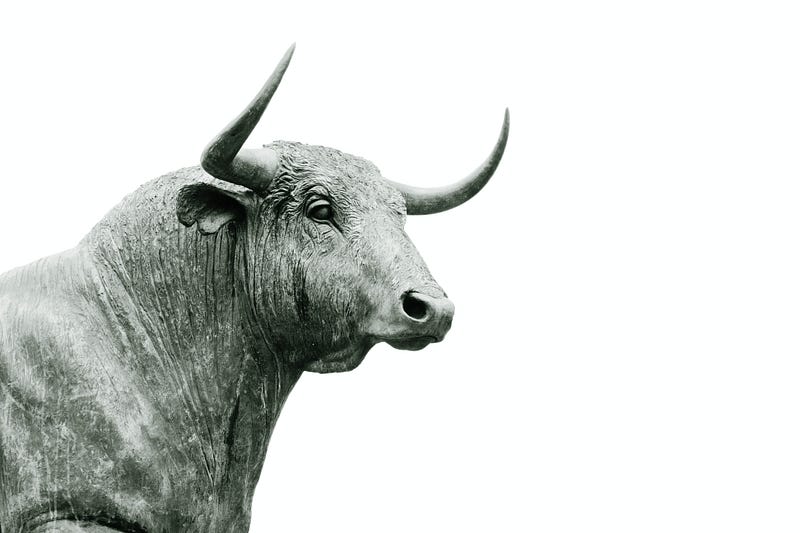
Photo by Hans Eiskonen on Unsplash


White bull as NFT

Lee’s “Bull,” featured in the OpenSea auction, is distinguished by its depiction of a white bull set against a dark green background. This particular piece is one of Lee’s unpublished works and is currently being offered for sale by a private art collector. Regarding the authenticity of the painting, the description on the OpenSea page states, “This work received a handwritten evaluation from Professor Jung Jum-sik, a founding member of the Lee Jung-seob Art Award, on November 9, 2000.”

The current owner of the original artwork has expressed their intention for auctioning it as a desire to share a valuable piece of art. The painting originally belonged to poet Ku Sang and has since changed hands multiple times, experiencing some damage along the way. While the copyright for an artist’s work typically remains with their inheritors for 70 years posthumously, in the case of Lee Jung-seob, this period has already lapsed.


Authenticity and NFT investments

Meanwhile, art appraisal experts are advising caution, emphasizing the need to first confirm the authenticity of the original painting. This caution stems from the fact that the painting has not undergone evaluation by an official appraisal organization.

During his interview with Yonhap, Jung Jun-mo, CEO of Korea Art Authentication Appraisal Inc., offered a word of caution regarding investment in NFTs tied to artworks with questionable authenticity. He emphasized that NFTs representing works that lack genuine authentication also hold no value in terms of authenticity. Jung advised potential investors to thoroughly verify the legitimacy of such artworks before proceeding with any investment in their NFT representations.

Last year, many paintings of modern Korean artists were converted into NFTs, but they sparked controversy over issues of authenticity. Experts in art investment have since been advising thorough research prior to making any investments in these digital assets. They warn that losses incurred from transactions involving these NFTs fall squarely on the investors.

More to Read
View All
Web3 & Enterprise·

Feb 20, 2025

Standard Chartered joins with local partners in Hong Kong to launch stablecoin

Standard Chartered Bank Hong Kong, a licensed bank and subsidiary of British multinational banking group Standard Chartered, has partnered with local companies to launch a Hong Kong dollar-based stablecoin in the Chinese autonomous territory.Photo by Chapman Chow on UnsplashJoint venture formed In a press release published by Animoca Brands, a blockchain-based gaming and Web3 venture capital firm based in Hong Kong, the company outlined details of the partnership between it and Standard Chartered, alongside Hong Kong Telecom (HKT), Hong Kong’s dominant fixed-line, mobile and broadband telecommunications firm. The partnership has been structured as a joint venture between the three companies, with the objective of launching the Hong Kong dollar-backed stablecoin. Local regulator and central bank, the Hong Kong Monetary Authority (HKMA) has been working towards implementing a regulatory framework specifically dedicated to stablecoins.  Legislative framework incoming As of the end of 2024, proposed legislation that would enable such a framework had advanced to Hong Kong’s Legislative Council. Before the bill can be enacted into law, the legislative process requires three readings of the bill accompanied by a series of debates and the scrutiny of lawmakers.  Once the legislation has been signed into law, it will require stablecoin issuers to obtain a license from the HKMA. In the case of this particular joint venture, the promoters plan to apply for a license in due course. Standard Chartered is already deeply embedded in Hong Kong’s financial system, making this latest development all the more significant. Alongside HSBC and Bank of China (Hong Kong), Standard Chartered issues the local currency, the Hong Kong dollar. That activity is carried out under the oversight of the HKMA.  The HKMA launched a sandbox environment relative to stablecoins in order to provoke an exchange of views between the regulator and market participants. The three parties to this latest joint venture have been sandbox participants since July of last year, alongside JINGDONG Coinlink Technology and RD InnoTech. JINGDONG declared its intention to launch a Hong Kong dollar-backed stablecoin last year. RD InnoTech plans to launch the HKDR stablecoin in conjunction with HashKey Exchange. Stablecoins ‘starting to eat the world’Earlier this month, Rene Michau, Standard Chartered’s global head of digital assets, set out the bank’s thoughts on stablecoins in an article published on the company’s website and co-authored by Circle Chief Financial Officer (CFO) Jeremy Fox-Green. Within it, Standard Chartered recognized the potential of stablecoins, suggesting that they are key to unlocking a future where blockchain acts as a new “internet of money.” The article went on to state that it is critical for stablecoin issuers “to maintain deep connections with strong banks and for those banks to be building digital asset capability.” The company recognizes that stablecoins are “starting to eat the world,” referring to a global stablecoin circulation that has already surpassed $100 billion.  Evan Auyang, President of Animoca Brands, pointed out that “we are still in the early stages for mass adoption of stablecoins across retail, enterprises and institutions.” He added that Hong Kong has a bright future as a global Web3 hub. Susanna Hui, Managing Director at HKT, believes that “issuing an HKD-linked stablecoin will enhance payment efficiency, streamline transactions, and provide greater security and transparency through advanced Web3 innovations.”

news
Policy & Regulation·

Jan 13, 2025

Bybit suspends services in India amid regulatory blowback

It’s been a tough couple of months for global crypto exchange, Bybit. Having had to leave the Malaysian market due to regulatory issues, the firm is now being forced to shutter its service in India for similar reasons.Photo by Naveed Ahmed on UnsplashWithdrawing services on January 12The exchange announced its withdrawal from the Indian market via a statement published to its website on Jan. 10. The service for Indian residents has been ceased from 08:00 UTC on Sunday, Jan. 12.  Account opening and crypto trading has been disabled. Furthermore, the ability to place market orders through other exchange products offered by the company has also been disabled. The ability for customers to withdraw fiat currency and digital assets remains in place. Achieving full complianceWhile the company is leaving the market, it has stated that its services are temporarily suspended in India. It cited a need to “operate in full compliance” as the firm’s primary objective relative to the Indian market. Elaborating on this, it stated:”We have taken this measure while we continue to work closely with the regulator to finalize our registration as a Virtual Digital Asset Service Provider in India, which we expect to secure in the coming weeks.” Malaysian market issueThe situation mirrors a similar set of circumstances that Bybit finds itself in relative to the Malaysian market. On Dec. 27, the Malaysian Securities Commission published a statement outlining details of an enforcement action it had taken against Bybit and the firm’s CEO, Ben Zhou.  In that instance, Bybit was directed to disable its service offering within the Malaysian market. The company indicated that it would return to the market once it had secured the necessary licensing. India hasn’t proven to be the most crypto-friendly jurisdiction to date. Indian crypto influencer R.K. Gupta took to the X social media platform, claiming that the government was at fault for Bybit having to withdraw from the Indian market. He stated: “Our country’s flawed policies are ruining crypto, while others aim for reserve currency status. Govt targeting exchanges, and now Bybit might stop services in India.” In December 2023, India’s Financial Intelligence Unit (FIU) took action to prevent unregistered overseas exchanges from operating within the Indian market. It issued compliance show-cause notices to nine exchanges at the time. Shortly afterwards, Apple India blocked access to these exchanges on the Indian Apple App Store.  While Bybit wasn’t amongst them, it is now being brought into line by Indian regulators. Back in September, it emerged that the FIU was considering requests to allow four offshore cryptocurrency exchanges to resume activity within the Indian market. Having been deemed to have come into compliance, Binance and KuCoin resumed activities in India in August 2024. Aside from Malaysia and India, Bybit has also encountered regulatory difficulties in Europe. Last August, it left the French market due to regulatory problems. In May 2022, the Autorité des Marchés Financiers (AMF), the French financial markets authority, blacklisted Bybit, warning investors that it wasn’t a registered digital asset service provider.  As part of that market withdrawal, Bybit collaborated with partner Coinhouse, a regulated French crypto-asset platform. Accounts holding assets above the value of 10 USDC were transferred to Coinhouse.

news
Policy & Regulation·

Oct 06, 2023

Further JPEX Controversy Due to DAO Plan

Further JPEX Controversy Due to DAO PlanDubai-headquartered crypto exchange JPEX, which has recently found itself at the center of controversy in Hong Kong, has moved forward with a plan to transition the platform into a decentralized autonomous organization (DAO).Photo by Clint Adair on UnsplashDisputed voting outcomeThe firm’s management envisages converting user assets into dividend shares, with an incentive to lock them up for two years. While the exchange claims that the majority of its users voted in favor of the plan, some users are alleging that their assets have been converted without their knowledge or consent.The company announced the outcome of its DAO Shareholder Dividend Scheme referendum on its website on Wednesday. According to JPEX, voting on the program concluded on September 28. The company alleges that 68% of users voted to support the proposed scheme.Asset conversionUnder this plan, users can convert their currently frozen assets into DAO Stakeholder dividends at a 1:1 ratio. JPEX also offers a repurchase option at 30% of the conversion price after one year and a 100% repurchase option after two years.In a prior announcement, JPEX stated that users who agreed to the scheme would receive dividends from the exchange through a new token listing, trading fees, and a distribution of JPEX Coin (JPC), the platform’s native token, in proportion to their shareholder dividends.The scheme seems to encourage users to keep their funds on the exchange, which has been grappling with liquidity issues. Previously, the exchange had taken to putting in place unreasonably high withdrawal fees to discourage users from attempting to withdraw their funds from the platform.Ongoing falloutThere has been ongoing fallout from the exchange businesses' difficulties over recent weeks. At first, a number of influencers who had promoted the exchange were arrested. Later, Hong Kong regulators suggested they were giving further scrutiny to crypto trading regulations in light of the scandal.Further arrests were made in connection with the exchange’s activities. Regulators have suggested that they would create a public listing of platforms that are actually regulated within the Chinese autonomous territory and the licensing status of those businesses. On Thursday the South China Morning Post (SCMP) reported that a further six people have been arrested in relation to the scandal, including the company’s CEO.In another report on Wednesday the SCMP had cited one platform user who maintained that her assets had already been converted to JPC tokens without her consent or prior knowledge. She and other users discovered that they could no longer withdraw their assets following JPEX’s announcement to proceed with the plan.“All of my [Tether] USDT and other cryptocurrencies are gone, all transferred to JPC,” she lamented, noting that her assets had been converted to JPC, a token with low liquidity and limited use cases. She expressed concern about the unknown price of JPC and the inability to withdraw, suggesting their assets had become worthless.On Wednesday, Hong Kong’s police and securities regulator jointly launched a crypto-focused task force aimed at combating illicit activities by cryptocurrency exchanges in the region.

news
Loading