Top

ZA Bank gears up for retail crypto app offering

Web3 & Enterprise·December 28, 2023, 1:49 AM

Hong Kong-based ZA Bank has published a “2023 in review” blog post that suggests that the virtual bank is preparing to bring virtual asset trading to retail customers through its ZA Bank App.
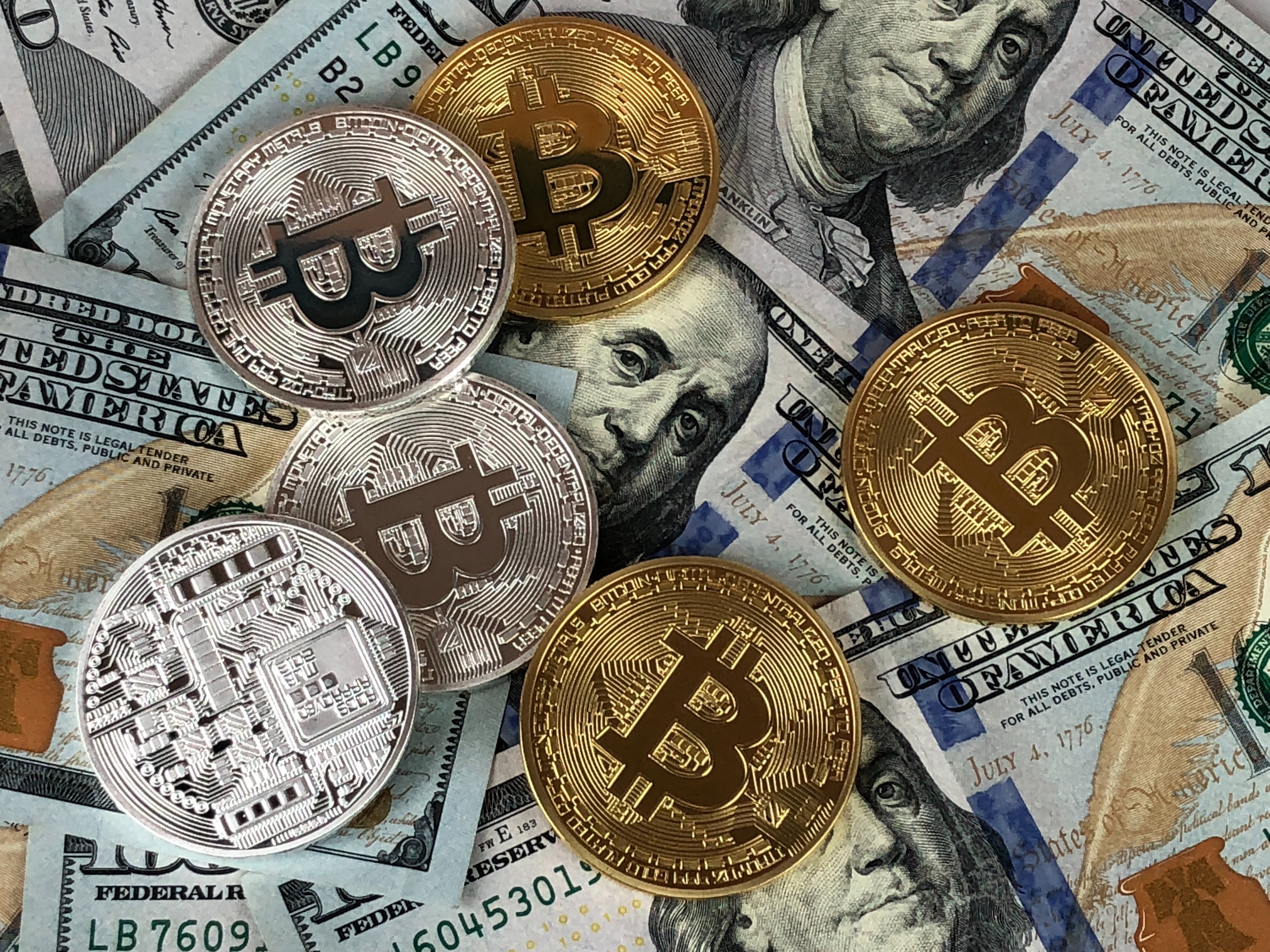
https://asset.coinness.com/en/news/b23c2a28d577cec7dbdb640955491f29.jpg

Photo by David McBee on Pexels

Embracing retail

In the blog article which was published to its website last week, Hong Kong’s largest virtual bank expressed its dedication to bolstering Hong Kong’s aspiration to emerge as a global hub for Web3. As the city embraces a new licensing regime for virtual asset trading platforms, ZA Bank unveiled its plans to introduce fiat currency-based virtual asset trading services for retail investors through the ZA Bank App.


The bank first aired the notion of such an offering back in May. Its renewed coverage of the topic would seem to suggest that such a product offering is much closer to launch. Additionally, the bank anticipates the launch of its U.S. stock trading service after obtaining necessary approvals, promising a stream of innovative and exciting services in the future.


Regulatory trend

News of the bank’s proposed retail offering aligns with moves being made by local regulators over the course of recent months to enable retail access to crypto-based products within the Chinese autonomous territory.


In June, a regulatory framework was put in place by the Securities and Futures Commission (SFC) to enable licensed virtual asset platforms to market to retail investors. In recent days it has emerged that regulators are prepared to accept applications for spot crypto exchange-traded fund (ETF) products which would be made available to retail investors.


Banking the crypto sector

ZA Bank also announced that it has been providing banking support to more than 80 Web3 companies since the beginning of this year, aligning with its commitment to “Banking for Web3,” introduced in April.


Notable among the roster of supported companies is OKX Hong Kong, with ZA Bank serving as the trusted banking partner for locally licensed virtual asset trading platforms (VATPs) such as HashKey and OSL.


The bank, which was established by ZhongAn Online and Beststar in 2018, has served an important banking role in respect of the digital assets sector in Hong Kong in 2023. While the authorities in Hong Kong appear to have pulled out all of the stops over the course of the past year to nurture crypto business, banking was identified as an area of difficulty.


In June, the Hong Kong Monetary Authority (HKMA) explicitly questioned the reluctance of some major banks to extend services to crypto companies, applying pressure on them to do so. Given that background, ZA Bank, being a first mover in embracing the industry, has played an important role in Hong Kong.


ZA Bank’s impact is evident in its notable market presence, with one in 10 Hong Kong adults choosing the institution for their banking needs. The ZA Bank App earned the distinction of being the highest-rated banking app on Hong Kong’s Google Play in 2023.


The bank has surpassed HKD 10 billion in customer deposits and secured the top spot in Asia in the Sia Partners 2023 International Mobile Banking Benchmark, maintaining the sixth position globally.

 

More to Read
View All
Policy & Regulation·

Sep 29, 2025

Japan surges to the front of Asia’s crypto pack as policy tailwinds mount

Japan’s cryptocurrency market has surged to become the fastest-growing in the Asia-Pacific region, driven by a government overhaul of its digital asset policies. On-chain transaction value jumped 120% in the year ending June 2025, according to a new report from Chainalysis. The expansion signals renewed activity in a market long characterized by its cautious approach. The Japanese government is increasingly open to crypto as a mainstream investment class through a series of reforms, including proposed friendlier tax laws and the licensing of regulated stablecoins, aiming to attract investment and foster a domestic Web3 industry.Photo by Daniel Hehn on UnsplashOverhauling a strict tax codeA central pillar of the reform is a proposed change to Japan’s tax code, which currently subjects crypto gains to rates of up to 55%, compared with a flat 20% on stock profits. The ruling Liberal Democratic Party is backing proposals to introduce the same 20% rate for crypto starting in fiscal 2026, along with rules that would allow investors to carry forward losses for up to three years. The measures, which require parliamentary approval, are intended to align digital assets more closely with traditional financial instruments. Uncertainty has emerged, however, with Prime Minister Shigeru Ishiba’s decision to resign. Ishiba has been supportive of the crypto industry, and the LDP’s leadership election on Oct. 4 could reshape the policy outlook. Sanae Takaichi is seen favoring tighter oversight, Shinjiro Koizumi more receptive to digital assets, and Finance Minister Katsunobu Kato stressing a balance between investor protection and innovation. Paving the way for a stablecoin eraThis political transition coincides with a shift in the Japanese market, which remains heavily concentrated in just a few assets. Over the past year, yen-denominated trading was dominated by XRP with $21.7 billion in volume, outpacing Bitcoin ($9.6 billion) and Ethereum ($4.0 billion). While political developments add unpredictability to the outlook, successful regulatory reforms could set the stage for positive change. One potential catalyst is the government’s recent licensing of the first issuer of a yen-backed stablecoin. Stablecoin issuer JPYC received Japan’s first funds transfer service provider license in August, with its launch anticipated in October. Broader access to stablecoins, digital tokens pegged to fiat currencies like the U.S. dollar or yen, is expected to provide Japanese traders and institutions with a more familiar tool for settlement. Major financial players are also moving in this direction. SBI Group, a leading financial conglomerate, recently deepened its partnership with Ripple to distribute RLUSD, an enterprise-grade U.S. dollar-backed stablecoin, in Japan. SBI plans to make the regulated stablecoin available by March 31, 2026. Corporate Japan bets on blockchainAt the same time, SBI Group also recently partnered with infrastructure provider Startale Group to build a blockchain-based trading platform for tokenized real-world (RWA) assets like stocks. The venture is a bet on the burgeoning tokenization market, which Ripple and Boston Consulting Group (BCG) project could reach nearly $19 trillion by 2033. Alongside moves by major financial groups, Japan is also nurturing its homegrown Web3 talent through the J-StarX Program, coordinated by JETRO Dubai and sponsored by the Ministry of Economy, Trade and Industry. This year, more than half a dozen Japanese startups, together raising over $17 million, were selected for the initiative, spanning blockchain infrastructure, AI-driven platforms, and advanced fintech solutions.  Since August, the cohort has been preparing for international exposure, with showcases scheduled at GITEX GLOBAL 2025 in Dubai and a visit to Abu Dhabi’s Hub71 in October. The initiative reflects Japan’s strategy of expanding overseas networks for its startups while positioning them to access the UAE’s growing Web3 and fintech markets. 

news
Web3 & Enterprise·

Oct 14, 2025

Circle sticks with dollar, euro stablecoins as Hong Kong’s crypto scene matures

Financial technology firm Circle is taking a measured approach in Hong Kong, favoring focus over expansion. In an interview with the Hong Kong Economic Journal, cited by local financial content provider AAStocks, Yam Ki Chan, the company’s vice president for Asia Pacific, said there are no current plans to issue a stablecoin pegged to the Hong Kong dollar. Still, he noted the company’s openness to partnering with local initiatives, adding that Circle has been in discussions with several firms to share its expertise and insights. The firm hopes the Chinese special administrative region will evolve into a launchpad for stablecoins tied to the local currency alongside other major currencies. Chan said Circle is doubling down on its two core products, the U.S. dollar stablecoin USDC and the euro stablecoin EURC. He pointed out that USDC has been catching on across the region, with more local corporations and professional investors starting to use it. His comments come after the Stablecoins Ordinance came into force on Aug. 1 in the city, setting up a mandatory licensing system for issuers under the Hong Kong Monetary Authority (HKMA). The regulator has said it does not plan to hand out the first licenses until early next year.Photo by tommao wang on UnsplashMoving assets on-chainWhile Circle continues to focus on stablecoins, other firms are finding new ways to bring traditional assets on-chain. DL Holdings, a Hong Kong-headquartered one-stop financial services group, is moving ahead with plans to tokenize about $40 million worth of its non-voting Class B membership interest in ONE Carmel, its luxury real estate investment project in California’s San Francisco Bay Area. The initiative, the firm’s first step into real-world asset (RWA) tokenization, will use blockchain-based smart contracts to automate distributions, transfers, and investor rights, allowing the company to pay out dividends to shareholders and give on-chain investors a chance to participate in ONE Carmel. Insurance is another testbed for blockchain. Anthea Holding Limited, a crypto-fintech licensed by the Bermuda Monetary Authority, raised $22 million in a Series A led by Yunfeng Financial. The proceeds will fund what Anthea says is the world’s first life insurance policy denominated in Ethereum (ETH). Yunfeng Financial, listed in Hong Kong, has close ties to Alibaba founder Jack Ma. Mainland firms deepen crypto exposureMainland companies are stepping into crypto investments. Hangzhou-based Jiuzi Holdings, a Nasdaq-listed operator of new energy vehicle stores, said it completed a private placement transaction settled in 100 Bitcoin. The company plans to allocate the proceeds to building a digital-asset custody platform and developing encrypted storage systems. Separately, China Renaissance is seeking to raise around $600 million for a publicly listed vehicle designed to invest in BNB, the cryptocurrency tied to Binance, according to Bloomberg. Venture firm YZi Labs, formerly Binance Labs, is expected to join the effort. In an August filing, the Beijing-based investment bank said it would commit about $100 million of its own capital to BNB. If completed, the proceeds would establish a U.S.-based crypto treasury company to hold and manage BNB reserves. Back in Hong Kong, momentum in the digital asset sector is now reaching the capital markets. HashKey Group, the financial services firm behind a licensed crypto exchange, has confidentially filed for an initial public offering in the city. Bloomberg reported the plan, citing a source familiar with the matter. The listing could take place as early as this year and raise up to $500 million. Market bounces back on softer trade rhetoricAmid these developments, crypto prices have rebounded from sharp losses linked to trade tensions between Washington and Beijing. The market had tumbled after U.S. President Donald Trump threatened to impose additional 100% tariffs on China. Sentiment shifted when Trump softened his stance on Truth Social, writing, “Don’t worry about China, it will all be fine!” and “The U.S.A. wants to help China, not hurt it!!!” Bitcoin reflected that whiplash. The token dropped to $103,893.3 on Oct. 10 during what Investing.com described as the largest single-day liquidation in crypto history at nearly $19 billion in positions. It has since recovered to $112,608.31 as of publication time. 

news
Web3 & Enterprise·

Nov 29, 2023

Rotonda revamps Burrito Wallet with cross-chain swapping, added mainnet and more

Rotonda revamps Burrito Wallet with cross-chain swapping, added mainnet and moreRotonda, a subsidiary of South Korean crypto exchange Bithumb, has recently revamped its Web3 wallet Burrito Wallet to make the app more convenient for users, according to Korean news agency Etoday on Wednesday (local time). The newest version features an improved mainnet support system, user interface (UI) and user experience (UX), with a stronger focus on enhancing user convenience and creating a framework for optimal investment.Photo by Shubham’s Web3 on Unsplash“Through this service renewal, we hope that many users will be able to experience a more convenient and unique web3 environment. We will continue to improve our services to establish Burrito Wallet as a user-friendly crypto wallet platform,” the company said.Expanded options for token tradingMost notably, Burrito Wallet now offers cross-chain swapping, which allows users to trade token currencies that have been issued on different mainnets. This is a step up from regular crypto swapping, which only allows the swapping of tokens issued on the same mainnet. Cross-chain swapping between the Ethereum, BNB Smart Chain, Matic, Avalanche and Arbitrum mainnets is now supported by the deSwap Liquidity Network (DLN), a decentralized cross-chain exchange built by deBridge Finance. DLN facilitates secure and unlimited liquidity transfers across chains with zero slippage.Rotonda added that it would continue to expand its lineup of swap platforms through collaborations with major industry names like Kana Labs, WOOFi and Unizen.Better user experienceThe company also added new features to help users make optimal investments. This includes a new notification bot dubbed “Burrito Chef,” which sends notifications for announcements, updates and events within the app. Users can quickly and conveniently check the insights they need to inform their personal investments and get the most out of the app’s services.On the UI front, a “Home” tab has been added, which provides users with a concise overview at of the most commonly used features like wallet, swap and chat, along with the most popular content. Token rankings by category — such as most swapped tokens and most rising tokens — that were previously available on the “Swap” tab have been moved to the “Home” tab and placed in the foreground of the screen. Rotonda also explained that it aims to provide a more customizable experience by adding more detailed chart features.The wallet also now supports the Sui mainnet, bringing the total number of supported mainnets to 12.This development comes shortly after Rotonda recently launched Burrito Wallet in the Latin American region in a move to expand its global user base.

news
Loading