Top

United Nations report cites popularity of USDT for fraud in Southeast Asia

Policy & Regulation·January 16, 2024, 7:13 AM

USDT, the leading U.S. dollar stablecoin issued by Tether, has been highlighted as a major conduit for money laundering and scams in Southeast Asia, according to a United Nations report released on Monday.

https://asset.coinness.com/en/news/84663d44b651855dce5794a5d64c40c6.webp
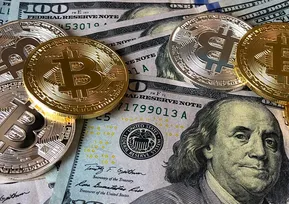
Photo by Mathias Reding on Unsplash

Illicit stablecoin use

The report has been titled “Casinos, Money Laundering, Underground Banking, and Transnational Organized Crime in East and Southeast Asia: A Hidden and Accelerating Threat.” It points out that online gambling platforms, particularly those operating illicitly, are among the favored channels for cryptocurrency-based money launderers, with a notable emphasis on the use of Tether or USDT.


In a foreword to the report, Jeremy Douglas, the UN’s Regional Representative for Southeast Asia and the Pacific, noted that technology had aided crime networks in Asia, and in particular, the Mekong Delta region. Developing upon that idea, he added:

”This has necessitated a revolution in the regional underground banking architecture, resulting in the development of systems and infrastructure capable of moving and laundering massive volumes of state-backed fiat and cryptocurrencies.”

The report itself asserts that illegal and under-regulated crypto exchanges have become “foundational pieces of the banking architecture used by organized crime.”


The document highlights law enforcement efforts in disrupting multiple money laundering networks linked to the illicit transfer of Tether funds. Last August, Singaporean authorities dismantled a network through an operation, recovering approximately $735 million in both cash and cryptocurrency.


‘Pig butchering’

The UN report further suggests that USDT has been extensively employed in various underground fraud activities, including so-called "pig butchering" romantic scams. Last November, Tether froze $225 million in stolen USDT following investigations by Tether in collaboration with crypto exchange OKX and the U.S. Department of Justice.


The money had been held in self-custodied wallets associated with an international human trafficking group in Southeast Asia orchestrating a pig-butchering scam.


In December, Tether CEO Paolo Ardoino informed U.S. legislators in a shared letter that the company has enlisted the U.S. Secret Service and Federal Bureau of Investigation onto its platform.


Later that month, the Chinese authorities uncovered a massive underground banking operation that was designed to evade the country’s foreign exchange controls. There was more related activity in December when it emerged that USDT has been integrated into the shadow economy in Cambodia, against a backdrop of the currency being prohibited for the purpose of trade within the Southeast Asian country.


TRM Labs report

In July of last year, a report by blockchain analytics firm TRM Labs, found that pro-ISIS terrorist groups in Central and Southeast Asia and the Middle East are increasingly using cryptocurrency, with a particular preference for USDT transacted over the Tron blockchain network.


The UN report cites the popularity of USDT among those engaged in cyber-fraud and online casino operations, located in Myanmar, along the border with Thailand.


Throughout 2023, Tether witnessed a notable expansion in its share of the global stablecoin supply, growing from 50% to 71%. At the time of writing, USDT has a market cap of $95 billion with stablecoins having an overall market capitalization of $134 billion.


The UN's findings raise concerns about the stablecoin's role in facilitating illicit activities and underscore the need for enhanced regulatory scrutiny within the rapidly evolving crypto landscape.

More to Read
View All
Policy & Regulation·

May 15, 2023

Korea’s Premier Law Firm to Jointly Hold Seminar on Preventing Crypto Exploits

Korea’s Premier Law Firm to Jointly Hold Seminar on Preventing Crypto ExploitsKim & Chang, a leading law firm in South Korea, has announced its collaboration with crypto exchange operator Dunamu to host a seminar on anti-money laundering (AML) and the prevention of crypto exploits. The event will take place at Korea University on Thursday, as reported by Moneytoday.Photo by David McBee on PexelsInauguration of a digital asset forumThe seminar is being organized by the Digital Assets Policy Forum, an organization dedicated to developing the digital asset market and safeguarding investors. The inauguration ceremony of the forum will also be held at the event.Talks by distinguished figuresThe seminar will commence with a keynote speech by Aaron Bice, Senior Subject Matter Expert at Chainalysis, a blockchain data analysis firm based in New York.Following Bice’s address, several distinguished individuals from South Korea will deliver presentations. Ahn Chang-kook, a high-level official from the Financial Intelligence Unit at the Korean Financial Services Commission, will elucidate the challenges and solutions associated with crypto exploits. Oh Jeong-eun, a prosecutor from the Incheon District Prosecutors’ Office, will provide insight into the investigations of unlawful foreign exchanges in banks and their implications. Advisor Ko Cheol-soo of Kim & Chang will shed light on the evolving global landscape of AML regulations in the crypto sector. In addition, Kim Kwang-hoon, a manager at Dunamu, will explore the topic of crypto AML systems.Panel discussionsA representative from Kim & Chang said that the event will gather a diverse group of experts in digital asset regulation, policy, and law from various sectors, including government, academia, and industries. These experts will not only deliver informative presentations but also actively engage in panel discussions during the event.

news
Policy & Regulation·

Oct 13, 2023

Short-Term Crypto Investment Prevails Among Hong Kong’s Retail Investors

Short-Term Crypto Investment Prevails Among Hong Kong’s Retail InvestorsHong Kong’s retail investor interest in virtual assets has experienced a significant surge in recent years, albeit a recent survey suggests that most retail investors take a short-term investment view relative to crypto assets.Photo by Robert Bye on UnsplashIFEC studyThis newfound enthusiasm for virtual assets emerges from a recent study published by the Investor and Financial Education Council (IFEC), a subsidiary of the Securities and Futures Commission (SFC), Hong Kong’s securities regulator. The survey found that 6% of retail investors in the city had entered the virtual asset market in 2023, as compared to merely 1% in 2019.Conducted from June to July of this year, the study encompassed 1,000 individuals aged between 18 and 69. The survey uncovered a trend toward crypto investing among retail investors who’ve been enticed by the allure of the emerging asset class. Intriguingly, every single one of the digital asset retail investors in the study held cryptocurrencies in their portfolios. Non-fungible tokens (NFTs) and stablecoins, while still relatively niche, were also present in the portfolios of 6% and 2% of investors, respectively.11% to invest in crypto within 12 monthsAnticipating a further uptick in interest, the IFEC report posits that 11% of those surveyed have intentions to invest in virtual assets or related products within the next 12 months. This indicates that the allure of virtual assets continues to exert its magnetic pull on investors in Hong Kong.Despite the growing interest, a noteworthy finding in the survey is that 75% of retail virtual asset investors admitted to their primary motivation being the pursuit of short-term gains. Simultaneously, 74% of these investors perceived virtual assets as a prevalent investment trend, and 73% cited the fear of missing out on popular investment opportunities as a driving factor. These statistics underscore the need for enhanced investor education within the sphere of virtual assets.Lack of regulatory awarenessAnother interesting aspect of the data which emerged from the survey was the finding that only 47% of all surveyed investors are aware of Hong Kong’s recently introduced virtual asset trading regulations, which came into effect on June 1.An additional facet of this investor behavior study was illuminated by research conducted by the Department of Applied Social Science at Hong Kong Polytechnic University (PolyU). This research, based on data from a separate IFEC report that surveyed 501 people from November to December of last year, revealed that many retail investors in virtual assets exhibited overconfidence in their judgment.These investors were also found to have a proclivity to overemphasize past information, lean heavily on readily available and easily recalled information, and overestimate personal intuition.With that in mind, Eric Chui, Head of PolyU’s Applied Social Science unit, advised virtual asset investors to adopt a more deliberate and rational approach. Chui emphasized the importance of building financial literacy and collecting high-quality market information to make informed investment decisions, while steering clear of irrational investment behavior and biases.

news
Markets·

Jan 12, 2024

Animoca Brands Co-Founder: U.S. ETF approval positive for Asia

The long-awaited approval of spot bitcoin exchange-traded funds (ETFs) in the U.S. on Tuesday is anticipated to have a more substantial impact on the development of cryptocurrencies in Asia. That’s the view of Yat Siu, the co-founder of Animoca Brands, a Hong Kong-based crypto venture capital and game software firm. The U.S. Securities and Exchange Commission's (SEC) approval is expected to attract new capital to the crypto industry, providing a safer avenue for the crypto-curious.Photo by André François McKenzie on UnsplashPotential for surge of interest in AsiaIn an interview with The Block, Siu emphasized the positive effect on Asia, attributing it to the region's regulatory clarity and the willingness of governments and regulators to build a crypto ecosystem. Strengthening regulatory oversight was a finding of a recent report relative to a number of Asian hubs. Industry leaders believe that the approval of spot bitcoin ETFs in the U.S. could lead to a surge of interest in Asia, where crypto adoption is already higher than in other continents. The perception of cryptocurrencies as investment assets, rather than just for transactions, might shift in the Asian market, with the ETF offering a regulated and lower-risk avenue for investment exposure. Additionally, Yat Siu noted that Asian investors, particularly the younger generation, have a more open view towards capitalism compared to their U.S. counterparts. In a recent interview with CNBC, Australian venture capitalist and founder of MHC Digital Group, Mark Carnegie, also expressed the opinion that the digital asset markets in Asia would flourish once the hype of the U.S. ETF approval has subsided. ETF focus on Singapore and Hong KongPost the U.S. approval, attention turns to Asia, with Hong Kong and Singapore emerging as potential candidates for introducing spot crypto ETFs. Hong Kong, in particular, has undergone regulatory renewal, positioning itself as a crypto hub, with it reportedly already attracting interest from fund managers, including those backed by Chinese capital, looking into launching spot crypto ETFs. Yat Siu alongside Glenn Woo, Head of Sales of APAC at Web3 infrastructure company Blockdaemon, were both positive in their assessment of Hong Kong as a worthy location for the offering of spot bitcoin ETFs in comments made last month. In November, the CEO of Hong Kong’s Securities and Futures Commission (SFC) indicated an openness to considering proposals for spot crypto ETF products aimed at retail investors. Singapore, known for its mature regulatory environment, is also considered a strong contender. Meanwhile, Japan may witness significant regulatory movement following the U.S. ETF approval. However, challenges and variables remain for Asia. The scale of capital inflows in Asia, compared to the U.S., and the caution of regulators in the face of crypto industry volatility and trust issues are cited as potential hurdles. Some experts suggest that Hong Kong and Singapore may initially be cautious in encouraging retail participation in virtual asset investments due to previous losses experienced by residents. Still, in the medium to longer term, increased interest and appetite for virtual assets are expected.  

news
Loading