Top

Mt. Gox edging closer to BTC payouts sparks market fears

Markets·January 24, 2024, 1:33 AM

The trustee of the failed Japanese cryptocurrency exchange Mt. Gox is preparing to initiate repayments of bitcoin (BTC) and bitcoin cash (BCH), prompting fears of a market sell-off among traders and investors.
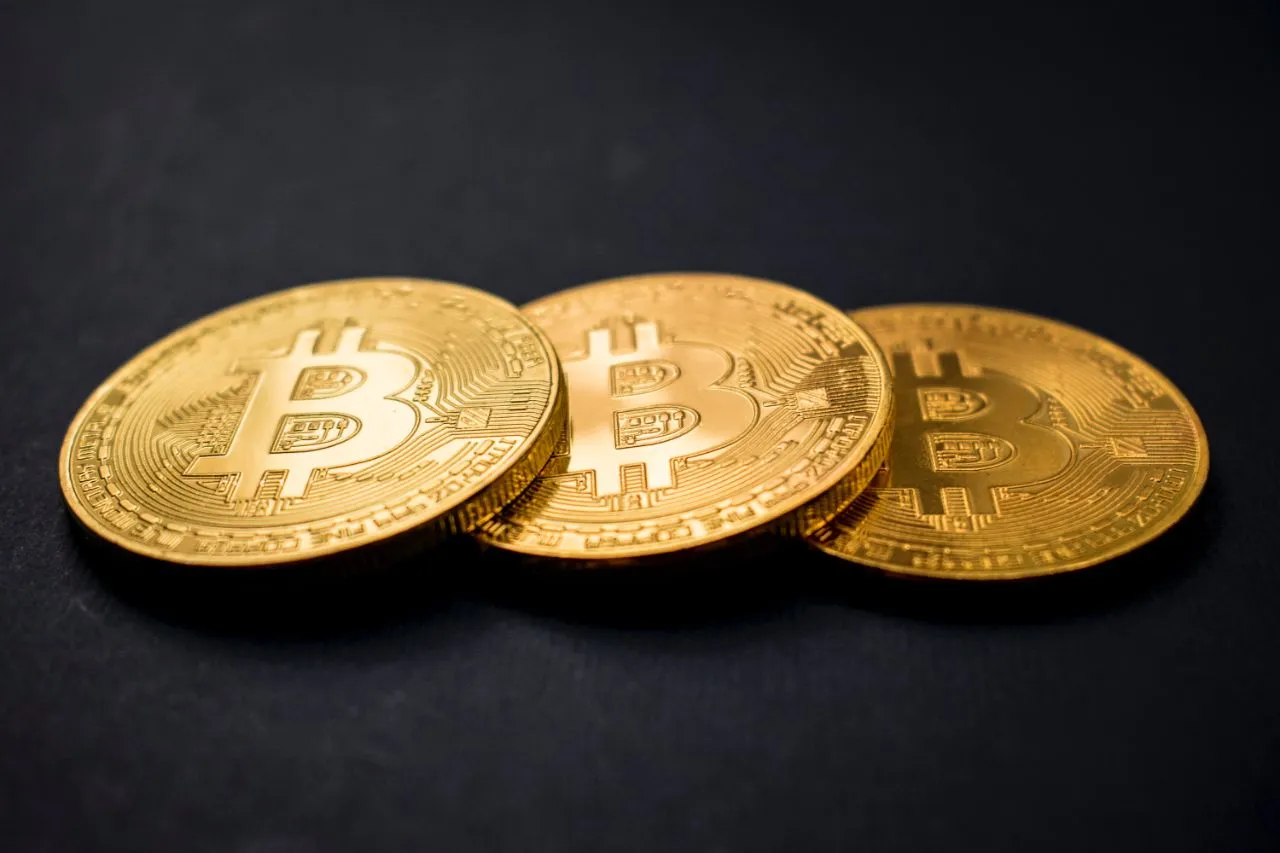
https://asset.coinness.com/en/news/1d843ecdc3c8aa72684646b2f88b7577.webp
Photo by Dmytro Demidko on Unsplash

Confirming repayment details

The crypto community on the /mtgoxsolvency subreddit disclosed that the Tokyo-based bitcoin exchange has initiated the process of verifying creditors' addresses for forthcoming repayments. Emails have been sent to creditors, confirming that their repayment details have been validated with relevant cryptocurrency exchanges.


The communication from Mt. Gox appears to be staggered, with users on different platforms receiving emails at varying times. Some Bitstamp users reported receipt of the email, while several Kraken customers mentioned that they were still awaiting the confirmation.


Mt. Gox, cautioning creditors, clarified that users with disabled or frozen accounts would not be able to receive repayments using the provided addresses. Additionally, the emails specifically pertain to payments in bitcoin and bitcoin cash.


This recent communication follows Mt. Gox's announcement in November, where it committed to returning approximately 142,000 bitcoin, 143,000 bitcoin cash and 69 billion Japanese yen, valued at over $5.67 billion at the announcement date and approximately $6.46 billion at the present moment.


During the November announcement, Mt. Gox assured creditors that repayments would commence in the following months and weeks. Creditors with payment methods deemed "effective at this time" were earmarked to receive their assets first.


Towards the end of December, some creditors reported the addition of yen-denominated balances to their PayPal accounts by Mt. Gox, signaling progress in the repayment process.


Market fears

The fear among market participants of a distribution of bitcoin from the Mt. Gox estate has cast a shadow over the sector over the course of a number of years. With this latest development, it appears that the estate is finally on the cusp of executing on that distribution.


If distribution is achieved in the short term, it will come at a time when bitcoin has experienced a major unit price pullback already. Since the approval of spot bitcoin exchange-traded funds (ETFs) in the United States earlier this month, it appears that another bankrupt crypto exchange, FTX, has sold $1 billion worth of Grayscale Bitcoin ETF shares into the market. That move is believed to have been responsible for a dramatic drop in bitcoin’s unit price.


In tandem with that event, some commentators believe that a pullback at this point is healthy for the market. That’s the view of Charles Edwards, founder of Capriole Investments. Taking to social media, Edwards wrote:

”We're still not here yet. This pullback is very overdue and lower is healthier.”


At the time of writing, bitcoin has a unit price of $39,884, down from a high earlier this month of $48,494.


Confirmation emails have been reported by several Reddit users, with Bitstamp confirming for most, and a few Kraken users also acknowledging receipt. Nevertheless, a significant number of Kraken users mentioned they are yet to receive the confirmation email.


Mt. Gox officially closed its doors in February 2014, almost a decade ago, after succumbing to an exploit in 2011.



More to Read
View All
Policy & Regulation·

May 14, 2025

Tether eyes South Korean market as stablecoins gain momentum

Tether, the company behind USDT, the popular dollar-backed stablecoin, is seeking to establish a presence in South Korea through remote hiring, according to a report from Maeil Business Newspaper citing industry sources.Photo by DrawKit Illustrations on UnsplashRather than opening a physical office, Tether is looking for a remote employee who will focus on increasing USDT adoption in Korea, exploring business opportunities, building partnerships and navigating the local regulatory landscape. The expansion comes as stablecoins gain significant traction in South Korea. Data provided to lawmaker Min Byeong-dug from the country's five largest cryptocurrency exchanges via the Financial Supervisory Service (FSS) shows that dollar-pegged stablecoins accounted for 47% of crypto assets withdrawn from these platforms between January and March. Central bank pushes for regulationMeanwhile, South Korean officials are increasingly focused on regulating the stablecoin sector. Bank of Korea (BOK) Governor Rhee Chang-yong recently called for the swift implementation of stablecoin oversight, warning that they could bypass the country’s financial rules. During a press conference in Italy, Rhee argued that stablecoins pegged to either the Korean won or the U.S. dollar effectively function as alternative currencies and should be examined under existing money transfer laws. Rhee has emphasized that authorities must first determine whether won-backed digital tokens should be permitted at all. Last October, during a national audit, he expressed concerns about stablecoins' dependence on fiat currencies and advocated for implementing a central bank digital currency (CBDC) instead. These concerns were echoed by Ko Kyeong-cheol, head of BOK's electronic finance team, who recently highlighted at a financial law conference that stablecoins could profoundly impact the central bank's ability to carry out monetary policy, maintain financial stability and oversee payment settlements. Ko emphasized that if South Korea were to permit won-pegged stablecoins, the BOK should be involved early in the approval process to minimize potential risks to its policy objectives. On the regulatory front, Financial Services Commission (FSC) Chairman Kim Byoung-hwan has indicated that discussions on developing a stablecoin regulatory framework are likely to begin in June as part of a broader initiative. Presidential candidates weigh in on stablecoin futureThe issue has also entered the political arena ahead of South Korea's June 3 presidential election. Lee Jae-myung, the Democratic Party of Korea's presidential candidate, has advocated for a market featuring won-based stablecoins. Lee argues that quickly adopting stablecoins would help South Korea keep pace with global trends and prevent capital outflows. His platform includes introducing spot crypto ETFs and reducing digital asset trading fees.  Another candidate, Hong Joon-pyo of the People Power Party, also previously announced plans to explore the issuance of a won-pegged stablecoin before being eliminated in the party's primary election.

news
Web3 & Enterprise·

Dec 20, 2023

MEVerse and XPLA forge partnership to herald new era of blockchain gaming

MEVerse and XPLA forge partnership to herald new era of blockchain gamingMEVerse, the blockchain metaverse platform operated by South Korean gaming company ME2ON Group, and global layer 1 blockchain XPLA have established a partnership to share their respective technologies and create content to popularize Web3 gaming, according to an official announcement on XPLA’s Medium on Wednesday (KST). Their larger goal outlines a commitment to redefining the industry’s landscape by creating a dynamic and engaging metaverse for users worldwide.Photo by Scott Graham on UnsplashHigh hopes“XPLA aims to broaden the horizons of the Web3 industry and contribute to the popularization of blockchain through collaboration with various projects. We plan to work closely with the MEVerse platform, which has secured a high-level lineup of Web3 games, to provide participants with an even richer experience,” said Paul Kim, Team Leader at XPLA.Seamless metaverse experienceMEVerse is known for leveraging its high-speed blockchain technology, which can process 9,000 transactions per second, to help users immerse themselves in the metaverse and enjoy the content it has to offer. Notably, it employs a Proof of Formulation (PoF) consensus algorithm developed by blockchain service platform FLETA — a more eco-friendly alternative to Proof of Work (PoW) that prevents forks by confirming blocks and transactions in real time. The platform also implements cross-chain technology to enhance scalability and interoperability.MEVerse’s blockchain infrastructure includes the Web3 P2E casual game portal MEVerse GameZ, non-fungible token (NFT) marketplace MEVerse DEX, blockchain explorer MEVerse Scan, and more. It also features games like X Heroes: NFT War and Pocket Battles: NFT War.This development is the newest partnership in XPLA’s growing lineup. The platform recently teamed up with Study-to-Earn (S2E) project EDUM and Game and Earn (G&E) platform PERPLAY in an effort to branch out its business.

news
Policy & Regulation·

Nov 10, 2023

Korea Joins OECD’s CARF initiative to enhance crypto tax compliance

Korea Joins OECD’s CARF initiative to enhance crypto tax complianceThe South Korean Ministry of Economy and Finance issued a press release to declare the country’s involvement in the Crypto-Asset Reporting Framework (CARF). This program, developed by the Organization for Economic Co-operation and Development (OECD), is designed to promote tax compliance and combat tax evasion in the realm of cryptocurrency. The initiative brings together 48 countries and jurisdictions, such as France, Germany, Japan, the United Kingdom and the United States.Photo by Nataliya Vaitkevich on PexelsTarget year of 2027In the joint statement released on Nov. 10, the participants of the CARF expressed their commitment to its widespread and timely implementation, aiming to enhance the effectiveness of the regime. They plan to align their domestic laws and enforce agreements by 2027, the year targeted by the OECD for exchanging relevant information. The statement also encouraged other jurisdictions to participate in this global effort.Updating laws and activating agreementsKorea’s commitment to international cooperation, as indicated in the joint statement, shows its intention to update domestic laws and activate exchange agreements. This preparation will pave the way for the exchange of crypto-asset transaction information to commence in 2027, adhering to the OECD’s proposed timeline. Such a step is anticipated to significantly contribute to the broad implementation of the CARF. The Economy Ministry stated that Korea is committed to ongoing participation in international efforts aimed at preventing tax evasion and enhancing tax transparency.In September, during a tax administration forum in Seoul, experts suggested that Korea’s potential participation in the OECD’s CARF would require more than just legislative amendments. They highlighted the necessity for Korea to develop a cooperative system involving both virtual asset service providers (VASPs) and regulatory authorities, explaining that this approach would ensure a smooth and effective implementation of the CARF in Korea.

news
Loading