Top

Bithumb’s college student supporter group Thumbs Up kicks off

Web3 & Enterprise·January 30, 2024, 7:19 AM

South Korea’s second-largest cryptocurrency exchange Bithumb held a ceremony on Monday at the Bithumb Customer Center in Seoul to celebrate the commencement of the exchange’s supporter group, Thumbs Up, according to an article published by local news site Digital Daily on Tuesday (KST). The group consists of 20 university students interested in crypto and crypto exchanges who were recruited after a two-week application period starting on Dec. 13.

https://asset.coinness.com/en/news/f071b718a224f6a4f245c41b273c68e7.webp
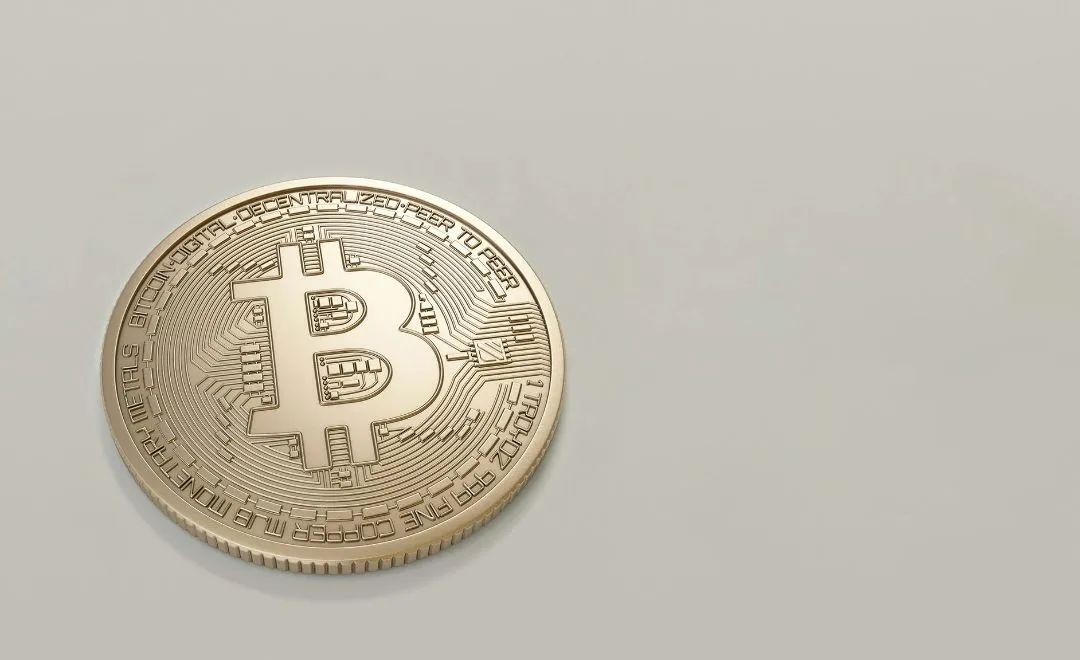
Photo by charlesdeluvio on Unsplash

Pushing towards advancements in crypto

"The open-mindedness and unconventional outlook of Bithumb's college student supporters will have a positive impact on Bithumb and the blockchain industry," said Kim Young-jin, Head of Business Support at Bithumb. "We look forward to the Thumbs Up supporters and Bithumb working together to create great projects."


Cultivating young innovative minds

The supporters will have a total of three months until the deadline on April 29 to propose ideas for improving Bithumb and create social media content related to the exchange's services and companies.


Bithumb stated that it would award prizes of KRW 5 million and KRW 2 million to one team and five individuals, respectively, based on their dedication and performance. The winners will also get the opportunity to become interns or official Bithumb ambassadors.

More to Read
View All
Web3 & Enterprise·

Jan 12, 2024

CoinGecko security breach latest threat within crypto space

The crypto space continues to suffer a disproportionate share of hacks and scams that were further exacerbated on Wednesday, with Malaysian crypto data aggregator the latest to succumb to a security breach. Serving as yet another stark reminder of the persistent threats plaguing the sector, a phishing scam targeted CoinGecko's X account, leading to a brief compromise that raised concerns about the safety of user information.Photo by GuerrillaBuzz on UnsplashPhishing scamDuring this incident, hackers posted a phishing link on CoinGecko's X account, falsely advertising a token airdrop for a cryptocurrency named GCKO. The deceptive post claimed that GCKO could be used for API services, including the cryptocurrency ANKR. Swift action by CoinGecko involved the removal of the fraudulent post and a public warning urging users to avoid interacting with any suspicious links or content. In an X post, CoinGecko wrote:”Our Twitter accounts @CoinGecko and @GeckoTerminal have been compromised. We're taking immediate steps to investigate the situation and secure our accounts. Please DO NOT click on any links or engage with suspicious content. Your security is our top priority.” Employee errorThe firm followed up with an update on Thursday, attributing the breach to a team member inadvertently clicking on a fraudulent Calendly link, granting unauthorized access to the hacker. Despite having two-factor authentication (2FA) enabled and employing robust security measures, CoinGecko emphasized that the inadvertent click allowed unauthorized access. The compromised accounts were then exploited to disseminate misleading information and potentially engage in malicious activities. CoinGecko expressed sincere apologies for any confusion or inconvenience caused by the incident. The company reiterated its commitment to platform security and continuous improvement of internal controls, assuring users that corrective measures were promptly implemented. SEC incompetenceCoinGecko's security incident occurred within 24 hours of a similar occurrence involving the U.S. Securities and Exchange Commission (SEC). The SEC's X account was compromised, with scammers posting a false message from Chair Gary Gensler about the approval of spot bitcoin exchange-traded funds (ETFs). While CoinGecko identified a vulnerability in its security regimen, the SEC later confirmed that the breach in its case was far more basic. It was not due to infrastructure attacks but rather the lack of 2-factor authentication (2FA) tied to the SEC's account, the most basic form of operations security. Gensler and the SEC have come in for major criticism from the crypto community in the U.S. due to a policy of regulation by enforcement that has been pursued. With that, the Commission came in for swift and harsh criticism in the immediate aftermath of its X account hack. Many pointed out the irony of Gensler advising consumers to secure their accounts back in October when the SEC itself had failed to do so. Others queried who would be responsible for what some interpreted as an episode of market manipulation, something that the SEC has perennially associated the crypto markets with. During the time that the account was compromised, millions of dollars of value were liquidated in short and long trading positions. CoinGecko's quick response serves as a valuable lesson in the importance of vigilance and proactive security measures amid the growing threats facing the cryptocurrency community.

news
Policy & Regulation·

Oct 30, 2024

Bhutan moves $66M in Bitcoin to Binance

The Royal Government of Bhutan has moved $66 million in Bitcoin (BTC) to global crypto exchange Binance. That’s according to blockchain data analytics firm Arkham Intelligence, outlining that the assets were moved to Binance over two separate transactions. The firm took to the X social media platform on Oct. 29 to highlight the digital asset transfer. In its X post, the firm wrote:”Crypto wallets belonging to the Royal Government of Bhutan moved $66.55M BTC to Binance this morning. The last time they deposited to exchanges was 4 months ago, at the start of July.”Photo by Moose Photos on PexelsSell-off concernsSome crypto community commentators have expressed concern of a sell-off given that the nation nestled in the Himalayas still has a holding of 12,456 Bitcoin, worth in the region of $900 million. The transfer was made on a day in which Bitcoin reached a unit price in excess of $73,000.  Arkham outlined that geographical data suggests that Bhutan’s Bitcoin mines remain active. On Oct. 29, they had accumulated $600,000 worth of Bitcoin mining rewards on-chain.  In this latest market activity, the Bhutanese began selling when the Bitcoin unit price had exceeded $70,000. As Bitcoin reaches towards new all-time-high pricing, Bitcoin whales often take profits. Mining Bitcoin since $5KIt emerged in 2023 that Bhutan had been quietly mining Bitcoin over the course of a number of years, since the leading digital asset had a unit price of around $5,000. The commercial activity has been enabled via Druk Holding and Investments (DHI), the commercial arm of the Royal Government of Bhutan. The Asian nation has ample hydroelectricity resources, being the only carbon-negative country in the world. Consequently, all its Bitcoin mining is carried out using hydro. While mining activity had been ongoing for a number of years and had largely gone unnoticed by the industry, an entanglement between DHI and failed crypto lenders BlockFi and Celsius brought more attention onto the Bhutanese holding company’s activities relative to crypto.  LawsuitsDHI was sued by BlockFi with the action subsequently voluntarily dismissed. In the case of Celsius it withdrew around $65 million from the platform prior to Celsius declaring bankruptcy. As a consequence, Celsius is currently suing DHI to claw back the funds that were removed from the platform. In 2023 Singaporean Bitcoin mining firm Bitdeer entered into a partnership with DHI with a view towards jointly developing green digital asset mining operation within the Kingdom of Bhutan. At the time, DHI CEO Ujjwal Deep Dahal said that the partnership formed part of an overall strategy to ensure that Bhutan took its place at the forefront of global innovation. Arkham Intelligence outlined on X that in H2 2023, Bhutan’s Bitcoin mining operations were producing in the region of 26 Bitcoin per day, or 780 Bitcoin per month. However, over the past three months, that mining rate has decreased to 8.6 BTC per day or 260 BTC per month. Arkham suggests that the Bitcoin halving, together with the increase in the Bitcoin hashrate, explains the reduced output, although it speculated that some unknown issue with Bitcoin mining rigs may also be a contributing factor. 

news
Policy & Regulation·

May 08, 2023

BNP Paribas Partners With Chinese in Digital Yuan Push

BNP Paribas Partners With Chinese in Digital Yuan PushThe Chinese authorities continue with their sustained efforts to promote use of the digital yuan, on this occasion by hooking up with French international banking group, BNP Paribas.According to the South China Morning Post (SCMP) on Friday, the partnership will see BNP Paribas collaborating with the Bank of China (BOC) to promote the digital yuan to its corporate clients. The digital yuan or e-CNY is a digital representation of the Chinese sovereign currency, issued by the BOC.Photo by Eric Prouzet on Unsplashe-CNY system accessAs part of the arrangement, BNP Paribas China will connect into the BOCs system, accessing an e-CNY management system. The BOC has authorized ten banks in China including the four state-owned banks, all of which are domestic lenders, to deal with its digital currency business.The direct e-CNY system access enables straight-through processing, allowing BNP Paribas to offer digital wallet functionality to its corporate clients relative to the digital yuan. Essentially, the system will allow BNP Paribas China’s corporate clients to link their bank accounts with an accompanying digital wallet. Other functionality that will be enabled as a consequence includes access to smart contract applications through the m-CBDC bridge (central bank digital currency).BNP Paribas China CEO CG Lai commented on the partnership: “While this collaboration can supplement the Bank’s offline payment collection capabilities and further optimize our clients’ account structure, this also reinforced the Bank’s commitment to the China market.” Lai outlined that the bank intends to enhance customer service capabilities by pursuing digital innovation that, like in this instance, contributes to China’s economic development.Louise Zhang, Head of BNP Paribas China Transaction Banking claimed that the partnership will “provide innovative, efficient cash management and trade financing services to local and multinational clients.”CBDC developmentThere has been a lot of activity in recent years when it comes to the development of CBDCs. The central banks of most nations have carried out some level of preparatory or investigative work relative to a digital currency. However, China has been by far the leader in its development of a CBDC.The BOC first began research into a digital currency in 2014. The country’s State Council approved the development of the digital yuan in partnership with China’s commercial banks in 2017. Beyond initial development, a testing phase began in 2019 with the project known as the Digital Currency Electronic Payment (DCEP) system emerging as the first version of the digital yuan after a number of years of development.In 2020, the BOC began more extensive testing of the digital currency in four Chinese cities — Shenzhen, Suzhou, Chengdu and Xiong’an. To promote use of the currency at that time, they offered free digital yuan to residents of those cities to spend, in that way, stepping up efforts to popularize the digital currency.Last month, the administrators of the Chinese city of Xuzhou announced that it was in the process of publishing a pilot scheme which will set out a means for promoting China’s e-CNY digital currency. Also in April, the eastern city of Changshu clarified that it is gearing up to commence paying state employees in the city in e-CNY. According to an announcement made by the city’s finance bureau the civil servants will start to receive e-CNY as payment in May.

news
Loading