Top

BNP Paribas Partners With Chinese in Digital Yuan Push

Policy & Regulation·May 08, 2023, 12:19 AM

The Chinese authorities continue with their sustained efforts to promote use of the digital yuan, on this occasion by hooking up with French international banking group, BNP Paribas.

According to the South China Morning Post (SCMP) on Friday, the partnership will see BNP Paribas collaborating with the Bank of China (BOC) to promote the digital yuan to its corporate clients. The digital yuan or e-CNY is a digital representation of the Chinese sovereign currency, issued by the BOC.
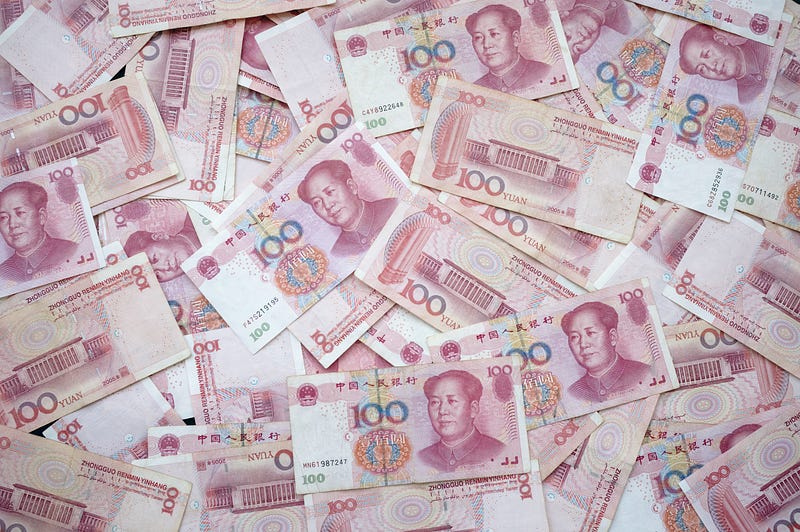
Photo by Eric Prouzet on Unsplash


e-CNY system access

As part of the arrangement, BNP Paribas China will connect into the BOCs system, accessing an e-CNY management system. The BOC has authorized ten banks in China including the four state-owned banks, all of which are domestic lenders, to deal with its digital currency business.

The direct e-CNY system access enables straight-through processing, allowing BNP Paribas to offer digital wallet functionality to its corporate clients relative to the digital yuan. Essentially, the system will allow BNP Paribas China’s corporate clients to link their bank accounts with an accompanying digital wallet. Other functionality that will be enabled as a consequence includes access to smart contract applications through the m-CBDC bridge (central bank digital currency).

BNP Paribas China CEO CG Lai commented on the partnership: “While this collaboration can supplement the Bank’s offline payment collection capabilities and further optimize our clients’ account structure, this also reinforced the Bank’s commitment to the China market.” Lai outlined that the bank intends to enhance customer service capabilities by pursuing digital innovation that, like in this instance, contributes to China’s economic development.

Louise Zhang, Head of BNP Paribas China Transaction Banking claimed that the partnership will “provide innovative, efficient cash management and trade financing services to local and multinational clients.”


CBDC development

There has been a lot of activity in recent years when it comes to the development of CBDCs. The central banks of most nations have carried out some level of preparatory or investigative work relative to a digital currency. However, China has been by far the leader in its development of a CBDC.

The BOC first began research into a digital currency in 2014. The country’s State Council approved the development of the digital yuan in partnership with China’s commercial banks in 2017. Beyond initial development, a testing phase began in 2019 with the project known as the Digital Currency Electronic Payment (DCEP) system emerging as the first version of the digital yuan after a number of years of development.

In 2020, the BOC began more extensive testing of the digital currency in four Chinese cities — Shenzhen, Suzhou, Chengdu and Xiong’an. To promote use of the currency at that time, they offered free digital yuan to residents of those cities to spend, in that way, stepping up efforts to popularize the digital currency.

Last month, the administrators of the Chinese city of Xuzhou announced that it was in the process of publishing a pilot scheme which will set out a means for promoting China’s e-CNY digital currency. Also in April, the eastern city of Changshu clarified that it is gearing up to commence paying state employees in the city in e-CNY. According to an announcement made by the city’s finance bureau the civil servants will start to receive e-CNY as payment in May.


More to Read
View All
Web3 & Enterprise·

Aug 08, 2024

Hong Kong's Mox Bank launches crypto ETF trading

Mox, a virtual bank in Hong Kong and a subsidiary of Standard Chartered, has introduced exchange-traded fund (ETF) trading for cryptocurrencies, marking a significant expansion into the digital asset space. The bank announced on Aug. 7 that it now offers its customers the ability to trade spot Bitcoin and Ether ETFs directly on its platform, making it the first virtual bank to do so.Photo by Florian Wehde on UnsplashExpanding crypto offeringsThe digital bank is also planning to broaden its cryptocurrency services. Future expansions may include direct purchasing and trading of cryptocurrencies in partnership with a licensed exchange. This move aligns with Hong Kong’s regulatory framework, which has been adjusting to accommodate and regulate crypto activities more robustly. Competitive pricing and user engagementMox is promoting itself as an economical choice for crypto ETF trading, with fees set at 0.12% of the transaction volume, with a minimum charge of 30 Hong Kong dollars ($3.85) for Hong Kong-listed spot and derivatives ETFs and $0.01 per share with a minimum of $5 for U.S.-listed derivatives ETFs. As of now, a local report reveals that 28% of Mox's customers engage in cryptocurrency investments, with 18% actively trading. The introduction of these ETFs is seen as a move to empower these customers to access emerging asset classes securely. Future aspirationsBarbaros Uygun, the CEO of Mox, expressed that the inclusion of crypto ETFs is part of the bank's broader strategy to set a global benchmark from Hong Kong. The bank aims to stay competitive by innovating and adapting to market changes. Jayant Bhatia, the bank’s chief product officer, hinted at more extensive plans in the crypto investment realm, although specifics on the timeline for launching broader crypto trading services were not disclosed. Despite the launch, the overall uptake of crypto ETFs in Hong Kong has been lukewarm. Bosera HashKey, ChinaAMC and Harvest Global, the issuers of the three spot ETFs in Hong Kong, have seen minimal activity with combined assets under management totaling just $236.3 million. The launch by Mox could potentially invigorate the market for crypto ETFs in Hong Kong as the region strives to become a leading hub for cryptocurrency in Asia. 

news
Policy & Regulation·

Oct 18, 2023

Almost 60K Korean Crypto-Holding Households Owe $389M in Unpaid Social Insurance Premiums

Almost 60K Korean Crypto-Holding Households Owe $389M in Unpaid Social Insurance PremiumsThe National Health Insurance Service (NHIS) in South Korea is intensifying its efforts to collect overdue premiums. Many high-income individuals who can afford to pay premiums for social insurance, including health insurance, have been neglecting their dues.Photo by Hush Naidoo Jade Photography on UnsplashVirtual assets for seizureAccording to the documents submitted on October 18 by the NHIS to lawmaker Jung Choun-sook, a member of the National Assembly’s Health and Welfare Committee, the NHIS is actively identifying a range of assets, including copyrights and virtual assets, that can be seized from these individuals. The NHIS aims to recover overdue premiums through stringent measures such as confiscation and government auctions. This move is designed to deter high-income earners from neglecting their obligations, ensuring fairness for those who consistently pay their premiums.Almost 60,000 crypto-holding householdsThis year, the NHIS discovered that 59,513 households, despite owning virtual assets, had outstanding social insurance premiums amounting to KRW 525 billion ($389 million). The NHIS has initiated collection efforts. In 2021, the insurance agency identified 5,336 households with virtual assets that had unpaid social insurance premiums totaling KRW 62.2 billion. Of this, the NHIS successfully collected KRW 6.92 billion, representing 11.13% of the total arrears.On this matter, lawmaker Jung highlighted that the government should strive to bolster the NHIS’s financial health. She underscored the importance of identifying concealed income sources or assets, like cryptocurrency holdings, of premium defaulters to ensure the collection of their overdue premiums.

news
Policy & Regulation·

Oct 26, 2023

Binance Behind New Hong Kong Crypto Exchange Pursuing License

Binance Behind New Hong Kong Crypto Exchange Pursuing LicenseThe launch of a crypto exchange named HKVAEX in Hong Kong has raised eyebrows as it appears to be closely connected to the global cryptocurrency giant, Binance.Photo by Florian Wehde on UnsplashResource sharingWhile the two entities do not officially acknowledge any affiliation, they share resources and have some commonalities that suggest a deeper connection, according to a report published by the South China Morning Post (SCMP) on Wednesday.HKVAEX was established in Hong Kong as an independent entity under BX Services Limited. Despite the absence of shared names, official affiliations, or public statements, several clues point to a connection. The logos of Binance and HKVAEX bear a resemblance, and Binance’s official accounts, as well as CEO Changpeng Zhao (CZ), are among HKVAEX’s followers on social media platform X (formerly Twitter).Gaining a foothold in Hong KongIt’s worth noting that Binance’s services are not available in Hong Kong, which raises questions about the motivation behind establishing an independent entity within the city. While HKVAEX appears to be actively pursuing a virtual asset license in Hong Kong, Binance has been relatively silent about its own licensing plans within the Chinese autonomous territory. This move could potentially provide Binance with a strategic foothold in a market that is becoming increasingly significant for digital asset entities.Hong Kong has recently introduced a licensing scheme for digital asset entities, and this development has spurred enthusiasm among such entities to establish operations in the region. Alvin Kan, the Head of Asia at Sei Labs, has noted that Asia is poised to become a major expansion zone for the Web3 sector, with regulatory developments in the US creating opportunities for expansion beyond American borders.Stanley Fung, who currently heads up HKVAEX, previously served as the chief of Huobi’s Hong Kong operations until November 2022, according to his LinkedIn profile. His departure from Huobi coincided with the entrance of crypto entrepreneur Justin Sun into Huobi’s management.In a company-managed Telegram group, HKVAEX has emphasized its status as an “independent crypto exchange” in Hong Kong, separate from Binance. However, it also revealed that it sources liquidity from Binance. Despite asserting its independence and having its own technical team, there have been instances of collaboration between the two entities in Hong Kong, such as a promotional campaign where Binance was referred to as a “partner” in incentivizing the opening of an HKVAEX account.Changing strategyBinance has faced a series of regulatory challenges in recent times. In May, Binance exited the Canadian market due to new regulations related to stablecoins and restrictions on crypto exchanges. In the US, the two leading regulators have filed lawsuits against Binance, CZ, and related entities, leading to the departure of several top officials from the company.The leading global exchange appears to be pursuing a different strategy more recently. It has entered the Japanese and Thai markets through the acquisition of a local entity and a joint venture with a local company. While forced out of the Netherlands, its Dutch customers were moved to rival Coinmerce, which connects to the Binance trading engine and order books.The evolving regulatory landscape is reshaping the cryptocurrency industry, and the relationship between Binance and HKVAEX highlights the complexities and strategies adopted by major players in this evolving space.

news
Loading