Top

3AC-founded OPNX Exchange announces closure

Web3 & Enterprise·February 03, 2024, 3:13 AM

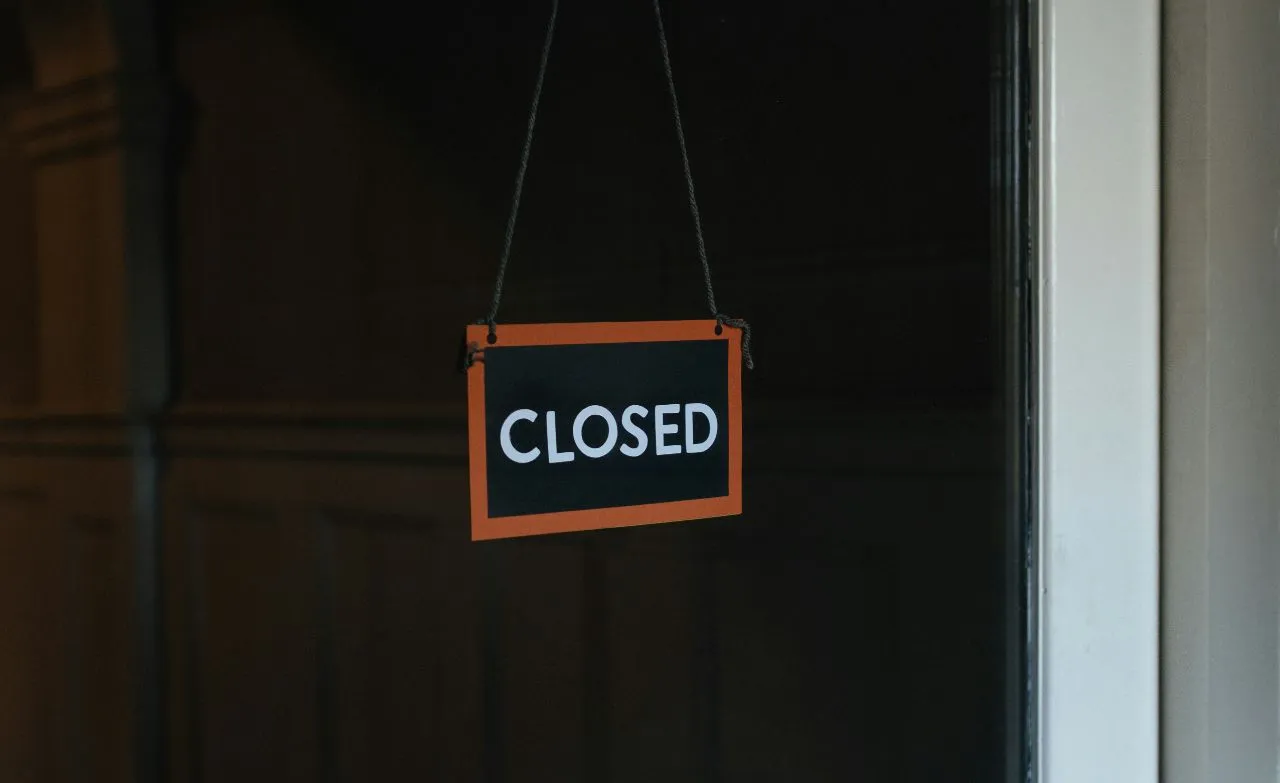
In a recent announcement OPNX, the Seychelles-incorporated cryptocurrency bankruptcy claims platform co-founded by the creators of the now-defunct hedge fund Three Arrows Capital (3AC), has revealed its decision to cease all operations.
https://asset.coinness.com/en/news/d10901ef092836a0c880a0a7968763cf.webp
Photo by Kelly Sikkema on Unsplash

February 14 shutdown

In a message to its users, subsequently shared on social media on Thursday, the OPNX team expressed its commitment to ensuring an orderly closure, urging users to settle all positions by Feb. 7 and withdraw their funds from the platform before Feb. 14, as all withdrawal functionality will be disabled thereafter. The team expressed gratitude to the OPNX community, acknowledging their dedication and trust throughout the platform's existence.


Short for "Open Exchange," OPNX served as both a hybrid bankruptcy claims platform and a crypto exchange, enabling users to trade creditor claims of bankrupt crypto companies.


The origin of OPNX can be linked to two defunct crypto entities — Coinflex and 3AC. Seychelles-based Coinflex was a crypto yield platform that was forced to suspend withdrawals in June 2022. It subsequently entered into a bankruptcy process. Coinflex co-founder Mark Lamb joined forces with 3AC’s Kyle Davies and Su Zhu to found OPNX. In October, Coinflex creditors sued Lamb, alleging that he had appropriated Coinflex's intellectual property, customer base, employees and technology to establish OPNX.


Mired in problems

Within its short existence, OPNX has been mired in problems. From the very outset, there was little goodwill for the new venture, given that many crypto sector participants took a dim view of Zhu and Davies due to the turmoil the collapse of 3AC caused within the industry.


In April of last year, OPNX claimed to have significant venture capital backing, only for many of the VC entities mentioned to quickly deny such claims subsequently. The following month, the local regulator in Dubai, the Virtual Assets Regulatory Authority, formally reprimanded the OPNX founders for promoting an unregulated business within the Emirate of Dubai. In August, it emerged that VARA had hit OPNX and its founders with a hefty fine.


Following the closure announcement, the native OX token of OPNX experienced a significant price decline. Over the course of the past 24 hours, the token unit price has fallen 13.6% to $0.007981.


The failure of 3AC led to Teneo, the firm responsible for liquidating 3AC's assets, subpoenaing Zhu and Davies for concealing details of their physical whereabouts through messages on social media platform X.


The closure of OPNX adds to the challenges faced by Zhu and Davies, as Teneo is actively seeking to recover $1.3 billion directly from the co-founders. The claim asserts that Zhu and Davies engaged in substantial leverage with investor funds after the insolvency of their hedge fund.


In September 2023, Singapore's central bank issued nine-year prohibition orders against Davies and Zhu, citing alleged violations of the country's securities laws at Three Arrows Capital.


All the while, crypto community sentiment remains negative where OPNX and its founders are concerned. Taking to social media, Ikigai Asset Management’s Travis Kling didn’t mince his words, stating:

”I mean it from the bottom of my heart when I say **** these criminals.”


As OPNX concludes its operations, the unfolding events surrounding its co-founders and their association with the failed hedge fund continue to draw attention to the need for the industry to raise its standards.




More to Read
View All
Web3 & Enterprise·

Dec 04, 2023

Gumi joins XPLA mainnet as newest validator

Gumi joins XPLA mainnet as newest validatorJapanese gaming company Gumi has joined South Korean gaming corporation Com2uS Group’s layer 1 blockchain mainnet XPLA as a new node validator, according to an official announcement on XPLA’s Medium page on Monday (local time).Photo by Shubham’s Web3 on UnsplashEmpowering the XPLA ecosystemThrough this partnership, Gumi is expected to play a crucial role in enhancing transparency, stability and scalability as a validator in the XPLA ecosystem. The collaboration aims to explore new possibilities in blockchain technology and integrate them into the gaming industry, thereby maximizing the benefits for all participants in the ecosystem and connecting game developers with players.Over a decade of global impactSince its establishment in 2007, Gumi has been active in the Japanese and global markets, engaging in various mobile gaming and blockchain projects. Recently, the company has not only been involved in the production of and investment in Web3 games but also operates as a key node operator in multiple blockchain projects. By working with Gumi, XPLA anticipates solidifying its position as a global Web3 gaming industry leader and expanding its influence in the Japanese Web3 market.“Through this partnership, we will gain insights into the Japanese market and strive to create a more reliable ecosystem,” said Paul Kim, leader of the XPLA team.Fortifying trust and redefining the Web3 landscapeXPLA’s validators are responsible for verifying the integrity of the blockchain, analyzing on-chain data to improve operations and ensuring the security of the XPLA ecosystem. By passing a proposal to increase the number of validators from 50 to 80 this year, XPLA aims to create an environment that accommodates more validators, thus building a more robust and trustworthy ecosystem.XPLA is an L1 mainnet that hosts numerous Web3 companies like Oasys, Animoca Brands, YGG, Blockdaemon, Cosmos Station and LayerZero as participants. It has onboarded multiple IP-based hit games like Summoners War: Chronicles, Minigame Party, Ace Fishing: Crew, Idle Ninja Online and The Walking Dead: All-Stars, effectively becoming a global Web3 content and gaming hub.

news
Policy & Regulation·

Aug 21, 2023

Korean Prosecutors Allocate $734K Budget for Crypto Crime Investigations

Korean Prosecutors Allocate $734K Budget for Crypto Crime InvestigationsThe South Korean Supreme Prosecutors’ Office has earmarked a budget of up to KRW 986 million (approximately $734,000) this year for investigations pertaining to virtual assets, according to data received by the local newspaper Law Times from the Ministry of Justice last Thursday. The significant size of the budget suggests that the prosecution is prioritizing efforts to combat the growing surge in virtual asset-related crimes.Photo by Tingey Injury Law Firm on UnsplashBudget divisionWithin this budget, KRW 778 million has been designated for the purchase of software licenses for virtual asset tracing and analysis equipment, while KRW 280 million has been allocated for an integrated strategic plan to establish a platform for analyzing and tracing unauthorized virtual asset transactions. The budget for this platform consists of preliminary planning costs. Related expenditures are expected to increase as the project is fully implemented.“It is true that our budgets are being concentrated on crimes related to virtual assets due to the fact that they have recently become a social issue,” said a prosecution official. “It may not be a lot compared to our overall budget, but assigning almost KRW 1 billion for one specific field of investigation is still a considerate amount.”Rising crypto crimesIn Korea, crimes associated with virtual assets have been increasing annually. This includes tax evasion, bribery, foreign exchange law violations, and money laundering, as well as cryptocurrency market issues including issuance, listing, and distribution. According to the Supreme Prosecutors’ Office, reported cases of suspicious virtual asset transactions received by the Korea Financial Intelligence Unit (KoFIU) surged from an average of 66 cases per month in 2021 to 900 cases in 2022, then 943 cases in 2023 — a fourteen-fold increase in just three years.Subsequently, the scale of the damages caused by cryptocurrency crimes has also seen a sharp rise. The total value of all reported damages skyrocketed from KRW 467.4 billion in 2017 to KRW 1.02 trillion last year, more than doubling in five years. The cumulative loss over this period exceeds KRW 5.3 trillion.Focused effortsThe prosecution has thus dispatched financial experts from organizations including KoFIU and Korea Exchange to create a joint virtual asset crime investigation unit under the Seoul Southern District Prosecutors’ Office dedicated to investigating cryptocurrency crimes.The prosecution’s Cybercrime Investigation Division has also begun developing a tracking system optimized for the Korean market to trace the flow of virtual assets. The foreign software that is currently being used for tracking comes with considerable expenses and limitations, particularly for tracking flows within the domestic market, where there are many transactions involving smaller, locally-issued cryptocurrencies called “kimchi coins.”“We are dedicating our manpower and technological development to virtual asset investigations,” said a high-ranking official from the prosecution. “We will also strive to secure the budget necessary for these efforts.”

news
Web3 & Enterprise·

Sep 21, 2023

Bitgamo Set to Launch 150 Crypto ATMs in Asia

Bitgamo Set to Launch 150 Crypto ATMs in AsiaIn a press release published on Monday, Luxembourg-registered crypto startup Bitgamo outlined its intention to roll out crypto ATMs across Asia.Photo by Monstera Production on PexelsAsian network rolloutDescribing itself as a no KYC (Know Your Customer) exchange for crypto-to-fiat transactions, the firm has the intention of embarking on a crypto expansion initiative that will see it deploy 150 crypto ATMs across key Asian markets.The press release quotes “official sources” as having confirmed that these crypto ATMs will be operational across the region by February 2024. The firm intends to locate the machines within markets such as Australia, Japan, Hong Kong, and Indonesia.European expansionIn alignment with its growth strategy, Bitgamo has also unveiled plans to introduce an additional 75 cryptocurrency ATMs across Europe over the course of 2024.Founded in 2020, Bitgamo claims that its objective is to address privacy concerns while promoting the adoption of cryptocurrencies in regions where acquiring and holding digital assets can be challenging.Gabriel Weber, the company’s Director of Communications, expressed his excitement about the expansion initiative. He stated:“We are thrilled to be able to offer this innovative service in Australia, Japan, Hong Kong, and Indonesia. The addition of our ATMs will make it super easy for users to sell crypto, and we are confident that they will be valuable resources for the thriving crypto communities in these countries.”No KYCThe crypto exchange and ATM business claims to offer a no KYC exchange policy, which sets it apart in an increasingly regulated landscape. As a Luxembourg-registered entity, Bitgamo classifies cryptocurrencies as commodities, adhering it says, to the legal framework of its home country.While the convenience of a no KYC approach is evident, it appears to be going against the current trend and recent regulatory pressures. Earlier this year Seychelles-based cryptocurrency exchange KuCoin implemented mandatory KYC. Bitget, another Seychelles-based exchange, followed suit earlier this month, while another Asia-centric exchange, OKX, has tightened its KYC policy.Online concernBitgamo isn’t well known and with that, this recent announcement has sparked some in the crypto community to express doubt. One individual on crypto-Twitter wrote: “This is a scam…don’t fall for it!” . . . “Raising awareness as their paid press releases are currently doing the rounds, trying to lure in victims.”Meanwhile, a YouTuber called “Negocios TV” urged caution relative to what it described as a possible scam. It’s certainly true to say that there’s very little information in the public sphere relative to Bitgamo and with that, market participants will need to do their own due diligence. Equally, we are not aware if these concerns are real or misplaced.If the offering is in fact legitimate, then it’s a very positive development. Crypto ATMs have often acted as the first touch-point for many individuals in accessing digital currency. Recent years have seen a considerable increase in the global network of crypto ATMs, offering those who want to onboard into the crypto sphere easy access to doing so and possibly purchasing their first digital currency.

news
Loading