Top

Bitgamo Set to Launch 150 Crypto ATMs in Asia

Web3 & Enterprise·September 21, 2023, 3:05 AM

In a press release published on Monday, Luxembourg-registered crypto startup Bitgamo outlined its intention to roll out crypto ATMs across Asia.
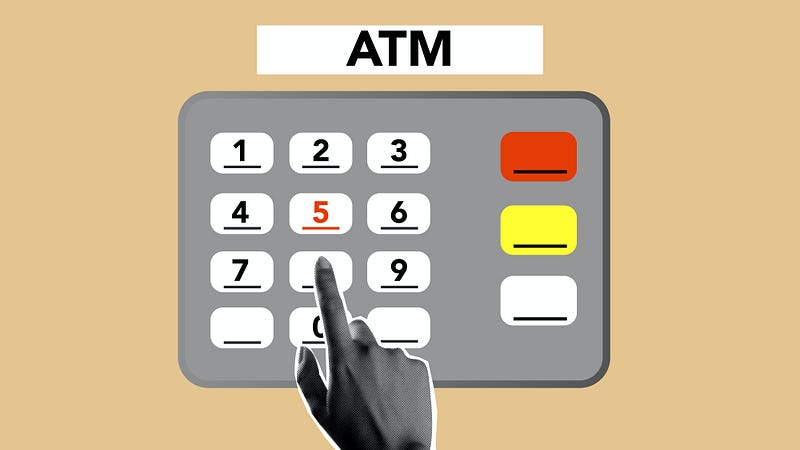
Photo by Monstera Production on Pexels


Asian network rollout

Describing itself as a no KYC (Know Your Customer) exchange for crypto-to-fiat transactions, the firm has the intention of embarking on a crypto expansion initiative that will see it deploy 150 crypto ATMs across key Asian markets.

The press release quotes “official sources” as having confirmed that these crypto ATMs will be operational across the region by February 2024. The firm intends to locate the machines within markets such as Australia, Japan, Hong Kong, and Indonesia.


European expansion

In alignment with its growth strategy, Bitgamo has also unveiled plans to introduce an additional 75 cryptocurrency ATMs across Europe over the course of 2024.

Founded in 2020, Bitgamo claims that its objective is to address privacy concerns while promoting the adoption of cryptocurrencies in regions where acquiring and holding digital assets can be challenging.

Gabriel Weber, the company’s Director of Communications, expressed his excitement about the expansion initiative. He stated:

“We are thrilled to be able to offer this innovative service in Australia, Japan, Hong Kong, and Indonesia. The addition of our ATMs will make it super easy for users to sell crypto, and we are confident that they will be valuable resources for the thriving crypto communities in these countries.”


No KYC

The crypto exchange and ATM business claims to offer a no KYC exchange policy, which sets it apart in an increasingly regulated landscape. As a Luxembourg-registered entity, Bitgamo classifies cryptocurrencies as commodities, adhering it says, to the legal framework of its home country.

While the convenience of a no KYC approach is evident, it appears to be going against the current trend and recent regulatory pressures. Earlier this year Seychelles-based cryptocurrency exchange KuCoin implemented mandatory KYC. Bitget, another Seychelles-based exchange, followed suit earlier this month, while another Asia-centric exchange, OKX, has tightened its KYC policy.


Online concern

Bitgamo isn’t well known and with that, this recent announcement has sparked some in the crypto community to express doubt. One individual on crypto-Twitter wrote: “This is a scam…don’t fall for it!” . . . “Raising awareness as their paid press releases are currently doing the rounds, trying to lure in victims.”

Meanwhile, a YouTuber called “Negocios TV” urged caution relative to what it described as a possible scam. It’s certainly true to say that there’s very little information in the public sphere relative to Bitgamo and with that, market participants will need to do their own due diligence. Equally, we are not aware if these concerns are real or misplaced.

If the offering is in fact legitimate, then it’s a very positive development. Crypto ATMs have often acted as the first touch-point for many individuals in accessing digital currency. Recent years have seen a considerable increase in the global network of crypto ATMs, offering those who want to onboard into the crypto sphere easy access to doing so and possibly purchasing their first digital currency.


More to Read
View All
Markets·

May 30, 2024

DBS Bank pours cold water on ownership of $650M in Ether

A crypto wallet reportedly tied to the multinational banking giant DBS Bank holds over 170,000 Ether, valued at nearly $650 million. Reporting on the matter subsequently prompted DBS to make a denial of any links to the wallet.Photo by Kanchanara on UnsplashClaim asserted, claim deniedOn May 30, blockchain analysis firm Nansen caused some excitement when it took to X, flagging a particular wallet address, identifying it as belonging to an Ethereum whale, taking matters a step further in asserting that the wallet belonged to Singaporean bank, DBS Bank. The submission of securities reports to the Securities and Exchange Commission (SEC) recently by many large corporates led to disclosures from some within traditional finance in the United States of Bitcoin holdings via the spot Bitcoin exchange-traded fund (ETF) products which had been approved earlier this year. A substantial holding of ETH by Singapore’s biggest bank would have been a significant boost for proponents of Ethereum. However, DBS Bank promptly refuted these claims. A spokesperson for the bank subsequently issued a statement to Cointelegraph and Decrypt, stating: "In relation to the post, DBS does not have this position on our books."  Claim not retractedFor its part, Nansen has not retracted its claim. In response to Decrypt, Nansen analyst Edward Wilson stated:"We have it under good authority, via several independent sources, that DBS owns the private key of this wallet and these assets are most likely a part of their custody solution." Wilson told Cointelegraph that it had obtained this information from “a good source,” going on to state: “This is similar to how we see institutions, both crypto-native like exchanges such as Binance or Coinbase custody funds on behalf of their users and non-crypto-native custody funds. The institution is the custodian and is responsible for managing the security of the funds.” The Nansen analyst expressed even more confidence in the claim in response to CryptoSlate. Wilson stated:“Nansen is 100% sure this belongs to DBS – DBS owns the private key of this wallet and these assets are most likely a part of their custody solution.” DBS’s foray into crypto servicesIn 2020, DBS Bank unveiled a crypto trading and custody service, including a platform for conducting security token offerings. At that time, DBS Exchange clarified that while the exchange itself would not hold any assets, it would provide custody services to investors. Since launching its crypto division, DBS Bank has seen significant success. In 2023, DBS reported an 80% growth in Bitcoin trading volume, attributing this surge to the crypto market turmoil of 2022. In February of this year, the Singaporean bank moved to integrate its digital asset exchange business into a new global financial markets unit. In April 2023, DBS opened a branch of the bank on the metaverse. It demonstrated its Web3 credentials further in August 2023 by introducing a metaverse game to tackle the issue of global food waste.

news
Web3 & Enterprise·

Dec 26, 2023

Singapore’s Whampoa Digital collaborates on establishment of $100M Web3 fund

Singapore’s Whampoa Digital collaborates on establishment of $100M Web3 fundWhampoa Digital, the Web3 subsidiary of privately-held Singaporean investment firm Whampoa Group, has entered into a collaboration with an Asian gaming company to establish a $100 million Web3 fund.Photo by Towfiqu barbhuiya on UnsplashFocus on Web3 in the Middle EastThe WEMIX Foundation, a subsidiary of South Korean blockchain gaming firm Wemade, announced details of the new fund via a press release published to its website on Friday.Wemade is renowned for its massively multiplayer online role-playing game (MMORPG) series Legend of Mir. This strategic collaboration aims to catalyze the expansion of the digital asset industry, with a specific focus on the rapidly growing Web3 sector in the Middle East.Reciprocal deal and project referralsThe Web3 fund initiated by Wemade is set to play a pivotal role in supporting developers at the Wemix Play Center situated in Dubai. Both Wemade and Whampoa Digital plan to engage in reciprocal deal and project referrals, particularly within the Web3 industry, and explore potential co-investment opportunities in promising projects.Aureole Foong, senior partner of Whampoa Group, expressed optimism about the partnership’s potential impact. Foong highlighted the significance of this collaboration in expanding the digital asset industry beyond established sectors and fostering innovation in the Middle East, recognized as one of the world’s fastest-growing regions in the Web3 space.Web3 gaming experienceWemade has extensive experience in the gaming sector, dating back to its establishment in 2000 and its notable creation of the Legend of Mir series, positioning it as a key player in the gaming industry. The company has diversified its portfolio by venturing into the blockchain space, launching Wemix, a tech ecosystem offering Web3 services.Wemade’s blockchain gaming platform, Wemix Play, boasts a player base of over 250,000 users. Last week the Wemix Foundation announced the launch of its una Wallet, associated with the company’s omnichain network and interoperable Web3 gaming platform.In addition to co-investing in gaming studios and blockchain projects in the Middle East and North Africa (MENA) region, Wemade is planning to establish a global Web3 gaming hub at the Dubai International Financial Centre (DIFC). The company will also set up an office for the newly formed Web3 fund at this location. The DIFC’s Innovation Hub, coupled with Wemade’s hub, will provide essential facilities and mentorship for the fund’s portfolio firms.Whampoa Digital, the investment arm of Whampoa Group, is well-versed in supporting global tech firms, including notable names like TikTok’s parent company ByteDance and crypto major Binance. In May Whampoa announced that it had plans to establish a crypto-friendly bank in Bahrain.2023 has presented challenges for Web3 investors seeking new funds. According to a report by the research arm of crypto investment firm Galaxy Digital, the average new Web3 fund size for the first nine months was $238.4 million, with a median of $50 million — both figures significantly lower than the same period last year.

news
Markets·

Mar 13, 2024

Korean banks see over $1.5B outflow in funds to crypto market

Recently, the top five Korean banks have seen a significant outflow of funds in their demand deposits – worth about KRW 2 trillion ($1.52 billion) – to crypto markets as local investors are rushing to withdraw their money from banks to invest in the crypto and stock markets. The recent surge of Bitcoin to KRW 100 million prompted the funds’ outflow, local media Etoday reported. This is a substantial turn from just a week ago, when these banks saw a KRW 23.5 trillion increase in their demand deposits just in a month.  The previous rise in demand deposits at banks, however, was also driven by local investors who used these accounts as a “station” to temporarily store their money for future crypto investments. These accounts are highly liquid, since users can deposit or withdraw funds at any time without incurring penalties from banks.Photo by Emile-Victor Portenart on UnsplashBank deposits flowing into crypto Data from the five banks –  KB Kookmin Bank, Shinhan Bank, Hana Bank, Woori Bank and NH Nonghyup Bank – show that their combined demand deposits totaled KRW 612.4 trillion on Friday, down KRW 2.2 trillion from late last month.  The crypto investing trend has prompted investors to withdraw their funds not only from demand deposit accounts, but also from fixed deposit and installment savings accounts. During the same period, the five banks’ fixed deposits saw a KRW 5.1 trillion decline from KRW 886.2 trillion to KRW 881 trillion, with installment savings decreasing by KRW 2.5 trillion, from KRW 33.2 trillion to KRW 30.6 trillion.  In particular, NH Nonghyup Bank, which offers real-name accounts to the crypto exchange Bithumb, has witnessed a decline of over KRW 2 trillion in its demand deposits over the past week. Shinhan Bank also reported an increase in dealing with more crypto assets.  Bullish crypto and stock market With Bitcoin prices hitting a new high, the U.K. bank Standard Chartered forecasts that Bitcoin could eventually reach $200,000 by 2025. The excitement around crypto has boosted the amount of cryptocurrencies traded against the Korean won across the top five crypto exchanges in Korea, reaching KRW 78 trillion.  Korean stock markets are also signaling a bullish sentiment, with the amount of investor deposits exceeding KRW 53 trillion this month. Investor deposits refer to customer deposits at securities companies saved for investment purposes or those left unclaimed after selling stocks.  Declining interest rates Meanwhile, local savings products with over 4% interest rates are no longer to be seen. According to the Korea Federation of Banks, a one-year savings product with the highest interest rate among the top five local banks offers an annual rate of 3.55%.  Online-only banks, which typically offer relatively higher rates than other traditional banks, are rapidly lowering rates on their saving products. The highest annual rate for Kakao Bank’s fixed deposits products stands at 3.5%, down by 0.1 to 0.2 percentage points depending on their maturity.  Kbank has also decreased rates for fixed deposits by 0.05 percentage points, lowering the rate for its flagship fixed deposits product from 3.7% to 3.65%. 

news
Loading