Top

Singapore’s Web3 sector hopes for budget measures to grow talent pool

Policy & Regulation·February 15, 2024, 1:59 AM

Deputy Prime Minister and Minister for Finance Lawrence Wong is slated to unveil the Singapore 2024 Budget Statement on Feb. 16. As Singapore prepares for the unveiling of its 2024 Budget, the city-state’s Web3 community is amplifying its call for crucial government backing.


That’s according to a recent report by The Straits Times. The plea from Singaporean firms revolves around two pivotal areas: one, nurturing a proficient talent pool well-versed in blockchain technology; and, in addition to that, having a strength and depth in cybersecurity, so as to fortify defenses against cyber threats.

https://asset.coinness.com/en/news/9dc1f3fc465a90059300d28da1e03d43.webp
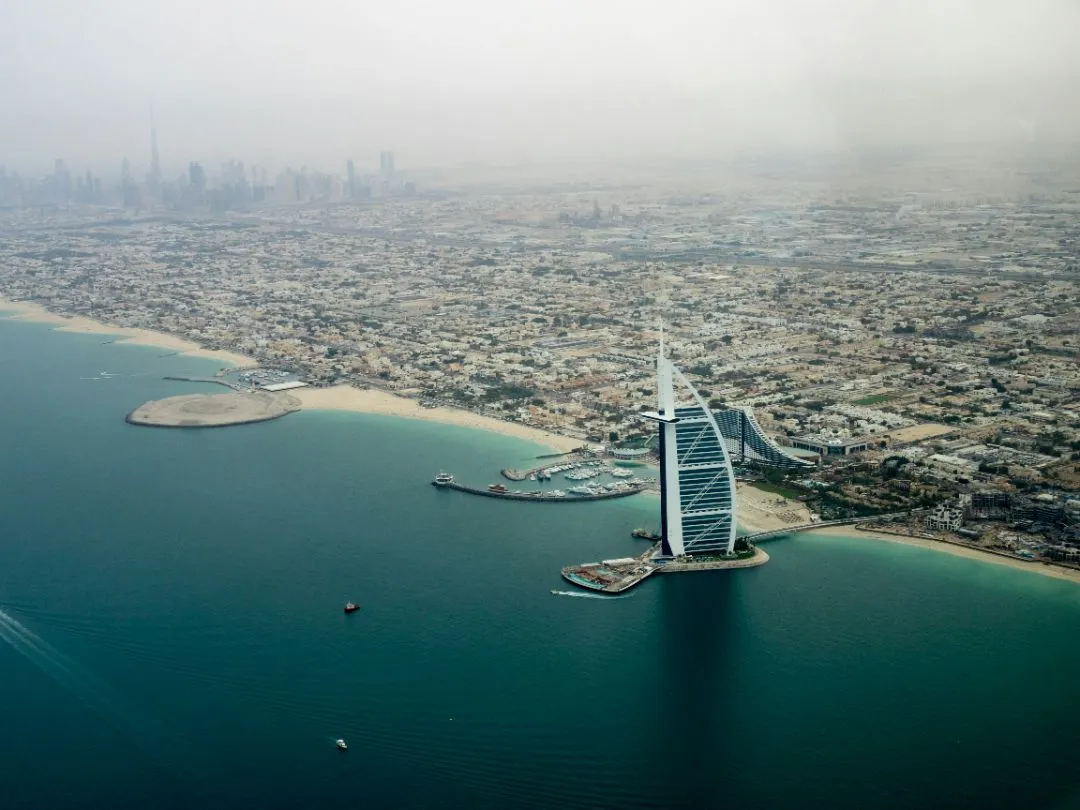
Photo by David Pardo Bernal on Unsplash

Urgent need for Web3 talent

Some time ago, stakeholders in Singapore set out their stall in terms of the ambition of firmly establishing the city-state as a global hub for Web3 development. It’s off to a good start with many notable crypto and Web3 companies having established themselves in Singapore. However, broadening that industry hub to the fullest extent will involve overcoming the significant hurdles hindering the growth trajectory of Singapore’s Web3 sector.


Top of the list is the scarcity of skilled professionals in the blockchain domain. Danny Lim, a core contributor at MarginX, a decentralized exchange, stressed the pressing demand for seasoned developers.


Lim underscored the necessity of supporting Web2 developers transitioning into Web3 realms, especially those grappling with job displacement, to solidify Singapore’s status as a nucleus for groundbreaking blockchain ventures.


Elaine Zhu, the general manager of the Asian division of blockchain infrastructure firm Parity Technologies, emphasized the critical need for blockchain education, expressing apprehension over the dwindling influx of new developers.


In citing a recent report by crypto-focused venture capital firm Electric Capital which quantified developer activity across Web3, Zhu noted that the number of experienced developers in Singapore remains healthy. However, the report found that the number of newly qualified developers dropped by 52 percent last year.


Bolstering cyber defenses

Additionally, the industry is clamoring for fortified cyber defenses to shield against the escalating threat landscape targeting digital assets. This focus on security underscores the broader challenge of ensuring the secure proliferation of Web3 technologies and digital currencies within Singapore’s technological ecosystem.


A report by Singapore-based blockchain security firm Beosin last year found that exit scams are a growing concern in the crypto-sphere. At the end of last month, the Singapore Police Force, alongside the Cyber Security Agency of Singapore (CSA), issued an advisory in order to raise awareness regarding crypto-centric cyber attacks.


Ong Chengyi, representing Chainalysis, hailed Web3 as pivotal for long-term growth and advocated for sustained governmental support to enhance the sector’s capability in mitigating risks using advanced technological solutions. Ong remarked:

“We hope to see more public-private collaboration to bolster Singapore’s defences against crypto crime and cyber threats more generally, through the utilization of data and technology.”


Angela Ang of TRM Labs echoed that sentiment, emphasizing the imperative for heightened regulatory support to nurture the expansion of digital assets. Ang stated:

“To deliver clarity to businesses at scale, whether it’s through licensing decisions or implementation guidance, the Government must invest in both human capital and technology throughout the regulatory process.”
 

More to Read
View All
Policy & Regulation·

Feb 28, 2025

First stablecoins gain DFSA approval in Dubai

The Dubai Financial Services Authority (DFSA), the financial regulatory agency of the Dubai International Financial Center (DIFC), a special economic zone, has approved two stablecoins under its crypto regulatory framework. The two stablecoins, USD Coin (USDC) and EURC, are both issued by blockchain-focused financial services firm Circle. While USDC is a U.S. dollar-backed stablecoin, EURC is a euro-backed stablecoin. In a press release published on the Circle website on Feb. 24, the company announced details regarding the approval. The stablecoins are the first to be recognized and approved by the DFSA.Photo by Christoph Schulz on UnsplashStablecoin integrationThe development means that firms based in the DIFC are now free to integrate either stablecoin into digital asset applications and products focused on areas such as payments and treasury management. A number of Circle executives took to social media to comment on the development. Circle Co-founder and CEO Jeremy Allaire outlined on X that the approval means that financial institutions in Dubai “are now able to transact in markets with USDC and EURC.” In legally recognizing the two stablecoins, Allaire pointed out that the DFSA had joined regulators in the European Union (EU) and Canada.  Last Summer, Allaire announced that Circle’s stablecoins complied with the EU’s Markets in Crypto Assets (MiCA) regulation. In December, Circle became the first stablecoin issuer to meet Canadian listing regulations. Dante Disparte, Circle’s chief strategy officer and head of global policy, pointed out that a trend is emerging requiring the pre-clearing of stablecoins prior to them entering into circulation or gaining regulatory approval. “In always-on finance, reciprocity is key,” he added.  Meanwhile, the firm’s EU Strategy & Policy Director, Patrick Hansen, underscored the significance of the approval. Hansen pointed to the fact that the DIFC is home to 6,000 registered entities, including 800 authorized financial firms. An ‘edge’ over TetherEugene Cheung, Chief Institutional Business Officer at Hong Kong-based digital asset platform OSL, said that the approval was “massive for institutional adoption,” while giving Circle an “edge” over Tether within the $157 billion stablecoin market. While Circle has always taken a regulatory-compliant approach, competitor Tether has struggled with compliance. In Europe, 10 companies have been approved to issue stablecoins under MiCA regulations, but Tether is not among them. This has led to a number of exchanges delisting Tether’s USDT in Europe. The DIFC was first established in 2004. The economic free-zone caters to firms operating within the Middle East, South Asian and African regions. The number of businesses registered within the free zone has increased by 25% since 2023. In November 2022, the DIFC recognized Bitcoin (BTC), Ethereum (ETH) and Litecoin (LTC). The following year, it added Toncoin (TON) and Ripple’s XRP, together with ZETA, the native token of the ZetaChain network. In 2024, the DFSA amended its crypto regulations to allow foreign funds to invest in recognized crypto tokens, while enabling domestic qualified investor funds to invest in unrecognized tokens.Although the regulatory approach taken by the authorities in Dubai accommodates stablecoins, algorithmic stablecoins are prohibited.

news
Policy & Regulation·

Jan 12, 2024

South Korea’s top asset manager halts trading for bitcoin ETFs

Mirae Asset Securities, South Korea’s largest asset management firm, has begun suspending trading for bitcoin ETFs, according to industry sources on Friday. This comes after an announcement made by the Financial Services Commission (FSC) stating that brokering spot bitcoin ETFs may be considered a violation of the government’s stance on virtual assets and the Financial Investment Services and Capital Markets Act.Photo by Dmytro Demidko on UnsplashTaking preemptive measuresThe asset manager has blocked new purchases of spot bitcoin ETFs listed in Canada and Germany starting yesterday and is considering suspending trading of bitcoin futures ETFs that have been listed in overseas markets since 2021. This includes the Proshares Bitcoin Strategy ETF, Valkyrie Bitcoin Strategy ETF, Invesco Galaxy Bitcoin Strategy ETF and VanEck Bitcoin Strategy ETF. As Korean financial authorities are putting the brakes on domestic investments in the recently approved spot bitcoin ETF by the U.S. Securities Exchange Commission (SEC), it is believed that Mirae Asset Securities is putting a preemptive halt to trading in other bitcoin ETFs. Spot vs futuresSpot bitcoin ETFs differ from futures ETFs in that they track the price of Bitcoin by actually holding the cryptocurrency, while the latter tracks its price through futures contracts. South Korean securities firms have been brokering futures ETFs listed in overseas market for a while now.

news
Web3 & Enterprise·

Jan 23, 2024

Ondo Finance announces APAC expansion

U.S.-based crypto startup Ondo Finance, a financial infrastructure firm that concerns itself with the tokenization of real-world assets (RWAs), has officially revealed its intention to expand into the Asia Pacific (APAC) area, with the inauguration of its first office in the region. In a press release published by the company on Sunday, Ondo clarified that the expansion is a direct response to the escalating interest in digital assets throughout Asia. That interest the company attributes to factors such as a flourishing crypto community, shifting regulatory environments and a growing appetite for exposure to U.S. assets.Photo by Florian Wehde on Unsplash40% market shareAt present, Ondo Finance holds a 40% share of the global market where tokenized RWAs are concerned. That market share has been driven by its three main tokenized product offerings: OUSG, designed for exposure to U.S. Treasuries; OMMF, facilitating exposure to U.S. money market funds; and USDY, positioned as a yield-bearing alternative to traditional stablecoins. These products serve as a conduit for global investors to access U.S.-based asset classes in tokenized form, aligning with the rising trend of digital asset adoption. To spearhead its APAC expansion initiative, Ondo Finance has appointed Ashwin Khosa as the vice president of business development in the region. Khosa brings nearly a decade of experience in Hong Kong-based institutional business development, having worked with multinational financial services company Citi, alongside key crypto firms such as Tether and its sister company, Bitfinex. His expertise encompasses both on-chain finance and a profound understanding of the APAC market. Khosa stated: “The team is top-notch and the mission of bringing real world assets onchain is extremely important. I look forward to working closely with partners in the region to help investors gain access to this next generation of high-quality assets.” Founded in 2021 with roots tied to the Goldman Sachs Digital Assets team and supported by leading venture capitalists including Founders Fund, Pantera Capital and Coinbase Ventures, Ondo Finance is looking to solidify its position as a dominant force in this newly emerging market on the back of nearly 40% of the global market share in tokenized securities. Nathan Allman, the founder and CEO of Ondo, expressed his excitement about the expansion, stating:“We’re very excited about our expansion into APAC. There is an active and rapidly growing crypto community and an appreciation for the type of high-quality exposure to US assets that our tokens provide.” Suspected token dumpIn a related development on Monday, on-chain sleuths have presented data that may indicate a sell-off of $11 million worth of ONDO tokens, the project’s native token. 20 million tokens were sold, with the suggestion that the token unit price fell in tandem with that market activity. Earlier on Monday, the token traded at $0.3062. At the time of writing, it's trading at $0.25. This expansion into the APAC region follows a string of pivotal developments for Ondo, including the revelation of its strategic roadmap and partnerships within the Ondo ecosystem. Additionally, the Ondo Foundation has introduced a points program and a proposed unlocking of its ONDO token, marking an integral part of the company's ongoing growth and development.   

news
Loading