Top

Bitdeer announces new mining chip and Q4 results

Web3 & Enterprise·March 05, 2024, 2:51 AM

Bitdeer Technologies, led by Jihan Wu and based in Singapore, has unveiled the very latest development in the world of Bitcoin mining technology with the announcement of the successful testing of its proprietary Bitcoin mining chip, slated for integration into its forthcoming mining rig. In addition, the firm has followed up on March 4 with the publication of financial results for Q4 2023.
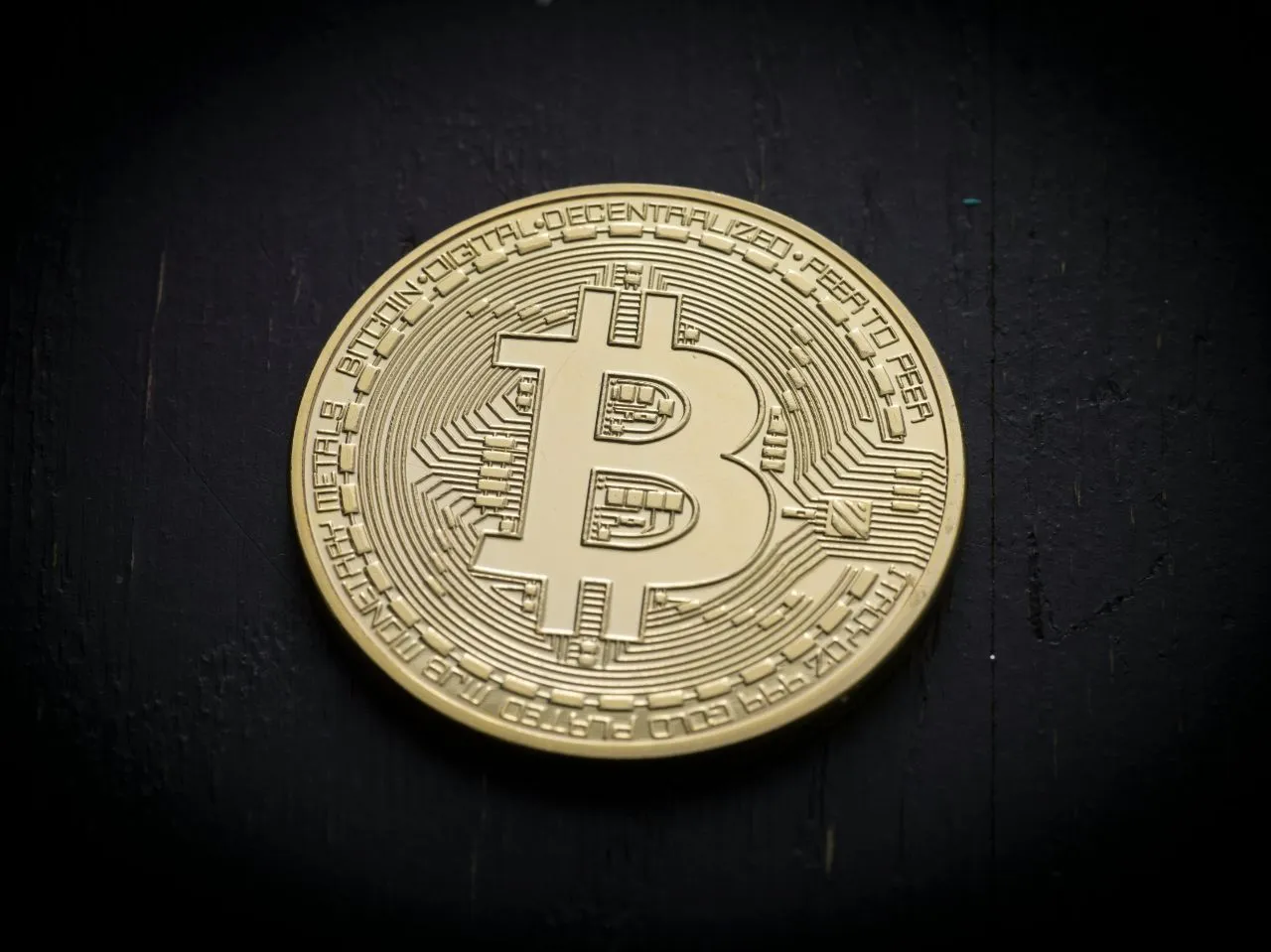
https://asset.coinness.com/en/news/81701fddf7c01f3af8b322ed63024a30.webp
Photo by Thought Catalog on Unsplash

Sealminer A1

The company revealed on X that its inaugural crypto mining chip, known as the SEAL01, destined to drive the Sealminer A1 mining rig, was engineered utilizing four-nanometer process technology, a feat achieved in collaboration with a semiconductor fabricator. Bitdeer boasts that this chip exhibits a power efficiency ratio of 18.1 J/TH.


At the heart of Bitdeer's latest achievement lies the SEAL01 chip, the culmination of years of dedicated research and development. By harnessing state-of-the-art technology and meticulous planning, Bitdeer aims to tackle the pressing challenges confronting Bitcoin miners, including skyrocketing operational costs and environmental implications.


The company claims that the efficiency of the SEAL01 chip not only promises a shift towards more sustainable mining practices but also holds the potential to significantly reduce energy consumption, thereby bolstering profitability and return on investment for miners.


"This powerful chip offers enhanced Bitcoin mining performance with minimized power consumption, leading to lower operating costs and a reduced environmental footprint for miners," Bitdeer affirmed in the X post. The firm stopped short of disclosing the launch timeline for its upcoming mining rig.


On the financial front, Bitdeer disclosed its financial results for Q4 2023, on March 4. The company reported a total of 111,966,634 outstanding ordinary shares as of Dec. 31, 2023, including class A and class V ordinary shares.


Additionally, Bitdeer revealed key operational metrics for Q4 2023, including total Bitcoin mined, power usage across its mining data centers, average cost of electricity and miner efficiency.


Bitdeer's shares closed up 2.11% at $6.76 on Nasdaq on Friday, indicating a positive market response to its recent newly developed Bitcoin mining chip. However, trading outside regular hours, going into March 4, have seen the share price peak at $7.52, yet having retraced to $6.9 at the time of writing. That may indicate that investors are not particularly enthralled by the firm’s Q4 2023 results.


Bitdeer emphasizes that the SEAL01 chip is engineered to meet the evolving demands of the cryptocurrency mining industry. As mining activities continue to gain traction and market dynamics evolve, the adaptability of hardware solutions becomes paramount. Bitdeer's strategic emphasis on innovation with the SEAL01 chip aims to pave the way for future advancements in cryptocurrency mining technology, ultimately fostering the growth and sustainability of the industry.


Moreover, Bitdeer asserts that the newly developed chip enables it to optimize efficiency, stability and performance in anticipation of the upcoming Bitcoin halving event slated for April.


Last month, the company’s founder Jihan Wu was installed as CEO, in a move that is understood to better position the company as it transitions to a growth phase.

More to Read
View All
Web3 & Enterprise·

May 07, 2025

Metaplanet issues more bonds to buy Bitcoin & opens U.S. subsidiary

Japanese Bitcoin treasury firm Metaplanet has opened a U.S. subsidiary company in Florida while also issuing 3.6 billion Japanese yen ($24.7 million) in bonds for the purpose of buying more Bitcoin.Photo by Kanchanara on UnsplashAccelerating the Bitcoin strategyIn an announcement on May 1, the company outlined that it had established Metaplanet Treasury Corporation in Miami, Florida. The firm cited the purpose of the subsidiary as a means through which it can accelerate its overriding strategy of accumulating more Bitcoin. Metaplanet CEO Simon Gerovich commented on X on the rationale behind locating the U.S. subsidiary in Florida, stating:”The reason for choosing Florida is clear: the state is rapidly emerging as a global hub for Bitcoin innovation, corporate adoption and financial liberalization.” Gerovich added that the newly formed company will enhance Metaplanet’s “around-the-clock operational capabilities across time zones.” The Metaplanet CEO sees the development as part of the firm’s evolution as a global Bitcoin treasury company.  $250 million capital raiseThe company stated that it had already established a corporate entity in the British Virgin Islands (BVI), with the U.S. addition enhancing the company’s ability “to respond to market dynamics with speed and precision.”  Metaplanet intends to raise $250 million in funding through the Miami-based entity, having launched it with initial capital of $10 million. It’s envisaged that the U.S. subsidiary can act as a vehicle to attract institutional investment.  Back in March it was reported that Metaplanet was investigating the idea of listing its stock in the U.S. At the time, Gerovich stated that the firm was “considering the best way to make Metaplanet shares more accessible to investors around the world.” As part of that process, Gerovich met with officials from the New York Stock Exchange (NYSE) and the Nasdaq.  In further U.S.-related developments, the company appointed Eric Trump, second son of U.S. President Donald Trump, to its strategic board of advisors in March. Last week, Metaplanet appointed David Bailey, CEO of Bitcoin Magazine, to its strategic board of advisors. Bond issuanceIn a separate development, Metaplanet has issued 3.6 billion Japanese yen ($24.7 million) in 0% ordinary bonds to purchase additional Bitcoin. The company used its EVO FUND as the mechanism through which it issued the bonds.  It has set out a goal of accumulating 10,000 BTC by the end of the year. Currently, the company holds 5,000 BTC. One community member believes that Metaplanet could hit this target as early as July on the basis of ongoing share dilution.Appearing on The Bitcoin Treasuries Podcast earlier this year, Metaplanet’s Director of Bitcoin Strategy, Dylan LeClair, described how prior to adopting its Bitcoin treasury strategy in 2024, the firm was a “zombie” on the Tokyo stock exchange with the pandemic having had a negative impact on the company’s fortunes.  He outlined that the company consolidated and dealt with some debt issues, but at that point it lacked a clear strategy. It then set out to replicate the success of U.S. Bitcoin treasury pioneer, Strategy (formerly MicroStrategy). On May 1 Gerovich posted on X that the company had achieved unrealized gains on Bitcoin exceeding six billion yen ($41.68 million). 

news
Policy & Regulation·

Mar 13, 2024

Thailand greenlights U.S. spot Bitcoin ETF access

The decision by U.S. regulators to approve spot Bitcoin exchange-traded funds (ETFs) in January appears to be having some knock-on effects, with the latest such response seeing the Thai authorities enable access to such products for institutional investors and ultra-high-net-worth individuals within Thailand.Photo by Karolina Grabowska on PexelsMeeting a growing demandAccording to a report in the Bangkok Post on March 12, Thailand’s Securities and Exchange Commission (SEC) has agreed that Thai asset management firms may manage and offer funds that incorporate investment in U.S. spot Bitcoin ETF products. The decision was arrived at following a recent SEC board meeting. The SEC's decision reflects a strategic response to the growing demand for digital asset exposure among institutional investors. It would appear that spot Bitcoin ETF approval in the United States has bolstered investor confidence in this investment instrument on an international basis. Urging cautionDespite the opportunities this presents for institutional investors, the SEC has emphasized caution, citing the high-risk nature of digital asset investments. SEC Secretary-General Pornanong Budsaratragoon verbalized that need for caution, stating: "Asset management firms asked the SEC for them to have exposure in digital assets, especially Bitcoin and spot Bitcoin ETFs, but we need to consider carefully whether to allow asset management firms to invest in digital assets directly due to the high risk.”It’s interesting to note that in an immediate response to the approval of these products in the United States in January, Thailand’s SEC clarified that it had no plans to allow asset management firms to launch similar products within Thailand. For the moment at least, it seems that demand will be satisfied by accessing products that have gained exposure to U.S. spot Bitcoin ETFs instead. Retail investors excludedWhile this move expands the investment landscape for institutional players, retail investors in Thailand find themselves sidelined due to regulatory restrictions. The amended regulations primarily cater to accredited investors, leaving retail participation in spot Bitcoin ETFs out of reach. This exclusion contrasts with the popularity of retail crypto trading in Thailand, albeit within regulated boundaries. Recent government regulations have both facilitated and restricted certain crypto activities. Thailand's move aligns with broader trends in the cryptocurrency sector, with several countries, including South Korea and Hong Kong, exploring opportunities in the space. In Hong Kong, regulators are currently processing applications for Bitcoin ETFs, with several financial institutions expressing interest in introducing spot Bitcoin ETFs. Just like the Thai authorities, the governor of the Royal Bank of India (RBI) had also responded in the aftermath of product approval in the U.S. stating that he didn’t favor the approval of such products in India. Despite that, news emerged on March 11 that Indian crypto investment platform Mudrex is planning to meet demand by providing clients with access to these U.S. products. As institutional investors gear up to capitalize on this opportunity in Thailand, the regulatory framework surrounding digital assets will continue to shape market dynamics, both domestically and internationally.

news
Policy & Regulation·

Mar 18, 2024

Korean tax agency’s move hints at approving corporate crypto accounts

The South Korean National Tax Service (NTS) is reportedly in the process of setting up virtual asset accounts for its district offices. This initiative is aimed at confiscating and liquidating the digital assets of individuals who fail to pay their taxes. This move comes after the creation of similar accounts by public prosecutors' offices, leading to speculation in the crypto industry that virtual asset accounts will soon be allowed for corporate entities as well.Photo by Nataliya Vaitkevich on PexelsDirect confiscation of virtual assetsA report by the local news outlet Etoday today has revealed that each district office of the NTS is working towards establishing a virtual asset account. This development will empower the tax agency to directly sell virtual assets confiscated from tax delinquents. Previously, the NTS would freeze the accounts of overdue taxpayers at Korean cryptocurrency exchanges, compelling them to convert their assets into Korean won. These funds were then confiscated by the NTS. The new initiative is set to streamline the process, enabling the tax authority to directly confiscate virtual assets without the intermediary step of conversion to Korean won. Speaking about this development, an NTS officer said that as each district office director holds the authority to collect taxes from taxpayers with overdue payments, it's necessary for each office to have its own account. Prosecutors’ Offices’ Upbit and Bithumb accountsThe crypto industry views this development as a potential step towards allowing the creation of virtual asset accounts for corporate entities, starting with government agencies. In December, the prosecutors' offices established their entity accounts at major cryptocurrency exchanges Upbit and Bithumb. Since then, the prosecution has utilized these accounts to sell confiscated virtual assets, aiming to recover funds that had not been collected.  An official from a cryptocurrency exchange indicated that the South Korean government is currently focusing on allowing entities that serve the public good to own virtual asset accounts. This approach is seen as the starting point, with expectations that the trend will gain momentum in the future. The official added that it's rare for the government to provide blanket permissions from the outset, suggesting a gradual and cautious approach to the integration of virtual asset accounts.Money laundering concernsMeanwhile, the Financial Intelligence Unit (FIU) of the Financial Services Commission (FSC), along with other financial regulators, has remained silent on the matter of virtual asset accounts for corporate entities. This reticence stems from concerns with the financial authority that the introduction of corporate crypto accounts could potentially lead to money laundering and the creation of slush funds. An official from the National Assembly’s National Policy Committee said that they have not received any comments from the financial authority in response to inquiries about plans to allow such accounts for corporate entities. The current law doesn’t prohibit corporate entities from trading virtual assets. However, under the auspices of the financial authority, banks have refrained from offering real-name accounts to corporate entities. This policy has been a point of contention within the crypto industry. Advocates argue that allowing corporate accounts could mitigate issues of market manipulation and challenge the dominance of Upbit in the Korean cryptocurrency market.  The official from the cryptocurrency exchange pointed out that the financial authority does not have a clear legal basis for prohibiting the creation of corporate crypto accounts. They suggested that the regulator should develop clearer guidelines and enforce these rules for corporate entities. More serious discussions in AprilMore serious discussions about the introduction of corporate crypto accounts are anticipated to take place in April, following the conclusion of the general election. Last month, the main opposition party, the Democratic Party of Korea, made election promises to open the crypto market to institutional investors. Meanwhile, the ruling People Power Party has been quietly deliberating on virtual asset policy. Despite these political movements, earlier reports indicate a disconnect between the political parties' efforts to relax crypto regulations and the financial regulator's stance. Meanwhile, Hwang Seok-jin, a professor at Dongguk University’s Graduate School of International Affairs and Information Security, expects to see a conclusion on the permission of corporate crypto trading by the end of this year. He said that there has been ongoing discussion about the approval of spot Bitcoin exchange-traded funds (ETFs) and that allowing the trading of such funds requires the ownership of virtual assets by institutions. 

news
Loading