Top

CoinGecko Report Points to Q3 Market Contraction

Markets·October 26, 2023, 2:11 AM

The third quarter of 2023 was marked by a significant market downturn and market cap contraction. That’s one of a number of findings in a Q3 crypto industry report compiled by Malaysian cryptocurrency ranking platform CoinGecko.
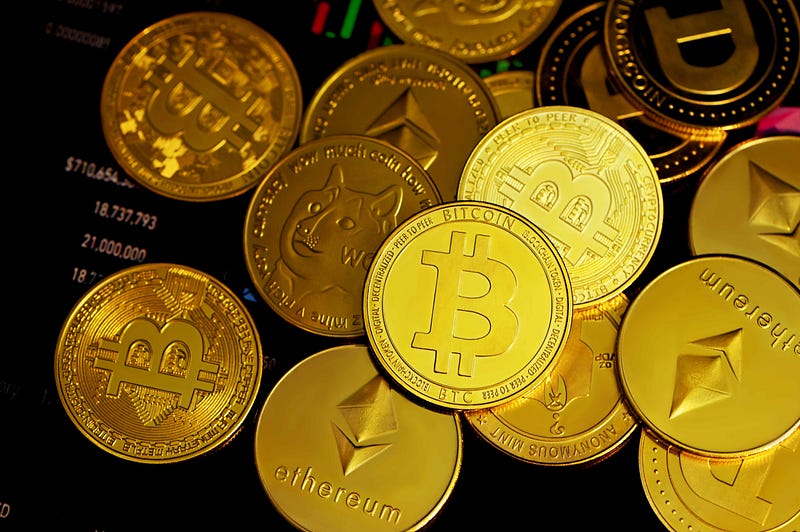
Photo by Kanchanara on Unsplash


Market cap contraction

The company released its latest research on Tuesday. In mid-August, Bitcoin (BTC) witnessed a sudden drop from approximately $29,000 to around $26,000, leading to a dip in the total cryptocurrency market capitalization from $1.2 trillion to $1.1 trillion.

The total crypto market capitalization recorded a nearly 10% decline, amounting to a drop of $119.1 billion. Since reaching its local peak on April 17, the total market capitalization has experienced a decline of 16.3%.

Notable shifts in the top 30 cryptocurrencies include Solana (SOL) climbing to #7, TrueUSD (TUSD) rising to #19, Litecoin (LTC) falling to #14, Avalanche (AVAX) dropping to #22, and Binance USD (BUSD) sliding to #27.


Stablecoin shrinkage

The top 15 stablecoins saw a 3.8% decrease in market capitalization during Q3 2023, reaching $121.3 billion. Tether (USDT) maintained its market cap during this period. USD Coin (USDC) experienced the largest absolute loss at -$2.26 billion (-8.3%), while Binance USD (BUSD) faced the most significant percentage decline of -45.3%, amounting to a drop of -$1.87 billion. TrueUSD (TUSD) was the sole gainer among the top 5, with a 12.8% increase in market cap.


NFT trading volume cut in half

Trading volume for NFTs declined by 55.6%, dropping from $3.67 billion in Q2 to $1.63 billion in Q3. Ethereum maintained its dominance, accounting for 83.2% of the NFT market during Q3. ImmutableX NFTs, driven by trading card game Gods Unchained, experienced a strong Q3, with a market share increase from 2.1% in Q2 to 3.9% in Q3.


Continued growth for RWAs

The Real World Asset (RWA) sector has continued to grow in 2023, with tokenized US treasury bills gaining popularity. The market cap for these tokenized T-bills increased from $114.0 million in January 2023 to $665.0 million by the end of September, marking a 5.84x gain. Traditional financial institutions led the way, with American asset manager Franklin Templeton controlling almost half of the overall market share, followed by Ondo Finance at 27%. Ethereum held 49% of the market cap share, while Stellar followed closely behind with 48%.


Spot DEX and CEX trading volume down

In Q3, spot trading volume on the top 10 decentralized exchanges (DEX) totaled $105 billion, a 31.2% drop from Q2. THORchain experienced a significant gain in volume, though this was partially attributed to illicit transfers.

Spot trading volume on the top 10 centralized crypto exchanges (CEX) amounted to $1.12 trillion, a decrease of 20.1% compared to Q2. Binance’s market share dropped to 44%, facing regulatory pressures and significant executive departures. Among the Asian exchange platforms, HTX, previously known as Huobi, secured the third spot with an 8% market share. Only Upbit and Bybit saw gains, while Kucoin was edged out of the top 10.

While Q3 may not have been the most positive industry quarter recently, things are looking a lot more promising as Q4 develops, with Singapore-based digital assets financial services platform Matrixport predicting a bitcoin unit price of $45,000 by year end.
More to Read
View All
Web3 & Enterprise·

Jul 07, 2023

Animoca Brands Remains Bullish on Blockchain Gaming

Animoca Brands Remains Bullish on Blockchain GamingBlockchain-based games have gained significant attention within the cryptocurrency space, witnessing remarkable growth and daily activity across various protocols despite challenging market conditions. Hong Kong-based Animoca Brands, the Web3 and metaverse company, recently pronounced its bullishness where blockchain gaming is concerned.In 2022 alone, Web3 gaming attracted approximately $4.5 billion in funding, as asset managers, investment funds, and venture capitalists sought to capitalize on the flourishing sector. In an interview with Cointelegraph, Yat Siu, Co-Founder of Animoca Brands, expressed the company’s renewed optimism in the blockchain gaming sector and provided an update on its eagerly anticipated metaverse fund, which made headlines in late 2022.Photo by julien Tromeur on UnsplashAnimoca’s metaverse fundThe metaverse fund, originally planned to have a budget of up to $2 billion in November 2022, aimed to invest in mid to late-stage startups focused on developing metaverse products and experiences. However, due to recent volatility affecting the cryptocurrency space, Animoca Brands scaled back its investment target to $1 billion in January 2023. Reports in March suggested a further reduction to $800 million.While awaiting the required license to launch the metaverse fund, Siu emphasized that Animoca Brands has been actively investing in early-stage startups through its venture arm, with additional investments directly from the company’s balance sheet. Currently, the company boasts a portfolio of over 450 companies.AAA blockchain games anticipatedDespite the challenges, Siu anticipates the release of several “AAA” blockchain games, in which Animoca Brands has made investments, by the end of 2023 or early 2024. Siu believes that the quality of titles backed by Animoca Brands, built on open protocol systems such as Ethereum and Polygon, will contribute to the long-term sustainability of the sector. He underlined the importance of these games being on-chain, enabling third parties to leverage the capabilities of blockchain technology and explore exciting possibilities.Siu also highlighted the significant role of scaling protocols like Polygon and technological advancements such as zero-knowledge proofs in boosting the development and quality of upcoming blockchain games. Immutable, a layer-2 platform, effectively reduced costs and improved transaction speeds for NFT generation in blockchain games. Choosing the right blockchain platform, especially Ethereum, is crucial for success in the industry.While fully decentralized games present challenges, Siu acknowledged that a hybrid on-chain and off-chain approach might be more suitable as the industry progresses towards true decentralization. Certain game features, such as provenance and skins, lend themselves well to on-chain implementation, while others may require a gradual transition.Integrating blockchain tech with existing gamingSiu emphasized the potential for integrating blockchain elements into the existing gaming culture worldwide. By designing interfaces that are familiar to gamers and gradually introducing crypto and Web3 experiences, gaming companies can facilitate the adoption of blockchain technology while promoting financial literacy among players.The Head of Animoca Ventures, an Animoca Brands sister company, recently explained that key Japanese games console makers are also showing an interest in blockchain gaming.Looking ahead, the year 2023 and beyond are critical for the blockchain gaming sector. The release of high-quality games, coupled with significant investments, will shape the long-term success of the industry. With its extensive portfolio and unwavering optimism, Animoca Brands remains dead set on driving innovation and pushing the boundaries of blockchain gaming.

news
Policy & Regulation·

Mar 14, 2024

Busan City embarks on forging blockchain-specialized cluster

The South Korean port city of Busan yesterday convened a meeting to reaffirm the city’s commitment to establishing a blockchain-specialized cluster in the region.  The meeting took place at the Busan Technology Innovation Center located in Busan International Financial Center (BIFC), attended by Busan Vice Mayor for Economic Affairs Kim Kwang-hee, the Korea Internet & Security Agency Director Lee Sang-joong, Busan Technopark Chairman Kim Hyung-gyun and representatives of companies stationed at the BIFC. Photo by Dane Kim on Unsplash$15 million investment by 2026In a bid to foster blockchain technology companies in the region, the local government has outlined plans to invest a total of KRW 20 billion, or over $15 million, in the blockchain cluster project for the next three years until 2026. The Busan government and the central government are each responsible for providing half of the project’s investment fund. Starting off, KRW 6.2 billion will be allocated this year. Among the project’s main objectives are identifying local startups with high potential for blockchain technology integration, facilitating their connections with VCs for fundraising and promoting the project’s achievements. Participating companies are set to share their annual performances this upcoming December.  Most importantly, the city aims to attract blockchain companies to the region, lay business foundations for them and transform the city into a blockchain industry hub.  Ambition to become a global blockchain hub Vice Mayor Kim said the city will keep supporting local blockchain startups so that these entrepreneurs can settle down in Busan, with the aim of turning the city into a global blockchain hub. 

news
Web3 & Enterprise·

Jul 14, 2023

Bitget Claims Debt-Free Status via Proof of Reserves

Bitget Claims Debt-Free Status via Proof of ReservesBitget, the Seychelles-based cryptocurrency derivatives exchange, proudly announced that its total proof-of-reserves ratio has reached an impressive 223% in its latest report.Photo by Traxer on UnsplashReserve of $1.44 billionIn a press release published to its website on Thursday, the exchange revealed that it currently holds a reserve of $1.44 billion, encompassing 31 different crypto assets. The reserve ratios for popular cryptocurrencies such as Bitcoin (BTC), Tether (USDT), Ether, and USDC stand at 454%, 135%, 171%, and a staggering 2,604%, respectively.Bitget executives, in an interview with Cointelegraph, emphasized the exchange’s commitment to operating without relying on debt or user funds for transactions or investments. They stated that the company is debt-free and has no outstanding liabilities, nor is it listed as a creditor for any recently bankrupt companies.When questioned about the high collateralization for certain coins, the exchange clarified that the funds originate from profits generated through transaction fees and returns from investments and acquisitions. While Bitget does not have external insurance for its users, it maintains a robust $300 million User Protection Fund.Executives assert that this fund operates more effectively than third-party insurance, enabling them to efficiently safeguard users’ assets without being dependent on external bureaucracy or policy changes.Partnering with third-party auditorsAlthough not yet a regulatory requirement, Bitget aims to enhance transparency by increasing partnerships with third-party auditors to thoroughly examine its assets and reserves. The exchange diligently updates its proof-of-reserves every month, further reinforcing its commitment to accountability and trustworthiness.While proof-of-reserves has gained popularity as a means of disclosing information about exchange assets, experts have cautioned about its effectiveness. Jack Graves, a professor of law at Syracuse University, highlights the challenges in determining the portion of assets pledged as collateral unless one has access to an exchange’s financial services, books, and records.Bitget’s remarkable proof-of-reserves ratio and its commitment to being debt-free demonstrate a greater focus on behalf of cryptocurrency exchanges in providing the crypto trading public with an enhanced level of information relative to the real-time financial position of the exchange.Crypto loansThe move is significant and much needed, following a dreadful 2022 for crypto consumers that saw many of them lose funds due to a complete lack of transparency with regard to funds held on deposit on behalf of customers. That period saw the collapse of platforms such as Celsius, FTX, Voyager, BlockFi, and others as a direct consequence of the mismanagement of user funds.It’s interesting too, that most of the platform failures involved crypto lenders, a space that Bitget recently announced that it was entering. Earlier this month, the company outlined that it would begin to offer crypto lending products to meet a need from users who are seeking alternative funding solutions, backed by digital assets.By diligently managing its funds and actively seeking audits, Bitget is making an effort to foster trust within the cryptocurrency community and ensure the safety of users’ assets.

news
Loading