Top

Travel booking startup targets Bitcoin investors with cashback offer

Web3 & Enterprise·March 08, 2024, 2:11 AM

Travala.com, the Cayman-incorporated company that provides crypto-native travel booking service, has unveiled an enticing offer for Bitcoin investors, involving cashback paid in the leading cryptocurrency in collaboration with the AVA Foundation.


This initiative, announced by the firm on the X social media platform on March 7, aims to reward travelers who pay for their bookings in Bitcoin, encompassing an array of travel options, from flights to hotels and activities spanning across three million destinations globally.
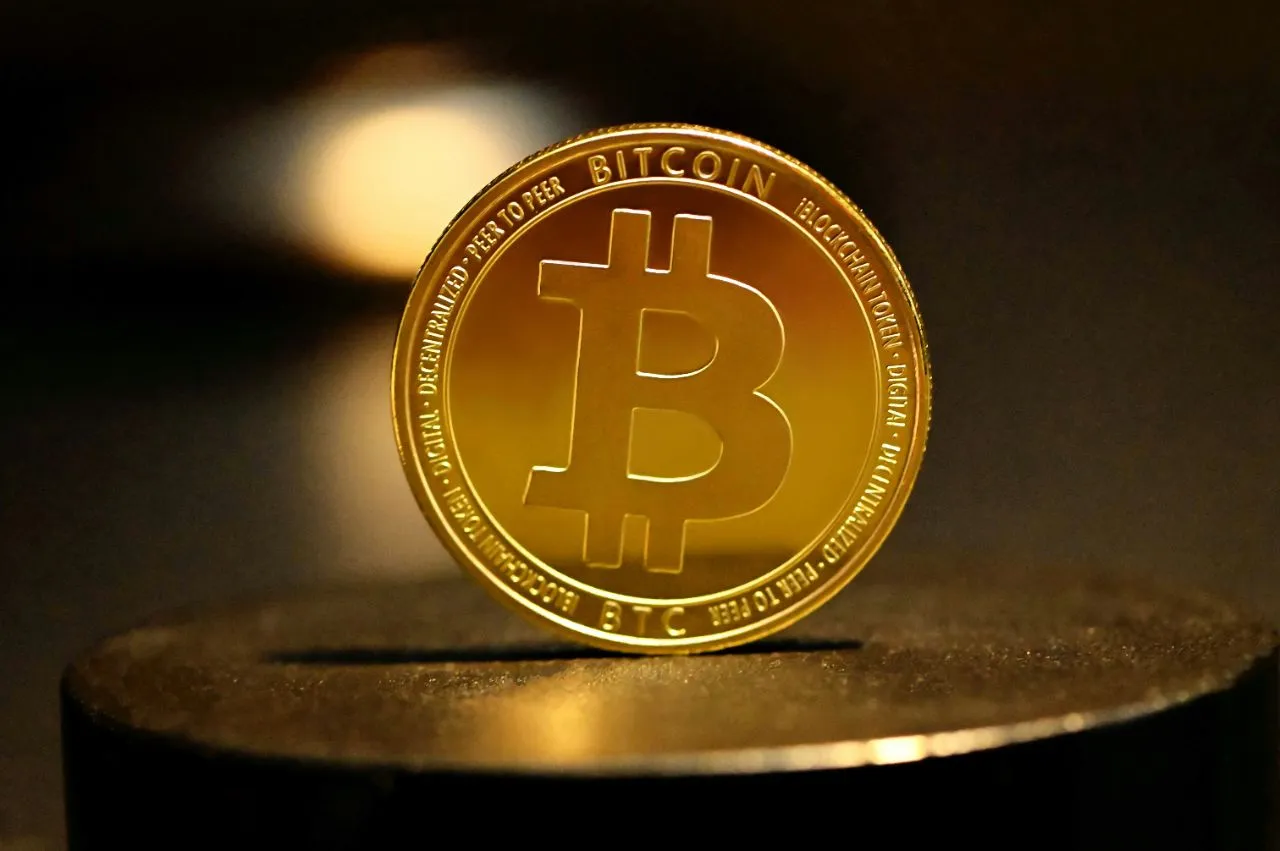
https://asset.coinness.com/en/news/fcd46487de3655713f2d0219b98b14da.webp
Photo by Kanchanara on Unsplash

10% BTC cashback

Unlike traditional cashback systems, where waiting periods for rewards can be lengthy, Travala.com ensures swift crediting of Bitcoin cashback into users' accounts within 24 hours after the completion of their trips. As part of this offer, cashback will be paid to the value of 10% of the customer’s spend, payable in Bitcoin.


Since its establishment in 2017, Travala.com has positioned itself at the intersection of cryptocurrency and travel, offering a diverse platform for bookings across various properties, activities and airlines. With support for over 90 digital currencies, the platform remains focused on cryptocurrency adoption, while aiming to provide value and flexibility for its users.


Mass adoption opportunity

Juan Otero, CEO of Travala.com, emphasized the growing appeal of Bitcoin to mainstream audiences, buoyed by recent developments like the approval of the first Bitcoin spot exchange-traded fund (ETF) in the United States. Otero sees this initiative as a means to broaden the adoption of crypto for everyday transactions, providing travelers with an efficient way to utilize reward programs.


The move towards Bitcoin-based rewards reflects the early stages of an industry-wide shift in travel loyalty programs. With traditional points-based systems losing traction, there's a burgeoning demand for innovative incentive schemes.


Steve Hipwell, a contributor to the AVA Foundation, highlighted the success of the AVA Smart Program, which has already distributed over $2.1 million worth of travel rewards in AVA tokens to customers who completed trips booked through Travala.com. By integrating direct Bitcoin rewards, the aim is to capture an additional segment of travelers seeking ways to save on their journeys.


Bitcoin stands out as one of the top three payment methods on Travala.com, accounting for approximately 9% of travel bookings on the platform. In 2023, travelers splurged over $5 million in BTC on flights, hotels and activities.


Travel Tiger NFTs

Access to Travala's BTC cashback scheme comes with a degree of exclusivity. Users must possess a Travel Tiger NFT and stake 2,500 AVA tokens to activate Smart Diamond membership.


This exclusivity stems from the limited availability of Travel Tiger NFTs, with only 1,000 in existence. These NFTs, minted on the Ethereum blockchain, serve as randomly generated utility collectibles. Market data from OpenSea places the floor price of Travel Tigers at 2.85 ETH, roughly valued at $11,165 at the time of writing.


This tie-up with the AVA Foundation is not Travala’s first partnership. In November 2023 the company struck a deal with travel industry meta-search giant Kayak, allowing it to integrate with Kayak and enable platform users to search more effectively for travel deals. Back in 2019, the company had struck a similar partnership with accommodation booking platform Booking.com. 

More to Read
View All
Markets·

Nov 05, 2024

Asia emerges at the forefront of crypto development

Asia has taken the lead, surpassing North America, in terms of being a crypto developer hub according to a recent report. Electric Capital, a venture capital firm based in Silicon Valley in the United States, recently compiled a report centered upon global crypto developer data. Its analysis of the data has led to some interesting findings. Photo by Shubham Dhage on UnsplashNorth America loses its leadElectric Capital General Partner Maria Shen took to the X social media platform on Oct. 30 to provide further details on some key takeaways. In the first instance, Shen points out that North America has lost its lead in terms of crypto developer share, with Asia emerging as the leading region in this respect. Shen stated that “for the first time, Asia is the #1 continent for crypto talent.” Underpinning that claim, she provided data that identifies a drop in North America’s share of crypto developers from 44% in 2015 to 24% in 2024. Within the same timeframe, Asia’s share of crypto developer talent has increased from 13% to 32%. Teasing the data out further, the United States still remains the number one country for crypto devs on a country-by-country basis. It leads this particular metric with 18.8% of the developer talent pool, followed by India with 11.8% and the United Kingdom with 4.2%. A consequence of U.S. regulatory uncertaintyRegulatory uncertainty in the United States has been identified as a contributing factor by some crypto community commentators. The Securities and Exchange Commission (SEC) in the U.S. has engaged in regulation by enforcement rather than establishing a bespoke regulatory framework for crypto.  This approach has led to SEC Commissioner Mark Uyeda calling crypto regulation in the U.S. “a disaster” earlier this month. Others, like Nic Carter, a partner at Castle Island Ventures, have gone further, describing the approach of the Biden Administration to crypto as “Operation Choke Point 2.0,” suggesting that there is an active plan being implemented to suppress the industry. This negative approach has led many U.S.-headquartered crypto firms to pursue growth opportunities overseas, particularly within centers in Asia and the Middle East such as Dubai, Abu Dhabi, Hong Kong and Singapore. All of these centers have taken the opposite approach, deliberately working towards putting purpose-made regulatory frameworks in place over the course of the past two years, in order to get crypto innovation started on the right footing. Shen underscored the issue from a U.S. perspective, by pointing out that 81% of crypto devs, who are actively playing their part in shaping the future of digital money, live outside the U.S. She highlighted the significance of this, stating: “This is a national security issue & innovation drain for the US.” In a subsequent post, she questioned whether this had come about due to a negative regulatory environment, adding that “the US needs clear crypto policy to maintain its country lead.” 

news
Web3 & Enterprise·

Jan 06, 2024

Etherscan expands through Solscan acquisition

Expanding beyond the Ethereum Virtual Machine (EVM) domain, Malaysia-headquartered Etherscan has officially acquired Solscan, a prominent block explorer within the Solana ecosystem.Photo by Shubham’s Web3 on UnsplashEnhancing cross-chain analysisThe acquisition, announced earlier this week, signifies a noteworthy development within the blockchain industry and is poised to bring about a new interface aimed at enhancing cross-chain analysis. Solscan, based in Singapore with its primary team in Vietnam, was previously majority-owned by TomoChain Lab, a Singaporean blockchain software developer. The deal’s terms were not disclosed and the acquisition places Solscan in the same league as Polygonscan within the family of Etherscan block explorers. Diversifying product offeringEtherscan, established in 2015, stands as one of the earliest crypto projects, initially focusing on the EVM space. The platform offers an explorer-as-a-service product for blockchain explorers, with the acquisition of Solscan marking a significant step in diversifying its offerings. Since its inception in 2021, Solscan has risen as a leading explorer in the Solana ecosystem, catering to over three million monthly users. Providing services such as detailed address, token, transaction information, APIs, dashboards and NFT metadata, Solscan mirrors Etherscan’s services but is tailored for the Solana network. The merger between Etherscan and Solscan is anticipated to bring forth a series of enhancements and innovations, with both platforms benefiting from the integration of additional features. The roadmap for this collaboration outlines improvements in user interfaces, navigation and overall accessibility, promising an enriched user experience. Solscan, in its announcement, assured its commitment to the Solana community, vowing to maintain unparalleled blockchain exploration services. The shared vision of Etherscan and Solscan revolves around providing what Etherscan termed “credibly neutral and equitable access to blockchain data,” underlining their commitment to transparency and fairness in the blockchain space. Matthew Tan, CEO and founder of Etherscan, expressed excitement about the acquisition and highlighted the alignment of Solscan’s expertise in making blockchain data accessible and user-friendly with Etherscan’s mission. The acquisition is expected to contribute significantly to the broader blockchain ecosystem. Solscan serves as a crucial player in the Solana ecosystem, an Ethereum alternative. The platform assists users in viewing information within the Solana blockchain, managing accounts, tracking transactions and exploring investment opportunities across various crypto platforms. Solana resurgenceThis deal comes at a time when Solana’s momentum is evident, ending 2023 on a strong note. In December 2023, NFT sales on the Solana network surpassed those on Ethereum for the first time. Solana has experienced substantial growth in comparison to Ethereum, both in terms of its token’s value and against the U.S. Dollar. The fall of crypto exchange FTX had a large impact on Solana and its ecosystem as FTX had been heavily involved within that community and associated projects. The exchange still holds a sizable amount of locked SOL tokens. Following its collapse, the SOL unit price fell below $10. At the time of writing, it stands at $100. The acquisition of Solscan by Etherscan underscores the resurgence of the Solana ecosystem, with major players in the Web3 space recognizing the value of Solana-based technology. As both platforms collaborate, users can anticipate a more robust and interconnected blockchain exploration experience.  

news
Web3 & Enterprise·

Jul 10, 2025

Remixpoint raises $215M to buy Bitcoin, CEO to receive salary in BTC

Remixpoint, Inc., an energy management solutions provider that trades on the Tokyo Stock Exchange (TYO:3825), has announced the raising of $215 million to finance its Bitcoin treasury while the company’s CEO has become the first public company executive in Japan to receive his entire salary in Bitcoin.Photo by Michael Förtsch on Unsplash3,000 BTC targetIn a statement published to X on July 9, the company outlined that it had raised ¥31.5 billion ($215 million). The proceeds will be entirely allocated to Bitcoin acquisition. The company is targeting the accumulation of 3,000 BTC.  As of June 16, the company held 1,051 BTC, valued at around $114 million. At today’s pricing, the funds raised would allow Remixpoint to buy a further 1,977 BTC. However, the firm warned that actual acquisition volume may vary depending upon Bitcoin pricing over a certain period of time, combined with the firm’s share price. Providing its justification for the funds raised, Remixpoint said that the decision reflected its “conviction in Bitcoin’s future,” a view that the company has formed following extensive internal discussion. Remixpoint initiated this treasury strategy in September 2024, compelled to do so due to concerns about the Japanese yen, with a desire to hedge against its depreciation. In addition to Bitcoin, the company has also bought altcoins such as Ether (ETH), Solana (SOL) and Dogecoin (DOGE). Japanese firms buying BitcoinRemixpoint is one of a growing number of Japanese firms to establish crypto-based treasuries. Japanese fashion retailer ANAP Holdings held 200 BTC as of July 8, with plans to acquire over 1,000 BTC by August. Publicly listed marketing business Agile Media Network stated in April that the company would make an initial purchase of ¥10 million worth of Bitcoin on a trial basis in an effort to determine if it's worthwhile to invest in the asset on a broader basis. Earlier this year, Japanese gaming firm Gumi announced plans to build up a Bitcoin treasury worth in the region of ¥1 billion. In recent months, SBC Medical Group, nickel processing firm S Science and textile manufacturer Kitabo have either added Bitcoin to their balance sheets or announced plans to do so. Japan’s standout Bitcoin treasury company is Metaplanet, a former hotel operator. Earlier this week, it emerged that the company aspires to build up a 210,000 BTC treasury. Furthermore, it plans to use its Bitcoin holding to buy cash-producing businesses, with a digital bank being one of its potential acquisition targets. On July 8, Remixpoint announced that it had taken the decision to pay the entire salary of its recently-appointed CEO, Takashi Tashiro, in Bitcoin. Tashiro will become the first Japanese CEO of a publicly-listed company to receive his salary in Bitcoin. Remixpoint said that it had taken this decision as part of a shareholder-perspective management outlook. In a tongue-in-cheek comment on X, market analyst Caleb Franzen said that "Now that the Remixpoint CEO is taking their salary in Bitcoin, I think Satya Nadella [CEO of Microsoft] will do the same any day now!" The emergence of crypto treasury firms has faced criticism. However, Elliot Chun, a partner at Architect Partners, asserted back in March that by 2030, a quarter of S&P 500 firms will have invested in Bitcoin.

news
Loading