Top

Thai regulator takes action against deceptive crypto ads

Policy & Regulation·May 03, 2024, 7:44 AM

In an effort to safeguard crypto investors from falling prey to misleading advertisements, the Securities and Exchange Commission (SEC) of Thailand has intensified its scrutiny of promotional campaigns within the crypto sphere. 


Broker agent events

On April 29, the Bangkok Post reported that the SEC has raised concerns regarding the potential violation of local regulations through introducing broker agent (IBA) events. These events, the SEC clarified, may breach regulations as IBAs are only permitted to promote digital token services to deter speculation on cryptocurrencies, categorized as high-risk assets.


IBAs, acting as local conduits for partner digital asset exchanges, typically earn commissions by onboarding clients within a specific market. Such practices are common for exchanges or brokers that don't directly operate in certain markets.


Deputy Secretary-General Anek Yooyuen conveyed the commission's unease over crypto exchanges offering preferential treatment to onboard users. Yooyuen stated:


"When operators organise sales promotions by offering rewards to entice people to use the service, this could encourage use of the service without considering the investment risks. This is especially the case for cryptocurrencies.”

https://asset.coinness.com/en/news/be199615eda261e751d42d66abd93a60.webp
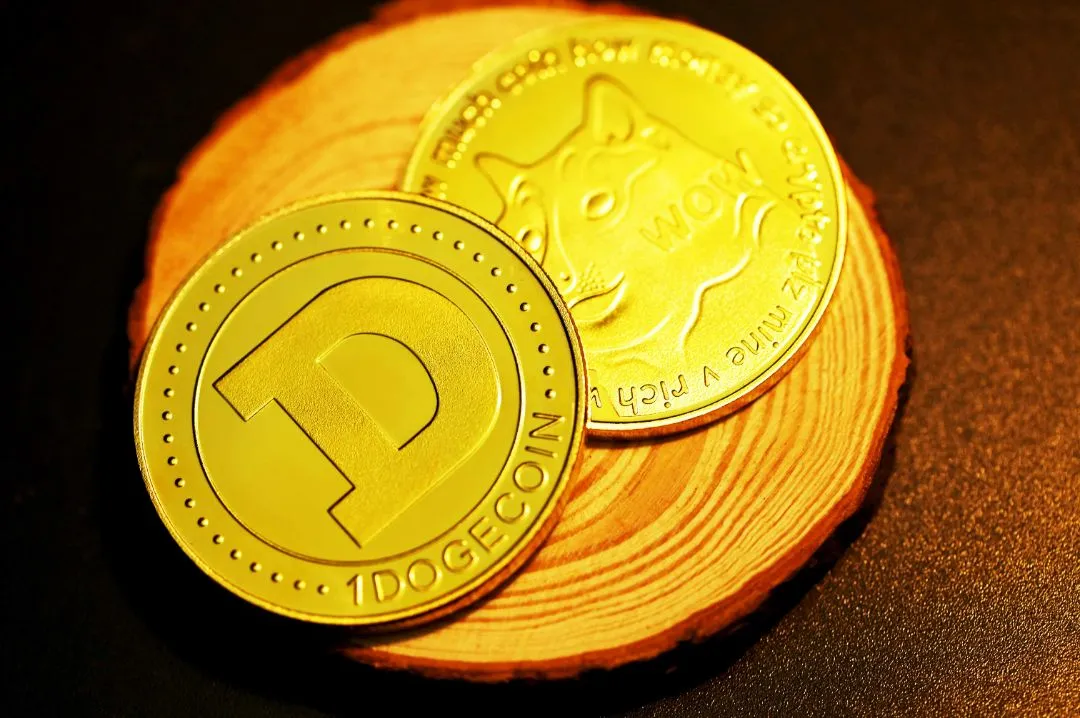
Photo by Than Diep on Unsplash

Warning of consequences

He cautioned that failure to adhere to these guidelines would result in “punishment according to the law.”


While cryptocurrency exchanges are legal in Thailand, they must secure local approval. Notably, last month, Thailand even greenlit asset management firms to launch private funds, offering Bitcoin exchange-traded funds (ETFs) exclusively to institutional and ultra-high-net-worth investors.


Nonetheless, the country recently prohibited the sale of cryptocurrency lending products and mandated that exchanges prominently display risk warning messages.


International regulatory trend

This move by the Thai SEC mirrors actions taken by regulators in other major crypto markets. For instance, the United Kingdom's Financial Conduct Authority (FCA) issued 450 alerts for illegal crypto ads in 2023 alone.


Similarly, Spain’s principal securities market regulator, the National Stock Market Commission, denounced fraudulent crypto asset promotions in November 2023, emphasizing companies’ obligations to adhere to local laws.


Thai advertising guidelines mandate businesses and advertisers to substantiate the “facts” presented in their campaigns, failing which could lead to legal repercussions.


A recent incident provides a case in point. Hackers hijacked advertisements on Etherscan, redirecting users to phishing sites aimed at draining crypto wallets. Scam Sniffer, a blockchain investigation firm, attributed the widespread phishing campaign to the inadequate oversight by advertisement aggregators. The company made the following statement on the matter:


“Etherscan aggregates ads from platforms like Coinzilla and Persona, where insufficient filtering could lead to exposure to phishing attempts.”


The wallet drainer scam involves enticing users to counterfeit websites and coercing them to link their crypto wallets, enabling scammers to siphon funds into their own wallets without user authentication or consent.


This is not the first time that the authorities in Thailand have homed in on crypto-related advertising. In August 2023, the southeast Asian country’s Ministry of Digital Economy and Society (MDES) outlined that it had engaged with social media firm Meta, owner of Facebook, informing it that its response to the proliferation of fraudulent platform ads relative to crypto had been inadequate. 
More to Read
View All
Web3 & Enterprise·

Nov 02, 2023

Hong Kong’s HaskKey launches app following regulatory approval

Hong Kong’s HaskKey launches app following regulatory approvalHong Kong-based cryptocurrency firm HashKey has unveiled the HashKey Exchange app, which has received the approval of the Securities and Futures Commission (SFC).News of the app launch emerged following insights shared by HashKey’s Chief Operating Officer, Livio Weng, in an interview with The Block recently.Photo by Manson Yim on UnsplashAppealing to retail tradersThe HashKey Exchange app went live on Wednesday, having received regulatory clearance from Hong Kong’s securities regulator the previous Friday. This achievement allows the app to offer full mobile trading capabilities. Prior to this milestone, HashKey had been primarily catering to professional investors under a voluntary licensing scheme.With the new app, Hongkongers can now conveniently purchase bitcoin and ether, utilizing either Hong Kong dollars or US dollars, directly from their local bank accounts. The app launch is significant as HashKey has become one of Hong Kong’s first fully compliant retail-facing crypto trading platforms. “We’ve recorded large trading volume since we began to serve retail users,” Weng stated. The move aligns with the Hong Kong government’s efforts to bolster the virtual asset sector, which was set in motion one year ago with various policy shifts.These shifts included the introduction of a mandatory licensing scheme for cryptocurrency platforms, enabling them to offer tokens with large market capitalizations to retail traders. The new licensing regulations officially took effect in June, with a one-year grace period, though no new exchanges have been approved to date. HashKey and its rival, OSL, had their previous licenses upgraded in August.Developmental challengesHong Kong has faced several challenges on this journey. While the new regulations are largely in line with international norms, the process has been notably expensive, particularly against the backdrop of a bearish crypto market.The lingering fallout from the JPEX scandal, a cryptocurrency exchange allegedly involved in fraudulent activities, continues to impact Hong Kong’s virtual asset landscape. The SFC first raised concerns about JPEX in mid-September, and since then, it has moved to tighten regulation in response, having received thousands of complaints in relation to JPEX.Despite these challenges, HashKey Group has reported significant activity on its retail platform since its launch in August, with a total trading volume exceeding US$600 million. On October 30, the 24-hour trading volume exceeded US$100 million.Planned token launchIn a move designed to incentivize new users, HashKey Exchange has introduced its platform token, HSK, which is slated to be officially listed on the exchange next year. With a total supply of 1 billion HSK, the company has specified that these tokens will not be initially sold to retail investors, emphasizing its long-term vision for the project.Established in Hong Kong in 2018, HashKey Group operates a digital asset brokerage and a venture capital arm. HashKey Exchange earned the distinction of becoming Hong Kong’s second licensed exchange in November of the previous year, following in the footsteps of OSL. Notably, five companies have applied for the new licensing scheme, according to the SFC, while several other exchanges have expressed their intent to pursue similar approval.

news
Markets·

Nov 15, 2024

Sygnum survey reveals greater crypto allocation appetite in Singapore

Sygnum Bank, a digital asset bank based in Switzerland and Singapore, has conducted a survey which has identified that investors in Singapore are more interested in increasing their allocation to crypto than their international peers. The bank’s 2024 Future Finance survey states that while a global average of institutional investors of 47% plan to increase their exposure to crypto next year, in the case of Singapore-based institutional investors, 57% of them expressed the view that they would increase their crypto holdings in 2025.Photo by Precondo CA on UnsplashThe report states:  "Singapore investors exhibit a higher risk appetite and motivation to invest on average than respondents from other countries.” The annual survey, which was published on Nov. 14, collated insights garnered from more than 400 institutional and professional investors, distributed across 27 countries, with average investor experience of in excess of 10 years. 121 of the survey’s participants were based in Singapore, with the survey having been conducted during Q3 2024. Long-term confidenceSingaporean respondents suggested that they were confident in the long-term potential and outlook where cryptocurrencies are concerned. While the main reason for investing in crypto was to gain exposure to digital assets in line with a global trend (56%), 41% of respondents from the city-state cited portfolio diversification as their reason for investing in the emerging asset class.  75% of investors expressed the belief that regulatory clarity has improved recently. Growing confidence among institutional investors generally is likely to be developing due to increasing certainty relative to digital asset regulation. While Donald Trump had not been elected in the United States at the time that survey participants responded, it was looking increasingly likely that he would win the election.  That’s likely to have had a bearing on investor outlook, not just within the United States but internationally, given the implications in terms of positive regulation and an overall positive approach to crypto. 39% of Singaporean respondents cited yield-generation opportunities as their motivation in investing in digital assets. The recent advent of spot crypto exchange-traded funds (ETFs) stood out as another motivation for investors.  Breaking down specific areas of interest within the crypto sector, 71% of Singaporean respondents were interested in investment in layer-1 blockchain networks. Meanwhile, 56% expressed an interest in Web3 infrastructure investment options, with 41% showing an interest in layer-2 blockchain networks. Interest in asset tokenizationIn relation to tokenization, 47% of those surveyed in Singapore indicated an interest in tokenizing mutual funds and corporate bonds over and above other financial assets and products. When first proposed, real estate was considered the most obvious asset primed for tokenization but mutual funds and corporate bonds now appear to be gaining more traction. Asset tokenization has been garnering considerable attention in mainstream finance but especially so in Singapore. Local regulator, the Monetary Authority of Singapore, (MAS) has been running Project Guardian, a collaboration between MAS and the financial services industry with an emphasis on asset tokenization. The project recently brought in the German central bank, the World Bank, HSBC and markets infrastructure firm Euroclear as participants. 

news
Policy & Regulation·

Jun 02, 2025

Thailand’s SEC moves to block five exchanges to protect investors

Thailand’s Securities and Exchange Commission (SEC), an independent state agency responsible for the supervision of capital markets including the digital assets sector within the Southeast Asian nation, has moved to block five cryptocurrency exchange platforms. In a statement published by the agency to its website on Thursday, May 29, the SEC outlined that it deems the five exchanges, namely OKX, Bybit, CoinEx, XT.com and 1000X.Live, to be unauthorized crypto trading platforms.Photo by REY MELVIN CARAAN on UnsplashCountering money laundering activityIt is acting against these platforms “to protect investors” and to prevent their use for money laundering purposes. In offering services to Thai users on an unauthorized basis, the exchanges were found to be in breach of Thailand’s Digital Asset Business Act B.E. 2561 (2018). The agency has asked the Ministry of Digital Economy and Society (MDES) to take measures to block local access to these online platforms. That block will be put in place on June 28. On that basis, the SEC has advised Thai users of such platforms to proceed to remove their assets from them before that June 28 deadline.  An updated version of the Royal Decree on Measures to Prevent and Suppress Technology-related Crime, (No. 2) B.E. 2568 (2025), was introduced by the Thai government in April. It facilitated the establishment of the Committee for the Prevention and Suppression of Technological Crime.  Following practices overseasThe committee met with the MDES in April, with the parties setting out the process through which unauthorized digital asset platforms would be restricted and blocked. On that occasion, similar practices carried out in other jurisdictions within the Asian region were referred to.  In December 2023 India’s Financial Intelligence Unit (FIU) moved to block nine offshore crypto exchanges, having issued them with compliance show-cause notices.  In April 2024 the Philippines SEC requested that Google and Apple remove apps associated with global exchange Binance from the local versions of their application stores. Japan’s Financial Services Agency (FSA) similarly ordered both companies to remove apps belonging to unregistered crypto exchanges in February of this year. Back in March, the Thai SEC filed a lawsuit against Aux Cayes FinTech Co. Ltd., an OKX affiliate company. The complaint alleged that OKX had been running an unlicensed exchange in Thailand, and was filed with the Economic Crime Suppression Division of the Thai police force. The SEC outlined on March 21 that a similar criminal complaint had been filed against XT.com. It’s understood that Bybit, CoinEx and 1000X.Live have also been recipients of complaints on the same basis. Earlier this year, the Economic Crime Suppression Division considered taking action against Polymarket, a crypto-based prediction market, on the basis that the platform violated Thailand’s gambling laws, and in doing so, posing a risk to economic and social stability in Thailand. In April 2024, the SEC issued a warning to crypto exchange platforms against the use of misleading advertising, drawing their attention to the fact that advertising of that nature would potentially place those platforms in breach of regulatory guidelines. 

news
Loading