Top

Hong Kong’s ZA Bank brings crypto trading to 800K retail customers

Web3 & Enterprise·November 27, 2024, 3:57 AM

Zhong An Bank (ZA Bank), Hong Kong’s largest digital bank, has announced that it is now offering crypto trading services to its 800,000 retail customers.


The bank set out details of its latest offering in a press release published to its website on Nov. 25. With that, ZA Bank claims to be the first Asian bank to offer crypto trading services to retail customers. Singapore’s DBS Bank was the first conventional bank in Asia to offer crypto services, although in that case, its offering was confined to institutional and accredited investors. It has yet to launch crypto trading for its retail customers.
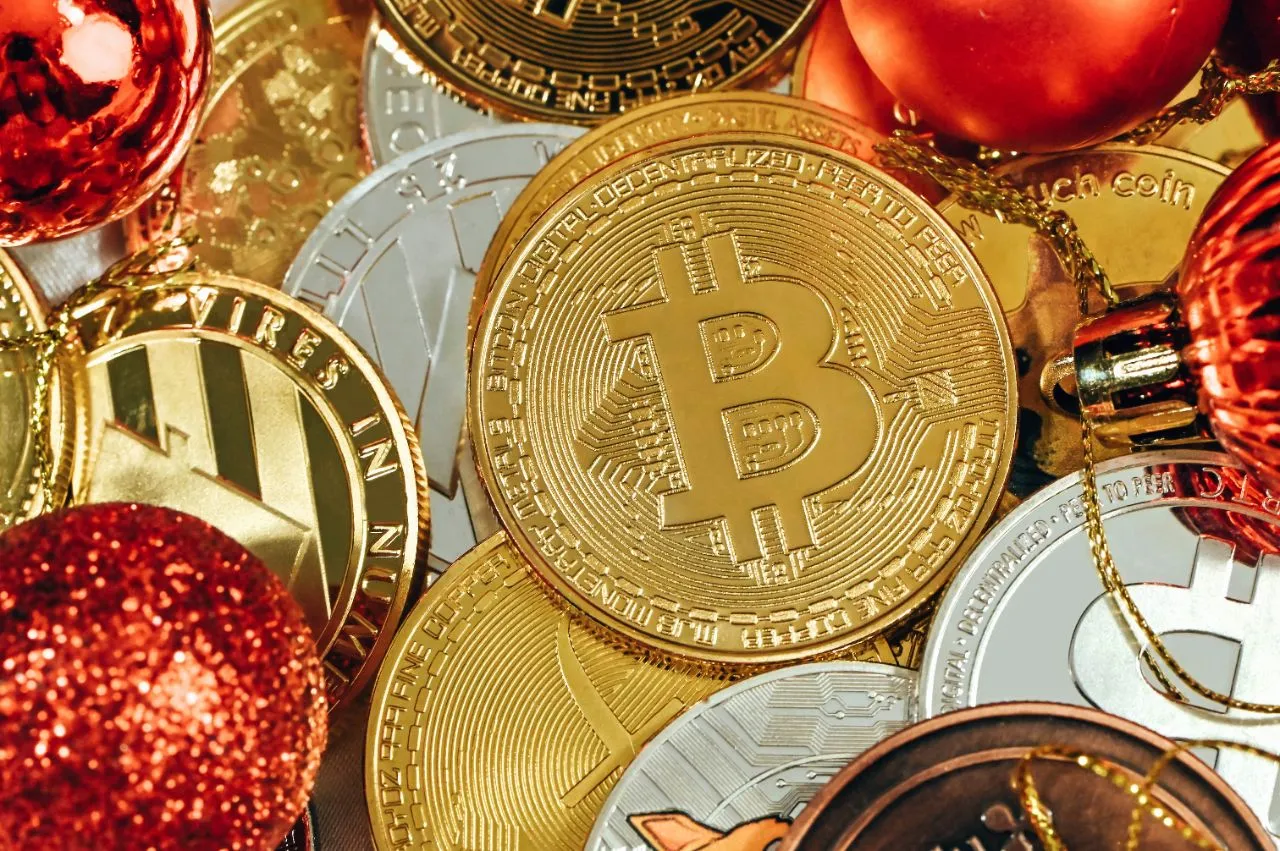
https://asset.coinness.com/en/news/806f7f5ccc4802b8642168f87288f088.webp
Photo by Traxer on Unsplash

HashKey Exchange partnership 

While DBS built its own crypto exchange platform, in this instance, ZA Bank has decided to partner with local regulated crypto platform, HashKey Exchange. To begin with, the bank will offer Bitcoin and Ethereum in HKD and USD trading pairs. To promote the service, users are being offered commission-free trading during the first three months. A minimum investment level of HKD 600 ($70) has been set.


Essentially, ZA Bank customers can access this trading feature through the ZA Bank banking app. Commenting on the partnership, HashKey Exchange CEO Livio Weng stated:

”Our collaboration goes beyond technical synergies; it also reflects our shared commitment to upholding the highest regulatory standards. Looking ahead, HashKey Exchange will continue to work closely with ZA Bank to drive the development of the Web3 ecosystem, while delivering more diversified financial services to our users. Together, we aim to usher in a new era of wealth management.”


HashKey Exchange is one of three virtual asset exchanges in the Chinese autonomous territory that have been fully regulated and licensed.


Facilitating retail demand 

The bank cited a recent Hong Kong Association of Banks survey, which suggested that 70% of respondents believe that banks offering virtual asset trading services would mean greater convenience for people in accessing cryptocurrencies. Consequently, it would lead to further adoption of cryptocurrencies and it’s on this basis that ZA Bank has launched this latest service, catering to an emerging demand from its customers.


Speaking to that, ZA Bank's Alternate Chief Executive Calvin Ng stated:

“The rise of cryptocurrency presents investors with more diverse asset allocation opportunities.”


On X, Neo blockchain co-founder Da Hongfei described the development as “noteworthy.” In particular, he highlighted the fact that ZA Bank supports account openings not just for Hong Kong residents but also mainland China residents living in Hong Kong. Notwithstanding that, crypto services still remain out of bounds for mainland China residents. 


Hongfei also pointed out that the offering doesn’t allow the customer to transfer crypto purchased via the app off the platform. It is strictly limited to trading of crypto between digital assets and fiat currency.


This offering by ZA Bank has been in the works for quite a while, with the bank having indicated that an app-based crypto retail offering was in development last December.  In September the bank received approval from the China Securities Regulatory Commission to add digital asset transactions to its Type 1 license.


The bank is owned by ZA Global, an affiliate company of Chinese insurance company Zhong An.

More to Read
View All
Web3 & Enterprise·

Aug 17, 2023

SK Telecom and Polygon Labs Team Up for Web3 Ecosystem Development

SK Telecom and Polygon Labs Team Up for Web3 Ecosystem DevelopmentSouth Korean telecommunications giant SK Telecom (SKT) and global blockchain firm Polygon Labs have joined hands to foster the growth of the Web3 ecosystem.Photo by GuerrillaBuzz on UnsplashThe two companies signed a memorandum of understanding (MOU) on Thursday at SK-T Tower located in Euljiro, Seoul. SKT’s Web3 Chief Officer, Oh Se-hyeon, and Polygon Labs’ CEO, Marc Boiron, were in attendance.Polygon Labs is the operator of the Polygon blockchain network, which is critically acclaimed for its superior blockchain performance, scalability, Ethereum compatibility, and more. The firm is also well-known for its engagement with various global enterprises and Web3 projects.“Polygon Labs has developed optimal blockchain technology for the popularization of Web3, and we expect our collaboration with SKT to serve as a key opportunity to offer Web3 experiences and services to a wider audience,” said Polygon CEO Boiron.Empowering NFT trade and connectivityAccording to the agreement, SKT’s NFT marketplace “TopPort” and the company’s upcoming Web3 wallet will operate on Polygon’s blockchain network. On the other hand, Polygon Labs will aid in integrating SKT’s Web3 services into its global ecosystem.This will enable NFT creators who use TopPort to trade their NFTs on the Polygon network. In addition, NFTs issued on TopPort will now be tradable on other NFT marketplaces within the Polygon network, enhancing global compatibility and scalability.SKT and Polygon also plan to allow SKT’s Web3 wallet to be used across various decentralized applications (dApps) within the Polygon ecosystem. Furthermore, they are exploring the possibility of facilitating NFT trading on TopPort using Polygon’s native token, MATIC.Promoting the advancement of Web3This partnership aims to drive sustained growth within the Web3 ecosystem, particularly by finding and incubating promising Web3 enterprises. To do so, Polygon Labs is considering investments in Web3 startups endorsed by SKT through its investment arm Polygon Ventures.SKT’s Web3 Chief Officer Oh expressed high hopes for the synergy between SKT’s blockchain service technology and expertise and Polygon Labs’ infrastructure technology and ecosystem, saying, “This collaboration could become a cornerstone for the future popularization of Web3.”All of these efforts are geared towards paving the way for Web3’s mainstream adoption, as these two industry giants combine their strengths to spearhead the evolution of the Web3 ecosystem.

news
Web3 & Enterprise·

Oct 05, 2023

MARBLEX Token to Be Listed on Japanese Crypto Exchange Zaif Next Week

MARBLEX Token to Be Listed on Japanese Crypto Exchange Zaif Next WeekMARBLEX, the blockchain subsidiary of South Korean game developer Netmarble, has announced the upcoming listing of its governance token, MBX, on the Japanese cryptocurrency exchange Zaif next Wednesday (local time).Photo by Chris Barbalis on UnsplashPenetrating the Japanese marketThe token had previously gained whitelist approval in the Japanese crypto market in July following a thorough assessment by the Japanese Financial Services Agency (FSA), making it the first token from a Korean blockchain gaming project to be whitelisted in Japan. MARBLEX highlighted that it would focus on subsequently expanding the token’s utility in order to establish a sustainable and secure gaming and tokenomics ecosystem.Opening detailsTo celebrate the listing, MARBLEX plans to hold an opening event from tomorrow to next Tuesday, during which it will offer the first 550 Zaif account holders who buy MBX tokens and file applications an additional batch of MBX tokens that amount to 10% of the total number of tokens that they buy. This applies to users who complete their Zaif account registration by tomorrow, and the winners will be announced separately next Tuesday, the company said.The purchase price for MBX coins will be calculated based on the average closing price of MBX on CoinMarketCap from this coming Saturday to Monday. The minimum order quantity per person is 10,000 yen, and the maximum is 500,000 yen.

news
Policy & Regulation·

Feb 10, 2025

Russia preparing to launch crypto mining equipment registry

The Russian authorities are in the process of bringing in a national registry for crypto mining equipment, with registration to be a mandatory requirement for all operators. That’s according to a report published by Russia’s state-owned news agency, Tass, on Feb. 3. The registry is being established by the country’s Ministry of Energy, with Yevgeny Grabchak, deputy minister of energy, heading up the project.Photo by Egor Filin on UnsplashThe measure is being introduced as part of a raft of amendments to existing mining regulations. The objective is to improve oversight relative to crypto mining activity within the Russian Federation.  Unauthorized mining has been a concern for the Russian authorities for some time. According to the TASS report on this development, the registry would make mining without equipment registration “impossible.” Late last year, a Russian government commission moved to ban crypto mining in specific regions of the country. Management of the power grid was understood to be the main motivating force. Crypto mining activity had caused power shortages in some areas.  A seasonal ban was implemented, running from December to mid-March, with the measure to be repeated each year until 2031. In August of last year, Russian President Vladimir Putin had signed into law legislation that recognized the legitimacy of crypto mining in Russia.  Illegal mining, particularly within these restricted regions, continues to be a concern for the authorities, prompting this latest measure. Additionally, the authorities plan on establishing clear criteria in order to define crypto mining and deal with gaps in current legislation which may be enabling illegal and unregistered operators to carry out such mining activity. According to a report last month by local news media outlet Prime, Russia saw a surge in demand for Bitcoin mining equipment in Q4 2024. Crypto equipment demand increased threefold in comparison with the same quarter in 2023. Addressing the need for a crypto equipment registry, the Russian government stated: “It is important to adapt the law ‘On Mining’ to the current situation, in particular, based on practical experience, to formulate clearer criteria for classifying activities specifically as the production of digital currency.” While efforts are being made to get a firmer grasp on unauthorized mining in areas that are being impacted by power shortages, work is also being done to use crypto mining as a mechanism to fully exploit surplus energy.  Last month, it was revealed that Russian state-owned power company Rosseti is evaluating Bitcoin mining as a means through which surplus energy can be utilized in low-demand regions. In a separate development, the TASS news agency also reported on Feb. 3 that crypto miners are now in a position to report their earnings via online accounts with Russia’s Federal Taxation Service (FNS). The TASS report stated: “A new function has appeared in the personal accounts of taxpayers. With the help of the online service, users can now send information about receiving digital currency to the tax authority.” The feature appears once the registered user submits an electronic signature. 

news
Loading