Top

Regulator pulls plug on Bybit in Malaysia

Policy & Regulation·January 02, 2025, 2:41 AM

In Malaysia local regulator the Securities Commission has ordered global crypto exchange platform Bybit to shut down its operations within Malaysia as part of enforcement actions being taken by the regulator against the company.
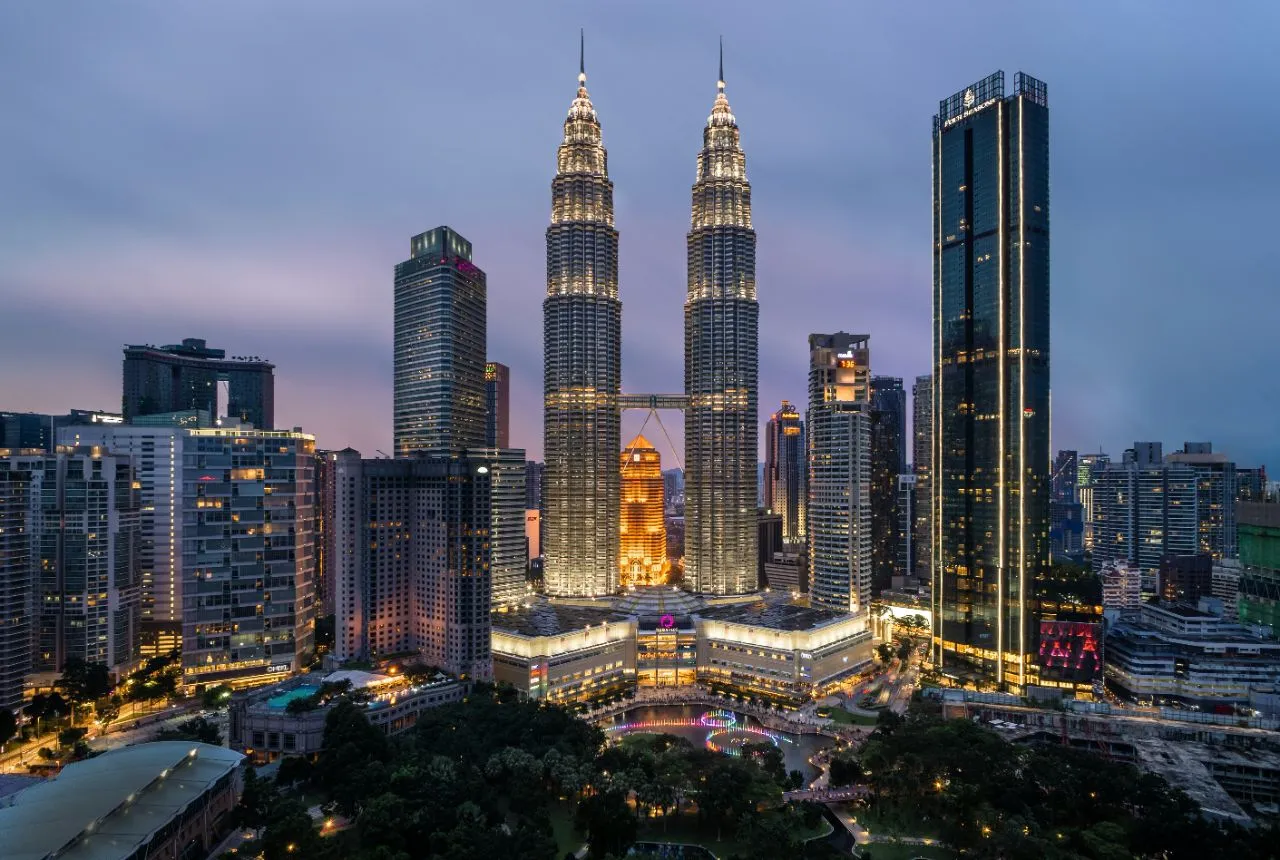
https://asset.coinness.com/en/news/e13a6825e26f264b214d9c1531d9bba8.webp
Photo by Esmonde Yong on Unsplash

Operating without registration 

The Securities Commission published a statement to its website late last week outlining that both Bybit and its CEO Ben Zhou had been reprimanded for carrying out digital asset trading activities in Malaysia without having completed the necessary registration.


The regulator also pointed out that both Zhou and his company have been listed on its Investor Alert List since July 2021. The Securities Commission took the opportunity to remind investors that they should only deal with what it termed “Recognized Market Operators” (RMOs), a designation it applies to entities that have completed registration with the regulator.


Investors who utilize unregistered platforms are not extended any form of protection under Malaysian securities law, the Securities Commission warned, adding that such platforms could put them at risk of fraud and implicate them in money laundering activity potentially.


Enforcement actions 

Bybit has been directed by the regulator to disable its website and mobile applications that are currently targeting Malaysian investors within 14 business days from Dec. 11. 


The regulator also wants the company to curb other forms of promotion aimed at Malaysian investors. With that, it has requested that the company take down its Telegram-based support channel for Malaysian customers. Advertising activity, including social media posts, must also cease in cases where such activity is aimed at Malaysian investors.


The Securities Commission acknowledged that thus far, Bybit has been compliant with its latest enforcement requests.


Intentions to secure licensing 

Bybit has responded to these developments on its Bybit Malaysia Telegram channel, stating that the company understands that these actions “may cause some inconvenience” to Malaysian customers. “Once we have secured the appropriate licenses, we look forward to reconnecting with you again in the future,” it added.


The enforcement action is likely to be a setback for Bybit given that the firm appeared to be focusing on the Malaysian market of late. In June it emerged that the company was moving to relocate Chinese employees to both Malaysia and Dubai. 


This is not the first occasion in which Malaysia’s Securities Commission has taken action against a crypto platform. In 2023 the commission ordered the closure of the Malaysian operations of global exchange Huobi (subsequently rebranded as HTX). The circumstances in that instance were similar in that it acted against the exchange and its CEO for operating illegally within the Malaysian market.


Within the Malaysian market, only six trading platforms have been registered. These include Hata Digital, Luno, MX Global, Sinegy, Tokenize Technology and Torum International.


Earlier the Securities Commission acted similarly in prohibiting Atomic Wallet from operating within Malaysia given its failure to register its digital asset exchange activities.


 

More to Read
View All
Policy & Regulation·

Jan 20, 2024

Regulator lifts investment cap for real estate-backed tokens in Thailand

The Securities and Exchange Commission (SEC) in Thailand has made a significant adjustment to the rules governing digital token investments. The SEC has decided to eliminate the investment ceiling previously imposed on retail investors participating in initial coin offerings (ICOs) tied to real estate and infrastructure.Photo by Colton Duke on UnsplashFostering digital economy growth and developmentThe announcement, specifying the revised criteria, was officially published in the Royal Gazette, with the measure taking effect on Tuesday. This move allows retail investors greater access to ICOs involving tokens backed by real estate or linked to real estate revenues. The SEC emphasized that, in addition to ensuring appropriate investor protection, its role extends to encouraging the utilization of technology and innovation in fundraising. The objective is to foster sustainable growth in the capital market and support the development of the digital economy. Prior to this adjustment, retail investors faced a restriction of a 300,000 baht ($8,450) investment limit per offering concerning digital tokens backed by infrastructure or real estate. The SEC's decision to remove this limitation aligns with the goal of managing product risks effectively while promoting a more inclusive environment for retail investors in the realm of digital token investments. Facilitating custodial walletsFurthermore, the SEC is currently undertaking a review of criteria to facilitate the establishment of custodial wallet provider businesses for digital asset operators with common major shareholders. This initiative aims to enhance the regulatory framework and provide guidelines for businesses involved in digital asset storage. Custodial wallets will be permitted in Thailand if operated by publicly traded companies with experience in digital asset storage. All Thai citizens will have a touch point with digital wallets shortly under a government program, a $14 billion digital handout scheme, which has been approved to distribute digital currency to the public through digital wallets. DASP approvalsAs part of its supervisory role, the SEC will also be responsible for granting permissions to digital asset service providers (DASPs) to expand into new business lines. Digital asset operators seeking to diversify their operations are required to obtain approval from the SEC before proceeding. This measure is intended to ensure the effective oversight of such businesses and maintain the credibility of the digital asset industry by preventing illegal operations. It’s likely no coincidence that tokenized real estate is being embraced in Thailand, given the background of Thailand’s recently installed Prime Minister, Srettha Thavisin. In 2021, Thavisin’s company played a role in funding crypto-friendly investment management firm XSpring Capital to the tune of $225 million. His firm also introduced a real estate-backed ICO in conjunction with XSpring. While Thailand’s SEC is moving forward with tokenized real estate, it doesn’t feel the same way about exchange-traded funds (ETFs). In the wake of the recent approval of spot bitcoin ETFs in the United States, the Thai SEC responded by stating that it currently has no plans to allow asset managers to launch similar products within the Thai market. 

news
Policy & Regulation·

Jul 06, 2023

Gyeonggi-do Province Mandates Senior Officials to Report Crypto Holdings

Gyeonggi-do Province Mandates Senior Officials to Report Crypto HoldingsSouth Korea’s most populated province which encircles Seoul has taken a proactive step towards regulating virtual assets by notifying the legislation of an amendment to the code of conduct for public officials. As reported by local news outlet Yonhap News Agency, the Gyeonggi-do province will gather public comments on the amendment until July 25.Photo by Ryoo Geon Uk on UnsplashProvincial levelUnder the revised code of conduct, Gyeonggi-do officials will be prohibited from engaging in property transactions or investments related to virtual assets, using any virtual asset information acquired during the course of their duties. Provincial officials are also forbidden from providing virtual asset information to others to aid their property transactions or investments.Implementation next monthThe amendment compels public officials whose duties involve crypto-related projects, as well as high-ranking officials with an obligation to report their wealth, to declare their virtual assets. Once reviewed by the Ordinance and Rules Review Committee early next month, the amendment will be implemented immediately.National levelA Gyeonggi-do official explained that the decision to preemptively amend the code of conduct regarding virtual assets was made in anticipation of the implementation of the revised Public Service Ethics Act. This act, passed during the National Assembly’s plenary session in May, mandates high-level government officials to report their virtual assets and is set to become effective on December 14.Gyeonggi-do’s crypto surveyGyeonggi-do has been active in taking measures related to crypto assets. In a recent announcement, the province revealed its plan to conduct a survey among residents, aimed at hearing their experiences with unfair virtual asset trading practices. The survey is scheduled to run from August to November and was prompted by a growing number of residents suffering unfair losses from crypto investments amidst an economic slowdown.

news
Policy & Regulation·

Mar 24, 2025

Confiscated crypto fund proposed in Russia

While Russia had previously ruled out adding Bitcoin to its national reserves, the latest soundings from officials within the world’s largest country call for the creation of a crypto fund to hold and manage confiscated cryptocurrencies. According to a report published by Russian state-owned news agency TASS, Evgeny Masharov, a member of the Civic Chamber of the Russian Federation, has put forward a proposal for the formation of a special fund that would hold and manage cryptocurrencies that had been confiscated as the proceeds of crime by the Russian authorities.Photo by Artem Beliaikin on UnsplashMasharov told TASS: "Cryptocurrency confiscated in criminal proceedings should work for the benefit of the state. For these purposes, a special fund can be created, on the balance sheet of which these cryptocurrencies would be located, the capitalization of which will significantly increase over time.” In the future, Masharov proposes that the funds could eventually be used for educational, social and environmental projects. Enabling asset confiscationMasharov supported moves to define digital assets as property within the realm of criminal procedure legislation previously. Since 2021, legislation has been proposed to lay out a properly defined framework to enable the confiscation of such assets in criminal cases. As of last month, Russia’s Supreme Court is currently working towards establishing this. The Civic Chamber official expressed his willingness to discuss his proposal with other stakeholders such as crypto industry representatives and officials from Russia’s Federal Taxation Service. If this proposal was to be implemented, it would match a position taken in the U.S. with regard to a Bitcoin reserve. Earlier this month, U.S. President Donald Trump signed an executive order creating a strategic Bitcoin reserve which will be funded mainly by confiscated Bitcoin. Central bank resistanceRussia’s central bank has been largely opposed to the use of cryptocurrencies within Russia in recent years. Last December, central bank governor Elvira Nabiullina stated that the bank had no plans to invest in cryptocurrencies. Earlier that month, Anton Tkachev, a member of Russia’s State Duma, had put forward a proposal to establish a national Bitcoin reserve. With the onset of sanctions as a consequence of the conflict in Ukraine, the Russian government has softened its position with regard to cryptocurrencies. Digital assets such as Bitcoin are now seen as a mechanism to enable cross-border trade and cross-border payments, circumventing the international banking system. It was reported last year that Russia’s central bank had changed course and with that, it was leading efforts to assist Russian companies to use cryptocurrency for international trade, bypassing Western sanctions. Earlier this month, Reuters reported that Russian oil firms are now using leading cryptocurrencies such as Bitcoin, Ethereum and Tether in oil trade deals with their counterparts in China and India. In another development earlier this month, it emerged that the central bank is now allowing a limited level of crypto investment by investors. Faced with sanctions and current geopolitical realities, it’s understood that Russia had been considering the use of Bitcoin for reserve purposes, but for the time being, it has opted to concentrate on adding gold and the Chinese yuan to its sovereign wealth fund. 

news
Loading