Top

Confiscated crypto fund proposed in Russia

Policy & Regulation·March 24, 2025, 1:45 AM

While Russia had previously ruled out adding Bitcoin to its national reserves, the latest soundings from officials within the world’s largest country call for the creation of a crypto fund to hold and manage confiscated cryptocurrencies.


According to a report published by Russian state-owned news agency TASS, Evgeny Masharov, a member of the Civic Chamber of the Russian Federation, has put forward a proposal for the formation of a special fund that would hold and manage cryptocurrencies that had been confiscated as the proceeds of crime by the Russian authorities.

https://asset.coinness.com/en/news/bc2a17626289d15b5f6be1bb1856a54f.webp
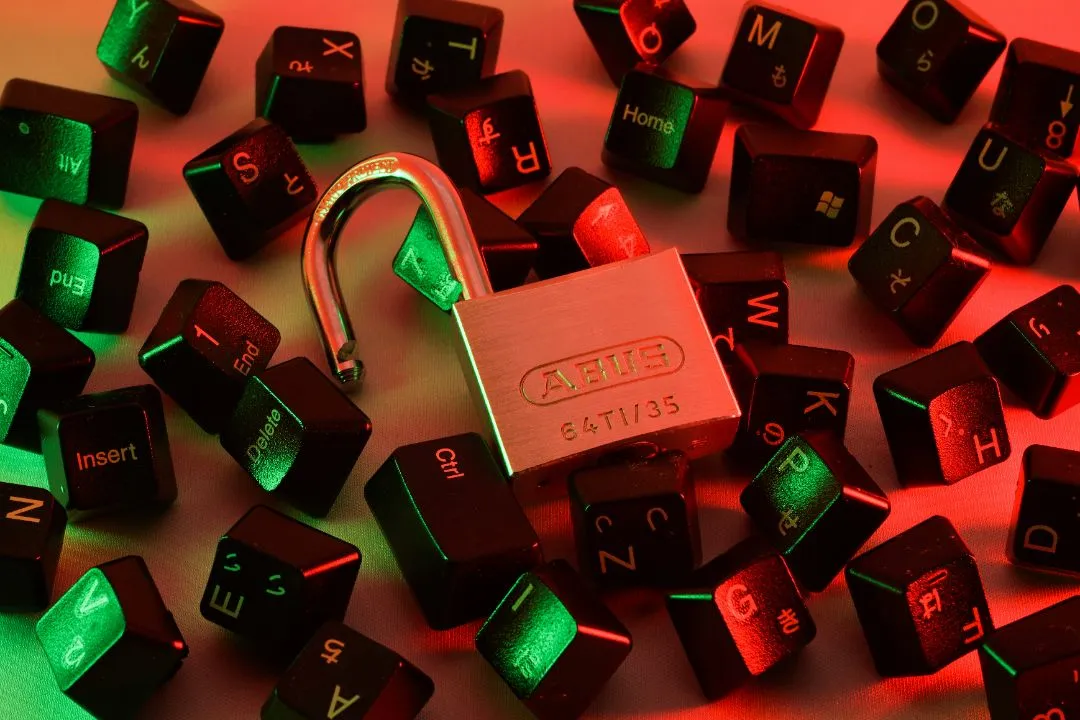
Photo by Artem Beliaikin on Unsplash

Masharov told TASS:


"Cryptocurrency confiscated in criminal proceedings should work for the benefit of the state. For these purposes, a special fund can be created, on the balance sheet of which these cryptocurrencies would be located, the capitalization of which will significantly increase over time.”


In the future, Masharov proposes that the funds could eventually be used for educational, social and environmental projects.


Enabling asset confiscation

Masharov supported moves to define digital assets as property within the realm of criminal procedure legislation previously. Since 2021, legislation has been proposed to lay out a properly defined framework to enable the confiscation of such assets in criminal cases. As of last month, Russia’s Supreme Court is currently working towards establishing this.


The Civic Chamber official expressed his willingness to discuss his proposal with other stakeholders such as crypto industry representatives and officials from Russia’s Federal Taxation Service.


If this proposal was to be implemented, it would match a position taken in the U.S. with regard to a Bitcoin reserve. Earlier this month, U.S. President Donald Trump signed an executive order creating a strategic Bitcoin reserve which will be funded mainly by confiscated Bitcoin.


Central bank resistance

Russia’s central bank has been largely opposed to the use of cryptocurrencies within Russia in recent years. Last December, central bank governor Elvira Nabiullina stated that the bank had no plans to invest in cryptocurrencies. Earlier that month, Anton Tkachev, a member of Russia’s State Duma, had put forward a proposal to establish a national Bitcoin reserve.


With the onset of sanctions as a consequence of the conflict in Ukraine, the Russian government has softened its position with regard to cryptocurrencies. Digital assets such as Bitcoin are now seen as a mechanism to enable cross-border trade and cross-border payments, circumventing the international banking system.


It was reported last year that Russia’s central bank had changed course and with that, it was leading efforts to assist Russian companies to use cryptocurrency for international trade, bypassing Western sanctions. Earlier this month, Reuters reported that Russian oil firms are now using leading cryptocurrencies such as Bitcoin, Ethereum and Tether in oil trade deals with their counterparts in China and India.


In another development earlier this month, it emerged that the central bank is now allowing a limited level of crypto investment by investors.


Faced with sanctions and current geopolitical realities, it’s understood that Russia had been considering the use of Bitcoin for reserve purposes, but for the time being, it has opted to concentrate on adding gold and the Chinese yuan to its sovereign wealth fund. 



More to Read
View All
Markets·

May 09, 2025

Binance survey reveals evolving security habits of Asian platform users

Global crypto exchange Binance has carried out a survey which reveals that the security habits of Asian platform users are evolving positively.Photo by Vadim Artyukhin on UnsplashUsers responding to more sophisticated scamsIn a blog post published by the crypto exchange platform on May 6, Binance revealed that it had carried out a survey of nearly 30,000 platform users across Asia. The company’s takeaway following analysis of the survey data is that “scams are evolving — and so are crypto users.” The firm suggested that users are “stepping up their security game,” with exchanges facing growing demand from their users for real-time protection and smarter security tools. Increasing use of 2FAThe exchange platform found that 80.5% of survey respondents now use Binance two-factor authentication (2FA). While the use of 2FA is definitely a move in the right direction, it doesn’t guarantee the safety of a user’s digital assets.  In an article published by Forbes last month Forbes Contributor Davey Winder warned that infostealer malware can compromise 2FA codes in as little as 10 seconds. In June of last year, an OKX user lost $2 million in crypto to a hacker who utilized AI despite the victim having used Google’s 2FA. Double-checking transfersThe survey found that 73.3% of users double-check transfers before sending digital assets. Due to the nature of decentralized cryptocurrency, crypto transactions are not easily reversed and are usually irreversible. That puts a greater responsibility on crypto users to ensure that they are sending funds to the appropriate wallet address. Double-checking transfer addresses is not only necessary due to human error. Malware is also used by hackers to spoof such addresses, tricking the sender into sending the digital assets to their address rather than the one that was originally intended. It emerged in May 2024 that a Bitcoin trader had lost more than $70 million in Bitcoin in an “address poisoning” scam. Binance itself had warned users last September that “clipper malware,” which intercepts clipboard data on a user’s phone or desktop, replacing copied wallet addresses with alternative addresses under the hacker’s control, is increasingly being employed in hacking attempts. While the survey has revealed a positive evolution in the security habits of Asian platform users, there’s still room for further improvement. Just 17.6% of survey respondents utilize address whitelisting, a measure that restricts account user access to a safe list of pre-defined trusted addresses. Only 21.5% of survey respondents use anti-phishing codes as a security mechanism. The objective of phishing is to steal data, install malware on a user’s device or otherwise gain account access. An anti-phishing code aids the user in verifying the authenticity of emails and texts from a specific service. Security remains a major issue within crypto. Last month, hackers employed social engineering tactics to steal $330 million in Bitcoin from an elderly American victim. Exchange platforms themselves continue to struggle to safeguard user funds. Earlier this year, Binance competitor, Dubai-headquartered Bybit, suffered a $1.5 billion hack believed to have been perpetrated by North Korea’s Lazarus Group. Lazarus is also thought to have been behind a $235 million crypto theft at Indian crypto exchange WazirX in July 2024.

news
Policy & Regulation·

May 09, 2024

Binance collaborates with Indian authorities to dismantle scam app

The Enforcement Directorate (ED) — an Indian law enforcement agency — seized 90 crores ($10.5 million) from an online scam app called E-Nuggets with the help of global crypto exchange Binance.  ED is the governmental law enforcement agency responsible for enforcing economic laws and with that, tackling economic crime. According to a report published by Indian English language daily newspaper The Hindu, the online gaming app E-Nugget had cryptocurrencies worth $10 million stored in 70 different crypto wallet accounts spread across the three crypto exchanges.  Local Indian exchanges ZebPay and WazirX also aided the ED in its investigations and subsequent actions. The ED contacted these exchanges to block the wallet addresses and transfer the crypto assets to the agency’s wallet. Photo by Naveed Ahmed on UnsplashCrypto assets seizedThe ED, tasked with upholding such financial crimes, spearheaded the operation against E-Nuggets, an online gaming platform masquerading as a legitimate investment opportunity. Taking to the X social media platform on April 30, the Indian law enforcement agency stated: “ED, Kolkata led a successful operation against a major “online gaming app scam” known as “E-Nugget”. The E-Nugget app, masqueraded as a gaming platform, promised users high returns on their investments. Crypto assets which were taken into possession of ED are transferred into Crypto Wallet of ED.” 70 wallets implicatedWith cryptocurrencies valued at $10 million spread across 70 different wallet accounts on three crypto exchanges, the agency swiftly took action. E-Nuggets enticed unsuspecting investors with promises of substantial returns through its purported gaming interface. However, once investments were made, the platform vanished into thin air, leaving users unable to recoup their funds. The ED's investigation revealed a complex web of deceit, with the agency seizing properties totaling over 163 crores ($19.5 million), comprising cash, cryptocurrency holdings, account balances and office spaces. The scam involved the funneling of funds into digital assets through 2,500 dummy bank accounts, resulting in the discovery of 19 crores ($2.2 million) in cash. A first information report (FIR) filed at the Park Street Police Station in Kolkata, became the catalyst that triggered the ED case that was subsequently registered under the provisions of India’s Prevention of Money Laundering Act (PMLA). Masterminded by Aamir Khan, who was apprehended alongside accomplice Romen Agarwal, the scheme operated under the guise of digital transactions, which, ironically, facilitated its unraveling. Law enforcement agencies adeptly traced, froze and seized the illicit funds as they moved through the digital realm. Public ledger upends scammersCritics often point to the potential for cryptocurrency to facilitate money laundering. However, the inherent transparency of blockchain technology presents significant obstacles to such illicit activities. Notably, in the infamous 2016 Bitfinex hack, where hackers absconded with 119,756 Bitcoin, the culprits were eventually apprehended in 2022 while attempting to launder the stolen funds. The collaborative efforts between Binance, the ED, and local exchanges points to a developing commitment towards combating financial fraud within the cryptocurrency space. This wasn’t the first occasion in which Binance had cooperated with law enforcement on such matters. In October of last year, the company got with the Thai authorities to assist them in crushing a crypto-related scam. By leveraging blockchain's transparency and international cooperation, authorities can effectively dismantle illicit schemes, safeguarding investors and upholding the integrity of the digital asset ecosystem.

news
Markets·

Sep 19, 2025

New K-drama ‘To the Moon’ debuts amid Ethereum price gains

As cryptocurrencies continue to captivate South Korea, the world of ordinary digital asset investors is set for its primetime debut. Today, major broadcaster MBC is scheduled to premiere “To the Moon,” a new television drama that explores the risks and rewards of crypto investing. In crypto slang, “to the moon” refers to expectations of a sharp price surge, a phrase often used by traders to signal bullish sentiment. The series, airing Fridays and Saturdays, is an adaptation of Jang Ryujin’s 2021 novel of the same name, with an English edition released on June 19 of this year. It chronicles the lives of three young women who, despite landing what most would consider solid positions at a confectionery company, find their ambitions stifled by economic realities. Confined to small studio apartments and seeing little room for advancement, they turn to the volatile world of cryptocurrency as their pathway to upward mobility. The publisher describes these burnt-out protagonists’ journey as one that oscillates between humor and despair.Photo by Kanchanara on UnsplashEthereum’s rally and rising optimismIn the original novel, the plot is ignited when one of the women achieves a significant windfall by investing in Ethereum (ETH), inspiring her colleagues to join the fray. What follows is a familiar tale for many investors. They experience a period of wild price swings and respectable profits, only to see their winning streak abruptly halted by a severe market downturn. At the time the book was published in April 2021, ETH traded at roughly $2,100. Today, by contrast, CoinMarketCap data shows the asset trading at $4,543.14, more than doubling since the book’s release. Support for this bullish outlook comes from well-known market voices. Tom Lee, Fundstrat founder and chairman of ETH treasury firm Bitmine, told CNBC that Ethereum (ETH), Bitcoin (BTC), and the Nasdaq 100 would benefit most if the Federal Reserve cut rates, predicting a strong rally in the next three months. He made these comments before the Fed’s actual move, a quarter-point rate cut announced at its Sept. 17 Federal Open Market Committee (FOMC) conference. In a separate Fox Business interview, VanEck’s CEO echoed this view, saying ETH will emerge as the leading asset as banks adopt blockchain for stablecoin transactions. Data also points to growing strength. According to Token Terminal, the supply of Ethereum-based stablecoins has recently reached an all-time high of $168 billion. This milestone is largely attributable to the fact that over half of the entire stablecoin supply now operates on the Ethereum network, underscoring its foundational role in the digital economy. Talent drain and security risksStill, there are headwinds that could slow Ethereum’s ascent. A recent survey by Protocol Guild, an independent funding group for Ethereum core developers, revealed a compensation gap that threatens the network's long-term health. The survey found that Ethereum core developers are receiving external job offers with a median salary of $300,000—more than double the $140,000 median they currently earn for maintaining and upgrading the network. Protocol Guild has noted that this disparity could precipitate a talent exodus, potentially slowing future development. Security has been an ongoing concern, with ETH often targeted by hackers. In a reminder of the sector's vulnerabilities, the crypto exchange Bybit reported a theft of 401,000 ETH in February, an amount valued at roughly $1.5 billion at the time. The U.S. Federal Bureau of Investigation later identified the exploit, one of the largest in crypto history, as the work of the North Korean hacker known as “TraderTraitor.” "To the Moon" is set to air at a time when its themes of innovation and risk are playing out in the real world of crypto. The industry is riding a wave of institutional adoption and high valuations, but it's also facing a talent crunch and security concerns. These dynamics continue to keep digital assets on investors’ radar in South Korea and beyond. 

news
Loading