Top

Thailand’s SEC considers Bitcoin ETF approval

Policy & Regulation·January 20, 2025, 7:41 AM

Thailand’s Securities and Exchange Commission (SEC), the Southeast Asian nation’s securities regulator, is believed to be considering moving towards approving spot Bitcoin exchange-traded fund (ETF) products. 


In an interview with Bloomberg, the Thai SEC’s Secretary-General, Pornanong Budsaratragoon, said that the agency is weighing up whether to allow individual investors and institutions to access spot Bitcoin ETFs. Budsaratragoon stated:


“We have to adapt and ensure that our investors have more options in crypto assets with proper protection.”
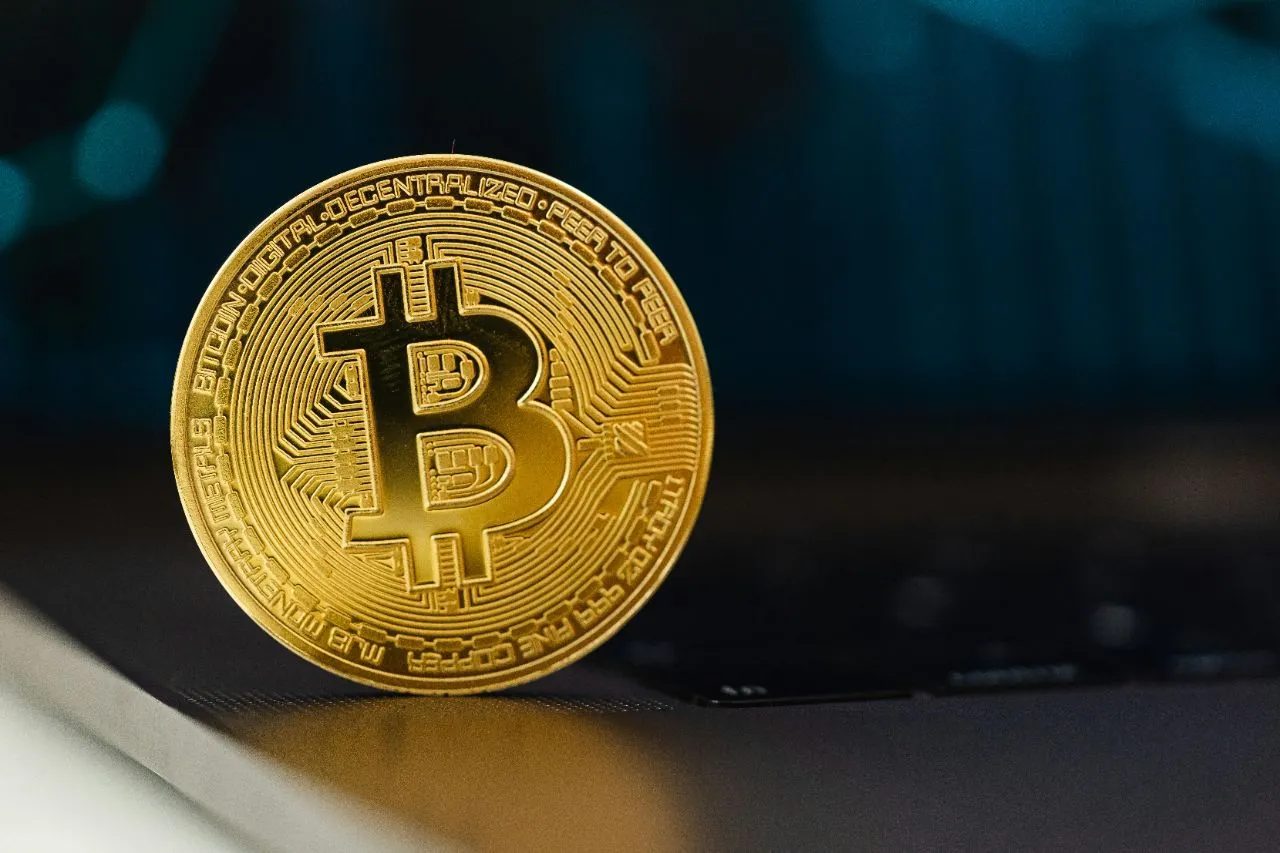
https://asset.coinness.com/en/news/fa5dc38f4d85f8bb9af82a72616fc7b6.webp
Photo by Photo By: Kaboompics.com on Pexels

Moving along with global crypto adoption

January 10 marked the first anniversary of the approval of spot Bitcoin ETFs in the United States. Given that the U.S. is home to the world’s largest capital markets, that decision has had an impact internationally. That reality is borne out by one of Budsaratragoon’s comments. She stated:


“Like it or not, we have to move along with more adoption of cryptocurrencies worldwide.”


While the SEC Secretary-General’s comment suggests that she feels a compulsion to move forward in line with developments elsewhere, that wasn’t the agency’s position in January 2024 following spot Bitcoin ETF approval in the U.S. 


Shortly afterwards, the regulator, alongside its regional counterpart in Singapore, outlined that it had no plans to approve the product in Thailand, stating: "The SEC has been following these developments closely but we do not have a policy to allow spot Bitcoin ETFs to be established in Thailand for the time being.”


Initial access to overseas products

In March of last year, the agency had warmed to the Bitcoin ETF product offering to a greater extent, by approving access to such products listed overseas to high-net-worth individuals and institutions. Off the back of that approval, One Asset Management (ONEAM) launched a fund of funds in June 2024, enabling Thai investors to gain exposure to Bitcoin ETFs which had been publicly listed overseas.


Back in October, Nirun Fuwattananukul, CEO of Binance Thailand, stated in an opinion piece published by the Bangkok Post that he felt that the Thai crypto market was moving from retail towards a focus on the institutions. He stated:

“By allowing more institutional funds to participate, the SEC is enabling a diverse range of investment strategies and helping digital assets gain broader acceptance in the mainstream.”


Fuwattananukul suggested that the local regulator had made some changes on Oct. 9, paving the way for institutional-grade mutual and private funds to invest in crypto products. The approval of locally listed Bitcoin ETF products would broaden investor access to digital assets in Thailand, particularly in relation to institutional investors, which is in line with the thinking of the Binance executive.


Earlier this month, Thailand’s Deputy Prime Minister, Pichai Chunhavajira, announced that a pilot program was being launched to help foreign tourists pay for goods and services using crypto within the Thai resort city of Phuket. 


Meanwhile, former Thai Prime Minister Thaksin Shinawatra expressed a bullish view on crypto in a speech he made in Bangkok last week. Shinawatra called on the country’s institutions to be more open to cryptocurrency, while citing regulatory developments in the U.S. relative to the emerging asset class.


More to Read
View All
Web3 & Enterprise·

Dec 26, 2023

Singapore’s Whampoa Digital collaborates on establishment of $100M Web3 fund

Singapore’s Whampoa Digital collaborates on establishment of $100M Web3 fundWhampoa Digital, the Web3 subsidiary of privately-held Singaporean investment firm Whampoa Group, has entered into a collaboration with an Asian gaming company to establish a $100 million Web3 fund.Photo by Towfiqu barbhuiya on UnsplashFocus on Web3 in the Middle EastThe WEMIX Foundation, a subsidiary of South Korean blockchain gaming firm Wemade, announced details of the new fund via a press release published to its website on Friday.Wemade is renowned for its massively multiplayer online role-playing game (MMORPG) series Legend of Mir. This strategic collaboration aims to catalyze the expansion of the digital asset industry, with a specific focus on the rapidly growing Web3 sector in the Middle East.Reciprocal deal and project referralsThe Web3 fund initiated by Wemade is set to play a pivotal role in supporting developers at the Wemix Play Center situated in Dubai. Both Wemade and Whampoa Digital plan to engage in reciprocal deal and project referrals, particularly within the Web3 industry, and explore potential co-investment opportunities in promising projects.Aureole Foong, senior partner of Whampoa Group, expressed optimism about the partnership’s potential impact. Foong highlighted the significance of this collaboration in expanding the digital asset industry beyond established sectors and fostering innovation in the Middle East, recognized as one of the world’s fastest-growing regions in the Web3 space.Web3 gaming experienceWemade has extensive experience in the gaming sector, dating back to its establishment in 2000 and its notable creation of the Legend of Mir series, positioning it as a key player in the gaming industry. The company has diversified its portfolio by venturing into the blockchain space, launching Wemix, a tech ecosystem offering Web3 services.Wemade’s blockchain gaming platform, Wemix Play, boasts a player base of over 250,000 users. Last week the Wemix Foundation announced the launch of its una Wallet, associated with the company’s omnichain network and interoperable Web3 gaming platform.In addition to co-investing in gaming studios and blockchain projects in the Middle East and North Africa (MENA) region, Wemade is planning to establish a global Web3 gaming hub at the Dubai International Financial Centre (DIFC). The company will also set up an office for the newly formed Web3 fund at this location. The DIFC’s Innovation Hub, coupled with Wemade’s hub, will provide essential facilities and mentorship for the fund’s portfolio firms.Whampoa Digital, the investment arm of Whampoa Group, is well-versed in supporting global tech firms, including notable names like TikTok’s parent company ByteDance and crypto major Binance. In May Whampoa announced that it had plans to establish a crypto-friendly bank in Bahrain.2023 has presented challenges for Web3 investors seeking new funds. According to a report by the research arm of crypto investment firm Galaxy Digital, the average new Web3 fund size for the first nine months was $238.4 million, with a median of $50 million — both figures significantly lower than the same period last year.

news
Web3 & Enterprise·

Oct 21, 2023

SynFutures Completes Series B Funding Round and V3 Launch

SynFutures Completes Series B Funding Round and V3 LaunchSynFutures, the Singapore-based project behind the SynFutures Protocol and decentralized derivatives exchange (DEX) specializing in crypto perpetual futures, has successfully completed its Series B funding round of $22 million.In a big week for the DEX project, SynFutures also launched V3 of the protocol on public testnet, incorporating its updated automated market maker (AMM) model, Oyster AMM.Photo by micheile henderson on UnsplashPotential token launchThe Series B funding round was spearheaded by Pantera Capital, with participation from Singapore’s HashKey Capital, SIG DT Investments (a unit of the Susquehanna International Group), and other investors.Co-founder and CEO of SynFutures, Rachel Lin, stated that while the company is excited about its recent funding success, it is also open to the idea of launching a native token in the future. However, any such decision would be contingent on market conditions and regulatory considerations.Enabling decentralized crypto derivatives tradingThis Series B funding, which was initiated in 2022, marks a significant milestone for SynFutures, coming to a close nearly two and a half years after its Series A round that raised $14 million in June 2021. In total, the company has now secured approximately $38 million in funding to date. In an interview with The Block, Lin declined to indicate the company valuation associated with the recent funding round.SynFutures, established in 2021, serves as a decentralized exchange catering to the trading of crypto perpetual futures, a derivative product that allows traders to speculate on the future price of cryptocurrencies with leverage and without fixed expiration dates. This approach enables traders to rapidly profit or incur losses based on market price movements.While SynFutures operates on various blockchain networks, it currently ranks as the second-largest derivatives protocol on Polygon, with a total value locked (TVL) of over $6 million, according to data from DeFi Llama. The platform has facilitated over $22 billion in cumulative trading volume since its inception.Notably, SynFutures has introduced its latest platform public testnet version, V3, on the Ethereum testnet. The company aims to extend its support for multiple blockchains, including Polygon and zkSync Era, an Ethereum Layer 2 network, when the mainnet version goes live, scheduled for late this year to early next year. Previous iterations of the platform, such as SynFutures V2 and SynFutures V1, have been deployed on Ethereum, Polygon, Arbitrum, and BNB Chain.V3 FeaturesOne of the standout features of SynFutures’ V3 platform is its proprietary AMM model called Oyster. Lin clarified that Oyster AMM combines concentrated liquidity AMM (offering up to 26,666x boost) with the traditional order book model (providing unlimited liquidity boost).With Oyster AMM, SynFutures aims to compete directly with centralized exchanges. The project’s Chief Marketing Officer (CMO) Mark Lee maintains that the offering provides advantages over other decentralized platforms also. “While several projects, including dYdX, opt for a hybrid approach — integrating off-chain orders with on-chain settlements — the full on-chain methodology stands out for its inherent transparency and trustworthiness,” Lee told Blockworks.SynFutures currently maintains a team of approximately 20 individuals. With the latest funding infusion, the company plans to expand its workforce, particularly in engineering and business development roles, to further its mission of advancing decentralized derivatives trading.

news
Policy & Regulation·

Apr 08, 2025

Hong Kong establishes rules to enable crypto staking

Hong Kong regulator, the Securities and Futures Commission (SFC), has established guidelines for crypto staking service providers. That’s according to a statement published by the SFC to its website on April 7. The guidance is aimed at licensed virtual asset trading platforms (VATPs) and SFC-authorized funds with exposure to digital assets.Photo by Markus Winkler on UnsplashExpanding service offeringThe regulator points out that the guidance on staking falls in line with its recently announced “ASPIRe” roadmap, which is geared towards ensuring that the Chinese autonomous territory remains relevant in its efforts to maintain its status as a global hub for crypto businesses. Expanding product and service offerings within the crypto sector was one of the five pillars of that plan. Smoothing the way for the offering of staking works towards fulfilling that aspect of the ASPIRe plan. Written approvalIn this guidance, the SFC sets out that licensed service providers must obtain written approval from the regulator before any such product can be offered to investors in Hong Kong. That stipulation applies to both VATPs and authorized funds with digital asset exposure. Additionally, VATPs must retain control over staked assets, with no delegation in the custody of such assets to third parties permitted. In the case of authorized funds that include crypto assets, they must stake virtual asset holdings through licensed VATPs and other authorized institutions. Required disclosuresThe regulator has also stipulated that certain disclosures must be made by licensed exchanges to potential customers in respect of staking products. These include the disclosure of all associated risks, full transparency with regard to fees, minimum lock-up periods and custodial arrangements. Commenting on the provision of this guidance, SFC CEO Julia Leung said that the provision of a greater range of regulated services and products is crucial in order to sustain continued growth of Hong Kong’s virtual asset ecosystem. However, she added that any broadening of the range of services offered “must be done in a regulated environment where the safety of client virtual assets continues to be front and centre of the compliance framework for offering such service.”   The SFC outlined that it recognizes “the potential benefits of staking in enhancing the security of blockchain networks and allowing investors to earn yields on virtual assets within a regulated market environment.” The authorities in Hong Kong are not the only ones who recognize the benefits that the incorporation of staking within crypto investment products can bring. Last month, Robert Mitchnick, head of digital assets at the world’s largest asset manager, BlackRock, told the Digital Assets Summit in New York that Ether ETFs would benefit from the addition of staking.  Mitchnick suggested that the current inability to earn a staking yield within such products is a key limitation. He outlined that such a change is dependent upon relevant regulatory changes being implemented in the U.S. A more crypto-friendly climate in the U.S. since U.S. President Donald Trump took office has resulted in various lawsuits being dropped against companies like Coinbase related to the staking services that had been offered. A number of U.S. Ether ETF issuers, including Franklin Templeton, Grayscale and Bitwise, have put forward proposals to the Securities and Exchange Commission (SEC) to have staking included in these products.

news
Loading