Top

XRP primed for institutional adoption in Asia via tracker fund launch

Web3 & Enterprise·April 22, 2025, 8:36 AM

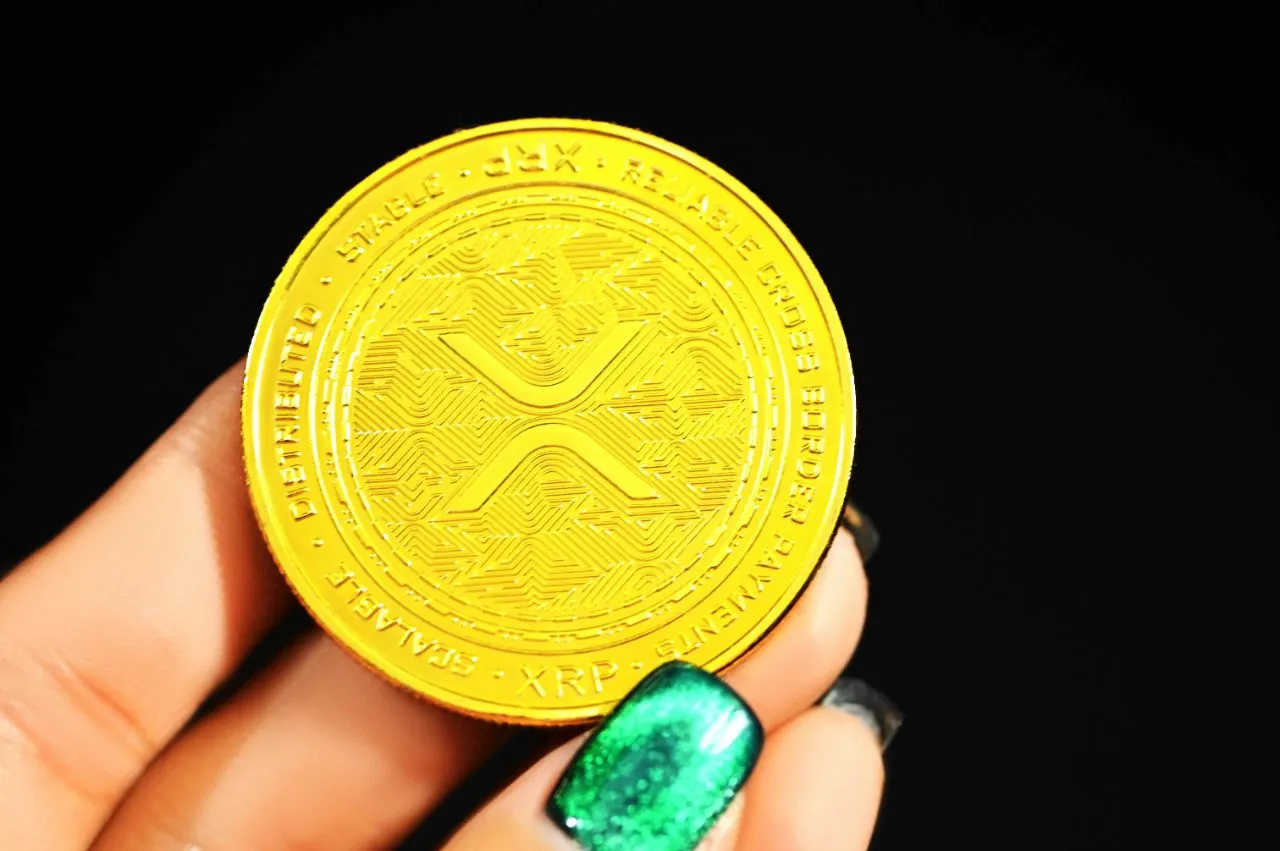
XRP, the native asset of the XRP Ledger (XRPL), a blockchain network developed by Ripple Labs, is destined for further institutional adoption in Asia due to the launch of the region’s first XRP tracker fund.


Crypto-focused institutional asset manager HashKey Capital recently announced the launch of its HashKey XRP Tracker Fund, which has been devised to track the performance of what is the world’s fourth-largest crypto asset by market cap, after Bitcoin (BTC), Ether (ETH) and U.S. dollar stablecoin Tether (USDT).
https://asset.coinness.com/en/news/99402d12198ff279c25518cd15e8a457.webp
Photo by Kanchanara on Unsplash

Enabling institutional access

The fund enables investors to gain exposure to XRP without having to take direct ownership and custody of the digital asset. Bitcoin and Ethereum exchange-traded funds (ETFs) have become popular in a number of markets, including the United States, as they allow institutional investors to gain exposure to these digital assets where they may have been uncomfortable with direct ownership due to concerns around custody and counterparty risk or regulatory concerns.


According to HashKey’s press release, investors can buy into the fund through cash or in-kind subscription and subscribe or redeem shares monthly. The fund will be measured and compared against a benchmark index provided by CF Benchmarks, a provider of crypto-related indices.


HashKey Partner Vivien Wong acknowledged the potential that XRP has in the market, stating:

“XRP stands out as one of the most innovative cryptocurrencies in today’s market, attracting global enterprises who use it to transact, tokenize, and store value.”

She added that the new fund simplifies access to XRP within the region, while catering to a growing demand for investment opportunities related to digital assets.

Potential ETF fund conversion

This marks HashKey’s third product that tracks digital asset pricing, with the company having launched both Bitcoin and Ethereum exchange-traded funds (ETFs) previously. On X, HashKey Capital outlined that the XRP Tracker Fund could potentially evolve into a fully fledged ETF, subject to regulatory approval, within the next 1-2 years.


The new fund, which was launched on April 18, also incorporates a strategic partnership with XRP developer Ripple Labs. In what is understood to be the first of a number of collaborations, Ripple will fulfill the role of being the fund’s anchor investor.

Ripple’s Managing Director for the Asia-Pacific (APAC) region, Fiona Murray, cited the development as proof that institutional adoption of digital assets continues to go from strength to strength. 


Ripple CEO Brad Garlinghouse stated last month that he expects a number of spot XRP ETFs to be approved in the United States later this year. Earlier in March, analysts at American investment bank JPMorgan had estimated that spot XRP ETF approval in the U.S. could result in net inflows of $8 billion into such products.

At the time of writing, XRP was trading at $2.09. The asset has increased in price by 300% over the course of the past 12 months, largely due to a changing regulatory environment in the United States and optimism that a settlement can be reached to end its multi-year legal battle with the Securities and Exchange Commission (SEC).


More to Read
View All
Markets·

Dec 30, 2023

OKX delisting sparks privacy coin price slump

In a move announced on Friday, OKX, the Seychelles-headquartered cryptocurrency exchange, declared its decision to delist 20 trading pairs by Jan. 5, triggering a notable price fall for major privacy coins such as Monero, Dash and ZCash. The exchange cited that the affected pairs did not align with its listing criteria, though specific details were not disclosed.Photo by Khara Woods on UnsplashPrivacy coin delisting trendWhile OKX did not explicitly articulate the rationale behind this move, industry observers are speculating that it could be part of the exchange’s broader efforts to comply with evolving regulatory measures. Privacy coins have increasingly drawn regulatory scrutiny due to concerns about potential illicit activities within the crypto space. Earlier in the year, Binance had also announced the delisting of several privacy coins to ensure compliance with local laws and regulations. The broader context of regulatory pressures on privacy-focused cryptocurrencies seems to be impacting major exchanges’ decisions. In 2022, Huobi cited regulatory pressures when it took the decision to delist Monero and other privacy coins. Kraken was further ahead of the curve still, delisting Monero for UK customers in November 2021. Downward price actionFollowing OKX’s announcement on Friday, the prices of privacy-focused cryptocurrencies, notably Zcash (ZEC) and Monero (XMR), experienced a decline. The entire sector of “privacy cryptos” has witnessed a 7.1% decrease in overall market capitalization, according to an index of such coins compiled by Malaysian crypto indexing firm CoinGecko. During this period, Monero and Zcash have seen unit price declines of 4.5% and 10.7%, respectively. Other tokens set for delisting, including Dash, Powerpool and Horizen, have recorded declines of up to 14%. OKX has provided guidance to users, advising them to cancel orders related to the affected trading pairs before the delisting date to avoid automatic cancellation, a process that may take 1–3 working days. Concurrently, the exchange has halted deposits for the impacted cryptocurrencies and plans to cease withdrawals by Mar. 5, 2024, affording holders sufficient time to withdraw their assets. However, once the delisting is complete, trading these digital assets on OKX will become impossible. Interestingly, certain privacy coins like MINA continue to be listed on the exchange, experiencing a 7.5% increase following the delisting announcement. It’s crucial to note that OKX’s delisting is not exclusive to privacy tokens, as it also includes other trading pairs associated with digital assets such as Kusama, Flow, Kyber Network and Aragon. The fight for privacySome crypto community members have voiced their concerns on social media, with many fearing that the innovation may be ‘captured’ by the various state authorities over time. However, ex-Monero developer Ricardo Spagni (AKA “Fluffypony”) was nonchalant about the whole thing, judging by his comments. In a post on social media platform X, he wrote: ”Monero users and contributors literally couldn’t care less about delistings at this point.” As the regulatory landscape evolves, cryptocurrency exchanges are navigating these challenges, impacting the availability and value of specific tokens on their platforms. Investors and privacy advocates alike will be closely watching how such regulatory compliance measures continue to shape the crypto market and crypto use.  

news
Policy & Regulation·

Oct 14, 2023

Indonesia to Launch Blockchain Trials to Enhance Public Services

Indonesia to Launch Blockchain Trials to Enhance Public ServicesIn the wake of its recent government-backed cryptocurrency exchange launch, Indonesia is moving further forward to launch trials that employ blockchain technology within its public services sector.Photo by Bisma Mahendra on UnsplashBlockchain-based land ownership recordsAt the recent Blockchain Economy Summit held in Dubai, Tuhu Nugraha, the Principal of the Indonesia Applied Digital Economy and Regulatory Network (IADERN), told Cointelegraph that these trials will encompass the utilization of blockchain-based digital certificates for land ownership and certificates of competence within the education sector.The executive believes that blockchain’s inherent attributes, which include characteristics such as immutability and transparency, can be harnessed to combat certificate fraud. By anchoring these certificates in blockchain’s secure ledger, the government can efficiently verify the authenticity of various digital certificates, which is a significant leap forward in ensuring the integrity of critical documents.Nugraha is an advisor to the Indonesian government on blockchain and metaverse technologies. He emphasized the government’s collaborative approach to Web3 technology. Additionally, Nugraha revealed that the Indonesian government is working in close partnership with various blockchain-focused associations to conduct experiments and gather insights into the multifaceted implications of blockchain across diverse sectors. Instead of imposing rigid regulations, Nugraha maintains that the Indonesian government is committed to crafting regulations that spur innovation.Cointelegraph also spoke with Grace Sabandar, Co-Founder of the Indonesia Blockchain and Metaverse Center (IBMC). Sabandar, an advocate of blockchain’s potential, emphasized the pivotal role of Indonesia’s youthful demographic on the basis that this dynamic demographic is inherently adaptable to new technology.Youthful demographic to capitalize on Web3Sabandar made the point that this younger Indonesian demographic has already demonstrated itself to be one of the world’s largest user bases for Web2 social media platforms such as Facebook and Instagram. On that basis, she believes Indonesia is poised to lead in the adoption of Web3 technology. She remarked:“We want to be the leader, not only the user of technology, because now, because of decentralization, anybody can do something, anybody can create something.”Furthermore, Sabandar highlighted the crucial educational role played by the IBMC in collaboration with the government, private sector stakeholders, media, and academia. Their mission revolves around enlightening the nation about the manifold benefits of blockchain, emphasizing transparency, the utility of smart contracts in business operations, the essence of decentralization, and other fundamental aspects.Realizing blockchain and Web3 potentialEarlier this week, a report published by South Korean crypto data platform Xangle in conjunction with Web3 consulting firm Tiger Research concluded that Indonesia has significant potential to grow its Web3 sector.Reports in recent days have also demonstrated further instances of the use of blockchain technology in the country, with state-owned ID Food collaborating with Singapore’s D3 Labs to establish a blockchain-based fish trading process. In July, South Korean tech company Milk Partners launched its blockchain-based reward points service in Indonesia.Indonesia’s blockchain development and adoption are being spurred on by the enthusiasm of its tech-savvy youth, collaborative partnerships, and a government dedicated to innovation and transparency. As it paves the way in the Web3 era, Indonesia seeks to leverage blockchain technology to benefit public services, foster trust, and lead by example in the global digital revolution.

news
Web3 & Enterprise·

Jan 24, 2024

Alchemy Pay expands on-ramp services via Bitcoin.com

Singapore-based payment solution provider Alchemy Pay has launched its fiat-crypto on-ramp payment services on the popular web portal Bitcoin.com.Photo by Kanchanara on UnsplashNew local payment methodsAccording to a recent press release, the integration offers a direct-to-customer plugin, providing access to a diverse range of cryptocurrencies. The move aims to enhance Bitcoin.com's reach, particularly in Asian and Latin American markets, by incorporating new local payment methods. Bitcoin.com emphasized the significance of Alchemy Pay's integration, suggesting that it represented a streamlined transition between fiat and crypto with an expanded array of local payment options. This development aligns with Bitcoin.com's goal of meeting the needs of its user base in Asia and Latin America. Alchemy Pay's payment gateway facilitates transactions using major credit cards such as Visa, Mastercard, Discover and Diners Club across 173 countries. Additionally, the platform supports domestic transfers and mobile wallet payments in developing markets. Alchemy Pay attempts to make the know-your-customer (KYC) process frictionless, coupling that service offering with low fees and competitive conversion rates. The firm’s overriding mission is to make cryptocurrency transactions as convenient as typical online payments. Focusing on industry partnershipsAlchemy Pay has been pursuing industry collaborations at an ever increasing rate over the course of the past year. The network boasts over 300 fiat payment channels, enabling checkouts beyond card payments to include various local mobile wallet options. Last month, it clinched a deal with global payment processor, Worldpay. That collaboration facilitates Alchemy Pay service users in leveraging Worldpay’s extensive Visa and Mastercard payment rails. Back in July, it struck a similar deal with global payments processor, Checkout.com. The company has also been active in the United States. Within that market, it has secured money transmitter licenses in the states of Iowa and Arkansas. It’s understood that the firm has more such licensing applications in the works in other U.S. states. At the end of November, Alchemy partnered with self custody and multi-coin wallet project Trust Wallet, enabling the wallet providers 70 million users in engaging in crypto transactions involving fiat payments. VERSE tokenBitcoin.com's native Token VERSE was launched in December 2022, acting as the platform’s rewards and utility token. The VERSE token has been enabled as a supported cryptocurrency as part of the Alchemy Pay platform integration. The utility token serves as a method of payment in its own right within the Bitcoin.com ecosystem and beyond, unlocking rewards along different tiers, and providing access to exclusive platform services. Users worldwide can leverage the VERSE DEX, Bitcoin.com's decentralized exchange, to swap cryptocurrencies without reliance on third-party custodians. Bitcoin.com’s goal is to simplify the process of buying, spending, trading, investing, earning and staying informed about cryptocurrency and the future of finance. Millions of users utilize Bitcoin.com's multi-chain digital wallet app for various crypto-related activities.  Meanwhile, Alchemy Pay supports transactions in 173 countries. The ramp, a one-stop solution for buying and selling crypto and fiat, can be seamlessly integrated by platforms and dApps as needed. 

news
Loading