Top

Ripple supports Japanese Web3 initiative & crypto research within APAC

Web3 & Enterprise·June 11, 2025, 6:03 AM

Ripple Labs, the American technology company that developed and supports XRP and the XRP Ledger (XRPL), has partnered with Japan’s Web3 Salon initiative, while in a separate development, the company is also funding crypto-related academic research within the Asia-Pacific (APAC) region.
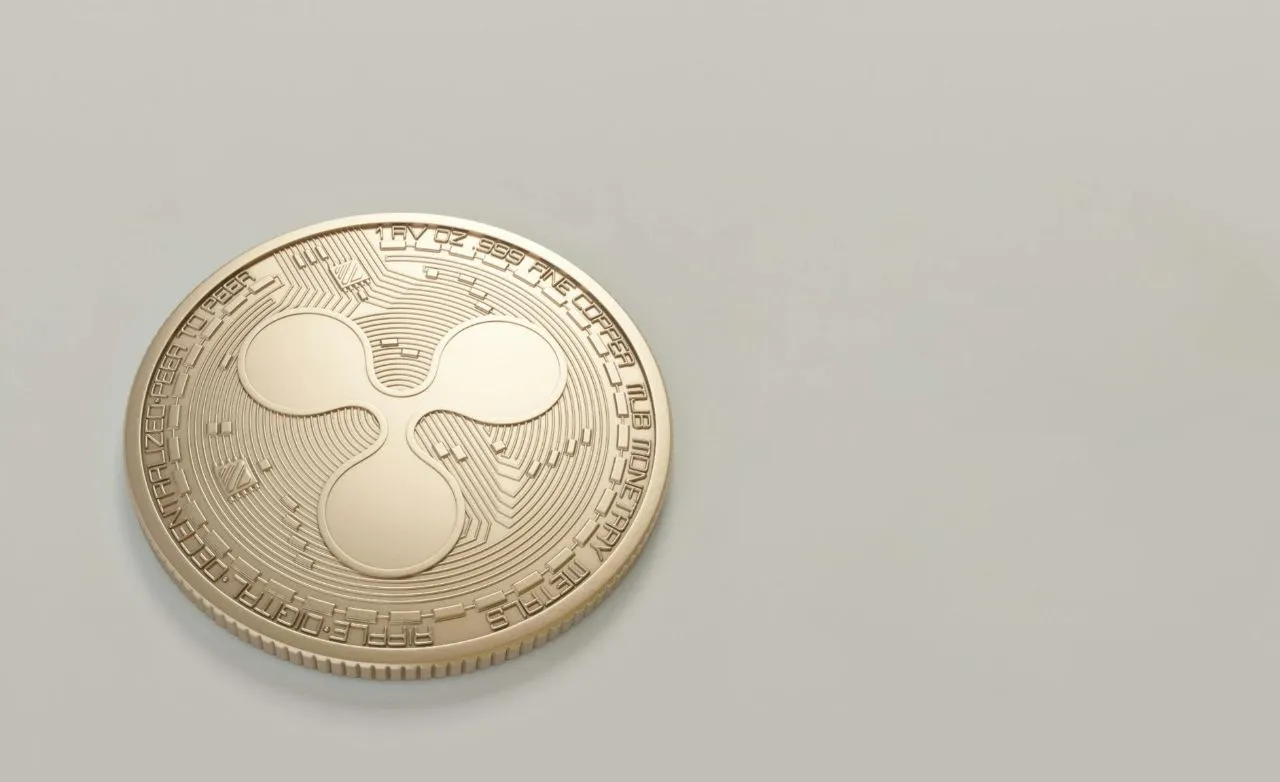
https://asset.coinness.com/en/news/1c6e63aacc8edb3e960521e94c422e6e.webp
Photo by Moose Photos on Pexels

Driving Web3 adoption in Japan

In a statement published to its website on June 9, the company outlined that it has partnered with Japan’s Web3 Salon project, a Web3 initiative with the objective of educating businesses and developers, nurturing blockchain startups and driving Web3 adoption through the provision of startup incubator programs and running hackathons and workshops.


One of Japan’s most active Web3 projects, Web3 Salon has the backing of the Japan External Trade Organization (JETRO). The project has also collaborated with a range of Japanese Web3 startups, Asia Web3 Alliance Japan (AWAJ), institutional investors and venture capital firms, as well as a number of key industry stakeholders.


Grant funding

As part of its involvement in this collaboration, Ripple will provide grant funding of up to $200,000 to Japanese startups who have developed their projects on XRPL. Ripple’s grant funding forms part of its broader initiative to finance XRPL-related startups in Japan and Korea. Earlier this month, it confirmed that it had established the XRPL Japan and Korea Fund for this purpose. 


At a broader level still, Ripple said that this latest funding commitment also falls under its one billion XRP commitment. Back in 2022 the company committed one billion XRP to advance XRPL ecosystem projects.


Christina Chan, Senior Director of Developer Growth at Ripple, commented on the development, stating:

“Ripple is proud to collaborate with Web3 Salon to unlock new opportunities in Japan’s thriving startup ecosystem. Together, we hope to fuel innovation and support the next generation of leaders.”


Supporting APAC university research

In a separate blog post published to its website on June 10, Ripple outlined that it was committing $5 million in funding within the APAC region as part of its University Blockchain Research Initiative (UBRI). The funding will cover blockchain-related academic research projects in Japan, South Korea, Singapore, Taiwan and Australia.


$1.1 million has been allocated to South Korea’s Korea University in funding that will be released over a six-year period. The funding builds on another relationship that had already been established with Yonsei University via the UBRI in 2024.


Equally, Japan’s Kyoto University had engaged with the UBRI last year. That support is now being renewed while funding is also being allocated to the University of Tokyo. The two institutions will be able to avail to funding in excess of $1.5 million.

Other APAC region educational institutions to benefit include the National Kaohsiung University of Science and Technology (NKUST) in Taiwan, the National University of Singapore (NUS) and Nanyang Technological University (NTU) in Singapore and the Australian National University (ANU) in Australia.

’An epicenter of digital finance’

Ripple called APAC “an epicenter of digital finance.” Expanding further on that assertion, it stated that the region has shown “an appetite for experimentation and boasting thriving communities for builders.” Consequently, it views the APAC region as a leader in payment technologies and digital asset adoption.


More to Read
View All
Web3 & Enterprise·

May 09, 2023

Aave v3 Launches on Metis Scaling Network

Aave v3 Launches on Metis Scaling NetworkMetisDAO confirmed on Tuesday that leading decentralized liquidity protocol Aave has been deployed on the layer 2 Ethereum-centric scaling platform.Photo by Joshua Sortino on UnsplashGiven the distributed nature of the teams behind decentralized networks and projects, it can be difficult at times to determine where project teams are based, albeit in the case of MetisDAO, according to LinkedIn, its primary location is Singapore despite having a Canadian Co-Founder and CEO.Aave’s move to ZK networksThe move comes following a vote taken by Aave’s user community, who voted in favor last month of a proposal to deploy the liquidity protocol on zero knowledge-based networks. In a social media post, the Metis team referred to the decentralized lending market going live on the network as “a new era of Decentralized Finance.”The development is significant for Metis, given that Aave is the third largest project in crypto based on the total value locked (TVL) metric. Within DeFi lending, it’s the biggest project in the sector, holding a TVL of $5.4 billion.One of the keys of Aave’s dominance is its multi-chain strategy. Metis marks the eighth network upon which it has been deployed. The others include Ethereum, Polygon, Arbitrum, Optimism, Fantom, Harmony and Avalanche.Metis technical roadmapWhile there’s a lot of uncertainty as to how various crypto projects will pan out over the longer run, most agree that Ethereum is here to stay. Metis stands a good chance of contributing to that ecosystem over the long term as layer two scaling networks are likely to be part and parcel of the Ethereum environment for some time to come.Last month, the project set out a technical roadmap, detailing what the project has in store, while claiming that in general, 2023 would be a great year for Ethereum. Metis is a layer two network based on Optimistic Rollup architecture. It has grown into the third largest scaling network relative to Ethereum.The project plans to roll out Bedrock, a technical upgrade that will enable improved network security. Furthermore, it plans on bringing about consensus and execution separation. Also in its sights are faster deposit times, which the project claims, will enable better UX.Many DeFi networks are under scrutiny in terms of the centralized elements that they incorporate. Metis plans to make improvements in this regard, with the intention of decentralizing the sequencer pool. The project claims that “Metis Andromeda will be decentralized to the core.”Hybrid rollupsDemonstrating further ambition, Metis is aspiring to bring about hybrid rollups, combining the features of optimistic rollup architecture with zero-knowledge proofs. In a tweet, Head of Marketing and MetisDAO Co-Founder Kevin Li said that “by combining the best traits from both schemes, hybrid rollups will offer the unmatched scalability and EVM-equivalence of optimistic rollups, together with the censorship resistance and fast finality enabled by zero-knowledge proofs. The best of both worlds.”MetisDAO believes it adds value for users of its network through Aave’s offering, enabling them to borrow assets with less collateral via Aave’s High-Efficiency mode. Furthermore, the deployment makes for improved risk management through supply and borrow caps, and siloed borrowing, reducing the risk in the event of market contagion.

news
Policy & Regulation·

Aug 27, 2025

Japan’s finance minister acknowledges crypto investment merits

Katsunobu Katō, a Liberal Democratic Party politician and Japan's Minister of Finance under Prime Minister Shigeru Ishiba's government since October 2024, has said that cryptocurrency assets can play a role in a diversified investment portfolio. Katō made the remarks while speaking at an event that was held in Tokyo related to the subject of crypto assets on Aug. 25, according to Bloomberg. Katō stated:''Crypto assets run the risk of high volatility, but if an appropriate investment environment is created, they can become targets for diversified investment.''Photo by JJ Ying on UnsplashGrowing crypto user baseKatō acknowledged that there is a growing user base in Japan related to digital assets. With that, he intends to work towards the provision of a healthy trading environment in Japan for stakeholders within the digital assets sector. The finance minister added that he has been trying to balance regulation with a need to leave the digital assets sector with sufficient freedom so as to enable the development of innovation. Crypto tax reformIt emerged over the weekend that the Japanese financial regulator, the Financial Services Agency (FSA), intends to include tax reform measures in respect of the crypto sector in 2026 tax revision proposals that it will bring to the Japanese government. It’s expected that the proposals, scheduled for submission by the end of this month, will call for a separate taxation category for digital assets and the implementation of a flat 20% tax rate. Under Japan’s existing tax regimen, crypto trading gains must be reported under the categorization of “miscellaneous income,” with those gains subject to tax rates of up to 55%. The move would bring taxation on crypto trading gains in line with the tax treatment that’s currently in place for equity trading gains. Equities have been given their own category and are taxed at a flat rate of 20%. Reclassifying cryptocurrenciesAdditionally, the FSA plans to propose legislation next year that would result in the reclassification of cryptocurrencies, removing them from their current treatment as a means of payment under the Payment Services Act. The regulator wants crypto to come under the Financial Instruments and Exchange Act, reclassifying it as a financial product. Katō has outlined his party’s commitment to the consideration of reviewing crypto asset taxation. That item was incorporated into his government’s tax reform plan for 2025, while the Japanese cabinet approved a proposal to amend the Payment Services Act back in March. As part of plans to have digital assets categorized as financial products, the FSA is also understood to be interested in broadening the scope of insider trading restrictions. Kato’s remarks are being interpreted as positive for the crypto sector. According to International Monetary Fund (IMF) data, Japan is the world’s fifth-largest economy, with a gross domestic product (GDP) exceeding $4.1 trillion.Source: World Economic Outlook (April 2025)In further positive news for the sector in Japan, it was reported on Aug. 18 that the FSA is likely to approve the issuance of JPYC, a Japanese yen-backed stablecoin, over the course of the coming months.

news
Web3 & Enterprise·

Apr 20, 2023

Celsius and BlockFi Filings Reveal Bhutan Crypto Investment

Celsius and BlockFi Filings Reveal Bhutan Crypto InvestmentThe tiny kingdom of Bhutan, nestled in the Himalayas, has been secretly holding millions of dollars in cryptocurrency, according to recent filings in the bankruptcy processes of crypto lenders Celsius and BlockFi. The revelation has surprised many observers, given the country’s reputation as a conservative and traditionalist society that places a high value on spiritual well-being and happiness over material wealth.©Pexels/Prateek KatyalDruk Holdings and InvestmentThe cryptocurrency holdings were reportedly managed by Bhutan’s Druk Holdings and Investment, which was established in 2018 with the aim of investing in a range of assets to help diversify the country’s economy and reduce its dependence on hydro-power exports. It’s understood that the fund had invested in a number of cryptocurrencies, including Bitcoin, Ethereum, and Ripple, and had seen significant gains as a result.While the exact amount of cryptocurrency held by the Bhutan Investment Fund is not known, a Forbes report estimates that it could be worth several million dollars. This represents a significant portion of Bhutan’s overall foreign reserves, which stood at $1.2 billion at the end of 2022.The news of Bhutan’s cryptocurrency holdings has sparked a debate about the role of digital assets in the country’s economy. Some experts have argued that cryptocurrencies could provide a valuable source of revenue for Bhutan, particularly as the country seeks to reduce its reliance on hydro-power exports. Others, however, have expressed concerns about the risks associated with investing in such a volatile and unpredictable asset class.A new frontier for investmentDespite these concerns, it appears that the Bhutan Investment Fund is committed to continuing its cryptocurrency investments. In a statement to Blockworks, the fund’s CEO, Tenzin Lekphell, said that “digital assets represent a new frontier for investment, and we believe that they have the potential to provide significant returns for our investors.”The news of Bhutan’s cryptocurrency holdings comes at a time when many countries around the world are grappling with the question of how to regulate and manage digital assets. While some countries, such as China, have taken a hardline approach and banned cryptocurrencies altogether, others, like Japan, have taken a more moderate approach and have sought to regulate the industry to prevent fraud and protect investors.Others still, like the United States and India have flip flopped on the subject with the United States having taken a regulatory hard line in recent months.A crypto opportunity for smaller nationsIt remains to be seen what approach Bhutan will take towards cryptocurrency regulation. However, the news of the country’s cryptocurrency holdings is a sign that even small, remote nations can take advantage of the opportunities provided by digital assets. On Tuesday Jason Lau, COO of crypto exchange Okcoin, stated that Bhutan’s investment was no surprise, with the expectation that other sovereign wealth funds would follow suit.Bhutan’s decision to invest in cryptocurrency has raised eyebrows in the international community. However, it is also a testament to the country’s willingness to explore new and innovative approaches to economic development. As the world continues to grapple with the opportunities and challenges posed by digital assets, Bhutan’s example may provide a valuable case study for other nations seeking to diversify their economies and embrace new technologies.

news
Loading